Categories
Hose Clamps & Cable Ties
This group does three jobs: pressing a hose onto a fitting hard enough to hold pressure, fixing a pipe to a wall, and gathering cable. None of the three substitutes for another. This page covers clamp types, how to read a band range, and cable tie sizing. The catalogue holds over 130 sizes from Erbi and Tork.
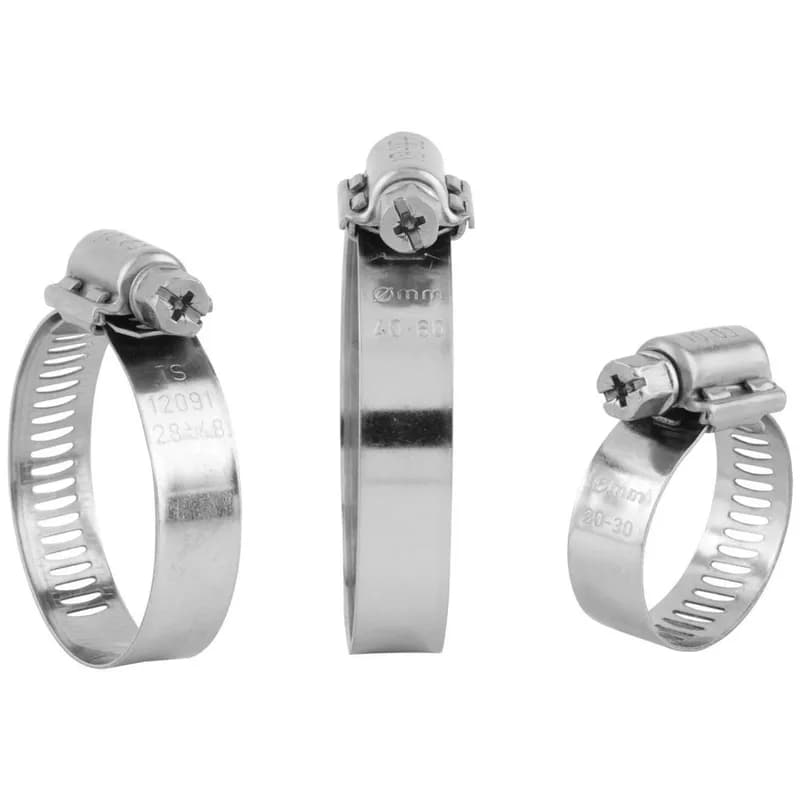
ERBİ A Tipi Hortum Kelepçe (8.5 mm) 10-16
ERBİ · Hose Clamps & Cable Ties
ERBİ A Tipi Hortum Kelepçe (8.5 mm) 13-19
ERBİ · Hose Clamps & Cable Ties
ERBİ A Tipi Hortum Kelepçe (8.5 mm) 18-25
ERBİ · Hose Clamps & Cable Ties
ERBİ A Tipi Hortum Kelepçe (8.5 mm) 8-13
ERBİ · Hose Clamps & Cable Ties
ERBİ B Tipi Hortum Kelepçe (13 mm) 105-121
ERBİ · Hose Clamps & Cable Ties
ERBİ B Tipi Hortum Kelepçe (13 mm) 115-135
ERBİ · Hose Clamps & Cable Ties
ERBİ B Tipi Hortum Kelepçe (13 mm) 130-146
ERBİ · Hose Clamps & Cable Ties
ERBİ B Tipi Hortum Kelepçe (13 mm) 146-164
ERBİ · Hose Clamps & Cable Ties
ERBİ B Tipi Hortum Kelepçe (13 mm) 19-26
ERBİ · Hose Clamps & Cable Ties
ERBİ B Tipi Hortum Kelepçe (13 mm) 20-30
ERBİ · Hose Clamps & Cable Ties
ERBİ B Tipi Hortum Kelepçe (13 mm) 22-36
ERBİ · Hose Clamps & Cable Ties
ERBİ B Tipi Hortum Kelepçe (13 mm) 25-42
ERBİ · Hose Clamps & Cable Ties
ERBİ B Tipi Hortum Kelepçe (13 mm) 28-48
ERBİ · Hose Clamps & Cable Ties
ERBİ B Tipi Hortum Kelepçe (13 mm) 32-51
ERBİ · Hose Clamps & Cable Ties
ERBİ B Tipi Hortum Kelepçe (13 mm) 38-58
ERBİ · Hose Clamps & Cable Ties
ERBİ B Tipi Hortum Kelepçe (13 mm) 44-64
ERBİ · Hose Clamps & Cable Ties
ERBİ B Tipi Hortum Kelepçe (13 mm) 51-72
ERBİ · Hose Clamps & Cable Ties
ERBİ B Tipi Hortum Kelepçe (13 mm) 57-76
ERBİ · Hose Clamps & Cable Ties
ERBİ B Tipi Hortum Kelepçe (13 mm) 65-82
ERBİ · Hose Clamps & Cable Ties
ERBİ B Tipi Hortum Kelepçe (13 mm) 76-92
ERBİ · Hose Clamps & Cable Ties
ERBİ B Tipi Hortum Kelepçe (13 mm) 85-103
ERBİ · Hose Clamps & Cable Ties
ERBİ B Tipi Hortum Kelepçe (13 mm) 92-110
ERBİ · Hose Clamps & Cable Ties
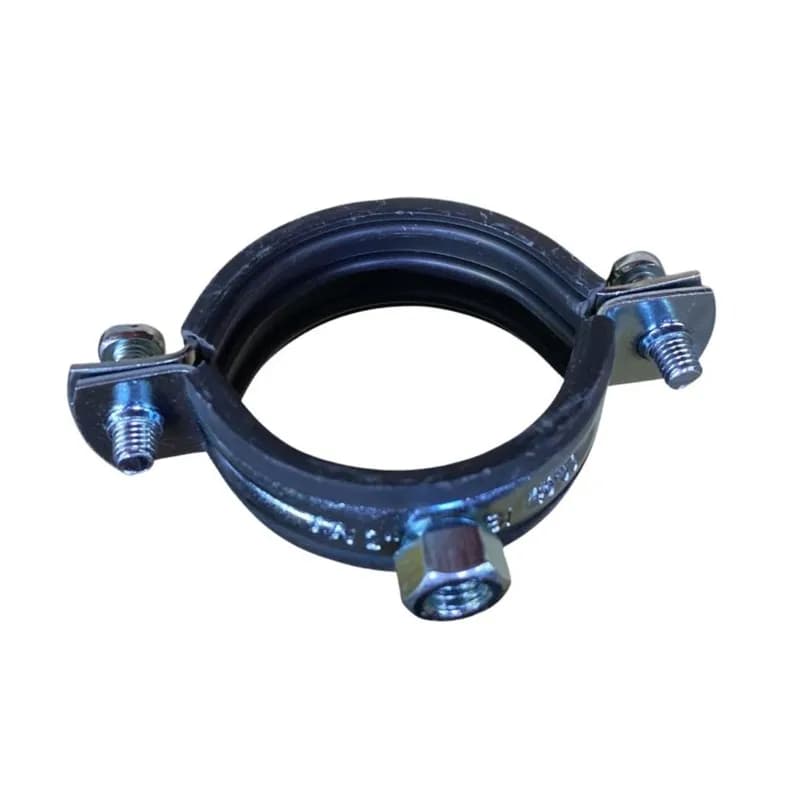
ERBİ DKP Ağır Yük Somunlu Kelepçe 1/1.2
ERBİ · Hose Clamps & Cable Ties
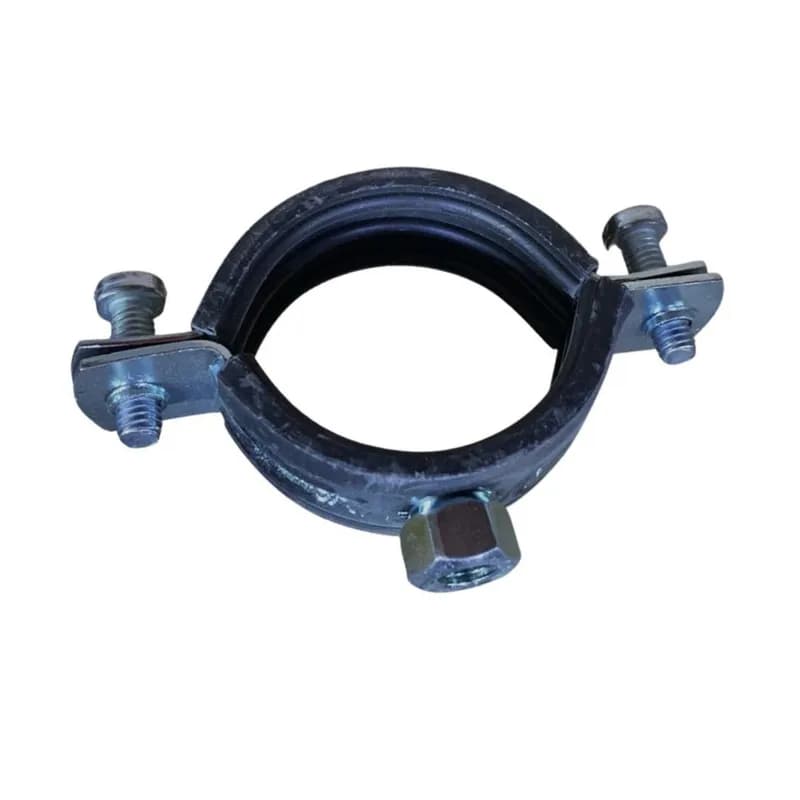
ERBİ DKP Ağır Yük Somunlu Kelepçe 1/1.4
ERBİ · Hose Clamps & Cable Ties
1–24 of 137 · page 1 / 6
Clamp types
A hose clamp is tightened by a worm drive and presses the hose onto the fitting. The B type has a 13 mm band and the C type 14 mm; a wider band spreads the pressure over more of the hose and is less likely to cut thin-walled tubing. Plated steel and stainless bodies are chosen by environment.
Saddle and screw-in pipe clamps fix a pipe to a wall or ceiling instead: the saddle type bolts onto threaded rod, the screw-in type goes straight into a plugged hole. Both are sized in inches, by the outside diameter of the pipe.
| Product | Job | Sizing |
|---|---|---|
| B type hose clamp | Hose to fitting | 13 mm band, Ø range |
| C type hose clamp | Hose to fitting | 14 mm band, Ø range |
| Wing screw clamp | Tool-free tightening | Small diameters |
| Saddle clamp | Pipe support | Inches (1/2"-5") |
| Screw-in pipe clamp | Pipe fixed to wall | Inches, short/long |
| Cable tie | Cable bundling | Width x length (mm) |
Reading band ranges and cable tie sizes
A figure such as 65-82 in a clamp name is the diameter range in millimetres that the clamp will close over. The outside diameter of the hose once it is on the fitting should fall near the middle of that range; a clamp working at the very end of its range either fails to grip or strains its band.
On a cable tie, 4.5x370 means a 4.5 mm band width and a 370 mm length. The length must exceed the bundle's circumference with margin to spare, and the width sets the tensile strength. Outdoors use UV-stable black ties — natural white ties go brittle in sunlight.
- Aim for the middle of the clamp's diameter range.
- On thin-walled hose, prefer the wider (C type) band.
- Outdoors, use black UV-stable cable ties.
- Cable ties and hook-and-loop seal nothing and hold no pressure.
Frequently Asked Questions
What is the difference between B and C type clamps?
Band width: 13 mm for B, 14 mm for C. The wider band spreads pressure over more of the hose and is less likely to cut thin-walled tubing. Both use a worm drive.
What does 65-82 mean in a clamp size?
It is the diameter range in millimetres the clamp closes over. The hose's outside diameter on the fitting should fall near the middle of that range.
Can a cable tie hold a hose?
It can hold it, but it will not hold pressure. A cable tie gathers; only a screw-tightened metal clamp presses the hose onto the fitting hard enough for pressure.
Black or natural cable ties?
Black ties are carbon-loaded and UV-stable, for outdoor use. Natural white ties are for indoors; in sunlight they go brittle and snap within months.
Where does a screw-in pipe clamp go?
Straight into a plugged hole in a wall or ceiling, fixing the pipe to the surface. The saddle type bolts to threaded rod or a profile instead.
Is hook-and-loop reusable?
Yes — that is its main advantage over a cable tie: it can be opened and refastened. It is preferred on cable bundles that are rearranged often.