Categories
Generators
A generator converts the mechanical energy of an internal combustion engine into electricity through an alternator. It supplies backup power when the grid fails, and it is the primary source of power on sites where there is no grid at all. This page covers every class we carry, from 0.8 kVA suitcase inverter sets to 2500 kVA canopy diesel sets, together with the sizing arithmetic.
Product Types
Go straight to the product type you need.
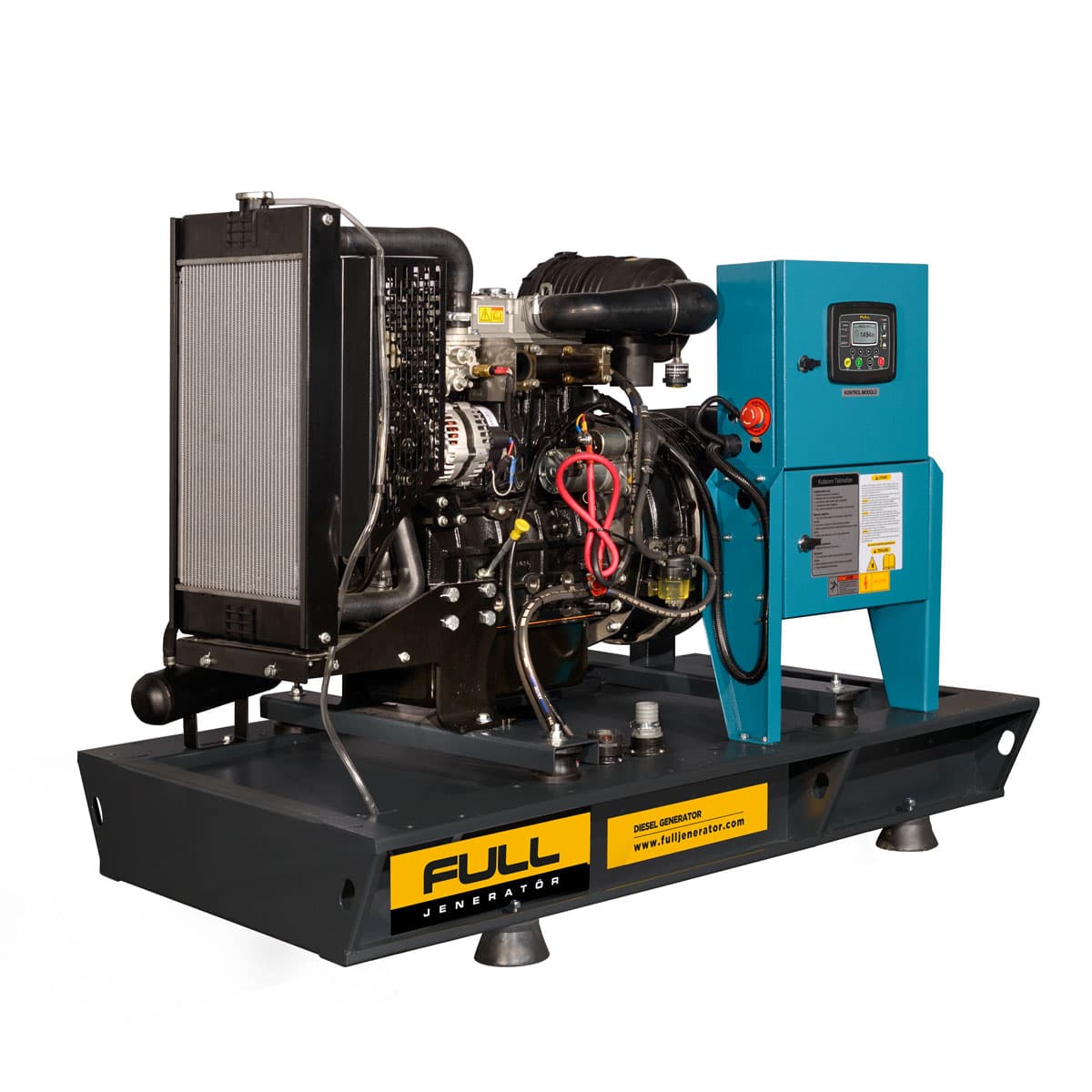
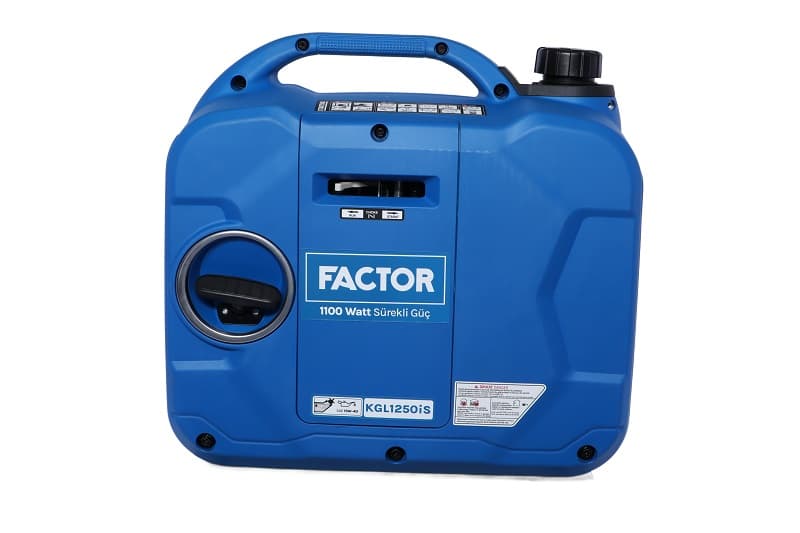


Factor FCKGL950 Petrol Generator 0.8 kW
Factor · Petrol Generators

Factor FCKGL10000CE3 Petrol Generator 10 kVA
Factor · Petrol Generators
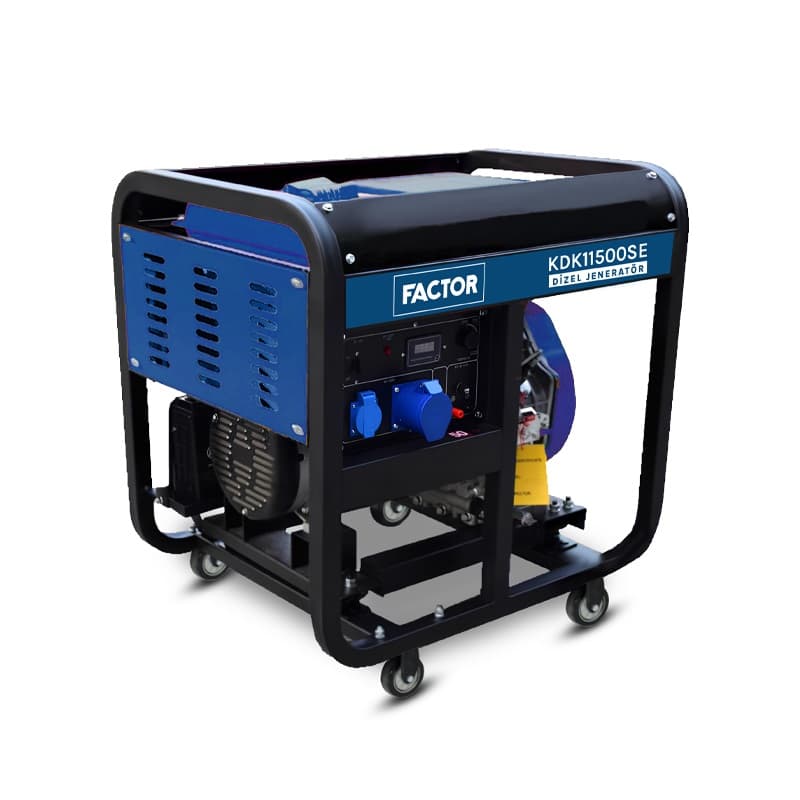
Factor FCKDK11500SE Diesel Generator 11 kVA
Factor · Portable Diesel Generators
Factor FCKDK11500SE3 Diesel Generator 11 kVA
Factor · Portable Diesel Generators
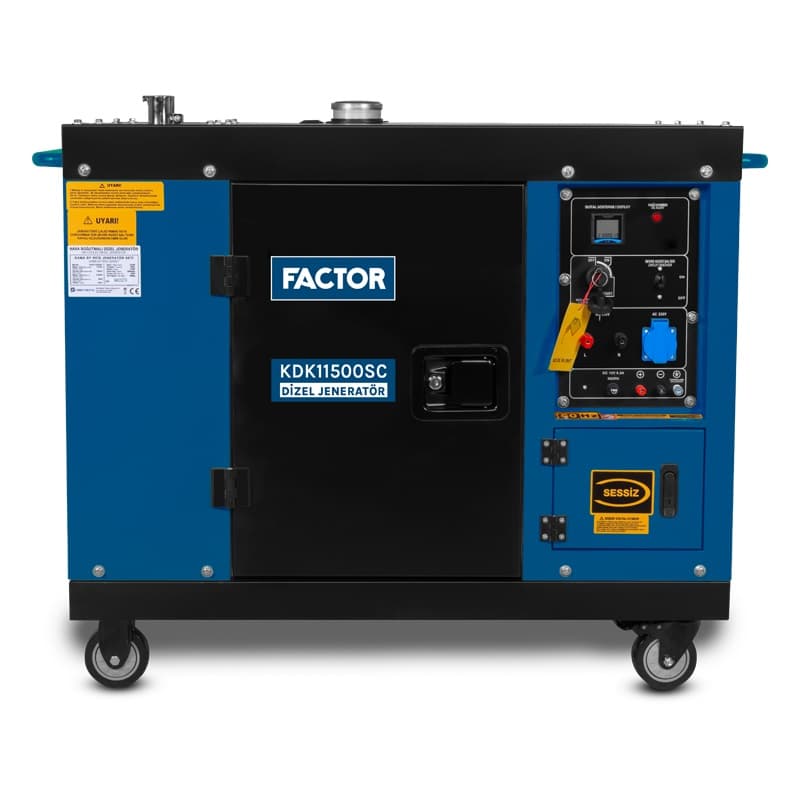
Factor FCKDK11500SC Canopy Diesel Generator 11 kVA
Factor · Portable Diesel Generators
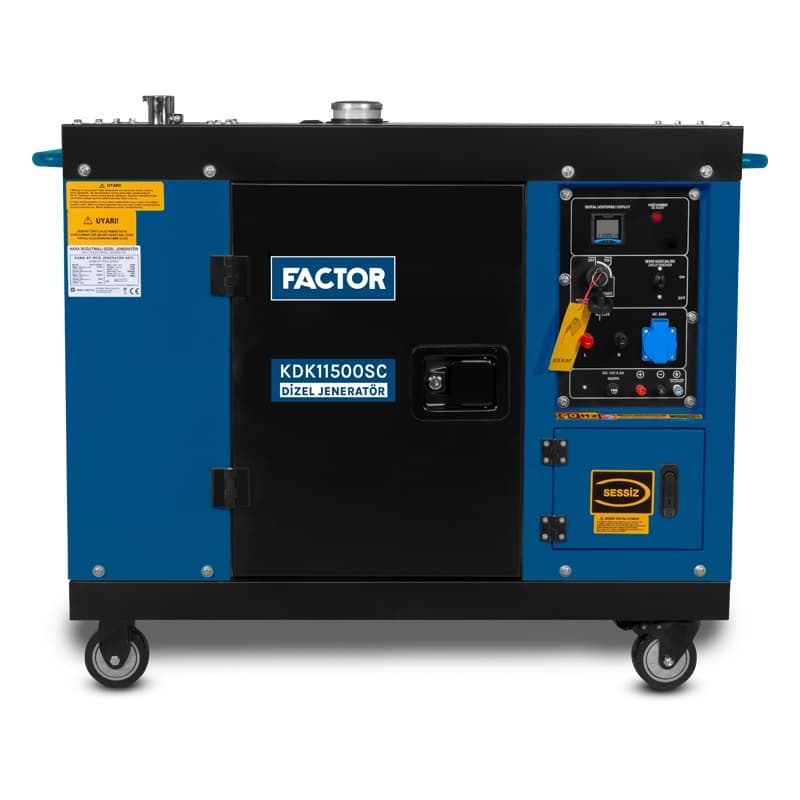
Factor FCKDK11500SC3 Canopy Diesel Generator 11 kVA
Factor · Portable Diesel Generators
Factor FCKDK12RE Diesel Generator 12 kVA
Factor · Portable Diesel Generators
Factor FCKDK12SC Canopy Diesel Generator 12 kVA
Factor · Portable Diesel Generators
Factor FCKDK12SC3 Canopy Diesel Generator 12 kVA
Factor · Portable Diesel Generators
Factor FCKDK12RE3 Diesel Generator 12 kVA
Factor · Portable Diesel Generators

Factor FCKDK15000SC Canopy Diesel Generator 15 kVA
Factor · Portable Diesel Generators

Factor FCKDK15000SC3 Canopy Diesel Generator 15 kVA
Factor · Portable Diesel Generators
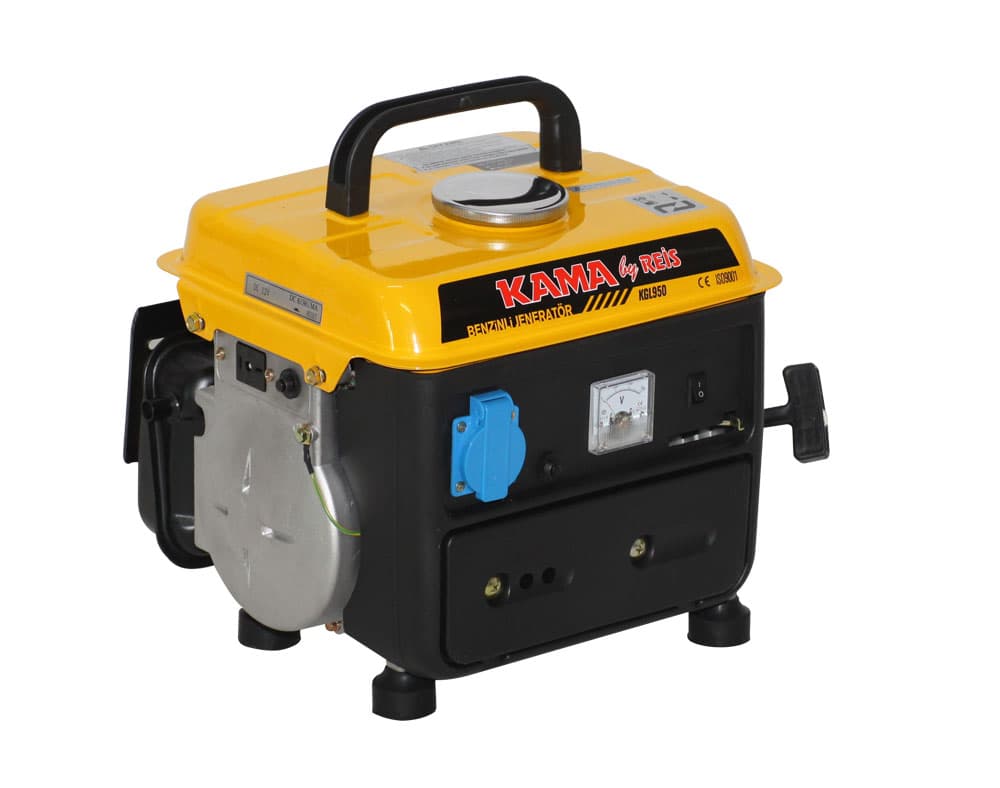
Kama By Reis KW08KVAKBRKGL950 Petrol Generator 0.8 kVA / 0.8 kW
Kama By Reis · Petrol Generators
Factor FACKGL3500CE Petrol Generator 3.5 kVA
Factor · Petrol Generators

Factor FCKGL3500CE Petrol Generator 3.5 kVA
Factor · Petrol Generators

Factor FACKGL3500C Petrol Generator 3.5 kVA
Factor · Petrol Generators

Factor FCKGL3500C Petrol Generator 3.5 kVA
Factor · Petrol Generators
Factor FACKGL5000CE Petrol Generator 5 kVA
Factor · Petrol Generators

Factor FCKGL5000CE Petrol Generator 5 kVA
Factor · Petrol Generators
Factor FACKDK7500SC Canopy Diesel Generator 6.9 kVA
Factor · Portable Diesel Generators

Factor FCKDK7500SC Canopy Diesel Generator 6.9 kVA
Factor · Portable Diesel Generators

Factor FCKDK7500SC3 Canopy Diesel Generator 6.9 kVA
Factor · Portable Diesel Generators
Factor FACKDK7500CE Diesel Generator 6.9 kVA
Factor · Portable Diesel Generators

Factor FCKDK7500CE Diesel Generator 6.9 kVA
Factor · Portable Diesel Generators
1–24 of 233 · page 1 / 10
Types of generator and where each one is used
Generators are classified first by fuel and then by enclosure and mode of use. Fuel decides running cost and how long the set can run continuously; the enclosure decides portability, noise level and how the set is installed.
| Type | Fuel | Typical range | Where it is used |
|---|---|---|---|
| Inverter generator | Petrol | 0.8 – 8 kVA | Caravans, camping, mobile trade units, sensitive electronics |
| Portable petrol generator | Petrol | 0.8 – 15 kVA | Home and small office backup, hand tools and lighting on site |
| Portable diesel generator | Diesel | 6 – 25 kVA | Construction sites, irrigation, small business backup |
| Canopy diesel generator | Diesel | 10 – 2500 kVA | Factories, hotels, hospitals, shopping centres, data centres |
| Welding generator | Diesel | 200 – 300 A welding current | Pipeline and steel structure welding away from mains power |
Ranges reflect the models we carry; canopy diesel sets are supplied up to 2500 kVA on a project basis.
How many kVA do you need? Sizing a generator
The only sound way to choose a set is to add up the loads it has to carry. Resistive loads such as lighting and heaters draw their rated power. Inductive loads — electric motors, compressors, pumps, lifts — draw three to six times their rated power at start-up. So the calculation adds a starting-current allowance and roughly 20% for growth on top of the total.
The table below shows what a set's kVA rating means in continuous load terms, and what each class is typically specified for.
| Generator rating | Continuous load | Typical application |
|---|---|---|
| 2 – 3 kVA | 1.6 – 2.4 kW | Lighting, fridge, TV, chargers, caravan |
| 5 kVA | ≈ 4 kW | Small flat backup, hand tools and site lighting |
| 8 – 10 kVA | 6.4 – 8 kW | Villa, small shop, irrigation pump |
| 15 – 22 kVA | 12 – 17.6 kW | Apartment common areas, small workshop, filling station |
| 33 – 55 kVA | 26 – 44 kW | Small production plant, hotel, cold room |
| 66 – 110 kVA | 53 – 88 kW | Mid-size factory, office building, retail branch |
| 150 – 330 kVA | 120 – 264 kW | Factory, shopping centre, hospital wing, server room |
| 400 – 800 kVA | 320 – 640 kW | Large plant, hospital campus, data centre |
| 900 kVA and above | 720 kW and above | Heavy industry, data centres, ports and infrastructure |
Continuous load is calculated at power factor 0.8, where kW = kVA × 0.8. Loads with high starting current call for the next class up.
The difference between kVA and kW
kVA is apparent power and kW is active power. The ratio between them is the power factor (cos φ), taken as 0.8 as standard on generator sets. So kW = kVA × 0.8 and kVA = kW ÷ 0.8. A 100 kVA generator delivers 80 kW of active power.
The kVA figure on the nameplate describes what the alternator can deliver; the kW figure describes what the loads actually consume. Load schedules are usually drawn up in kW, so dividing the kW total by 0.8 gives the kVA rating to specify.
Standby, prime and continuous ratings
A generator datasheet normally carries two ratings. Standby is for backup duty during a mains failure: variable load, limited hours, no overload permitted. Prime is for continuous running under variable load, and typically allows 10% overload for one hour in twelve.
The prime rating is roughly 90% of the standby rating. On a site with no grid, an agricultural installation or a production line that runs continuously, size against the prime rating; for a set that only runs during an outage, standby is the right figure.
Single-phase or three-phase
A single-phase generator delivers 230 V and suits homes, small businesses, lighting and heating. A three-phase generator delivers 400/230 V, which is what three-phase motors, lifts, industrial machinery and larger facilities require.
A three-phase set can also supply single-phase loads, provided they are balanced across the phases. If the site has even one three-phase motor, specify a three-phase set; otherwise a single-phase set is both cheaper and simpler to install.
Canopy, open-set and automatic transfer configurations
A canopy set is housed in a sound-attenuated enclosure: it can be installed outdoors, is protected against rain and dust, and typically measures 65–85 dBA at 7 m. An open set is lighter and cheaper but needs a plant room with the ventilation, exhaust routing and acoustic treatment already in place.
An automatic transfer switch (ATS) starts the generator when the mains fails, transfers the load and hands it back when the mains returns. In hospitals, data centres, cold stores and continuous production it is a requirement rather than an option. On a manual set an operator does that work.
- Canopy set: outdoor installation, sound-attenuated, lockable doors
- Open set: needs a plant room, lighter and lower cost
- Automatic (ATS) set: starts and transfers without an operator
- Trailer-mounted set: for projects that move between sites
Fuel consumption and running cost
As a rule of thumb a diesel set burns about 0.25 litres per kW per hour at full load: a 100 kVA (80 kW) set uses roughly 20 l/h flat out. Consumption falls with load — the same set burns about 25% less at 75% load and about 45% less at 50%. Every product page publishes the manufacturer's figures at full, 75% and 50% load.
Run time is the tank capacity divided by full-load consumption. Where the set must run through long outages, an external tank with automatic refuelling extends it. Running a diesel set continuously below about 30% load is not recommended: light loading causes carbon build-up.
Installation, maintenance and spare parts
A set performs as well as it is installed: adequate ventilation area for intake and hot-air discharge, an exhaust routed outside, anti-vibration mounts, earthing, and a mechanically interlocked transfer arrangement between mains and generator.
Routine maintenance is usually an oil and filter change every 250–500 running hours, checks on the battery and block heater, and at least one on-load test run per year. Seza Global supplies load and site assessment, installation, scheduled maintenance and spare parts alongside the sets it delivers.
Frequently Asked Questions
What size generator do I need?
Add up the loads in kW, allow for the starting current of motors and compressors, add about 20% for growth, then divide by 0.8 to get the kVA rating. For a 40 kW total, 40 ÷ 0.8 = 50 kVA. Send us your load schedule and we will size it for you.
What is the difference between kVA and kW?
kVA is apparent power, kW is active power. Generator sets are rated at power factor 0.8, so kW = kVA × 0.8. A 100 kVA generator delivers 80 kW.
What is the difference between standby and prime power?
Standby is for limited-hours backup duty with no overload allowed. Prime is for continuous running under variable load and typically permits 10% overload for one hour in twelve. Prime is roughly 90% of standby; size against prime for anything that runs continuously.
Should I buy a diesel or a petrol generator?
Petrol sets are lighter, quieter and cheaper at low ratings, and suit occasional short-duration use. Diesel sets do more work per litre, last longer and can run for hours or days. Broadly: petrol below about 10 kVA and for infrequent use, diesel above that or for continuous duty.
What is an inverter generator for?
An inverter generator regenerates the alternator output electronically, producing a clean sine wave that is safe for computers, medical equipment, audio systems and modern appliances. Because engine speed tracks the load, it is also far quieter and more economical than a conventional set.
How much fuel does a generator use per hour?
A diesel set burns roughly 0.25 litres per kW per hour at full load, so a 100 kVA (80 kW) set uses about 20 l/h. Consumption falls with load. Each product page publishes the manufacturer's own figures at full, 75% and 50% load.
Single-phase or three-phase?
If the site has a three-phase motor, lift or industrial machine, you need a three-phase (400/230 V) set. If the loads are single-phase only — lighting, heating, refrigeration — a single-phase (230 V) set is sufficient and cheaper.
Do I need an automatic transfer switch?
You do if the set must start without an operator when the mains fails. An ATS detects the outage, starts the set, transfers the load and hands it back on restoration. It is standard in hospitals, data centres, cold stores and continuous production; manual starting can be enough for a rarely used backup set.
Do I need a canopy?
Yes if the set is installed outdoors or noise is a constraint: the canopy provides both sound attenuation and protection from rain and dust. If you have a plant room with ventilation and exhaust already in place, an open set is lighter and cheaper.
How often does a generator need servicing?
The general rule is an oil and oil/fuel/air filter change every 250–500 running hours. Battery, block heater and coolant should be checked regularly, and standby sets should be test-run on load at least once a year.
Can you supply a rating or model that is not listed?
Yes. The listed models are the stock and fast-delivery range; diesel sets up to 2500 kVA, synchronised parallel systems, trailer-mounted sets and bespoke configurations are supplied on a project basis. Tell us the requirement and we will quote with the sizing.
Can I get wholesale or dealer pricing?
Yes. Seza Global prices by quantity for dealers and project customers. Request a quote from any product page or apply through the dealer application form.