Categories
Mini Lathes
A mini lathe is a bench machine that works cylindrical parts by turning them. It is used in model making, prototyping, watchmaking, jewellery and small part production; what separates it from a full-size lathe is capacity and a bias toward precision.
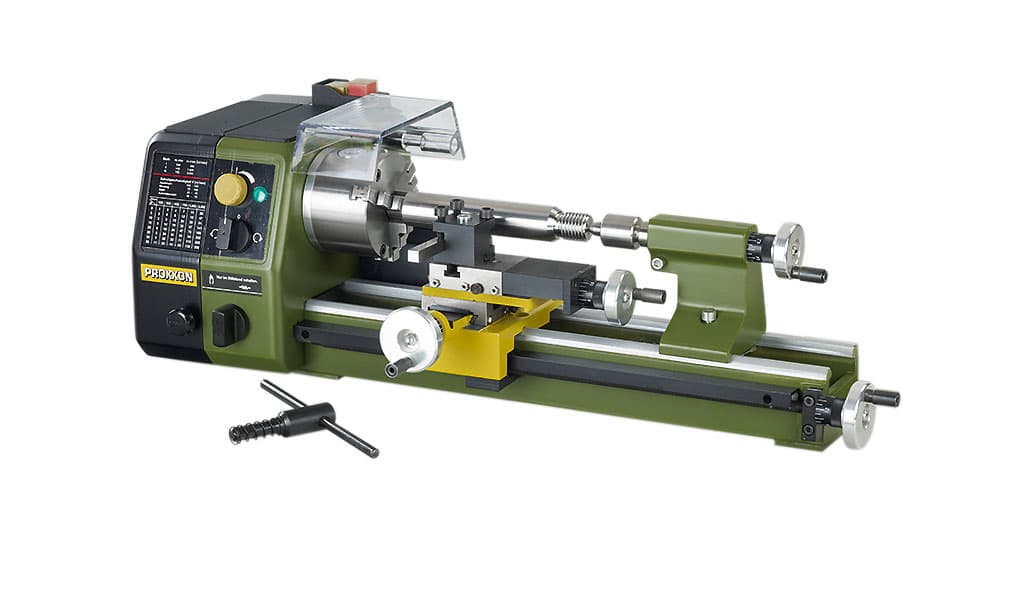
Proxxon 24002 Precision Lathe
Proxxon · Mini Lathes
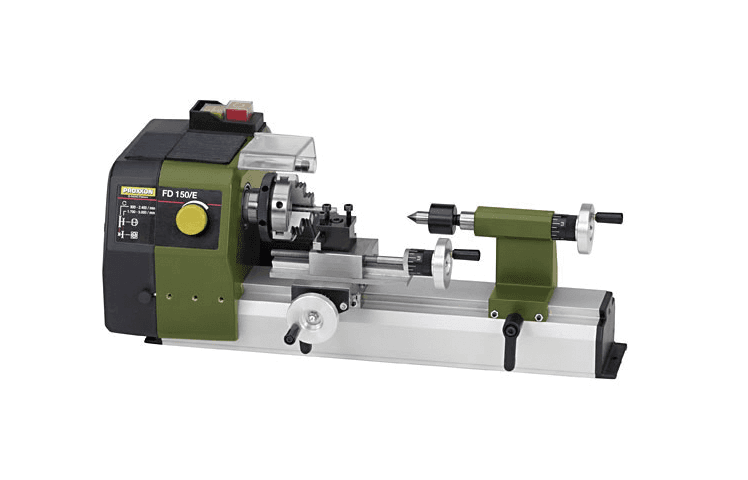
Proxxon 24150 Precision Lathe
Proxxon · Mini Lathes
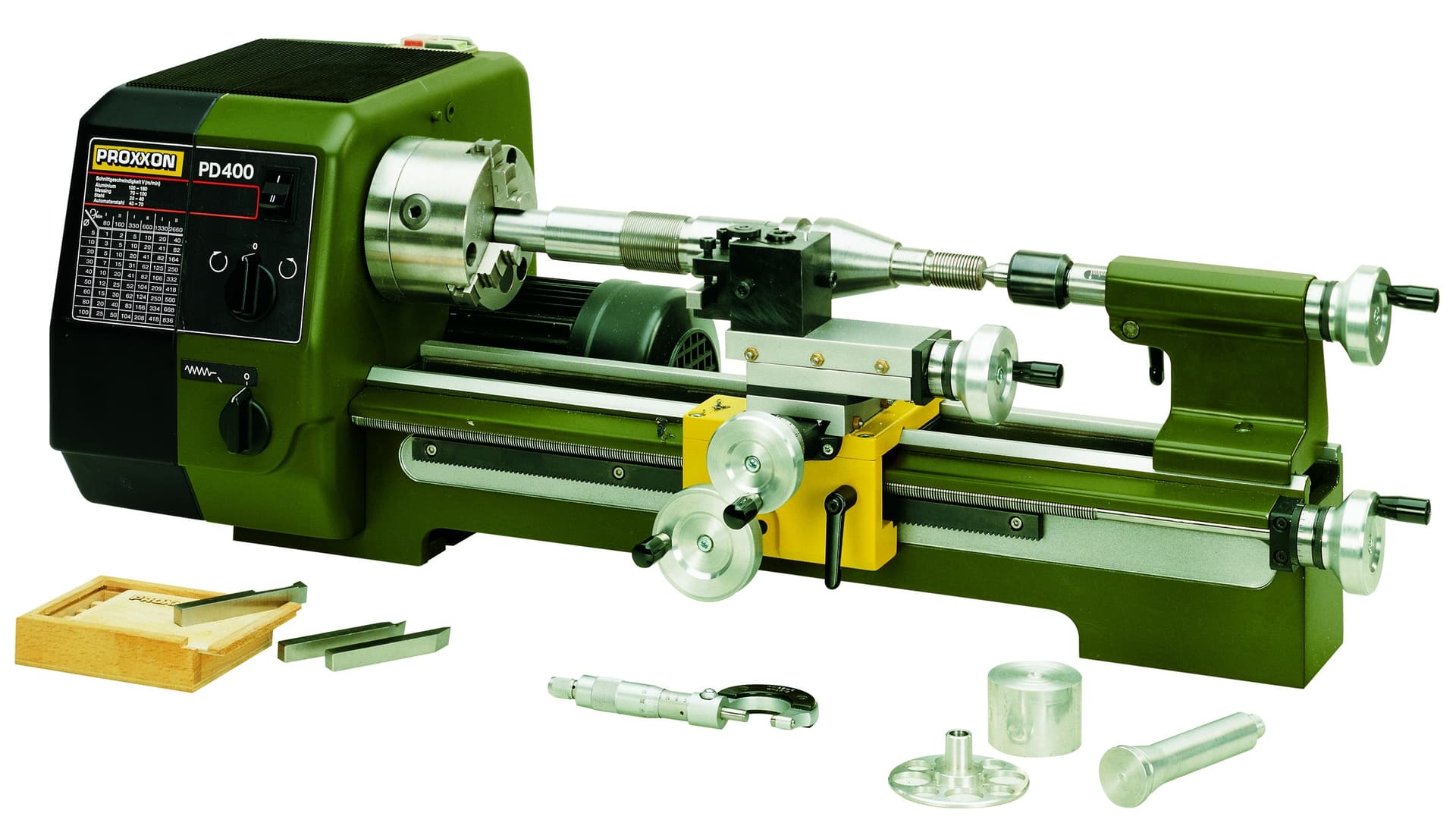
Proxxon 24400 PD400 Precision Lathe
Proxxon · Mini Lathes
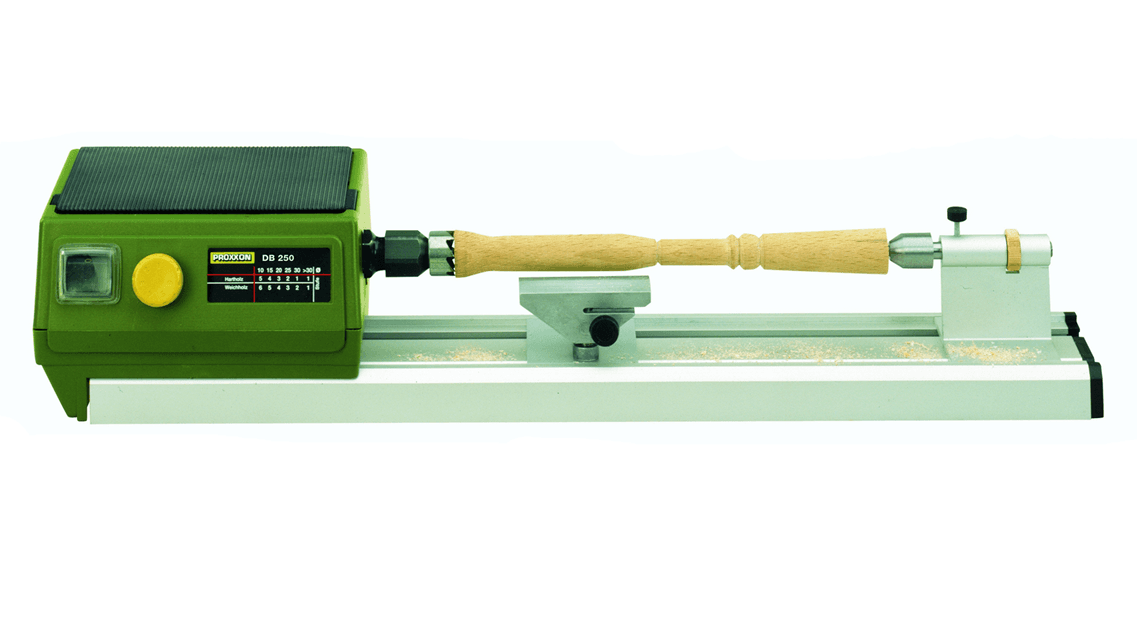
Proxxon 27020 DB 250 Micro Precision Lathe
Proxxon · Mini Lathes
Three figures set the limit
Distance between centres gives the longest part that can be turned. Centre height gives the diameter: twice the height is the largest that will swing.
The third is the speed range. Small diameters need high speed, which is why continuously variable drive is standard on mini lathes and more useful than stepped pulleys.
The accessories that make it usable
The chuck holds the work: three jaws self-centre round and hexagonal stock, four independent jaws grip square and irregular work. The tool does the cutting, and its geometry decides the surface.
On long work a fixed and a travelling steady stop the deflection; a dividing head adds indexing, a die holder adds threading. All of them are listed on the micro tool accessories and lathe chuck shelves.
Frequently Asked Questions
Will it cut metal?
Yes: aluminium, brass, copper and mild steel are the everyday materials of a mini lathe. Hardened steel and heavy cuts are not what this class is for.
Is a wood lathe the same as a metal lathe?
No. On a wood lathe the work turns and the tool is guided by hand; on a metal lathe the tool is carried on a slide and advances to a measurement. Both are in the catalogue and the product name says which.
Can it mill?
To a limited extent with a milling attachment and a compound table, but side load is not what a lathe spindle is designed for. Where milling is continuous, a milling machine is the right tool.