Categories
Calipers
A caliper gives outside, inside, depth and step measurements from one instrument, and the choice comes down to reading step and length. This page covers the difference between digital, dial and vernier models, the 0.01-0.05 mm reading step, and the habits a true reading depends on. The catalogue holds 46 products from GFB and BMI.
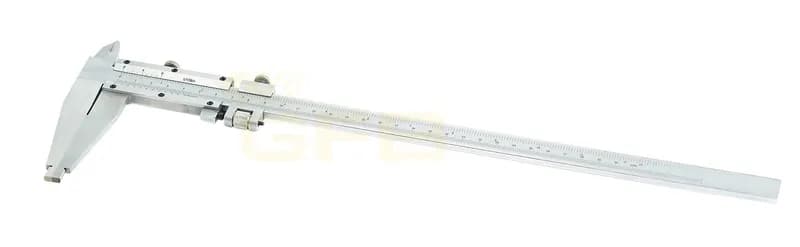
1000 mm Uzun Çene Kumpas
GFB · Calipers
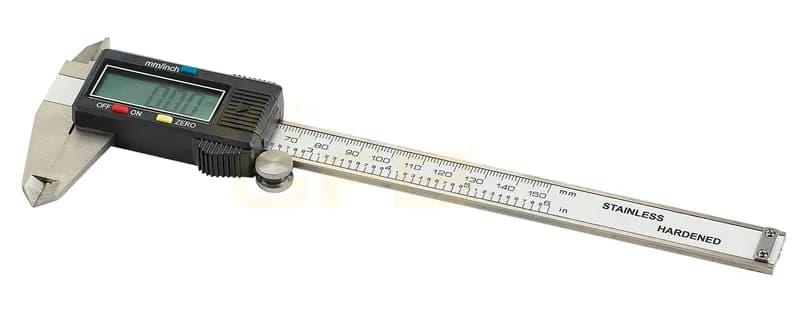
100 mm Büyük Ekran Dijital Kumpas
GFB · Calipers
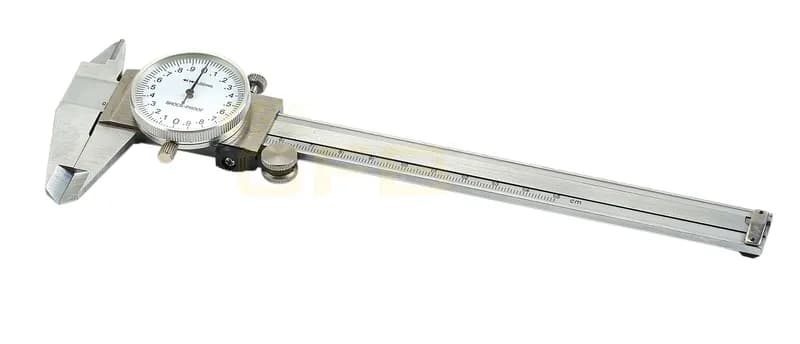
150.02 mm Saatli Kumpas
GFB · Calipers
150 mm Büyük Ekran Dijital Kumpas
GFB · Calipers
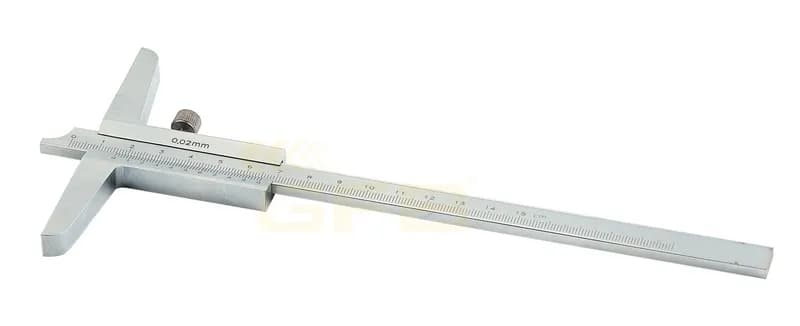
150 mm Derinlik Kumpası
GFB · Calipers
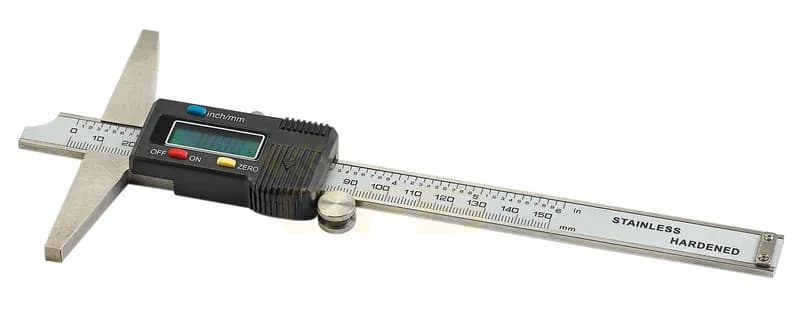
150 mm Dijital Derinlik Kumpası
GFB · Calipers
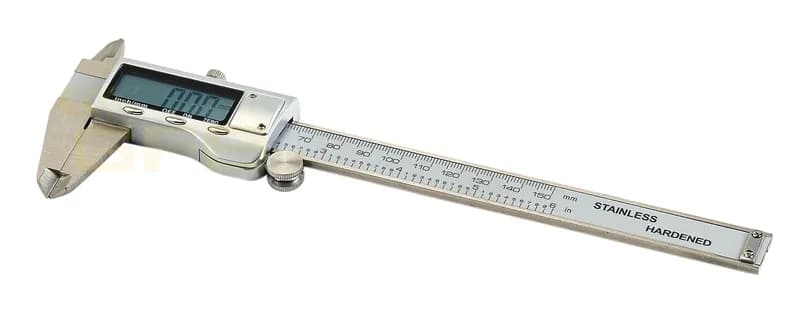
150 mm Dijital Kumpas Metal Ekran
GFB · Calipers
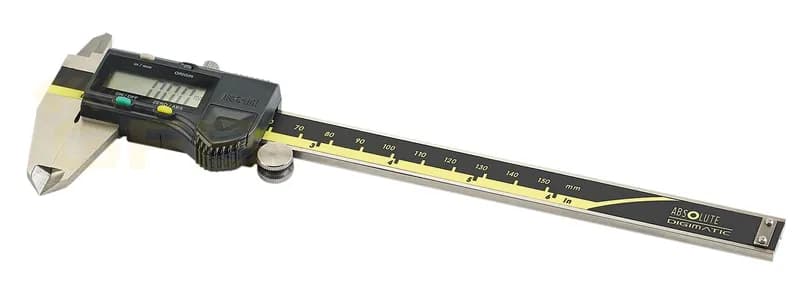
150 mm Mitutoyo Model Dijital Kumpas
GFB · Calipers
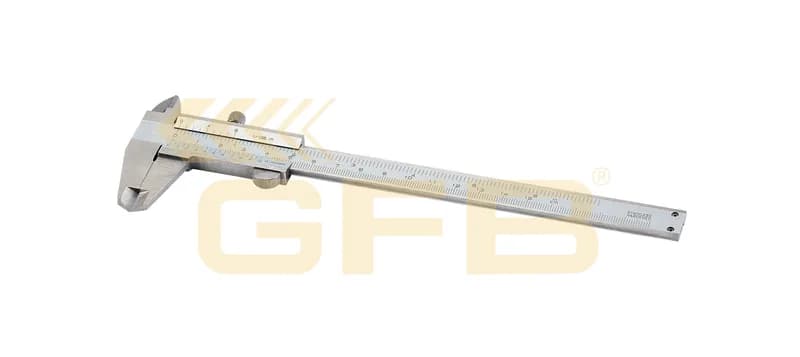
150x0.05 Monoblok Süper Kumpas
GFB · Calipers
200.02 mm Saatli Kumpas
GFB · Calipers
200 mm Büyük Ekran Dijital Kumpas
GFB · Calipers
200 mm Derinlik Kumpası
GFB · Calipers
200 mm Dijital Derinlik Kumpası
GFB · Calipers
200 mm Dijital Kumpas Metal Ekran
GFB · Calipers
200 mm Mitutoyo Model Dijital Kumpas
GFB · Calipers
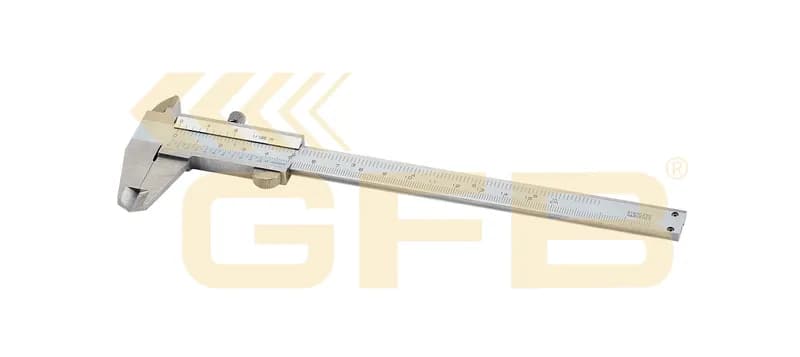
200x0.05 Monoblok Süper Kumpas
GFB · Calipers
300 mm Büyük Ekran Dijital Kumpas
GFB · Calipers
300 mm Derinlik Kumpası
GFB · Calipers
300 mm Dijital Kumpas Metal Ekran
GFB · Calipers
300 mm Mitutoyo Model Dijital Kumpas
GFB · Calipers
300 mm Uzun Çene Kumpas
GFB · Calipers
300x0.05 Monoblok Süper Kumpas
GFB · Calipers
500 mm Büyük Ekran Dijital Kumpas
GFB · Calipers
500 mm Uzun Çene Kumpas
GFB · Calipers
1–24 of 46 · page 1 / 2
Digital, dial and vernier
A vernier caliper needs no battery, survives drops and dust, and takes practice to read correctly; its step is typically 0.05 or 0.02 mm. A dial caliper shows the reading on a needle dial, which speeds up repeated checks.
A digital caliper reads to 0.01 mm, zeroes anywhere you choose and converts mm to inches; it is the fastest for batch checking. In return it depends on a battery and must be kept clear of swarf, coolant and damp — IP-rated models exist for exactly those environments.
Monoblock bodies with hardened jaws are machined from one piece and hold their accuracy longer under heavy use. A depth gauge is a separate type for hole and groove depths, its flat base sitting square on the reference face.
| Type | Reading step | Where |
|---|---|---|
| Vernier | 0.05 / 0.02 mm | Site, dusty work, spare instrument |
| Dial | 0.02 mm | Batch checking, fast reading |
| Digital | 0.01 mm | Machining, tolerance checks |
| Depth gauge | 0.01 - 0.05 mm | Holes, grooves, step depths |
What a true reading depends on
Most caliper error comes from the user, not the instrument. The jaws must sit square on the work, the measurement should be taken on the flat of the jaws rather than their tips, and the pressure must be the same every time; over-tightening shifts the reading by hundreds of microns. That is what the thumbwheel is for.
Before measuring, close the jaws and check zero: a digital display should read zero, and on a vernier the zero lines should coincide. Temperature matters too — a long caliper held in the hand warms and grows, so for precision checks the part and the instrument should be at the same ambient temperature.
Frequently Asked Questions
Digital or vernier?
Digital reads to 0.01 mm, is fast and zeroes wherever you want, but depends on a battery and on being kept clean. A vernier works without power and survives site use, though reading it takes practice.
What is the difference between 0.02 mm and 0.05 mm?
It is the smallest division the instrument can show. General workshop and assembly work is fine at 0.05 mm; tolerance checks and machining call for 0.02 mm or a 0.01 mm digital.
Why does the reading change every time?
Usually pressure. The jaws have to close with the same force each time, which is what the thumbwheel is for. The jaws must also sit square on the work and read on their flat, not their tips.
What length should I buy?
150 mm is the common size and covers most workshop work. Shops measuring pipe, flanges and larger parts want 200-300 mm, and special work 500-600 mm long-jaw models.
Is a depth gauge a separate instrument?
Yes. The depth rod on a standard caliper is for shallow measurements; measuring groove and hole depths properly needs a flat-base depth gauge that beds fully on the reference face.