Categories
Drainage Butt Fusion Machines
Welding a non-pressure drainage line poses a different problem from a pressure main: what is being joined is usually not straight pipe but an elbow, a tee or a branch, and those fittings have to be held in the clamp directly. This category covers the MINI 160 JOYT, VR 160 JOYT, VR 250 and Maxi 315 butt fusion machines for Ø 40-315 mm, together with their heating plates.
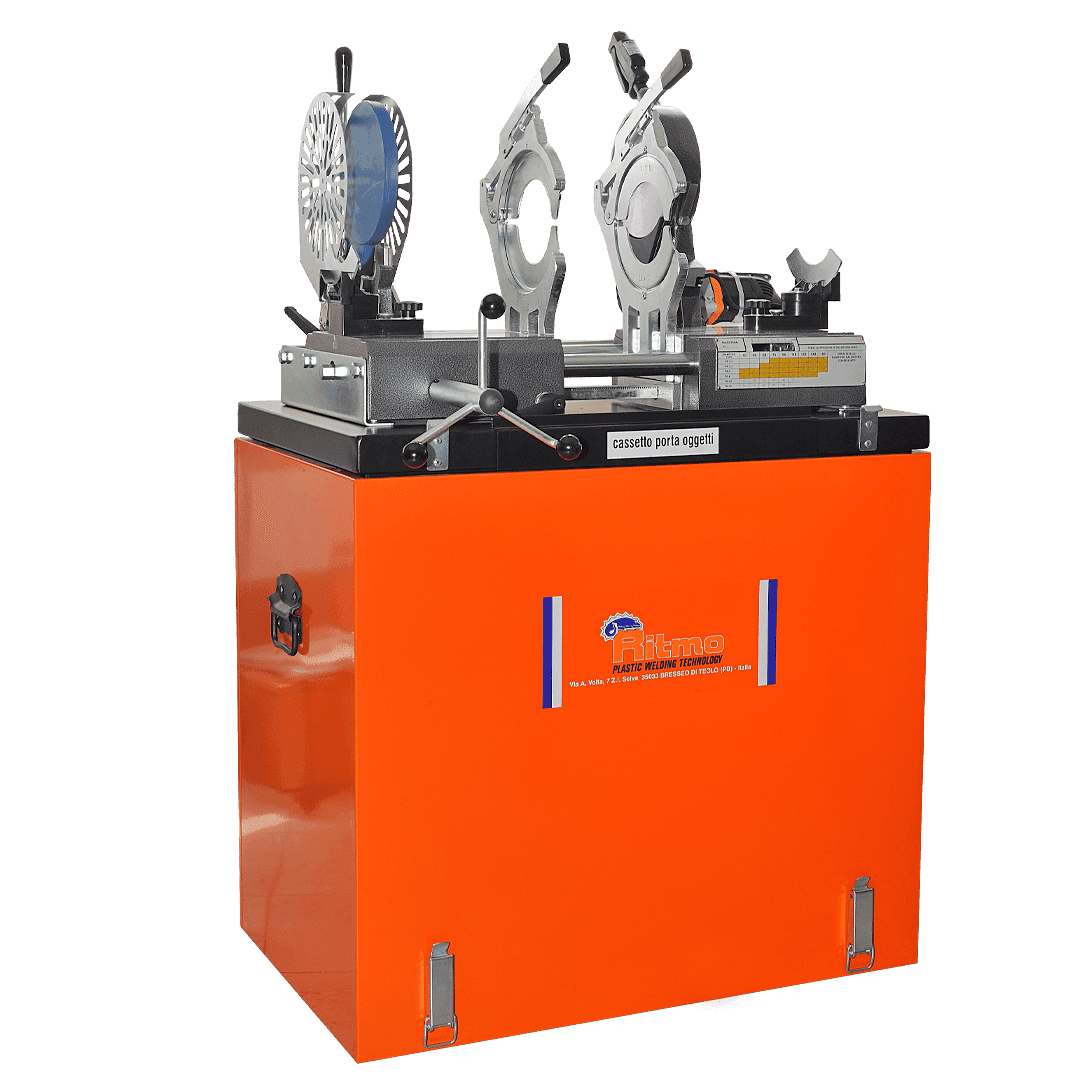
Ritmo VR 160 JOYT Drainage Butt Fusion Machine Ø 40-160 mm
Ritmo · Drainage Butt Fusion Machines
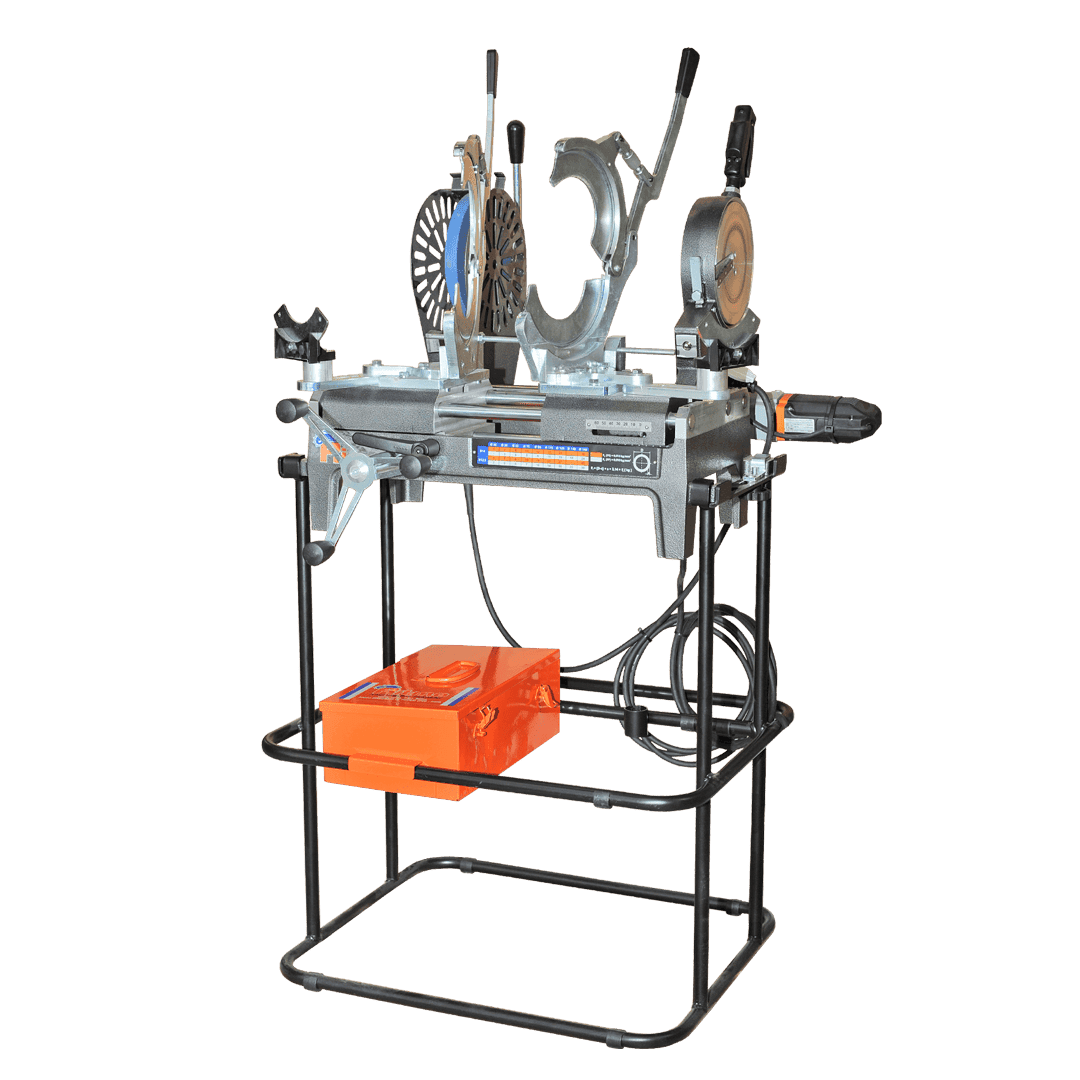
Ritmo MINI 160 JOYT Elbows Drainage Butt Fusion Machine Ø 40-160 mm
Ritmo · Drainage Butt Fusion Machines
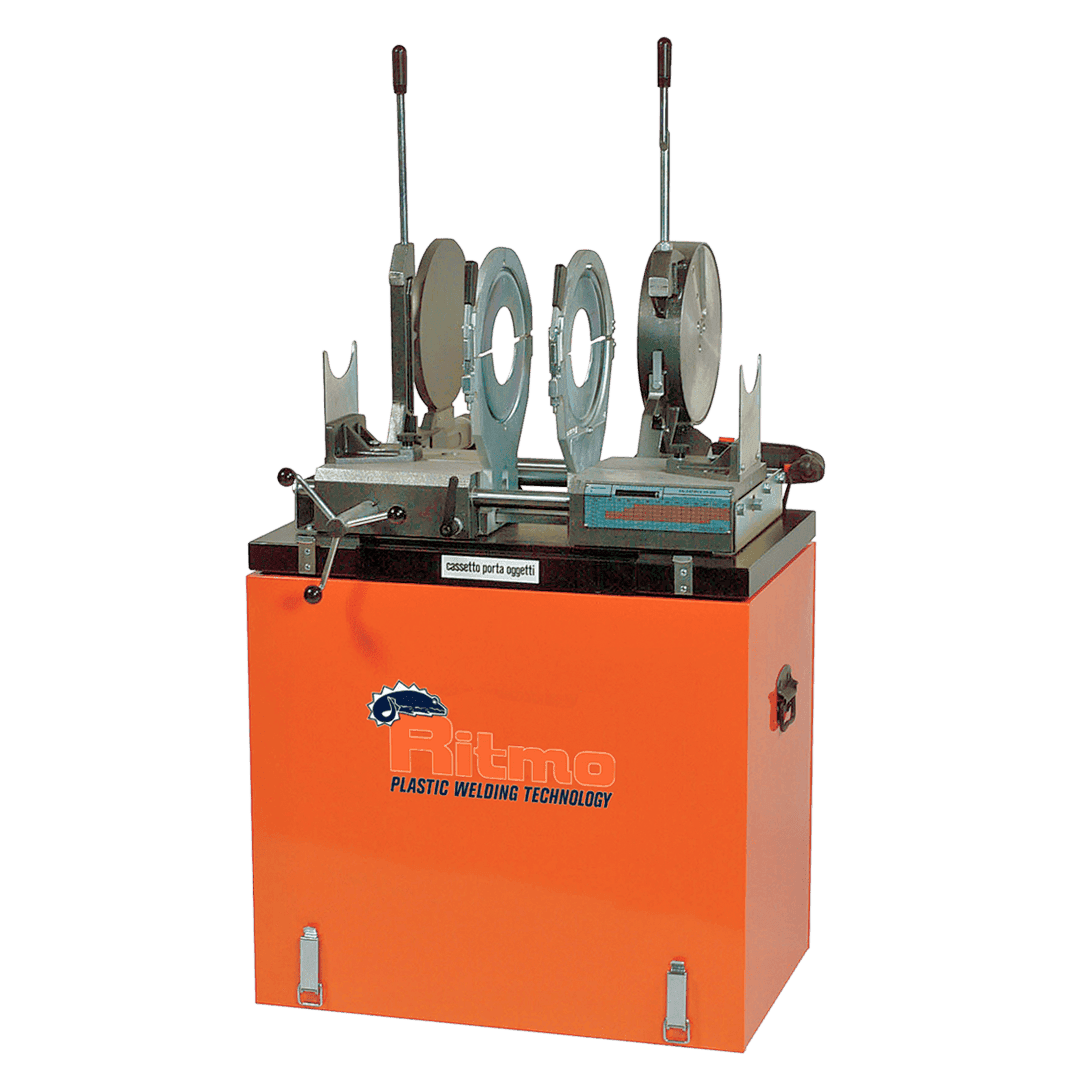
Ritmo VR 250 Drainage Butt Fusion Machine Ø 75-250 mm
Ritmo · Drainage Butt Fusion Machines
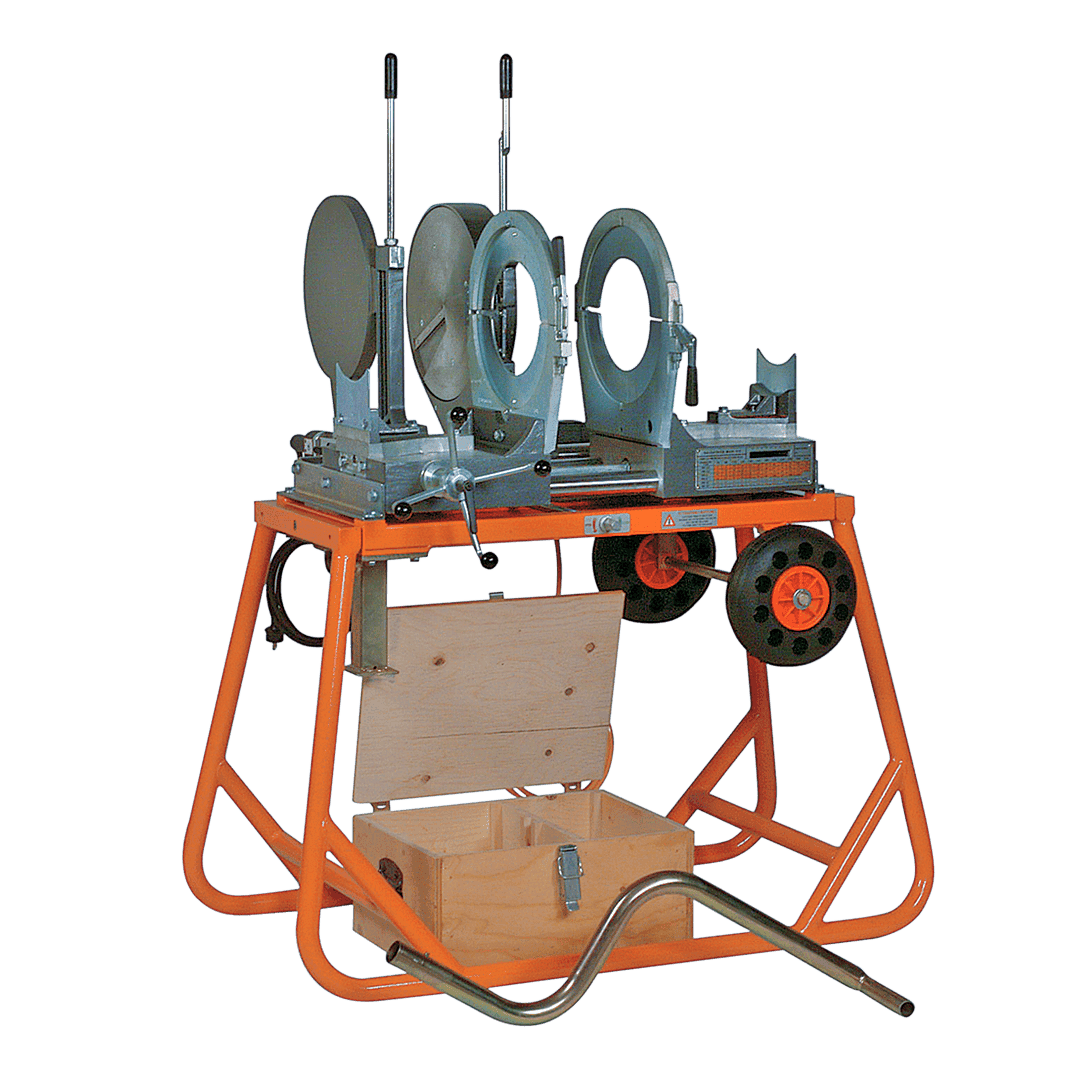
Ritmo MAXI 315 Drainage Butt Fusion Machine Ø 90-315 mm
Ritmo · Drainage Butt Fusion Machines
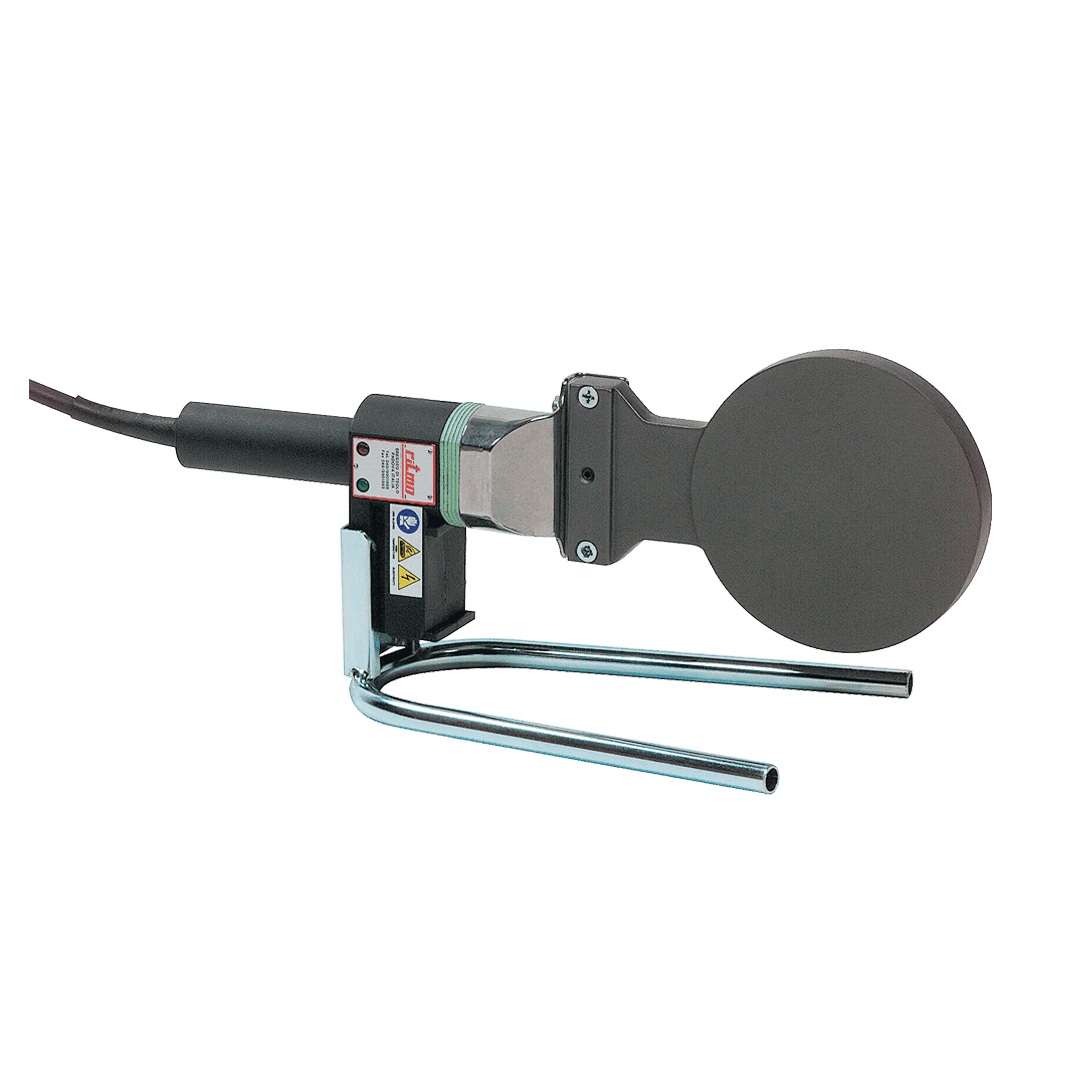
Ritmo TP Heating Plates Ø 125-315 mm
Ritmo · Drainage Butt Fusion Machines
Holding the fitting in the clamp
The quick-locking clamps in this range grip the fitting — square-cut elbows included — with no extra adapter. The logic of pressure-main machines, which grip a long run of pipe body, does not work here: most of what gets welded in the workshop and on site is short.
The heating plate is withdrawable and comes with a thermal guard, so it is not left in place between cycles; the working area stays safe and the coating lasts longer. The adjustable (TE) version runs between 180 and 280 °C, the fixed (TF) version at 210 °C.
- MINI 160 JOYT – Elbows: Ø 40-160 mm, clamp layout aimed at elbow welding
- VR 160 JOYT: Ø 40-160 mm, 110 V or 230 V single phase
- VR 250: Ø 75-250 mm, 2200 W, reaches working temperature in about 20 minutes
- Maxi 315: Ø 90-315 mm, 3900 W (230 V)
- Heating plates: supplied separately as spares and consumables
Which model to choose
Start with the diameter: most in-building and in-plant drainage stays under Ø 160 mm, which the MINI 160 JOYT and VR 160 JOYT cover. Infrastructure and industrial drainage reaching Ø 250 and Ø 315 mm needs the VR 250 or the Maxi 315.
The second factor is the supply: 110 V models suit crews working off a site transformer, 230 V models suit workshop and plant work with mains sockets. Ambient operation runs from -5 °C (-10 °C on the MINI 160 JOYT) to 40 °C; outside that range, tenting or preheating is required.
Frequently Asked Questions
Can a pressure-main machine weld a drainage line?
On straight pipe-to-pipe joints it is technically possible, but drainage work is mostly welding elbows, tees and branches. Pressure-main clamps are not designed to hold those parts and need extra adapters; this range does the same job with its standard clamps.
What is the difference between a TE and a TF heating plate?
The TE version is adjustable between 180 and 280 °C, which allows parameters to be changed for different materials and wall thicknesses. The TF version runs fixed at 210 °C; on crews doing one kind of work it is preferred because it removes an operator variable.
How long does the machine take to reach working temperature?
About 20 minutes depending on the model. Build that into the start of the job: a weld made before the plate is up to temperature melts the outer surface without heating the section through, and the joint is weak.
What is used above Ø 315 mm?
Above Ø 315 mm, and on pressure lines, the models in the butt fusion machines category apply — manual hydraulic, automatic and CNC-controlled machines up to Ø 1600 mm.