Categories
Diamond Blades
A diamond blade cuts with diamond grit bonded to its rim, not with teeth. Having no teeth it has none to lose, and it cuts glass, ceramic, porcelain, stone, concrete and hard coatings where a toothed blade cannot.
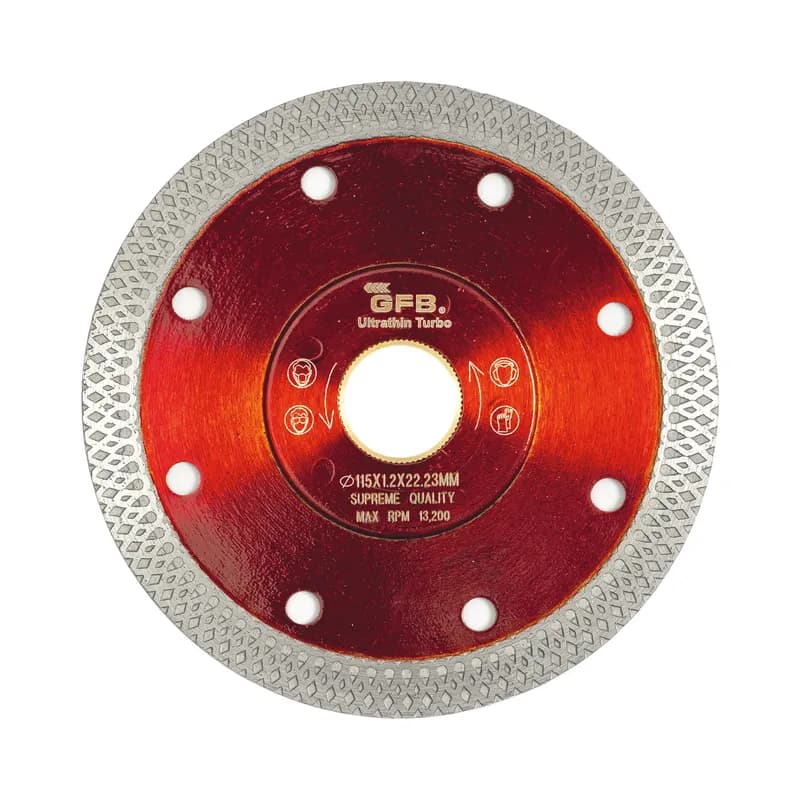
GFB Diamond Cutting Disc 115 mm Cross Thin Turbo
GFB · Diamond Blades
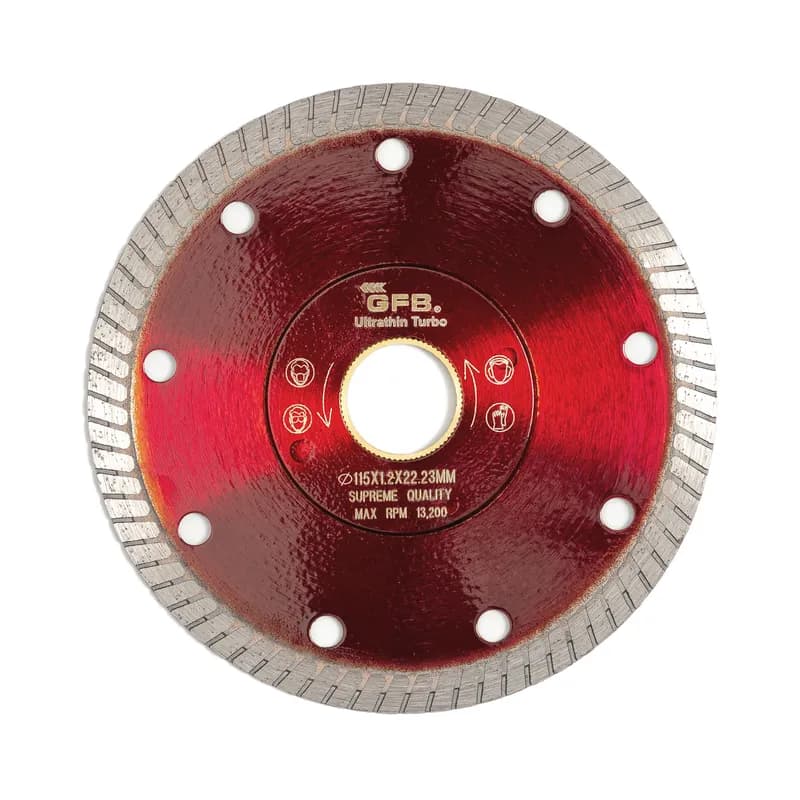
GFB Diamond Cutting Disc 115 mm Thin Turbo
GFB · Diamond Blades
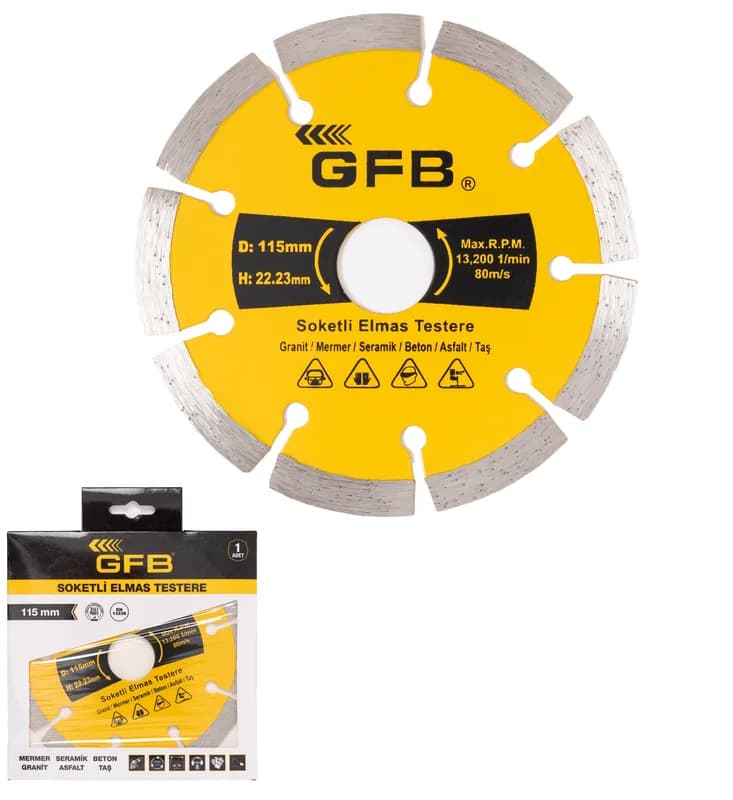
GFB Diamond Cutting Disc 115 mm Silicon Carbide (SC) Segmented Socket (Concrete & Marble)
GFB · Diamond Blades
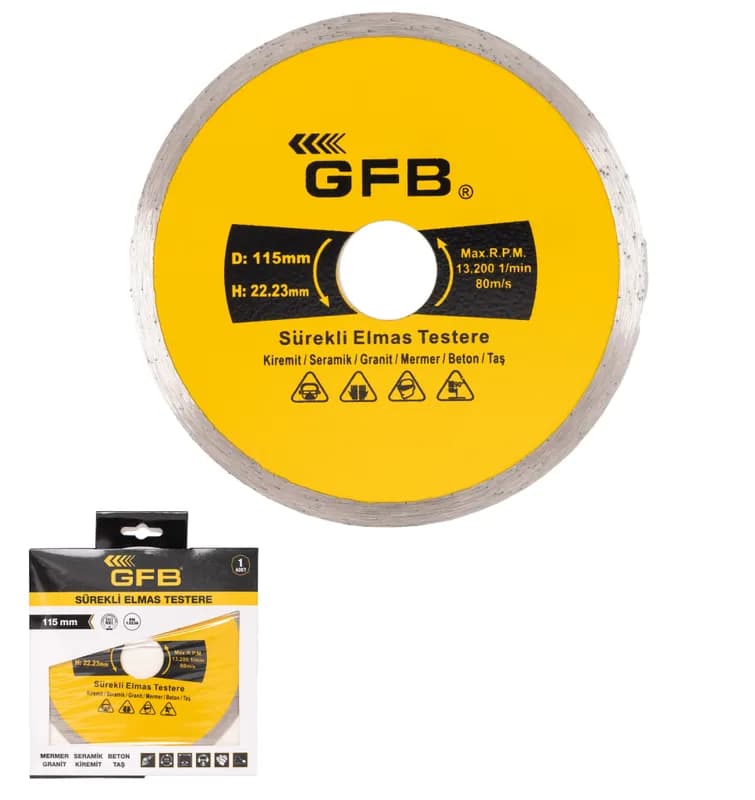
GFB Diamond Cutting Disc 115 mm Silicon Carbide (SC) Continuous Turbo (Granite & Marble)
GFB · Diamond Blades
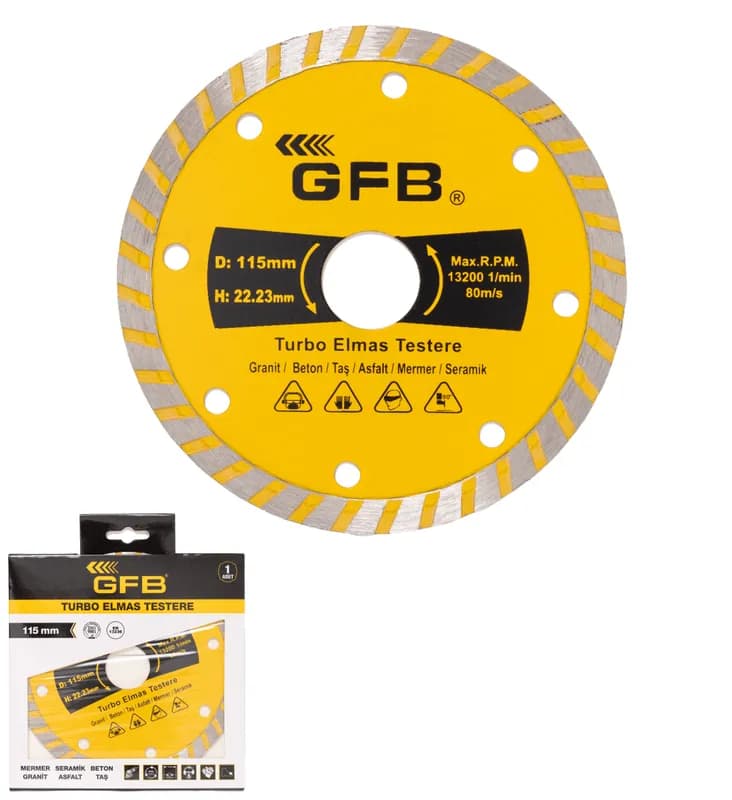
GFB Diamond Cutting Disc 115 mm Silicon Carbide (SC) Turbo (Granite & Marble)
GFB · Diamond Blades
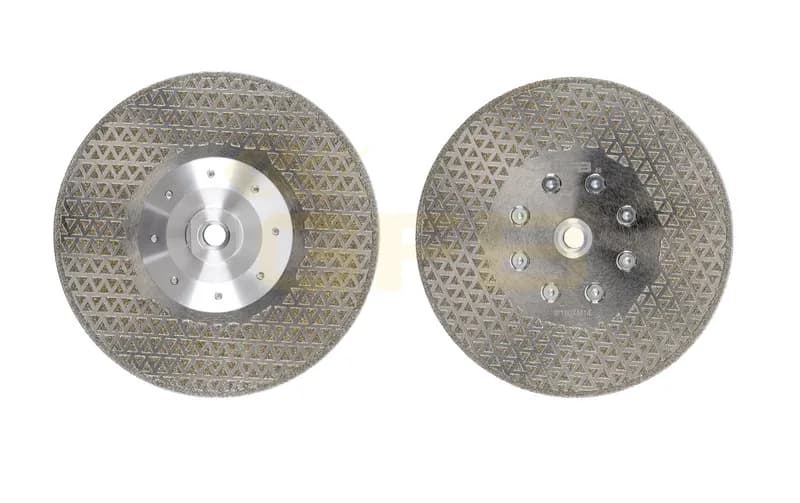
GFB Electroplated Diamond Blade 115 mm Double Faced M14 Flanged
GFB · Diamond Blades
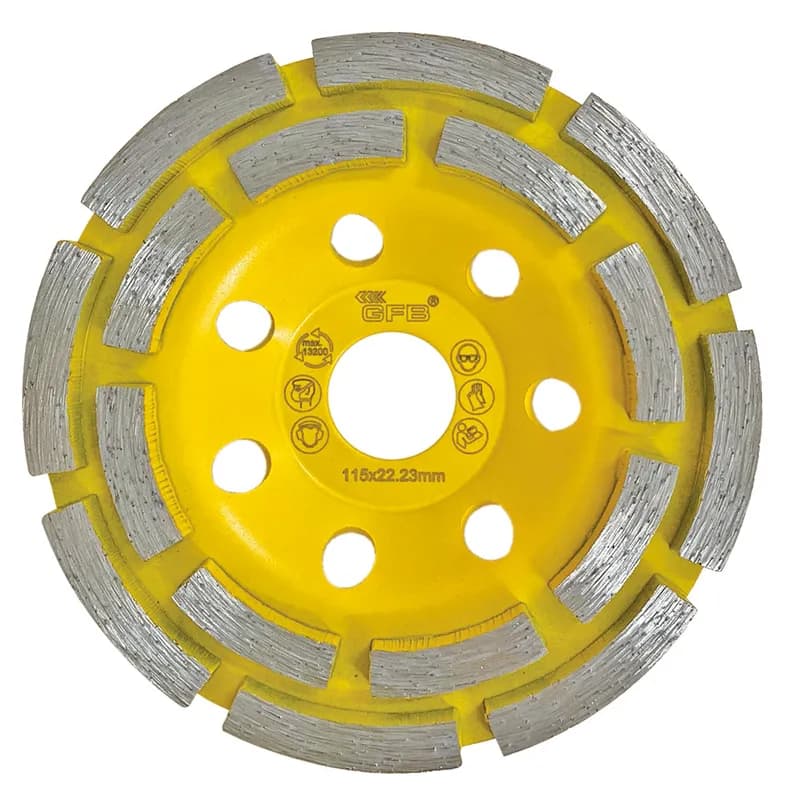
GFB Diamond Grinding Disc 115 mm Segmented
GFB · Diamond Blades
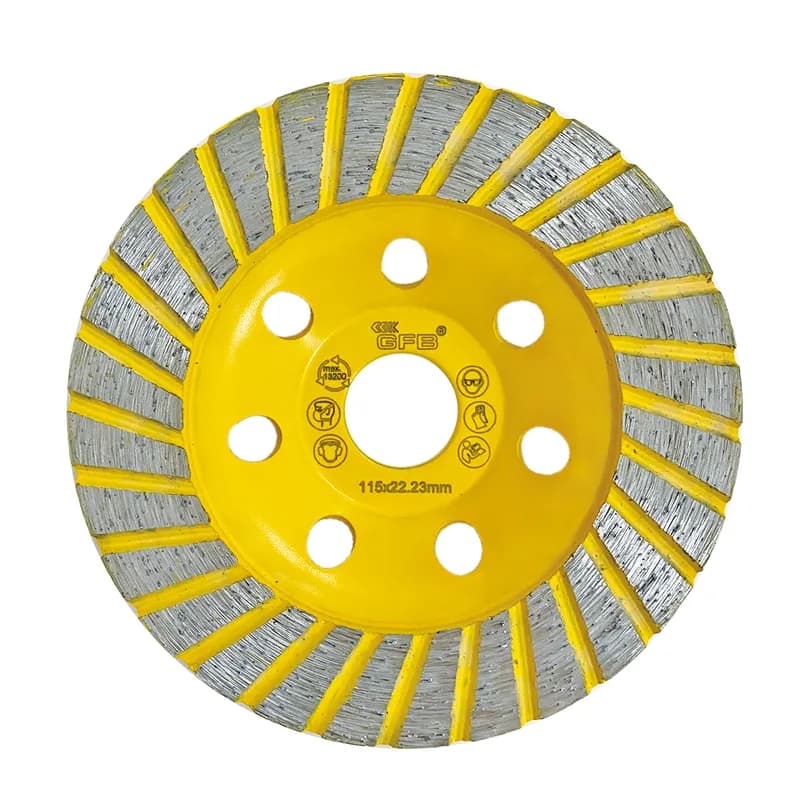
GFB Diamond Grinding Disc 115 mm Turbo
GFB · Diamond Blades
GFB Diamond Cutting Disc 125 mm Thin Turbo
GFB · Diamond Blades
GFB Electroplated Diamond Blade 125 mm Double Faced M14 Flanged
GFB · Diamond Blades
GFB Diamond Grinding Disc 125 mm Segmented
GFB · Diamond Blades
GFB Diamond Grinding Disc 125 mm Turbo
GFB · Diamond Blades
GFB Diamond Cutting Disc 150 mm Thin Turbo
GFB · Diamond Blades
GFB Diamond Cutting Disc 180 mm Thin Turbo
GFB · Diamond Blades
GFB Diamond Cutting Disc 180 mm Silicon Carbide (SC) Segmented Socket (Concrete & Marble)
GFB · Diamond Blades
GFB Diamond Cutting Disc 180 mm Silicon Carbide (SC) Continuous Turbo (Granite & Marble)
GFB · Diamond Blades
GFB Diamond Cutting Disc 180 mm Silicon Carbide (SC) Turbo (Granite & Marble)
GFB · Diamond Blades
GFB Electroplated Diamond Blade 180 mm Double Faced M14 Flanged
GFB · Diamond Blades
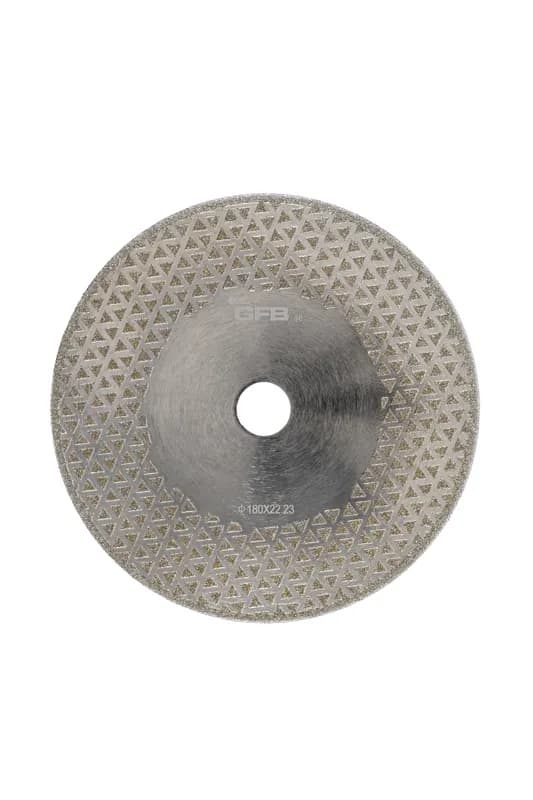
GFB Electroplated Diamond Blade 180 mm Double Faced Unflanged
GFB · Diamond Blades
GFB Diamond Grinding Disc 180 mm Segmented
GFB · Diamond Blades
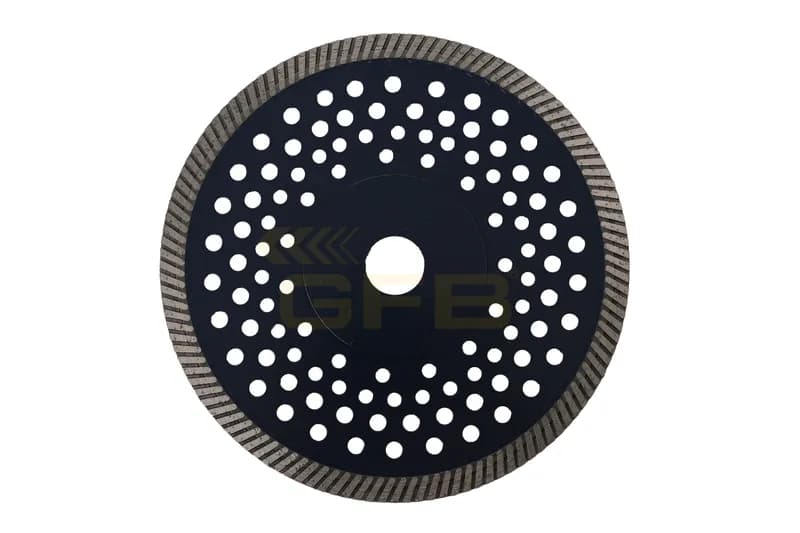
GFB Diamond Saw Blade 180 mm (Granite)
GFB · Diamond Blades
GFB Diamond Grinding Disc 180 mm Turbo
GFB · Diamond Blades
GFB Diamond Cutting Disc 230 mm Silicon Carbide (SC) Segmented Socket (Concrete & Marble)
GFB · Diamond Blades
GFB Diamond Cutting Disc 230 mm Silicon Carbide (SC) Continuous Turbo (Granite & Marble)
GFB · Diamond Blades
1–24 of 159 · page 1 / 7
How it cuts
Diamond is the hardest material known. The grit on the rim does not shear the material, it abrades a slot through it; the cut is slow, but it advances through hard and brittle material without cracking it.
The bond decides as much as the diamond: a soft bond wears to expose fresh grit and is what hard material needs, while a hard bond lasts longer in soft, abrasive material.
Wet and dry cutting
Cutting wet holds the dust down and cools the blade; that is why the edge quality on ceramic and porcelain tile is visibly better wet.
Cutting dry, the blade needs cooling breaks: a continuous cut burns the bond and the diamonds shed early. The same rule holds at micro tool sizes.
Frequently Asked Questions
Will it cut metal?
A diamond blade is not for ferrous metal: hot steel reacts chemically with diamond and consumes the blade. Use an abrasive cutting disc for metal.
Segmented, continuous or turbo?
A continuous rim gives the cleanest cut and is the standard for tile. A segmented rim cools and clears dust better and cuts faster but coarser; turbo sits between the two.
Which diameters suit a micro tool?
Micro tool chucks take small diamond discs in the 20-85 mm range; diameter and bore are in the spec table on the product page.