Categories
Adjustable Wrenches
An adjustable wrench sets its jaw opening with a worm screw, covering fasteners whose size is unknown or keeps changing. Load must always sit on the fixed jaw and the movable jaw must be closed fully onto the flats. Sizes from 6″ to 24″ are listed here, including 1000V insulated patterns.
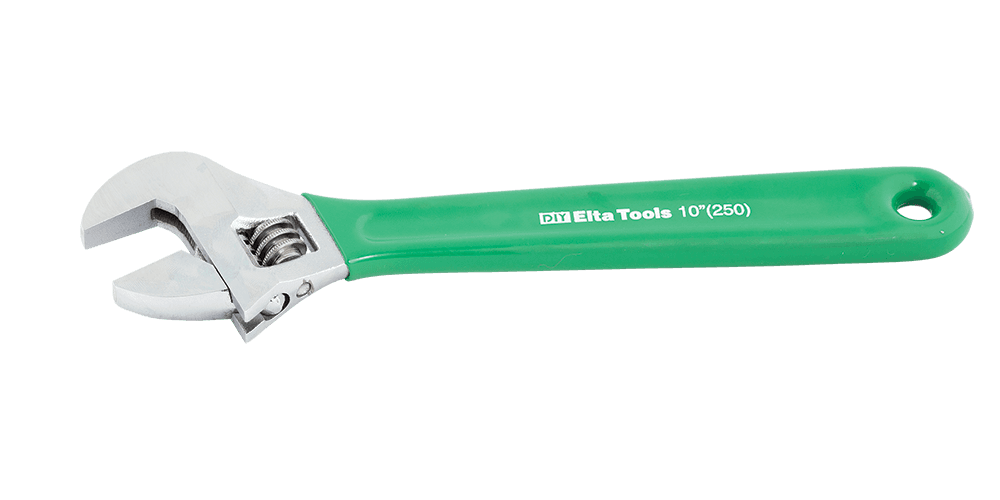
Elta Adjustable Wrench 206 mm
Elta · Adjustable Wrenches
Elta Adjustable Wrench 256 mm
Elta · Adjustable Wrenches
Elta Adjustable Wrench 306 mm
Elta · Adjustable Wrenches
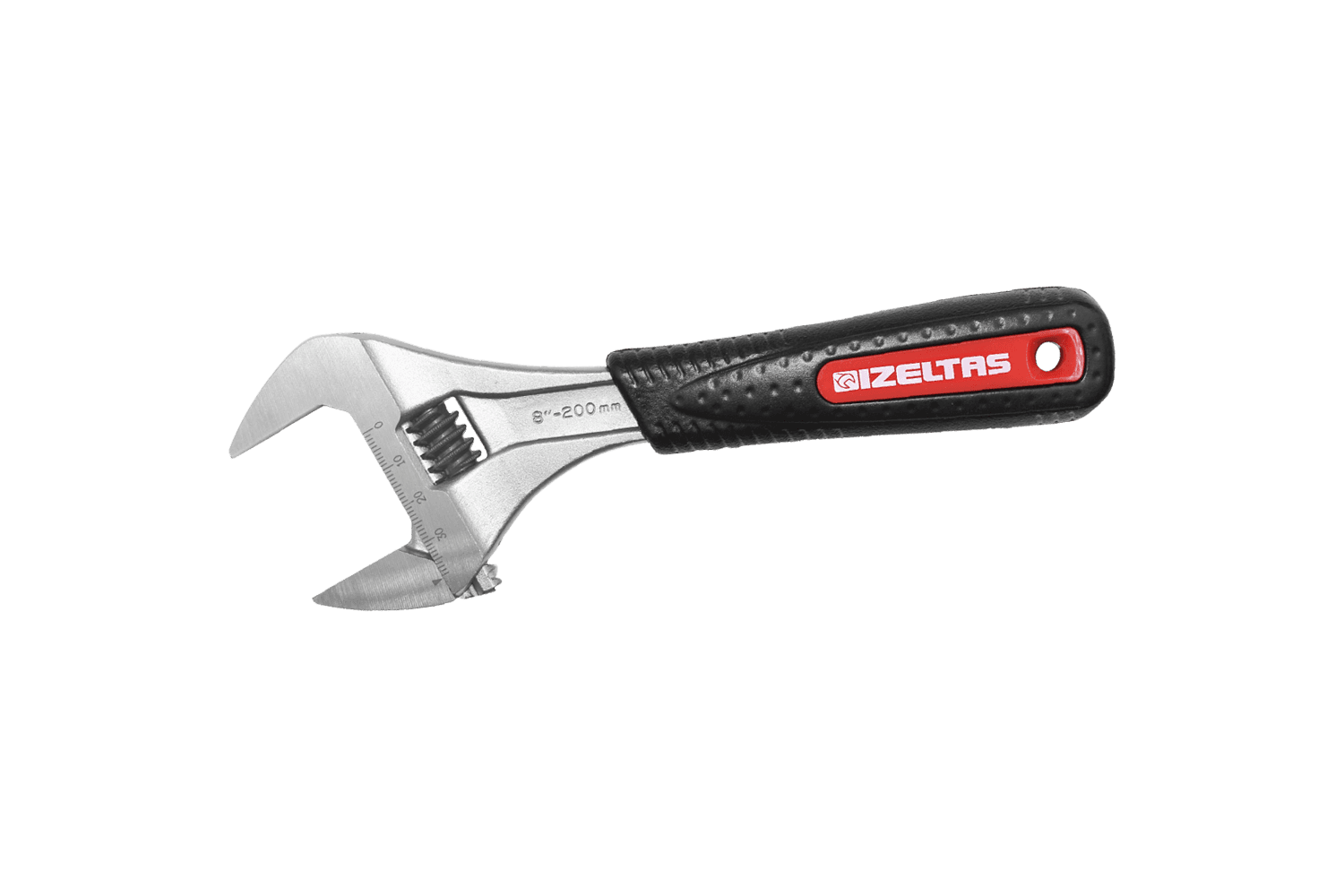
İzeltaş Super Wide Opening Adjustable Wrench 216 mm
İzeltaş · Adjustable Wrenches
İzeltaş Super Wide Opening Adjustable Wrench 264 mm
İzeltaş · Adjustable Wrenches
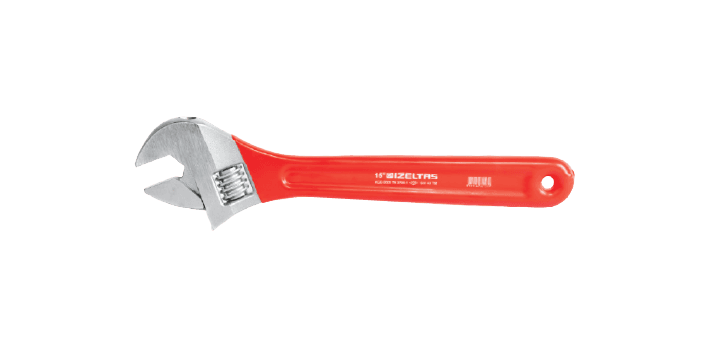
İzeltaş Adjustable Wrench 160 mm
İzeltaş · Adjustable Wrenches
İzeltaş Adjustable Wrench 208 mm
İzeltaş · Adjustable Wrenches
İzeltaş Adjustable Wrench 260 mm
İzeltaş · Adjustable Wrenches
İzeltaş Adjustable Wrench 308 mm
İzeltaş · Adjustable Wrenches
İzeltaş Adjustable Wrench 388 mm
İzeltaş · Adjustable Wrenches
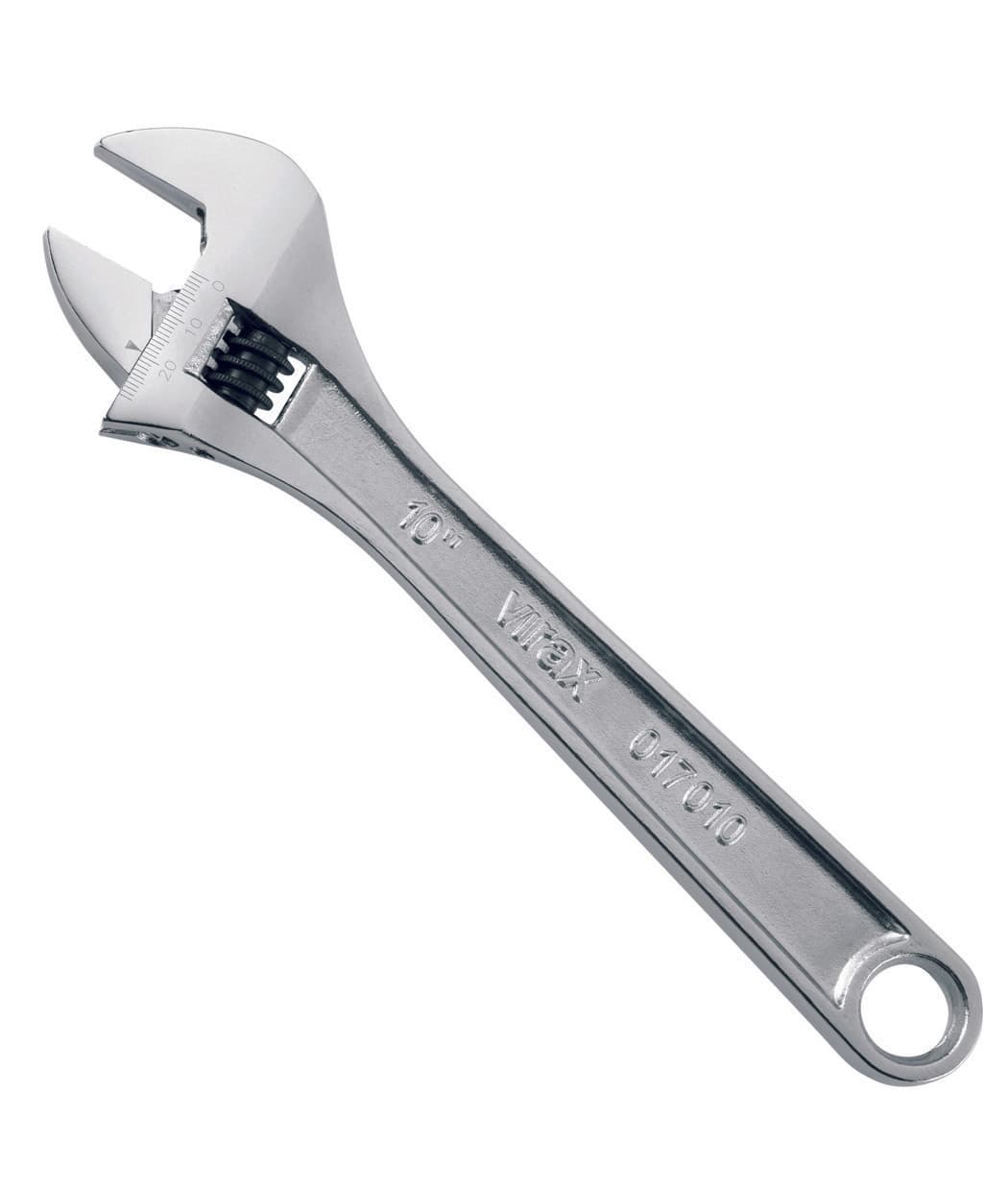
Virax Adjustable Wrench 1.3/4″
Virax · Adjustable Wrenches
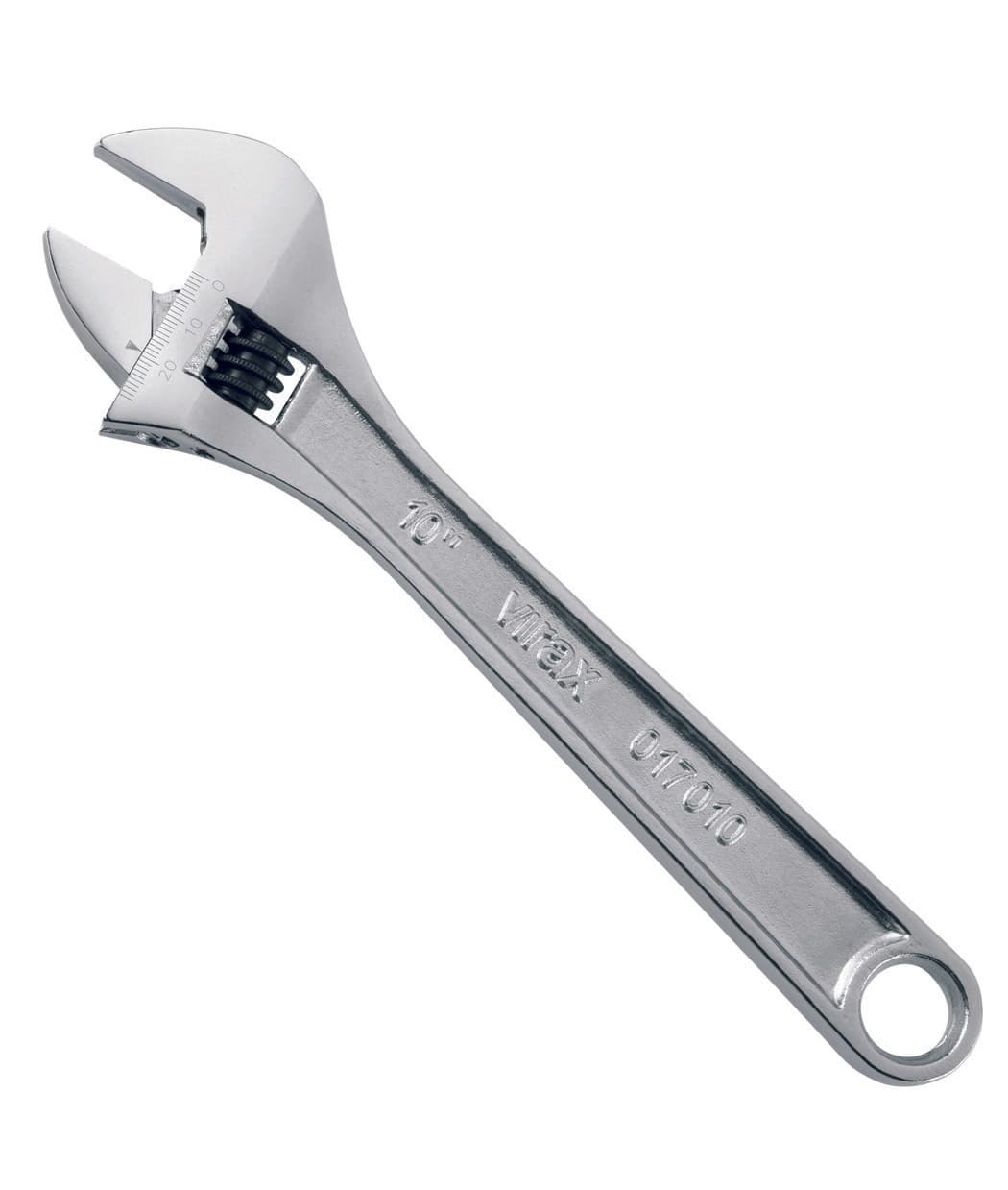
Virax Adjustable Wrench 2.1/16″
Virax · Adjustable Wrenches
The load always goes on the fixed jaw
One jaw is forged into the body, the other rides on a slide driven by a worm screw, and the moving jaw cannot carry what the fixed one carries. So the wrench must be turned with the pull on the fixed jaw; turning it the other way opens up the slide over time and leaves the wrench permanently sloppy.
The second rule is to close the jaw fully onto the flats every time. Half a millimetre left on the worm screw is enough for the wrench to sit on the nut while loading its corners. Nearly every corner rounded by an adjustable wrench comes from that gap.
Length, opening and wide-jaw patterns
Length and maximum opening go up together: a 6″ wrench opens to about 19 mm, a 12″ to about 34 mm, a 24″ past 60 mm. Length is also handle length, so the right wrench has to cover both the size and the moment required.
Wide-jaw patterns give a larger opening at the same length and are the plumbing choice on union nuts and large fittings. A 1000V insulated adjustable wrench is also listed here; on that one the insulation is the only layer of protection in live work.
Maintenance
Keeping the worm screw clean and occasionally oiled is what lets the jaw close fully. When jaw or screw wear out, original jaw and spindle sets are listed in the spare parts section for sizes from 6″ to 15″.
Frequently Asked Questions
Which way should an adjustable wrench be turned?
So the pull falls on the fixed jaw forged into the body. The moving jaw rides on a slide and cannot carry the same load; turning the other way leaves the wrench permanently sloppy.
Why does an adjustable wrench round nuts?
Almost always because the jaw was not closed fully. Half a millimetre of play puts the load on the corners instead of the flats. Close the jaw onto the flats with the worm screw before every pull.
Which length should I choose?
Length sets both the opening and the leverage: 6″ opens to about 19 mm, 12″ to about 34 mm, 24″ past 60 mm. The wrench has to cover the size and deliver the moment.
What is a wide-jaw pattern for?
A larger opening at the same length -- the plumbing choice for union nuts and large fittings, and useful where there is no room to swing a longer wrench.
Can a worn jaw be replaced?
Yes. Original jaw and spindle sets for sizes from 6″ to 15″ are listed in the spare parts section.