Categories
Asphalt & Concrete Cutting
An asphalt and concrete saw runs a diamond blade across a surface to leave a straight cut of controlled depth. That cut is what stops a break from spreading beyond the line, and it is how a clean edge is achieved in utility trenching and patching. The range here covers petrol and diesel walk-behind machines and handheld cut-off saws.
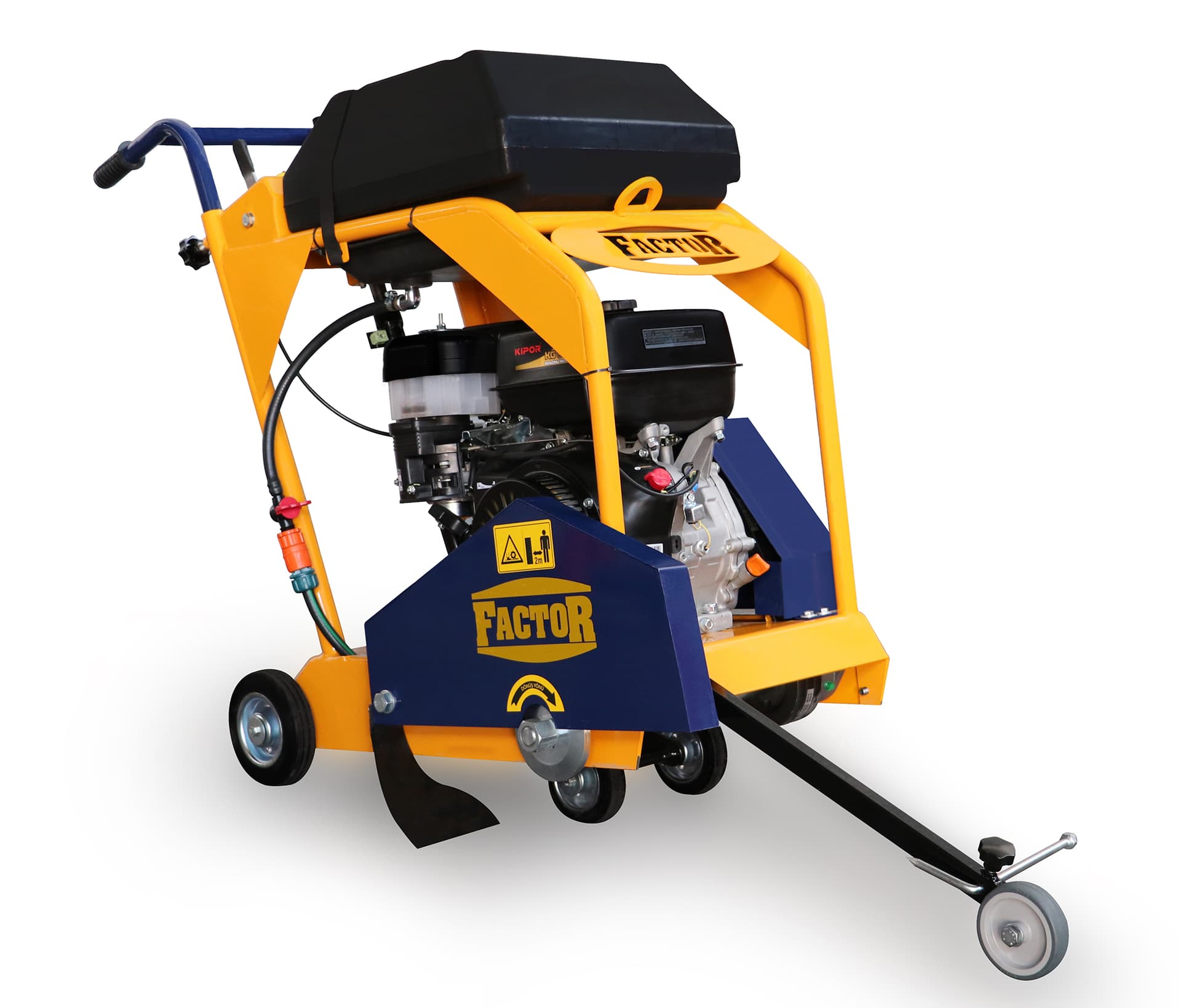
Factor FAC13KB Petrol Asphalt and Concrete Saw
Factor · Asphalt & Concrete Cutting
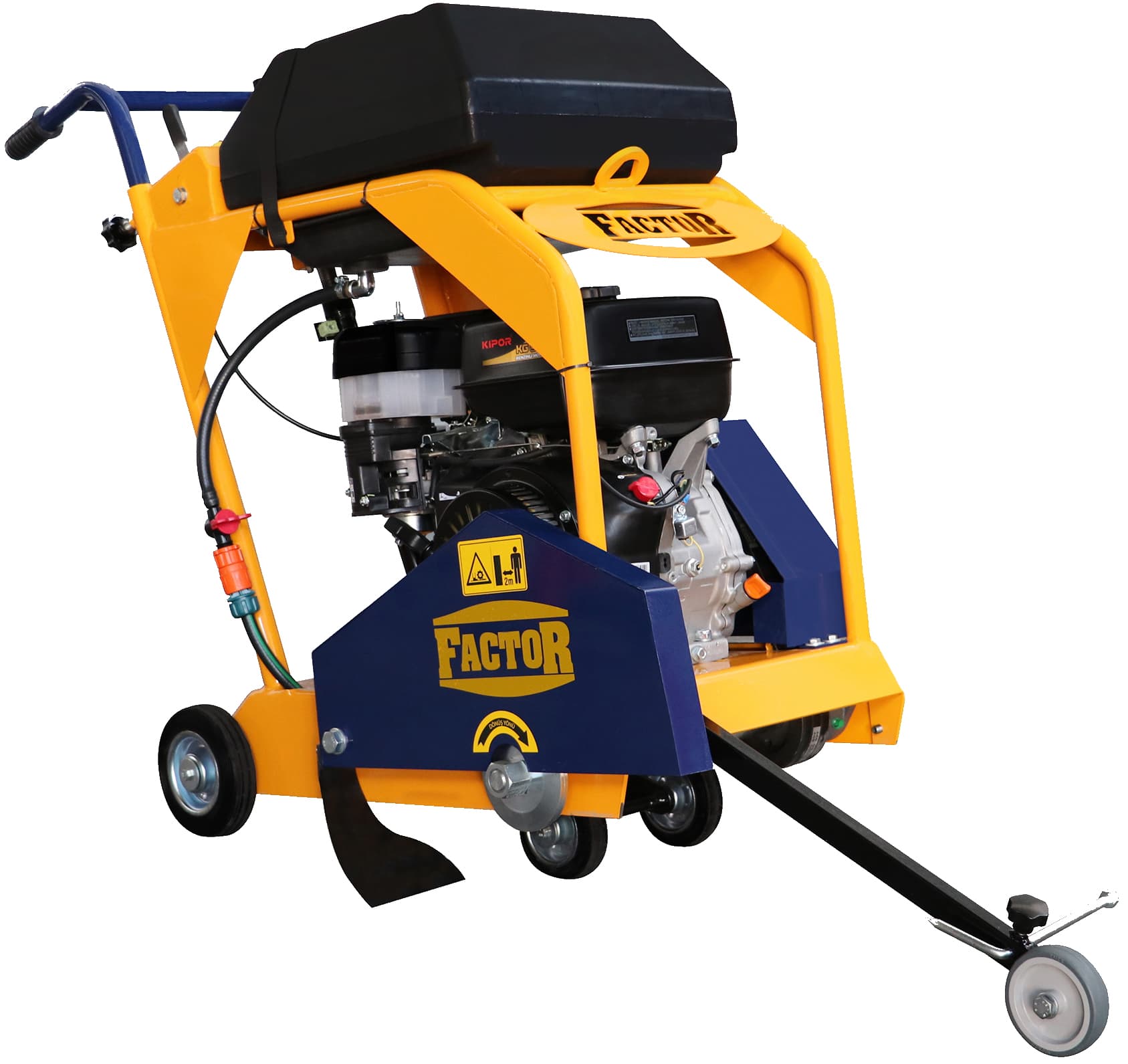
Factor FAC18KB Petrol Asphalt and Concrete Saw
Factor · Asphalt & Concrete Cutting
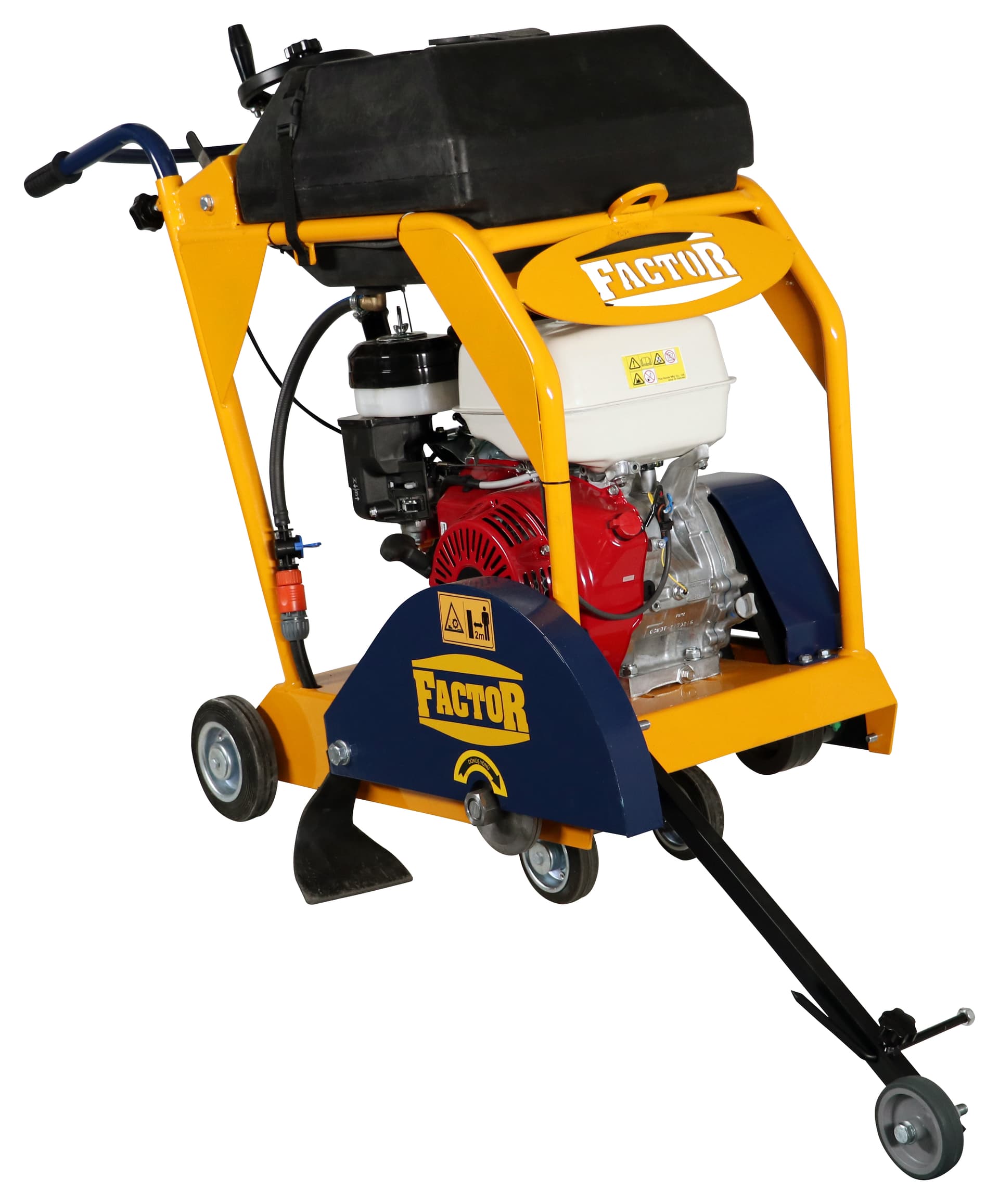
Factor FACCNQ-H13 Petrol Asphalt and Concrete Saw
Factor · Asphalt & Concrete Cutting
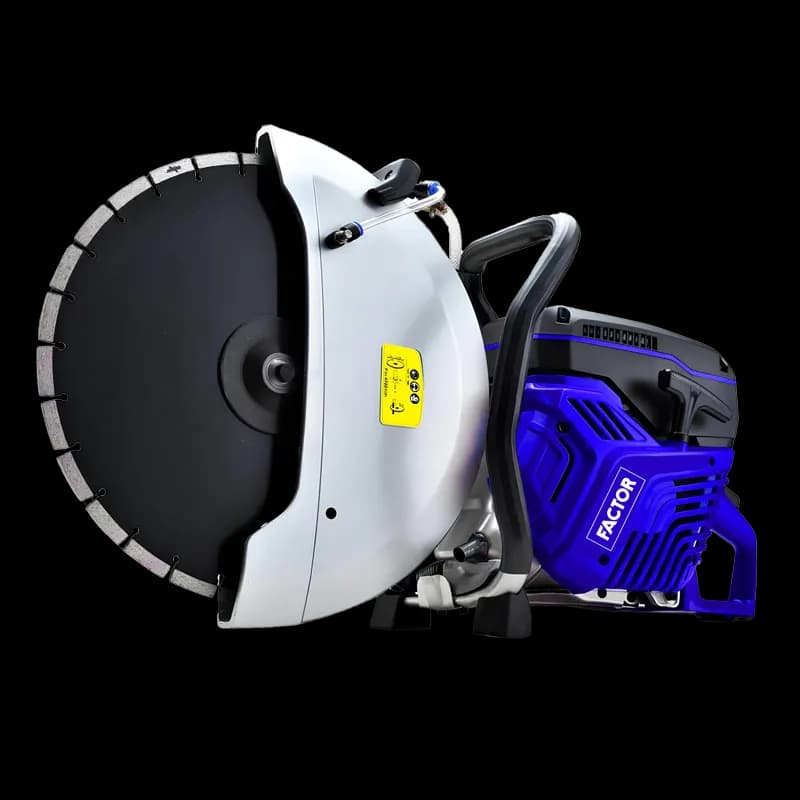
Factor FCCZB400 Petrol Handheld Cut-Off Saw 400 mm 6.4 HP
Factor · Asphalt & Concrete Cutting
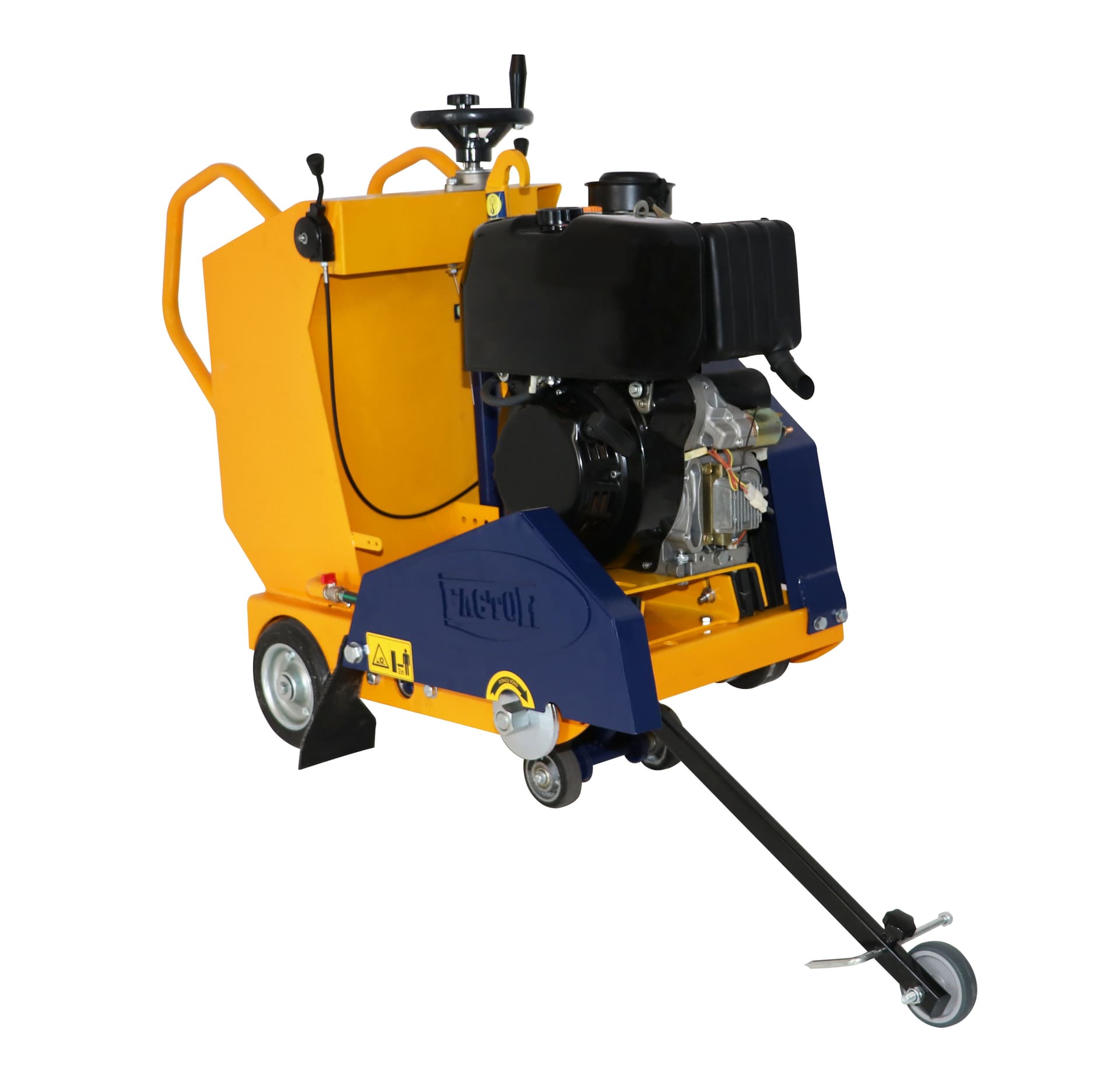
Factor FAC12RD Diesel Asphalt and Concrete Saw 12 HP
Factor · Asphalt & Concrete Cutting
Blade diameter sets cutting depth
Cutting depth is roughly a third of blade diameter: about 125 mm with a 350 mm blade, 145 mm with a 400 mm blade and 185 mm with a 500 mm blade. Where the slab is thicker, either cut from both sides or move to a larger blade.
Do not take full depth in one pass: stepping down in 3-5 cm increments protects both blade and machine and gives a straighter cut.
| Blade diameter | Approx. cutting depth | Typical job |
|---|---|---|
| 300-350 mm | 110-125 mm | Joints, patching, thin slabs |
| 400 mm | ≈145 mm | General utility trenching |
| 500 mm | ≈185 mm | Thick slabs, roads |
Walk-behind or handheld?
Walk-behind road saws cut long, straight lines quickly and cleanly, with mechanical depth adjustment and the operator steering on foot. Handheld saws work in tight spaces, in walls and above ground level, but holding a long cut straight with one is difficult.
Wet cutting and blade choice
Wet cutting suppresses silica dust, cools the blade and extends segment life. Asphalt and concrete want different segment hardness: hard segments for abrasive materials such as asphalt, softer ones for concrete. The wrong blade either wears out quickly or does not cut at all.
Frequently Asked Questions
How deep does a concrete saw cut?
Roughly a third of the blade diameter: about 125 mm with a 350 mm blade, 145 mm with a 400 mm blade and 185 mm with a 500 mm blade.
Can I cut full depth in one pass?
No. Step down in 3-5 cm increments — it protects the blade and the machine and keeps the cut straight.
Can I use the same blade on asphalt and concrete?
No. Abrasive materials such as asphalt need hard segments; concrete needs softer ones. The wrong blade either wears out fast or will not cut.
Walk-behind or handheld?
Walk-behind machines are faster and straighter on long cuts. Walls, tight spaces and cutting above ground level require a handheld saw.
Is wet cutting mandatory?
It is critical for health: wet cutting suppresses silica dust. It also cools the blade, extending segment life and keeping the cutting speed up.
Petrol or diesel?
Petrol machines are lighter and cost less to buy. Diesel burns less fuel in continuous work, which pays back where daily cutting lengths are high.