Categories
Pullers
A puller draws interference-fitted pulleys, bearings, gears and couplings off a shaft without damage. The legs sit behind the part at equal angles and the spindle centres on the shaft; pulling off-centre bends the spindle and cracks the part. Two- and three-leg standard pullers, internal and external bearing pullers, ball joint and battery pullers and their spare arms and spindles are listed here.
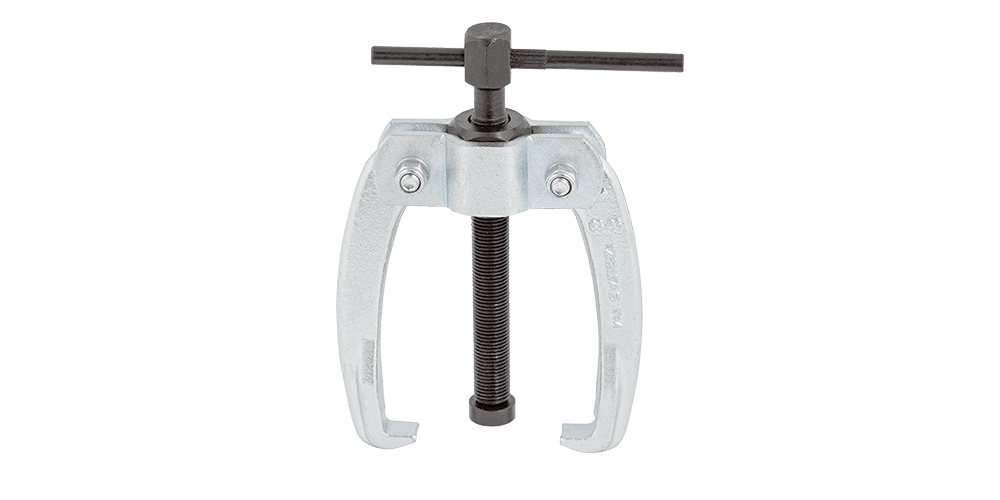
İzeltaş Battery Puller (Two Arms) 6×4 cm
İzeltaş · Pullers
İzeltaş Battery Puller (Two Arms) 6×6 cm
İzeltaş · Pullers
İzeltaş Battery Puller (Two Arms) 8×8 cm
İzeltaş · Pullers
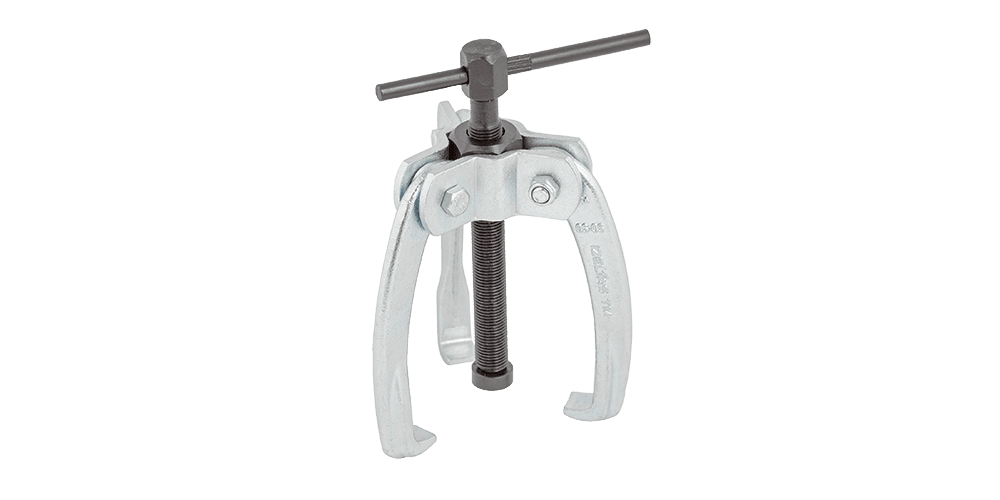
İzeltaş Battery Puller (Three Arms) 6×4 cm
İzeltaş · Pullers
İzeltaş Battery Puller (Three Arms) 6×6 cm
İzeltaş · Pullers
İzeltaş Battery Puller (Three Arms) 8×8 cm
İzeltaş · Pullers
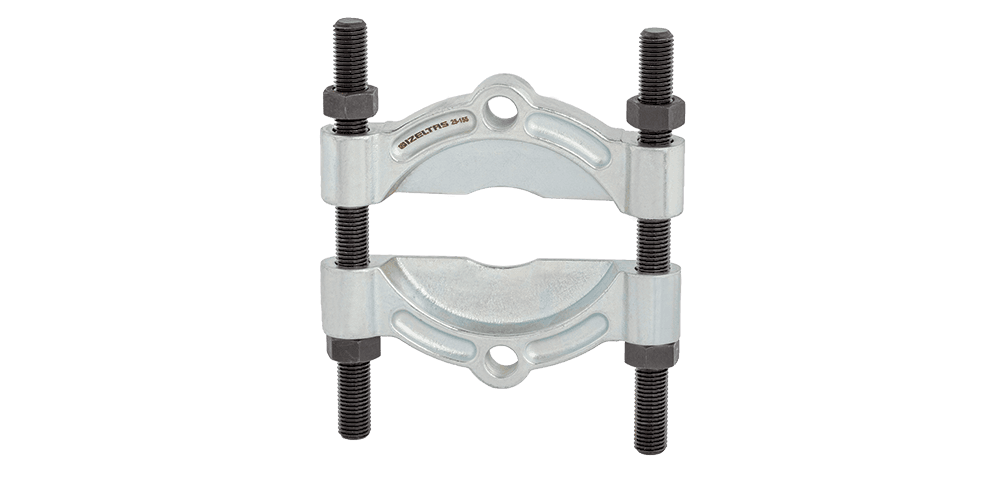
İzeltaş Seperator 12 – 75 mm
İzeltaş · Pullers
İzeltaş Seperator 22 – 115 mm
İzeltaş · Pullers
İzeltaş Seperator 25 – 155 mm
İzeltaş · Pullers
İzeltaş Seperator 30 – 220 mm
İzeltaş · Pullers
İzeltaş Seperator 40 – 280 mm
İzeltaş · Pullers
İzeltaş Seperator 5 – 60 mm
İzeltaş · Pullers
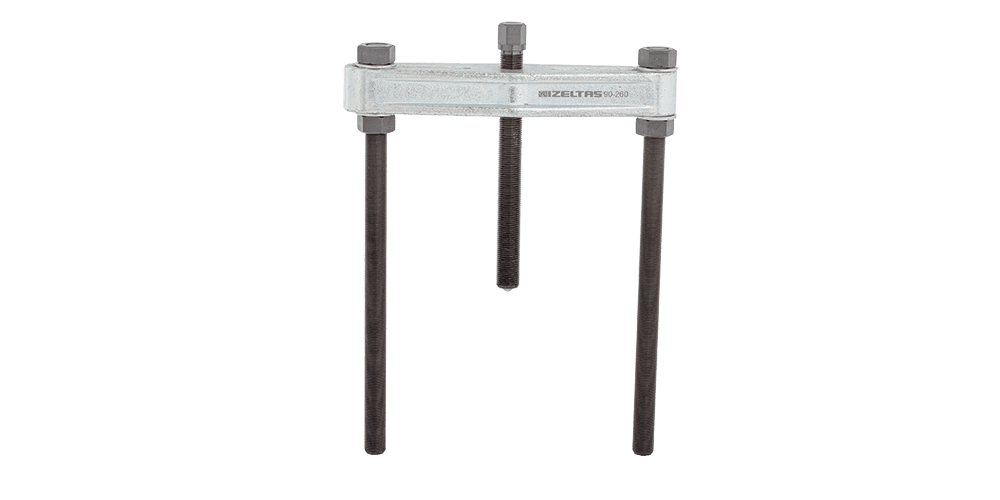
İzeltaş Puller Arms For Seperator 100 – 360 mm
İzeltaş · Pullers
İzeltaş Puller Arms For Seperator 140 – 435 mm
İzeltaş · Pullers
İzeltaş Puller Arms For Seperator 40 – 115 mm
İzeltaş · Pullers
İzeltaş Puller Arms For Seperator 55 – 205 mm
İzeltaş · Pullers
İzeltaş Puller Arms For Seperator 90 – 260 mm
İzeltaş · Pullers
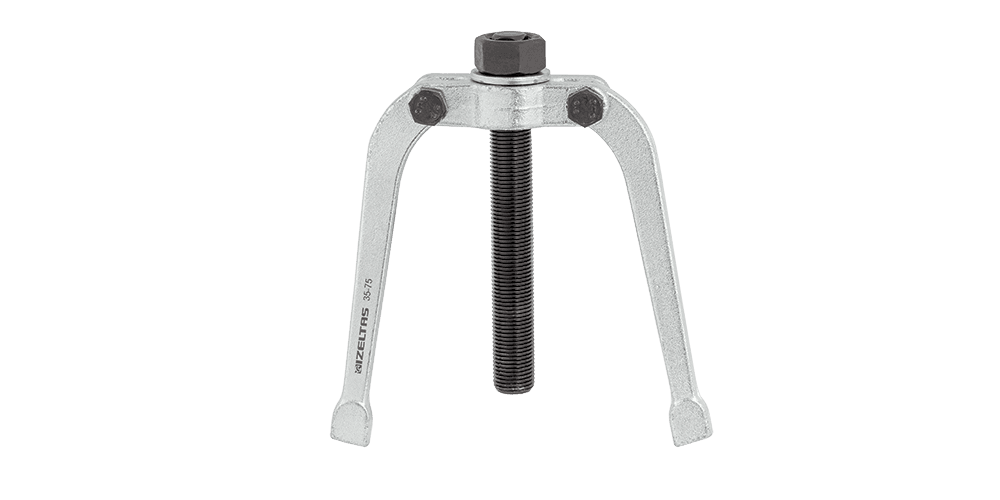
İzeltaş Arms For Internal Expansion Puller 35 – 75 mm
İzeltaş · Pullers
İzeltaş Arms For Internal Expansion Puller 60 – 130 mm
İzeltaş · Pullers
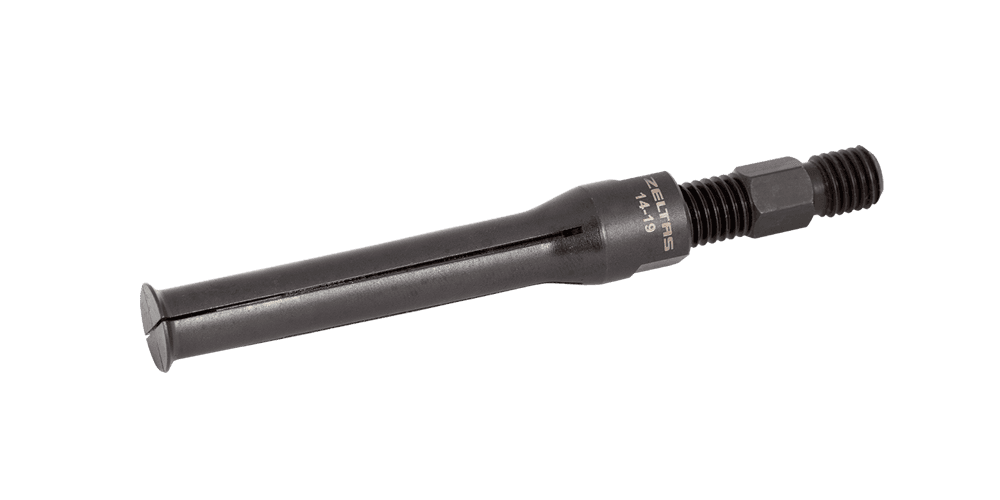
İzeltaş Internal Expansion Puller – Model A 10 – 13 mm
İzeltaş · Pullers
İzeltaş Internal Expansion Puller – Model A 13 – 17 mm
İzeltaş · Pullers
İzeltaş Internal Expansion Puller – Model A 14 – 19 mm
İzeltaş · Pullers
İzeltaş Internal Expansion Puller – Model A 16 – 21 mm
İzeltaş · Pullers
İzeltaş Internal Expansion Puller – Model A 18 – 23 mm
İzeltaş · Pullers
1–24 of 71 · page 1 / 3
Two-leg, three-leg and internal bearing pullers
A two-leg puller works in confined recesses and where the legs can only pass at two points. A three-leg puller grips at three equal points and holds the part concentric with the shaft, which is what pulleys, gears and couplings need.
An internal bearing puller works differently: the jaws pass behind the inner race and the pull is taken through a bridge. Jaw sizes from 10 mm and the bridges and arms that go with them are listed here. A ball joint separator is forked, for parting the tapered pin of an automotive ball joint from its housing.
Setting up: centre, angle and heat
Set the legs behind the part at equal angles and as deep as they will go, and line the spindle up with the shaft axis. Pulling off-centre bends the spindle and cracks the part. The wider the legs splay, the greater the side load on the spindle, so keep them as square to the part as the job allows.
Heat makes an interference fit far easier: warming the part while cooling the shaft can cut the force needed several times over. Using heat rather than more force protects both the part and the puller. Do not extend the puller handle -- if the capacity is not enough, move up a size.
Spare parts
Arms and spindles are what tire. Spare arms, spindles, extensions and links for the standard, master and battery pullers, and spare jaws for internal and external bearing pullers, are all listed. Spindles are induction hardened and arms hardened, in chrome vanadium steel.
Frequently Asked Questions
Two-leg or three-leg puller?
A three-leg puller grips at three equal points and keeps the part concentric -- the choice for pulleys, gears and couplings. Use a two-leg where the legs can only pass at two points.
Why does the spindle bend?
Almost always because the pull is off-centre. Line the spindle up with the shaft axis and set the legs behind the part at equal angles.
The bearing will not move -- what now?
Use heat rather than more force: warming the part while cooling the shaft cuts the force needed substantially. Extending the handle damages both part and puller.
How does an internal bearing puller work?
Its jaws pass behind the inner race and the pull is taken through a bridge. Jaw sizes start at 10 mm here and are used with the matching bridges and arms.
Can I replace a broken puller arm?
Yes. Spare arms, spindles, extensions and links for the standard, master and battery pullers are listed.