Categories
Cleaning Sprays
An industrial cleaning aerosol is chosen by the residue that has to come off. A high-pH degreaser for dirt and grease, adhesive remover for labels and glue, residue-free contact cleaner for electronics, stainless cleaner for inox surfaces.
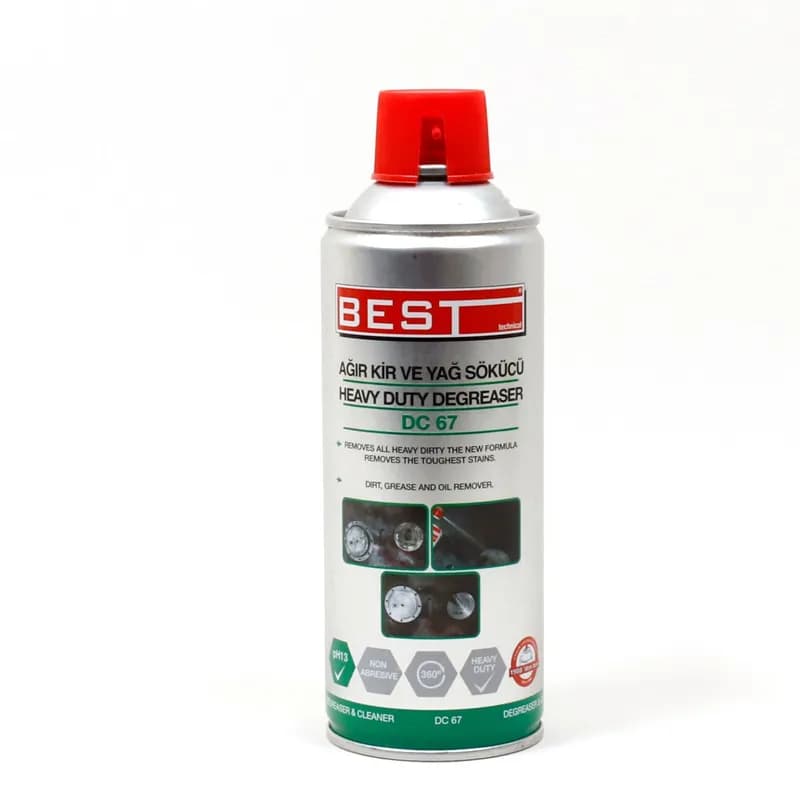
Best Heavy Duty Degreaser DC 67 400 ml
Best · Cleaning Sprays
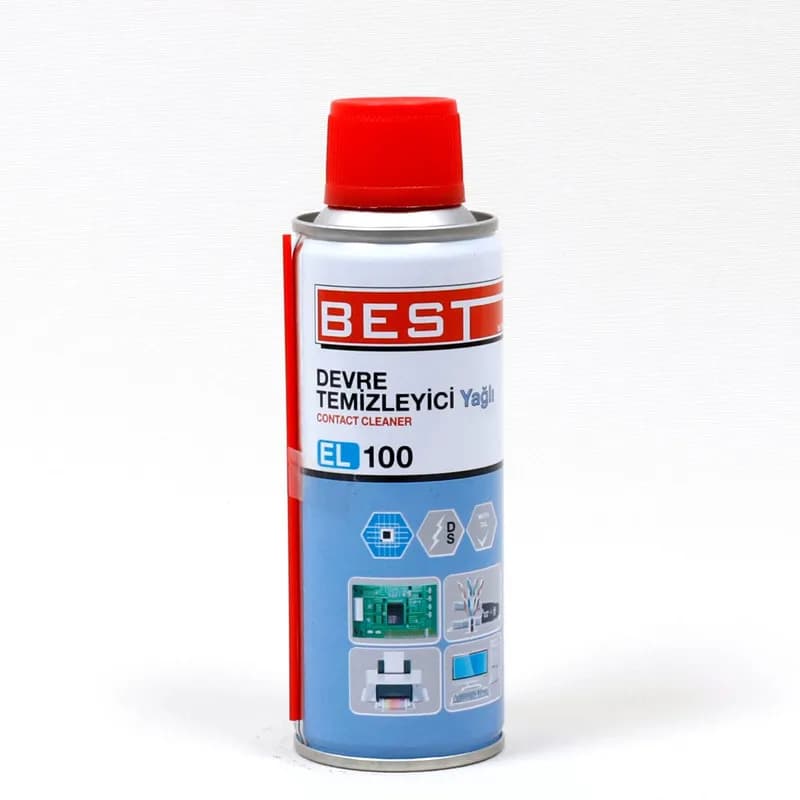
Best Contact Cleaner Lubricating EL 100 200 ml
Best · Cleaning Sprays
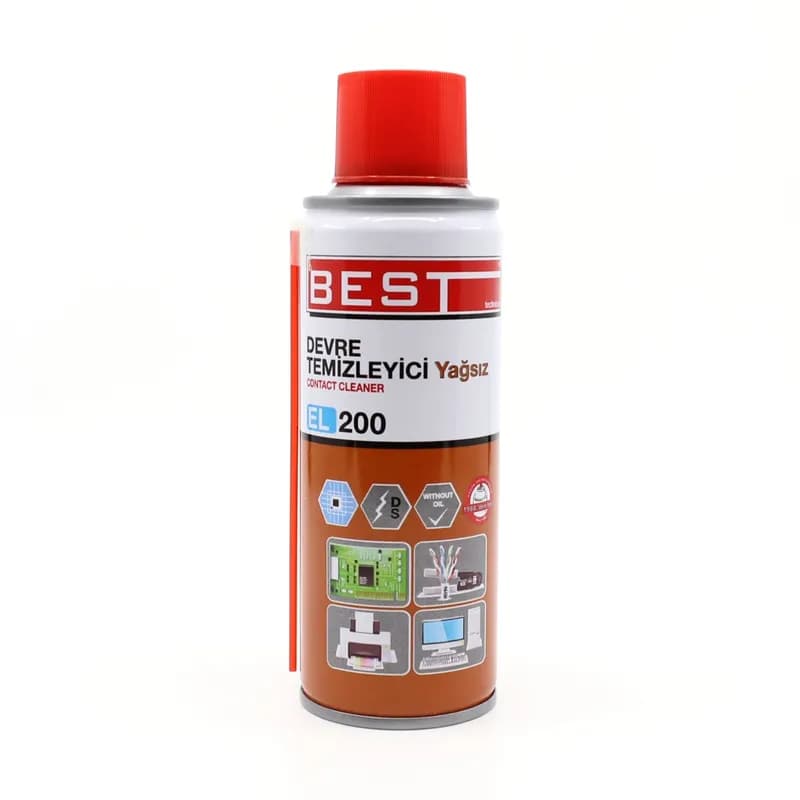
Best Contact Cleaner Non-Lubricating EL 200 200 ml
Best · Cleaning Sprays
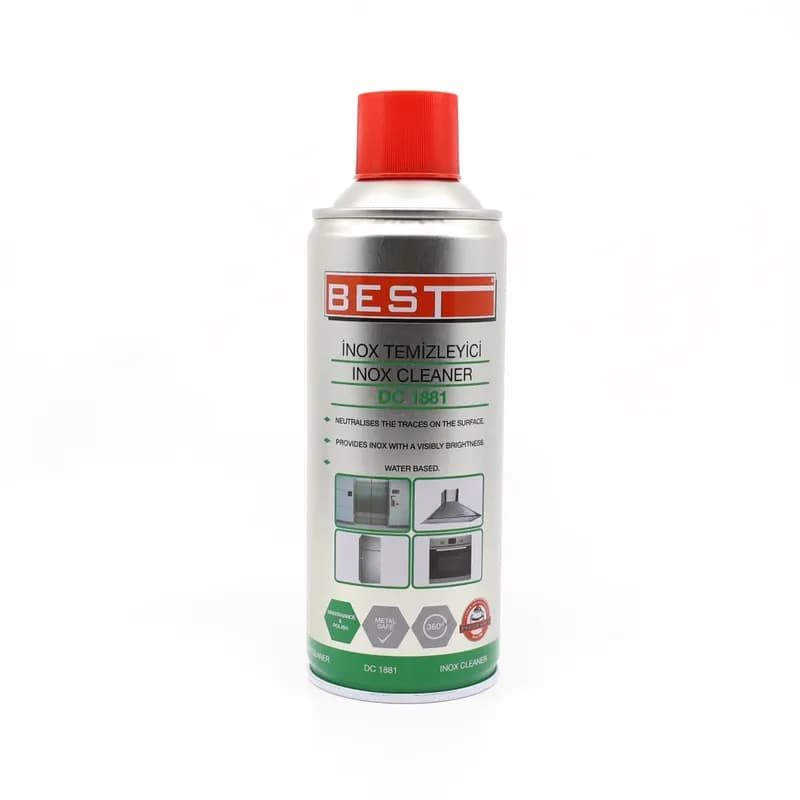
Best Stainless Steel Cleaner DC 1881 400 ml
Best · Cleaning Sprays
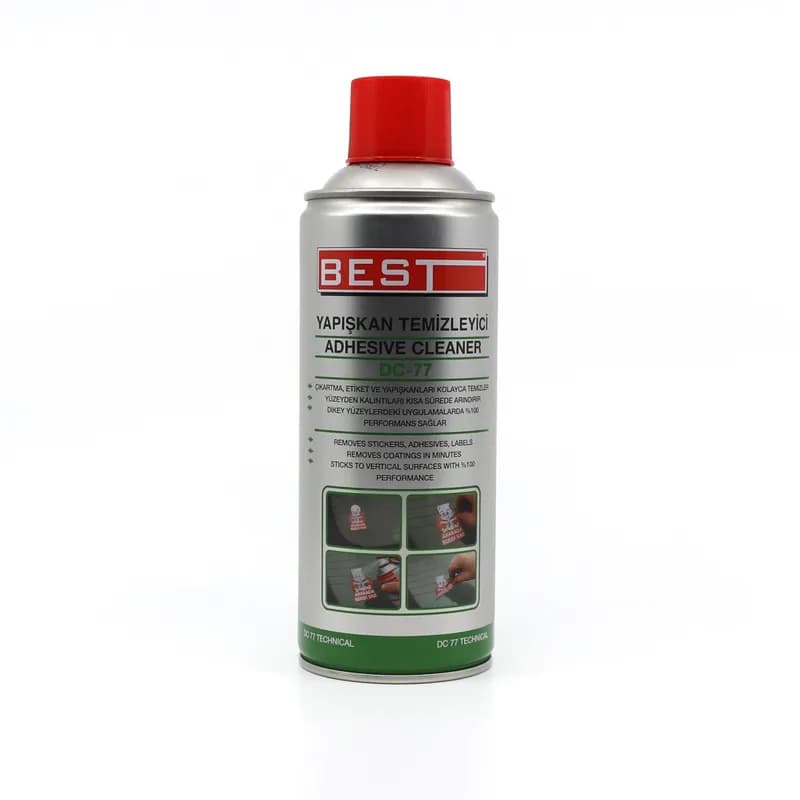
Best Adhesive Remover DC 77 400 ml
Best · Cleaning Sprays
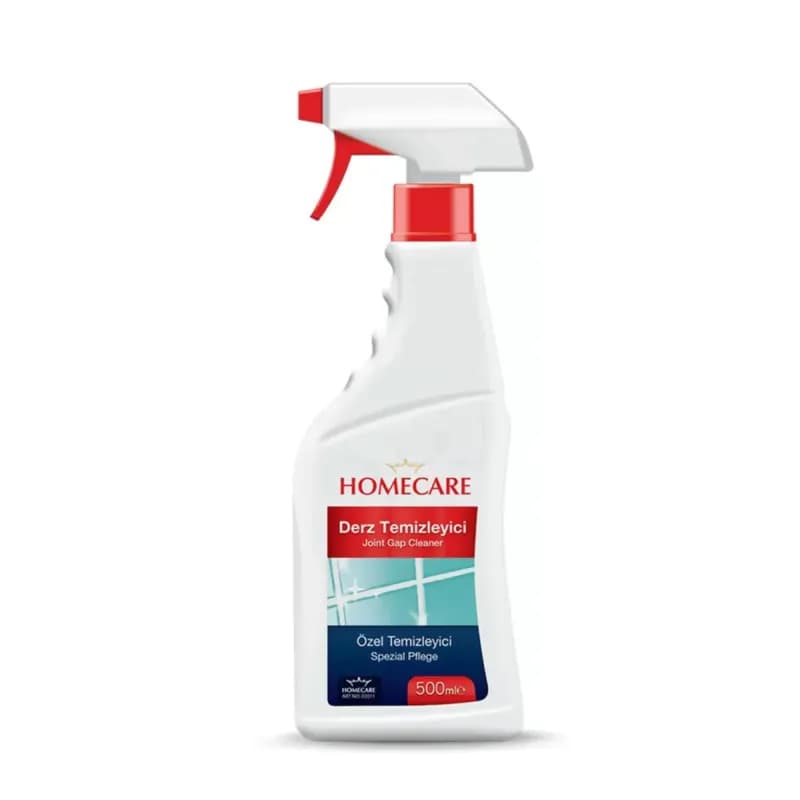
Homecare Derz Arası Temizleyici Sprey 500 ml
Cleaning Sprays
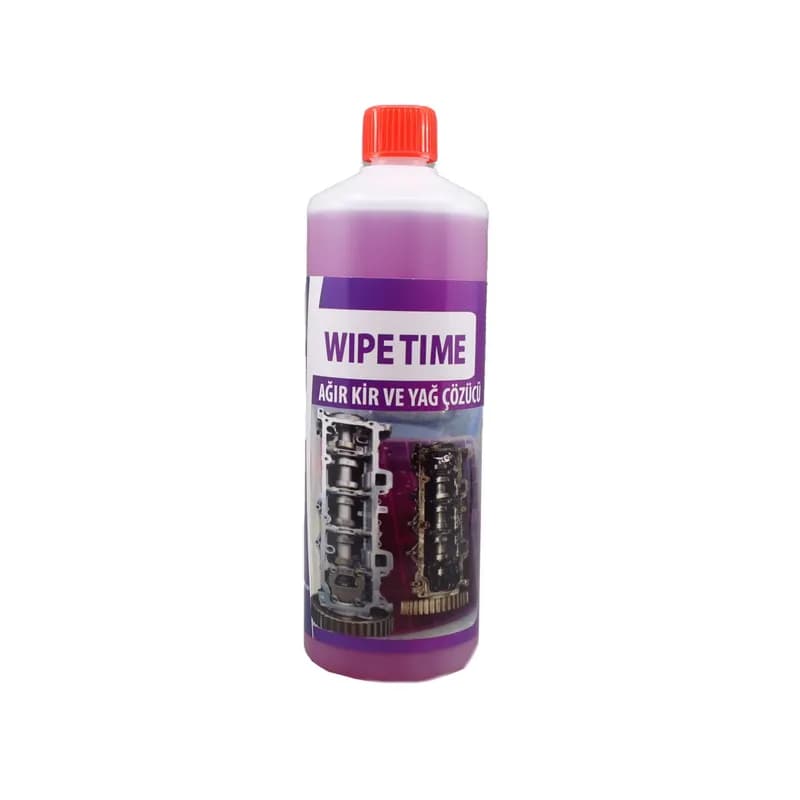
Wıpe Tıme Ağır Kir ve Yağ Çözücü Sprey 1 kg
Cleaning Sprays
Lubricating or non-lubricating contact cleaner?
Lubricating contact cleaner (EL-100) leaves a very thin oil film on the surface it cleans. That is what a moving or rubbing contact — a switch, a connector — wants: the surface is not left bare after cleaning.
Non-lubricating contact cleaner (EL-200) flashes off fast and leaves neither residue nor oil film. This is the choice for optical surfaces, sensitive boards and anywhere an oil film would collect dust.
Why the pH is stated
The heavy duty degreaser is pH 13; that alkalinity is what saponifies grease and what industrial machinery, plant and floor cleaning call for. The same strength calls for care on aluminium and paintwork.
Stainless cleaner sits at the other end: water based, with a creamy protective formula, it cleans without harming the surface, neutralises smears and fingerprints and leaves a thin protective layer. Not for hot surfaces or use in direct sun.
Frequently Asked Questions
Can contact cleaner be sprayed on a live board?
No. The board must be de-energised, and the solvent must be allowed to evaporate completely before power is restored.
Can degreaser be used on paintwork?
A pH 13 formula can affect paint and aluminium. It is ideal for cleaning a surface before painting; on paintwork that must survive, test on a hidden area first.
What does adhesive remover take off?
Multi-layer adhesive, label and sticker residue, and even epoxy and rubber. For glass, metal and rigid plastic.
Does stainless cleaner scratch?
The opposite: it leaves a protective layer that reduces scratching with regular use. It is not abrasive.