Categories
Descaling Pumps & Chemicals
A descaling pump dissolves limescale by circulating an acid solution through a boiler, heat exchanger or cylinder in both directions. The system is three parts: the pump, the descaling chemical, and the neutraliser that leaves the circuit safe afterwards.
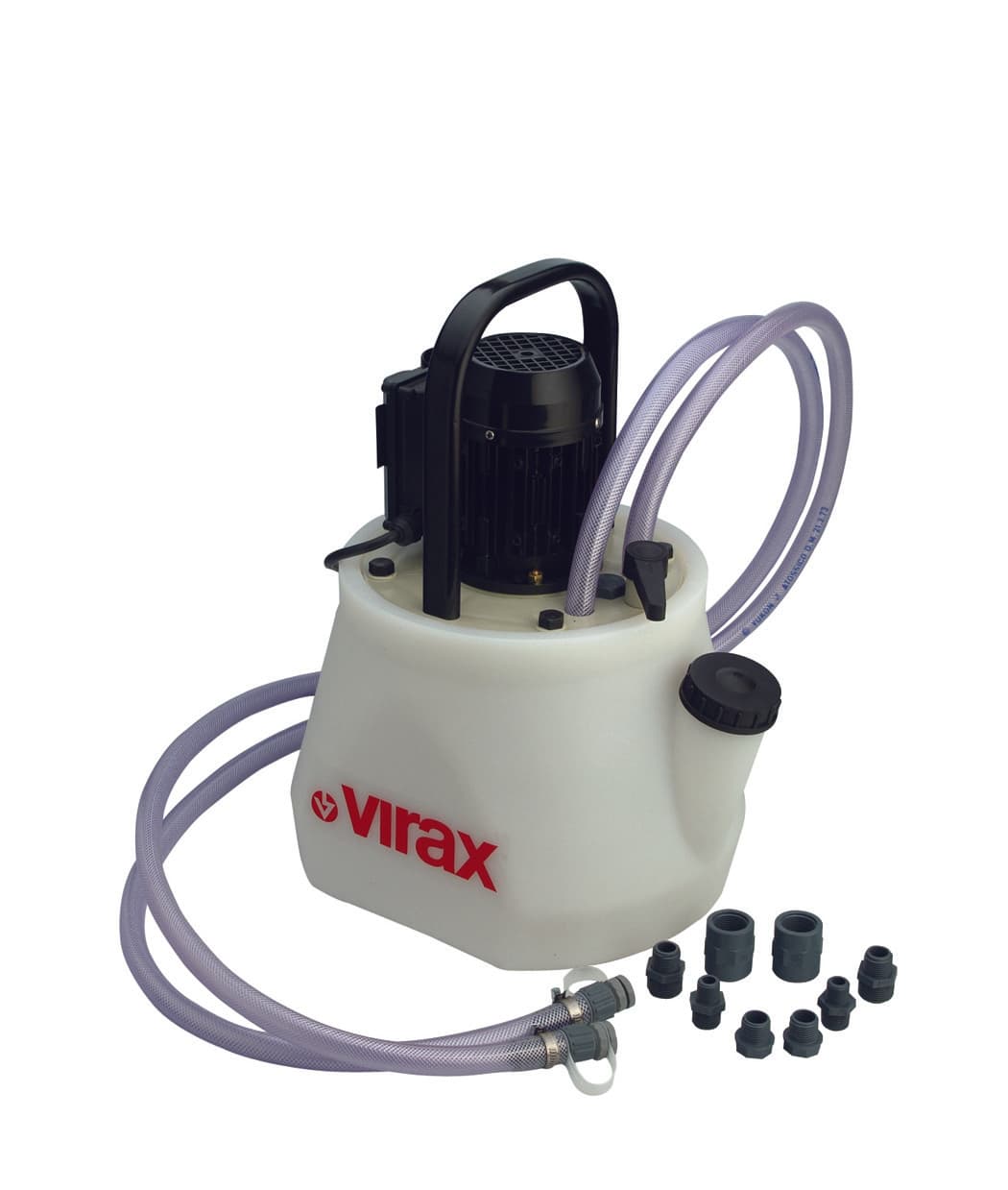
Virax Descaling Pump
Virax · Descaling Pumps & Chemicals
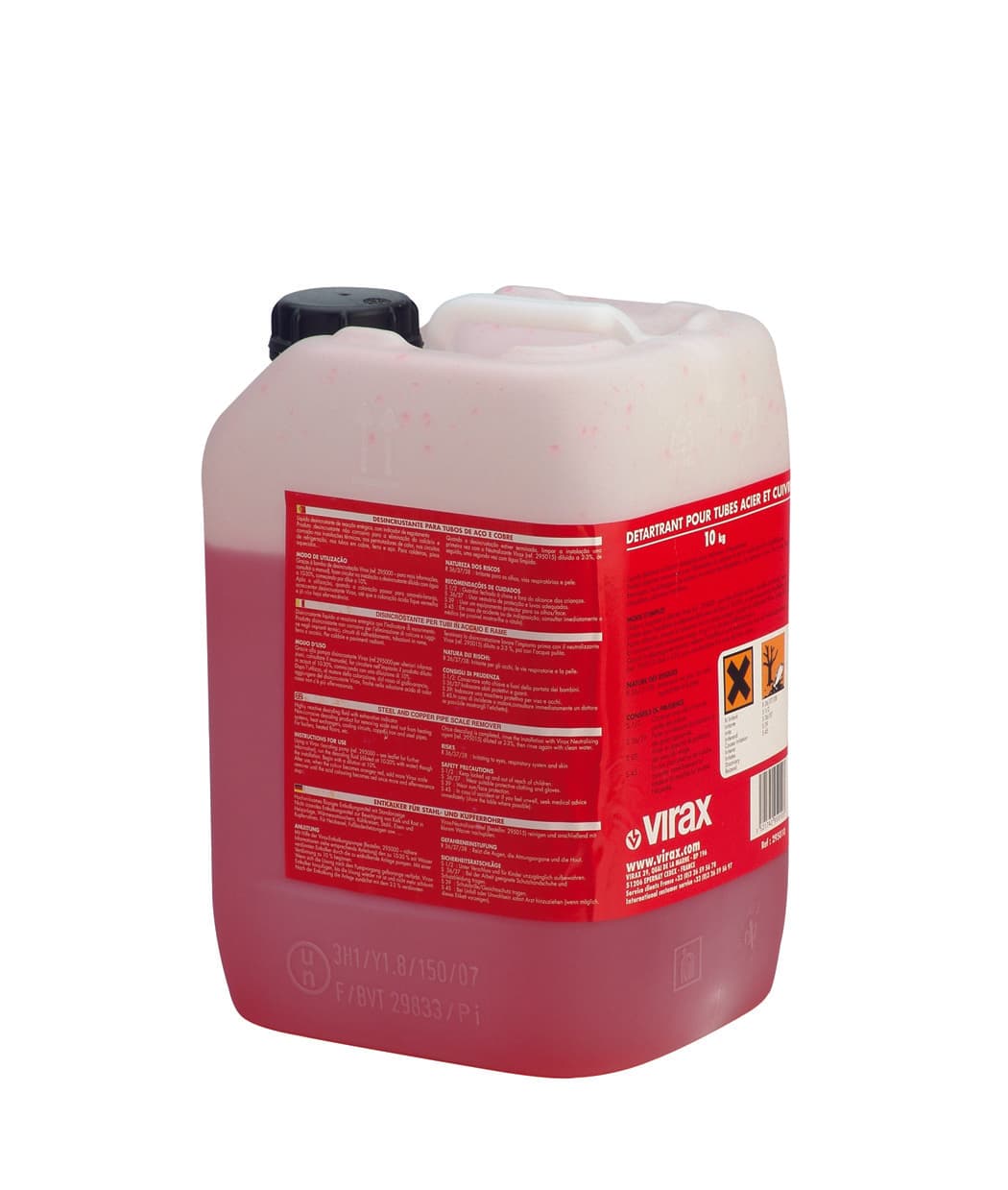
Virax Limescale Remover 10 Lt
Virax · Descaling Pumps & Chemicals
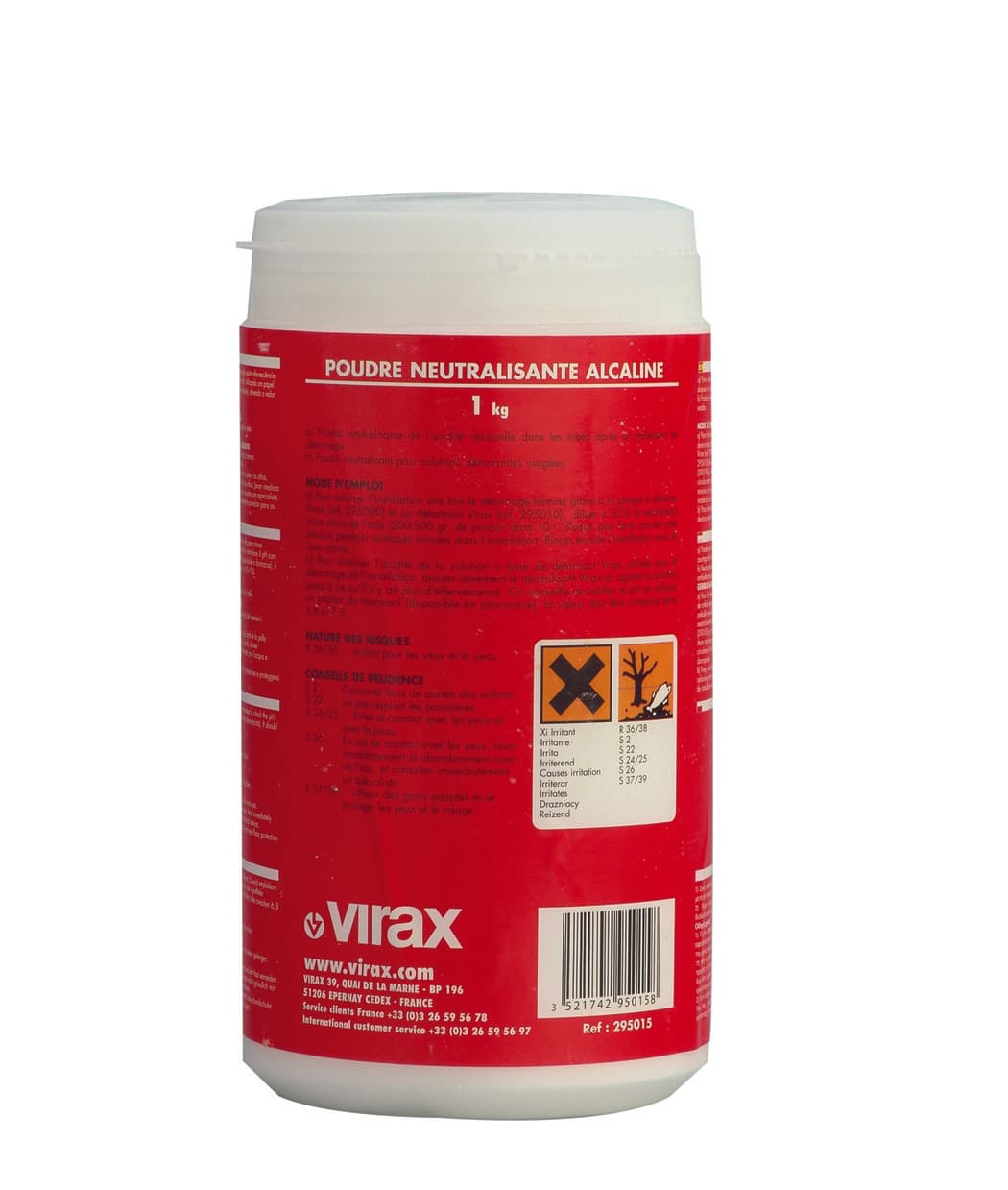
Virax Neutraliser 1 kg
Virax · Descaling Pumps & Chemicals
What limescale costs
Scale insulates. A few millimetres on the face of an exchanger means burning more fuel for the same hot water: the appliance runs longer and wears faster.
The second effect is flow: a narrowed bore slows circulation, loads the pump and lets the system overheat locally. Descaling is the cheapest maintenance there is before replacing an appliance.
The sequence
The appliance is isolated and the pump connected to the flow and return. The solution is circulated in both directions: reversing stops a one-way pass from cleaning only one face of a passage.
When the job is done the circuit is flushed and the remaining acid is neutralised. Skip that step and the acid left behind corrodes the system — which is why the neutraliser is part of the system, not an option.
Frequently Asked Questions
How often should a system be descaled?
It depends on water hardness and operating temperature. Annual service is usual in hard water areas; longer heat-up times and reduced flow are the direct signs.
Is the neutraliser really necessary?
Yes. Acid left in the circuit starts corrosion. Neutralising is the last step of the job.
Why does the pump reverse?
Circulating one way does not remove scale evenly. Reversing attacks a blocked passage from both ends.
What appliances is it used on?
Boilers, heat exchangers, cylinders and similar closed heating and hot water circuits. The appliance maker's service instructions take precedence.