Categories
Disposable Gloves
A disposable glove is worn for one task and thrown away. Its job is contact control rather than mechanical protection: it separates the hand from the product and the product from the hand. This page carries powdered and powder-free latex examination gloves and boxed nitrile gloves.
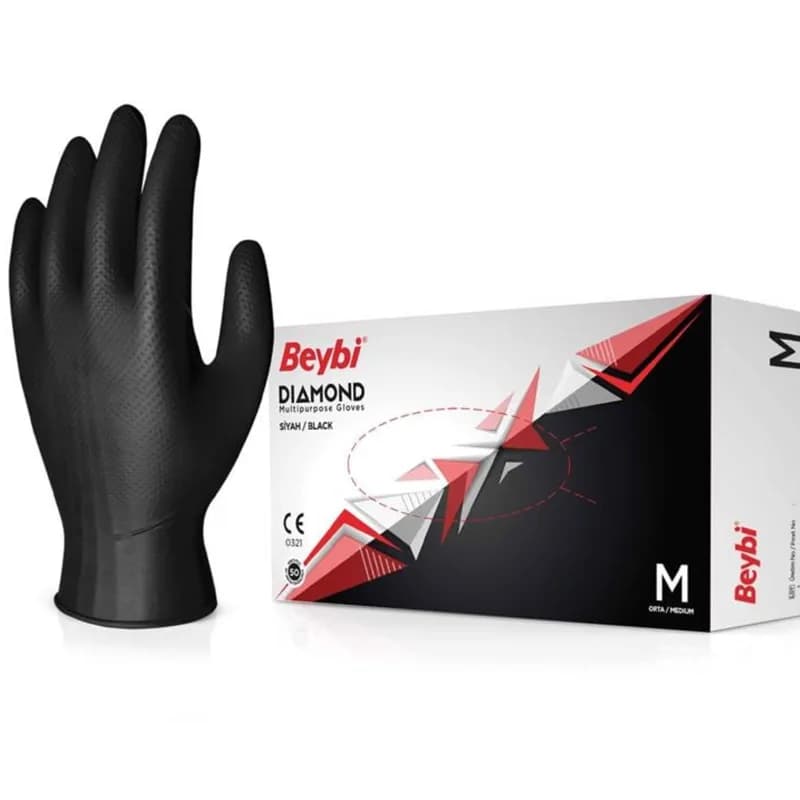
Beybi DIAMOND Examination Glove Size L
Beybi · Disposable Gloves
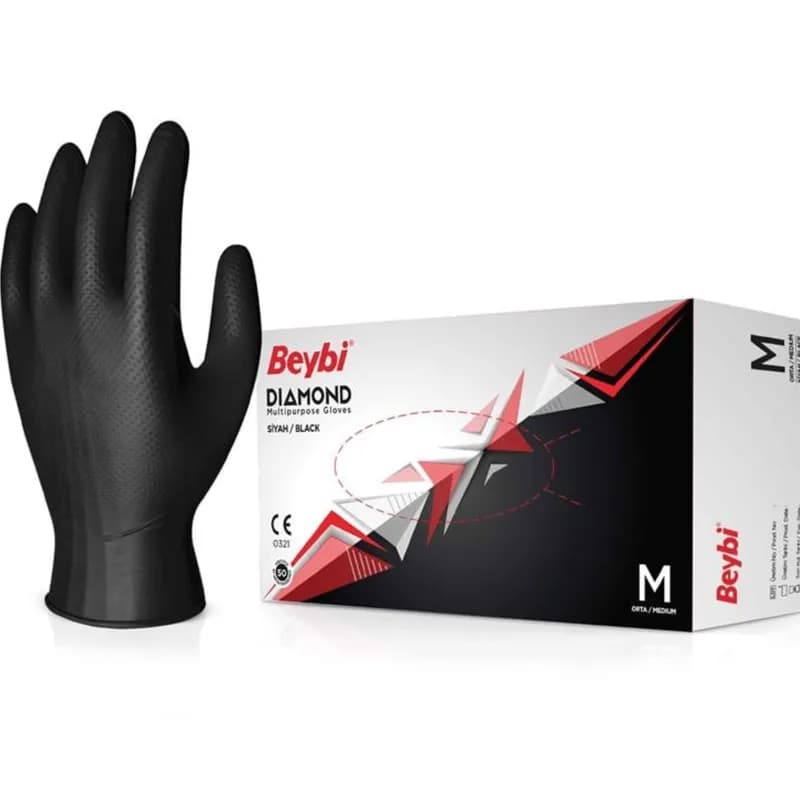
Beybi DIAMOND Examination Glove Size M
Beybi · Disposable Gloves
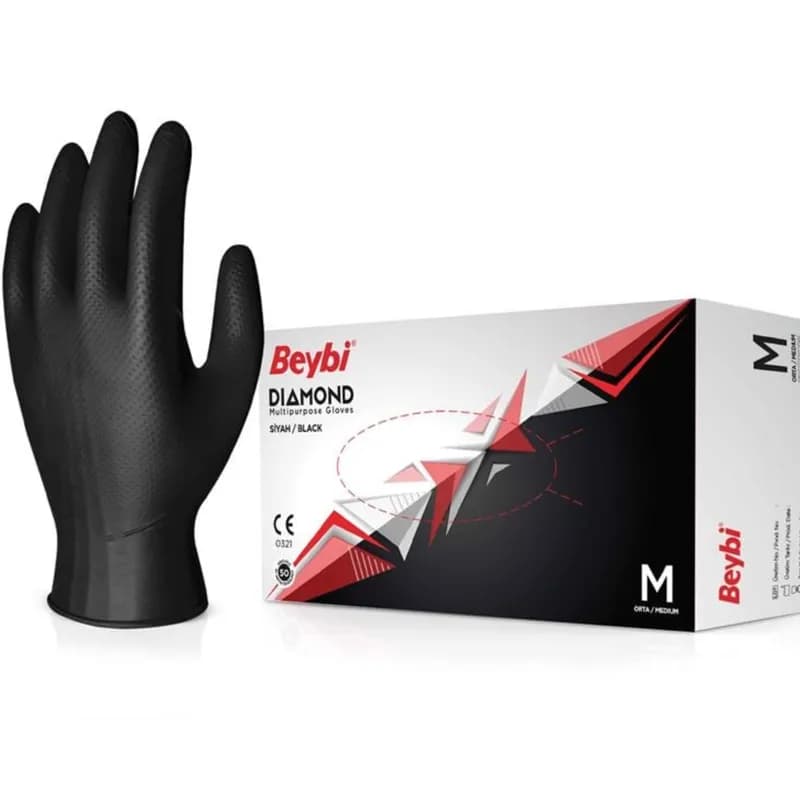
Beybi DIAMOND Examination Glove Size XL
Beybi · Disposable Gloves
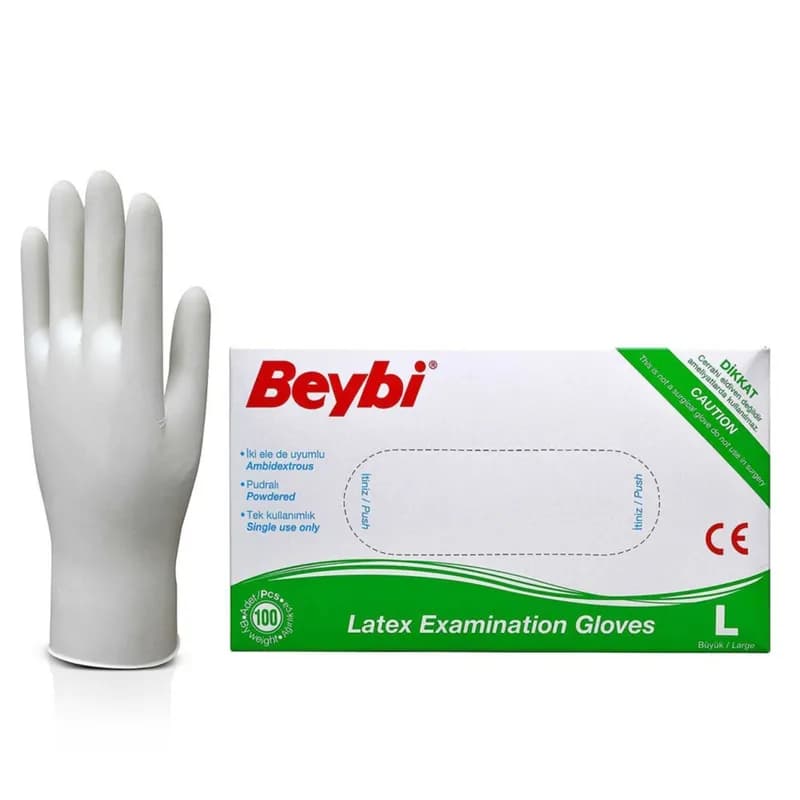
Beybi Powdered Disposable Glove Size L
Beybi · Disposable Gloves
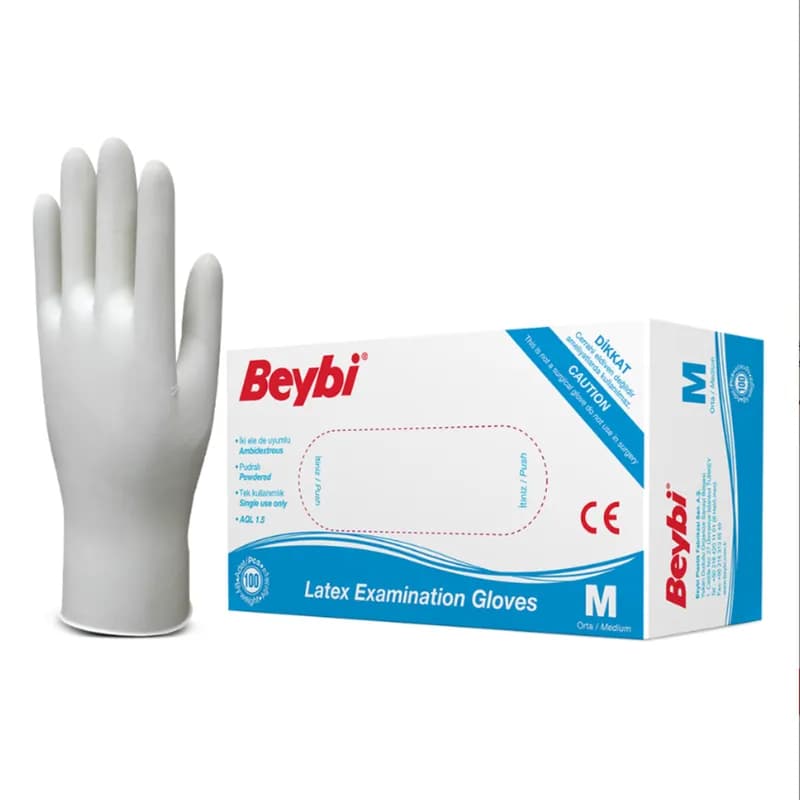
Beybi Powdered Disposable Glove Size M
Beybi · Disposable Gloves
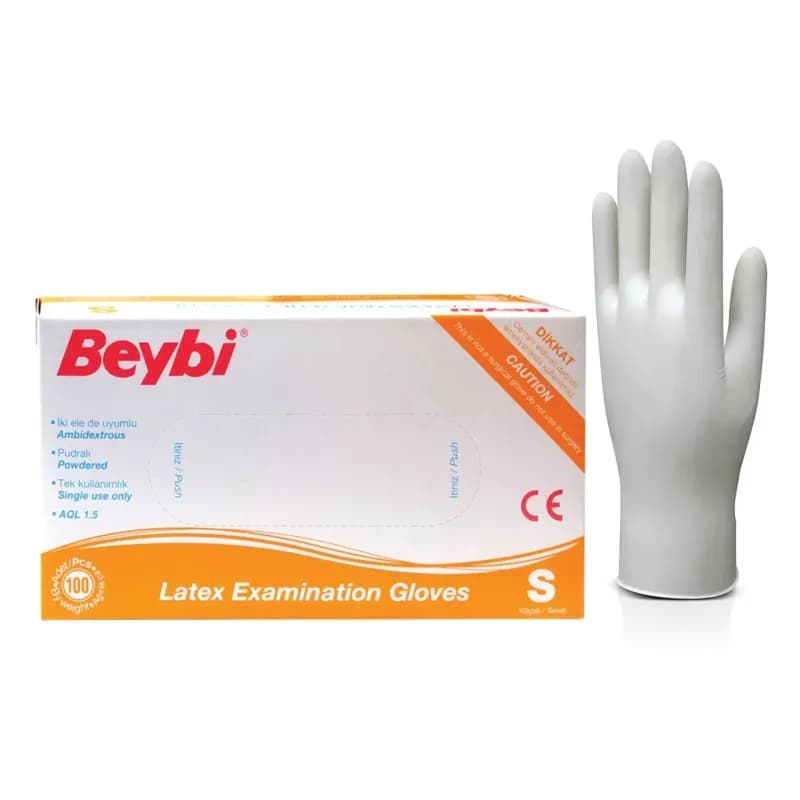
Beybi Powdered Disposable Glove Size S (150.15.MU01)
Beybi · Disposable Gloves
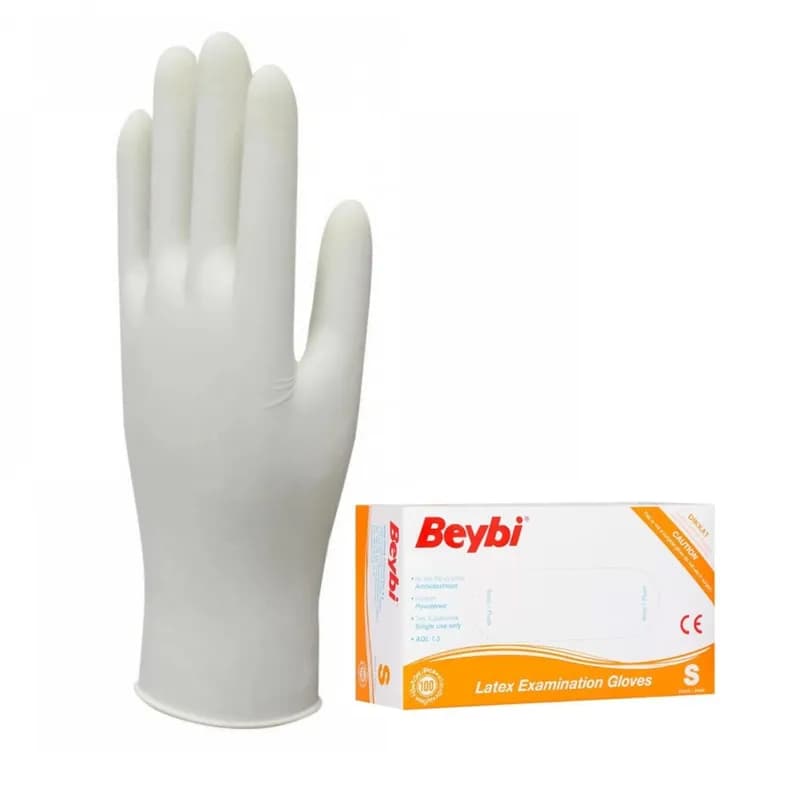
Beybi Powdered Disposable Glove Size S (150.32.PL01)
Beybi · Disposable Gloves
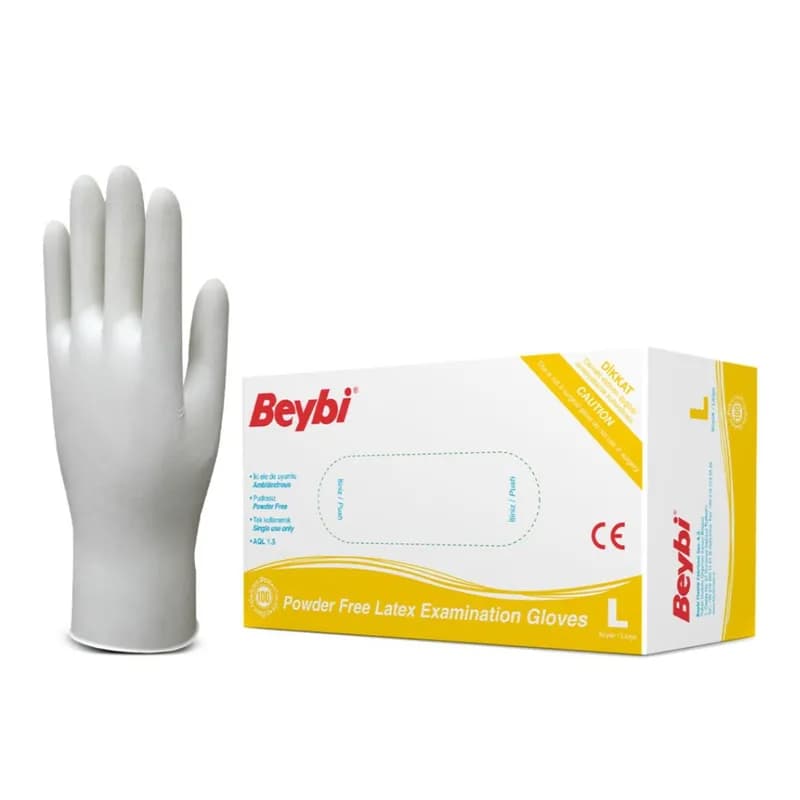
Beybi Powder-Free Disposable Glove Size L
Beybi · Disposable Gloves
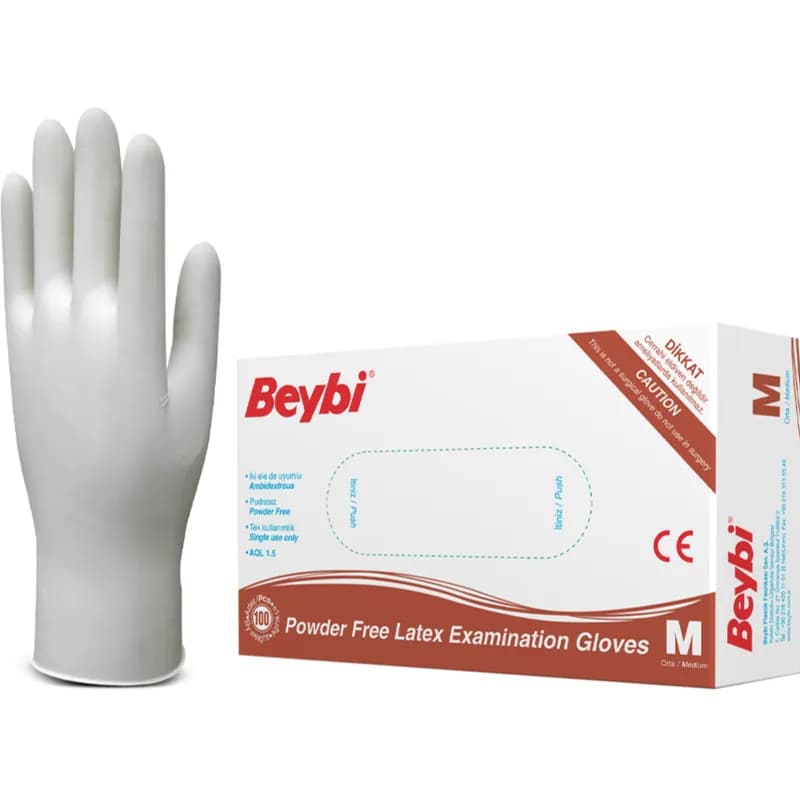
Beybi Powder-Free Disposable Glove Size M
Beybi · Disposable Gloves
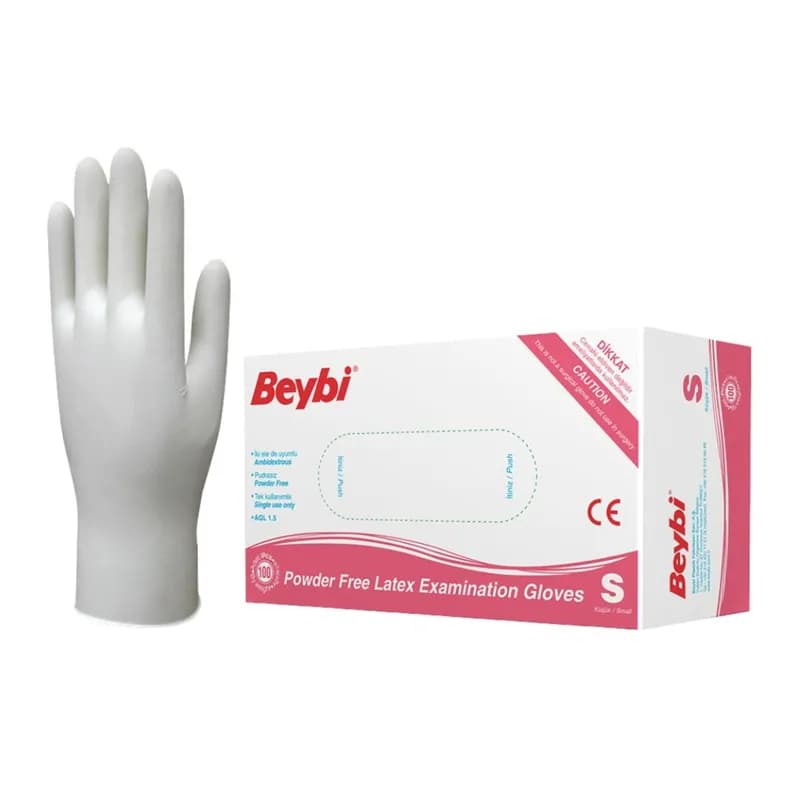
Beybi Powder-Free Disposable Glove Size S
Beybi · Disposable Gloves
Powdered or powder-free?
Powder makes a glove easier to put on: donning a powder-free glove onto a damp hand is noticeably harder. Where gloves are changed often, that is why the powdered version is chosen.
Against that, powder transfers to the surface. In food, paint, bonding and laboratory work that is not wanted, and the powder-free version is used.
Latex and nitrile disposables
A latex disposable is more elastic and fits the hand better, but carries an allergy risk from natural rubber proteins. A nitrile disposable has no such risk, resists puncture better than latex, and stands up better to oils and many chemicals.
Neither substitutes for a work glove: the thin body gives no protection against cutting, puncture or abrasion.
Frequently Asked Questions
Can a disposable glove replace a work glove?
No. It is not made for mechanical protection and gives none against cutting, puncture or abrasion. Where there is a mechanical hazard, use a coated knit or cut resistant glove.
Latex or nitrile?
Latex is more elastic and fits better but carries an allergy risk. Nitrile has no allergy risk, resists puncture better and stands up better to oils and many chemicals.
How are sizes given?
Disposable gloves are sized S, M, L and XL rather than by the numbered work glove system. The size is in the product name.
What is the pack size?
It varies by model; examination gloves are usually boxed in 100s. Unit and carton packing appear in the technical table on the product page where the manufacturer declares them.