Categories
High Temperature Paint
Heat resistant spray paint solves the problem of ordinary paint scorching and flaking off hot metal. The paint on this page is rated to 600 °C / 1112 °F, leaves a tough finish and protects against rust. Three colours — black, silver and red — in 400 ml cans.
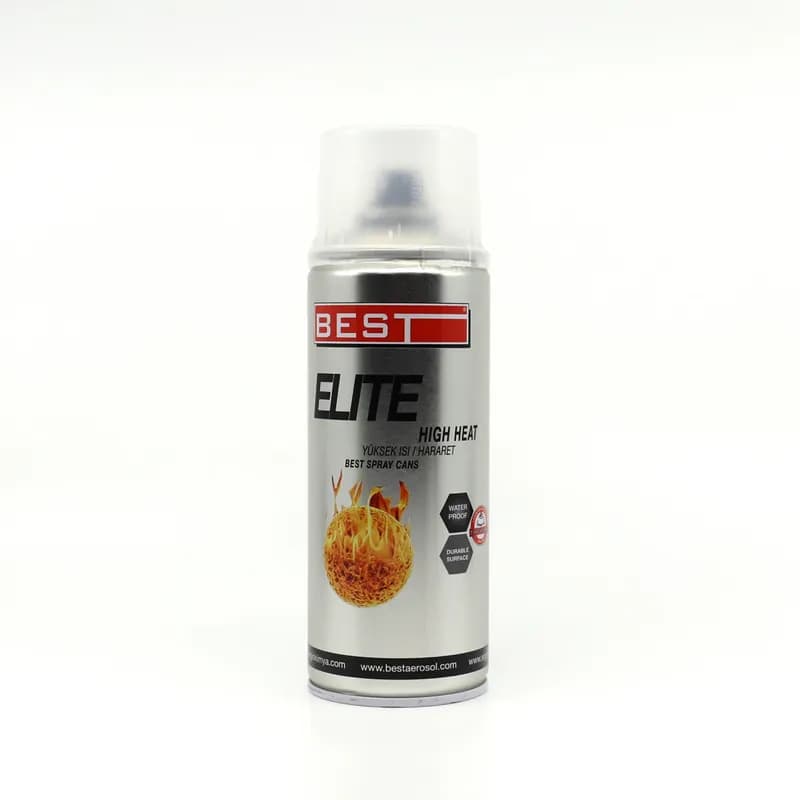
Best Elite High Temperature Paint 400 ml Silver
Best · High Temperature Paint
Best Elite High Temperature Paint 400 ml Red
Best · High Temperature Paint
Best Elite High Temperature Paint 400 ml Black
Best · High Temperature Paint
Why ordinary paint flakes off
The binder in ordinary paint is an organic resin. Once the surface passes 150-200 °C the resin starts to break down: the paint yellows, then blisters, then peels. That is why ordinary paint sprayed on an exhaust, a stove or a manifold is gone after the first heat.
Heat resistant paints use a silicone-based binder instead. Rather than breaking down at temperature, the binder hardens; the film completes its cure over the first heat cycles and is stable hot from then on.
Application and first heat
The surface must be completely free of rust, oil and old paint: heat resistant paint does not rescue a failing layer beneath it, it lifts with it. After wire brushing or sanding, wipe the surface with solvent.
Lay on several thin coats. Because the paint only reaches full hardness once the part is hot, bringing it up to temperature gradually the first time lets the film cure evenly.
Frequently Asked Questions
What temperature does it withstand?
The manufacturer's figure is 600 °C / 1112 °F. That is the continuous surface temperature; exhaust manifolds, stove bodies, flues and oven surfaces all sit in that range.
Is a primer needed?
No — ordinary primer does not survive the temperature, and leaving a layer underneath that breaks down is the most common reason the paint lifts. Apply it directly to clean metal.
Is it the same as radiator paint?
No. Radiator paint is for warm surfaces such as panel radiators, white goods and water tanks, and is not for use where flame touches the surface. Exhausts, stoves and flues need heat resistant paint.
Which colours are available?
Black, silver and red, all three in 400 ml cans.