Categories
Combination Wrenches
A combination wrench has an open jaw at one end and a twelve-point ring of the same size at the other, so one tool both spins a fastener quickly and breaks it loose under torque. This page lists metric sizes from 6 mm to 50 mm and SAE sizes from 1/4″ to 2″ in straight, offset, ratcheting and long-pattern bodies, each with its jaw size, overall length and weight.
Proxxon 23045 Swivel, ratcheting Combination Spanner 8mm
Proxxon Industrial · Combination Wrenches
Proxxon 23047 Swivel, ratcheting Combination Spanner 10mm
Proxxon Industrial · Combination Wrenches
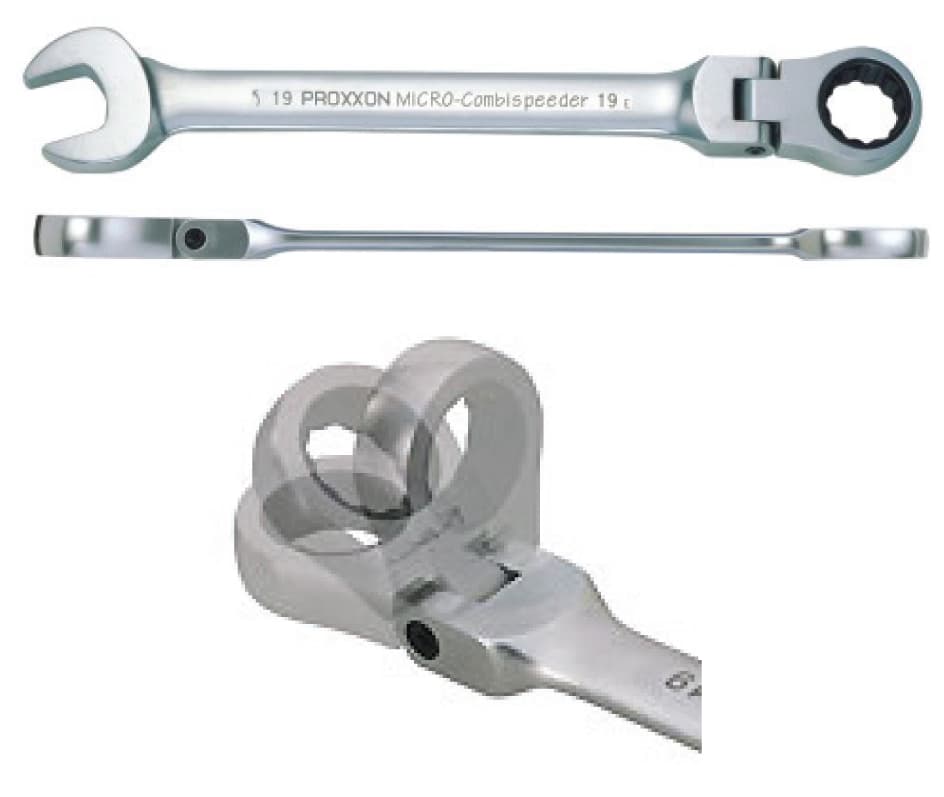
Proxxon 23050 Swivel, ratcheting Combination Spanner 13mm
Proxxon Industrial · Combination Wrenches
Proxxon 23061 Swivel, ratcheting Combination Spanner 24mm
Proxxon Industrial · Combination Wrenches
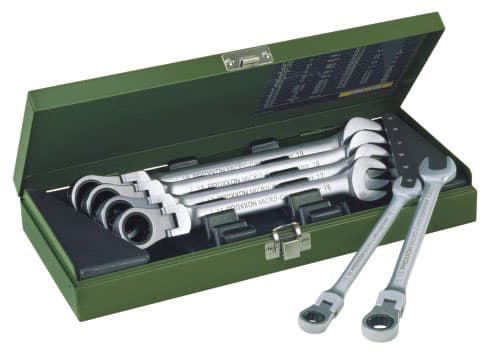
Proxxon 23068 Combination Spanner 7 pcs
Proxxon Industrial · Combination Wrenches
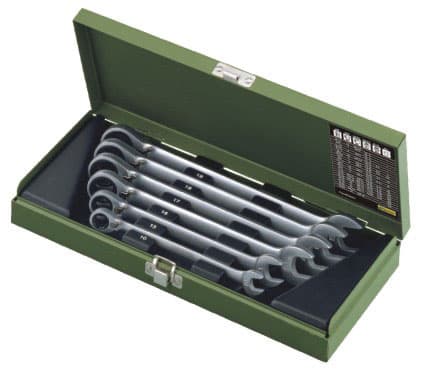
Proxxon 23124 Ratcheting Combination Spanner 7 pcs
Proxxon Industrial · Combination Wrenches
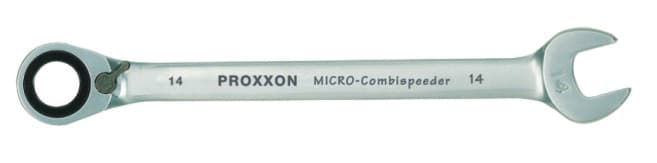
Proxxon 23132 Ratcheting Combination Spanner 10mm
Proxxon Industrial · Combination Wrenches
Proxxon 23133 Ratcheting Combination Spanner 11mm
Proxxon Industrial · Combination Wrenches
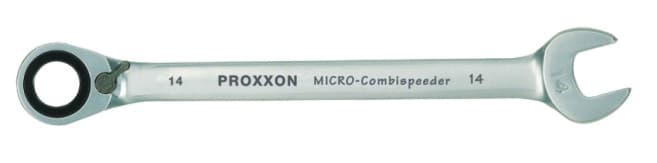
Proxxon 23134 Ratcheting Combination Spanner 12mm
Proxxon Industrial · Combination Wrenches
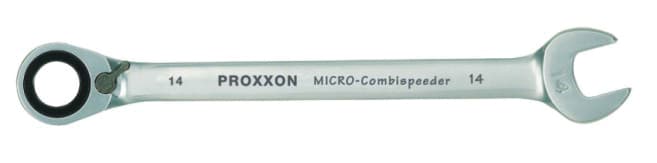
Proxxon 23135 Ratcheting Combination Spanner 13mm
Proxxon Industrial · Combination Wrenches
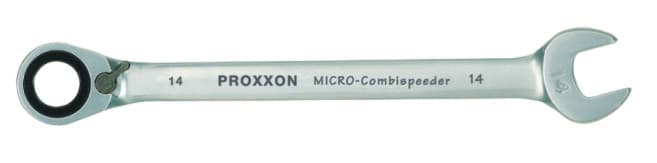
Proxxon 23136 Ratcheting Combination Spanner 14mm
Proxxon Industrial · Combination Wrenches
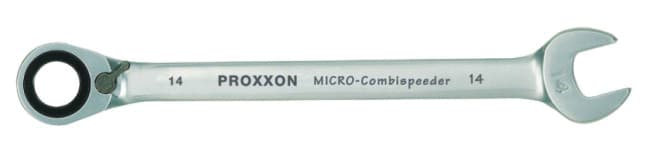
Proxxon 23137 Ratcheting Combination Spanner 15mm
Proxxon Industrial · Combination Wrenches
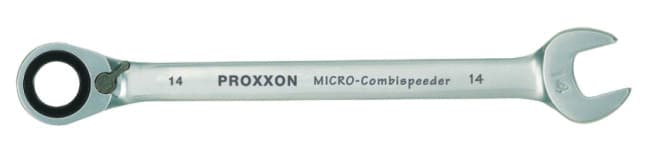
Proxxon 23138 Ratcheting Combination Spanner 16mm
Proxxon Industrial · Combination Wrenches
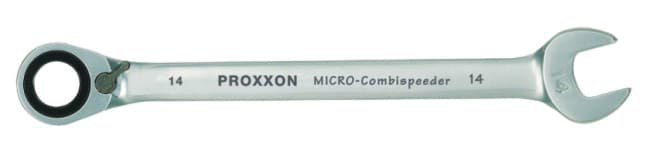
Proxxon 23139 Ratcheting Combination Spanner 17mm
Proxxon Industrial · Combination Wrenches
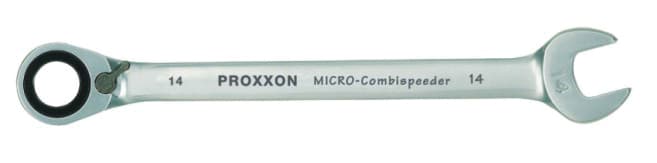
Proxxon 23140 Ratcheting Combination Spanner 18mm
Proxxon Industrial · Combination Wrenches
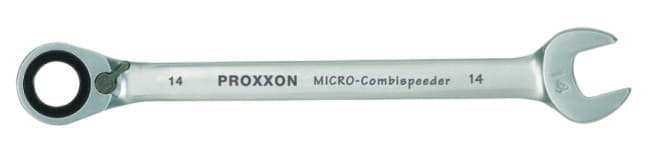
Proxxon 23141 Ratcheting Combination Spanner 19mm
Proxxon Industrial · Combination Wrenches
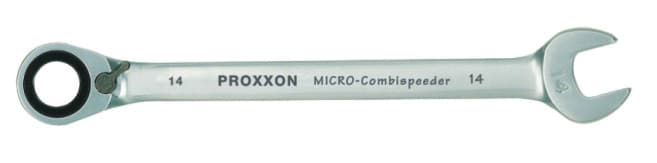
Proxxon 23143 Ratcheting Combination Spanner 21mm
Proxxon Industrial · Combination Wrenches
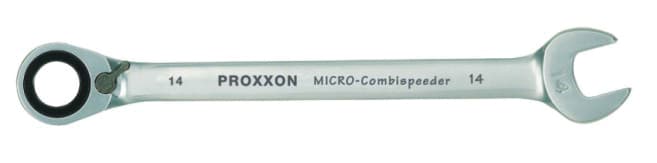
Proxxon 23144 Ratcheting Combination Spanner 22mm
Proxxon Industrial · Combination Wrenches
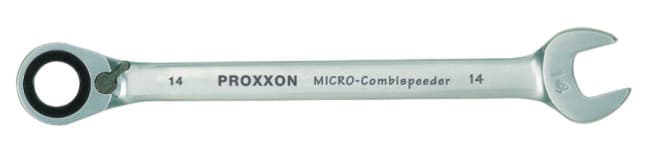
Proxxon 23146 Ratcheting Combination Spanner 24mm
Proxxon Industrial · Combination Wrenches
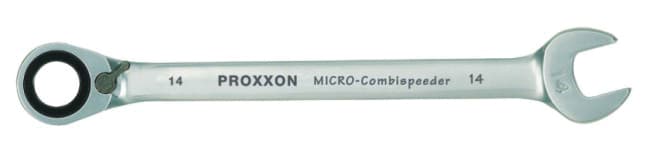
Proxxon 23130 Ratcheting Combination Spanner 8mm
Proxxon Industrial · Combination Wrenches
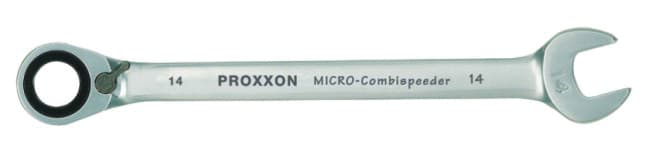
Proxxon 23131 Ratcheting Combination Spanner 9mm
Proxxon Industrial · Combination Wrenches
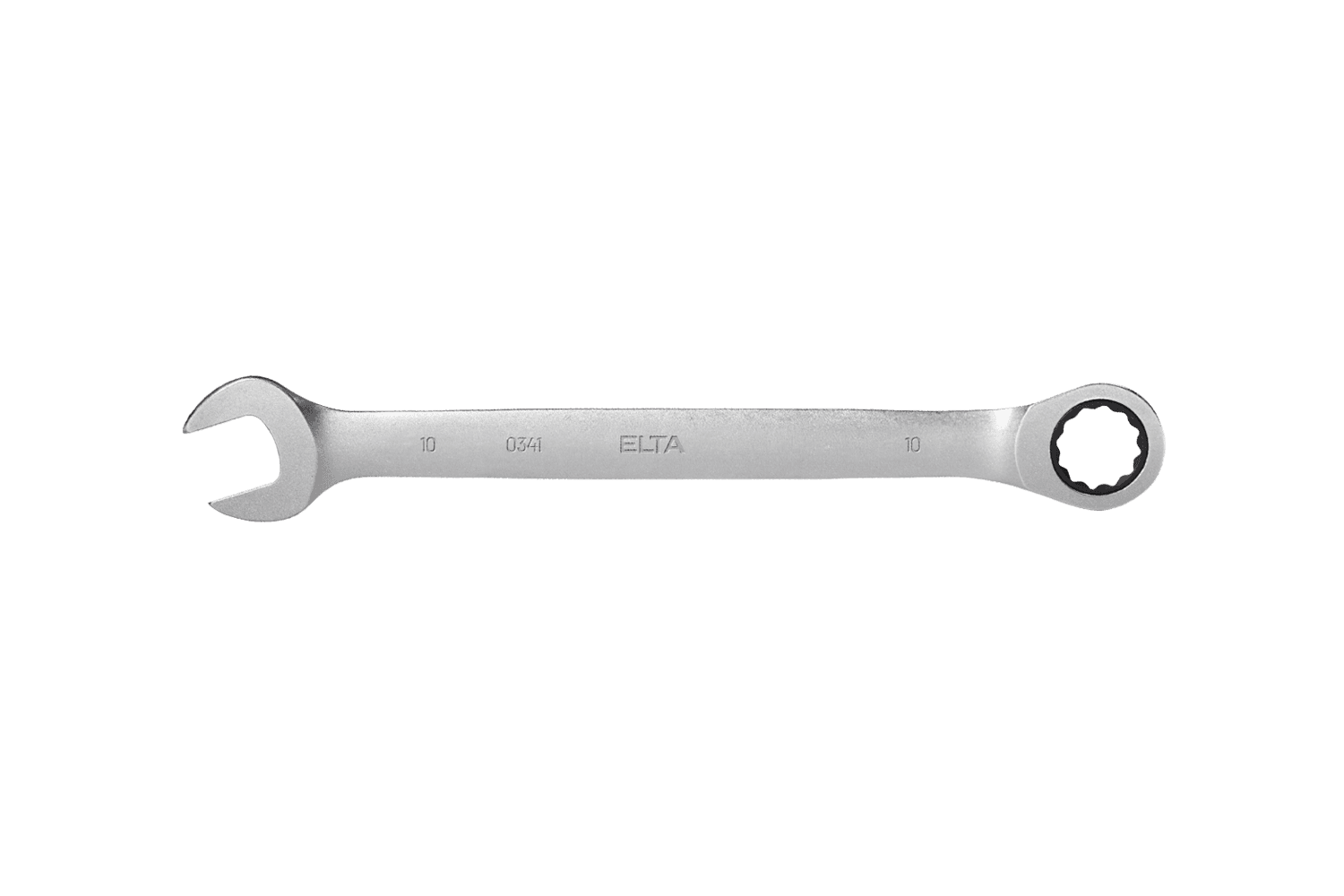
Elta Combination Wrench With Ratchet 10 mm
Elta · Combination Wrenches
Elta Combination Wrench With Ratchet 12 mm
Elta · Combination Wrenches
Elta Combination Wrench With Ratchet 13 mm
Elta · Combination Wrenches
1–24 of 258 · page 1 / 11
Body patterns: short, long, offset, ratcheting
The same size comes in four bodies, and the choice is the trade between access and force. The short pattern works in confined space; the long pattern turns the same hand force into more torque, in proportion to handle length -- a long 17 mm wrench delivers roughly a third more moment than the short one.
On the offset pattern the ring is raised out of the handle plane, so the wrench clears the work surface and leaves room for your knuckles. On the ratcheting pattern the ring free-wheels one way, so the wrench never leaves the nut and the swing angle drops to about five degrees. A ratchet mechanism is not built for the high torque of the first release; break a seized joint with a plain ring.
Metric and SAE do not substitute
Every family is listed in both metric and SAE. The two systems are close but not equal, and the close pairs are the dangerous ones: the gap in the table below is enough for the wrench to sit on the nut while loading its corners rather than its flats. A few tightenings later the corners are rounded.
The size at the end of a product name is the wrench opening, not the nominal bolt diameter. An M10 bolt head usually takes a 17 mm wrench; choose by the across-flats size rather than guessing from the thread.
| SAE size | In millimetres | Nearest metric | Difference |
|---|---|---|---|
| 1/4″ | 6.35 mm | 6 mm | 0.35 mm |
| 3/8″ | 9.53 mm | 10 mm | 0.47 mm |
| 7/16″ | 11.11 mm | 11 mm | 0.11 mm |
| 1/2″ | 12.70 mm | 13 mm | 0.30 mm |
| 9/16″ | 14.29 mm | 14 mm | 0.29 mm |
| 5/8″ | 15.88 mm | 16 mm | 0.12 mm |
| 3/4″ | 19.05 mm | 19 mm | 0.05 mm |
Even the closest pairs leave play; a difference under 0.1 mm still crushes the corner at full torque.
Material and standard
The combination wrenches here are forged from chrome vanadium steel and chrome plated: forging keeps the grain running unbroken around the jaw, and the plating limits corrosion and stops oil holding on the surface.
Jaw geometry follows TS 3794 – TS ISO 7738 Form A. The twelve-point ring engages a hexagon every 30 degrees, which doubles the number of positions in which the wrench can be put back on the nut in a tight space.
Frequently Asked Questions
What is a combination wrench?
A double-ended wrench with an open jaw at one end and a twelve-point ring of the same size at the other, so one tool both spins a fastener quickly and breaks it loose under torque.
Short pattern or long pattern?
The long pattern turns the same hand force into more torque and is the default for general maintenance. The short pattern is what you need where the handle will not fit. A shop kit usually carries both, so the same size can be reached two ways.
Can a ratcheting combination wrench break a seized bolt loose?
It should not be asked to. The ratchet mechanism is not designed for the torque peak of the first release; break the joint with a plain ring end and use the ratchet for the spinning that follows.
Can I use 1/2 inch instead of 13 mm?
No. 1/2″ is 12.70 mm, and the 0.30 mm of play concentrates load on the corners of the nut, rounding them after a few tightenings. Each system needs its own sizes.
What is an offset wrench for?
Its ring is raised out of the handle plane, so when it goes onto a nut on a flat surface there is clearance between your hand and the surface and the wrench does not drag.
Can I work out the wrench size from the bolt diameter?
Not directly: the wrench opening is the across-flats dimension of the head, which depends on the head type. Commonly M8 takes 13 mm, M10 takes 17 mm and M12 takes 19 mm, but the choice should always follow the measured opening.