Categories
Latex Gloves
Latex gloves are natural rubber and grip best of all on wet surfaces. This page carries latex coated knit work gloves alongside the rubber gloves used in cleaning and building work.

Beybi Latex Glove Size 10-10.5
Beybi · Latex Gloves

Beybi Latex Glove Size 7-7.5
Beybi · Latex Gloves
Beybi Latex Glove Size 8-8.5
Beybi · Latex Gloves
Beybi Latex Glove Size 9-9.5
Beybi · Latex Gloves

Beybi PL17 Flex Special Purpose Work Glove Green Size 10
Beybi · Latex Gloves
Beybi PL17 Flex Special Purpose Work Glove Green Size 9
Beybi · Latex Gloves
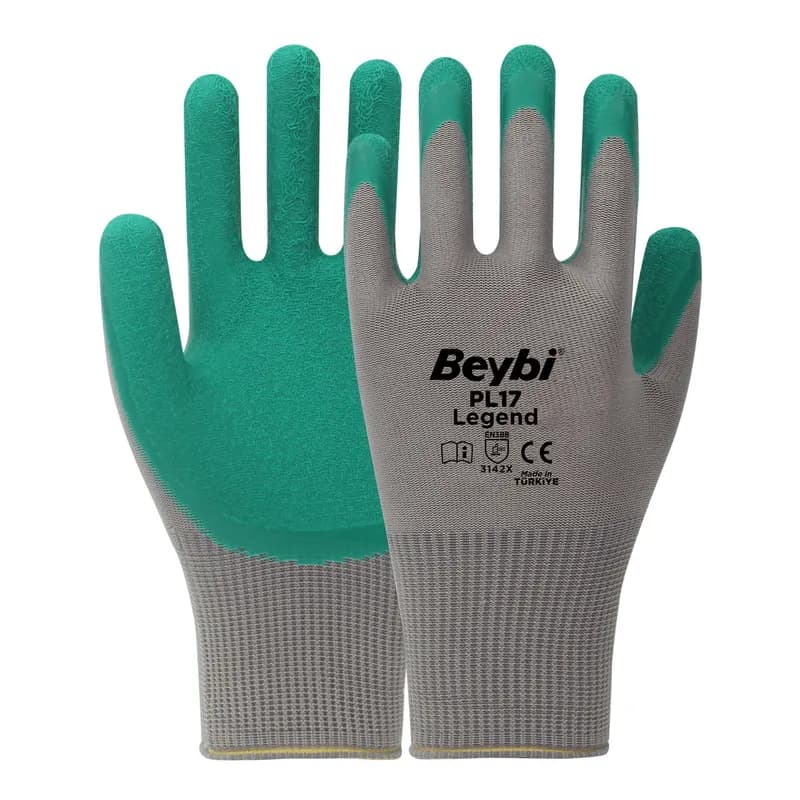
Beybi PL17 Legend Special Purpose Work Glove Grey/Green Size 10
Beybi · Latex Gloves

Beybi PL17 Legend Special Purpose Work Glove Grey/Green Size 9
Beybi · Latex Gloves

Beybi PL17 Legend Special Purpose Work Glove Black Size 10
Beybi · Latex Gloves
Beybi PL17 Legend Special Purpose Work Glove Black Size 9
Beybi · Latex Gloves

Beybi Crinkle Latex Glove Size 10
Beybi · Latex Gloves
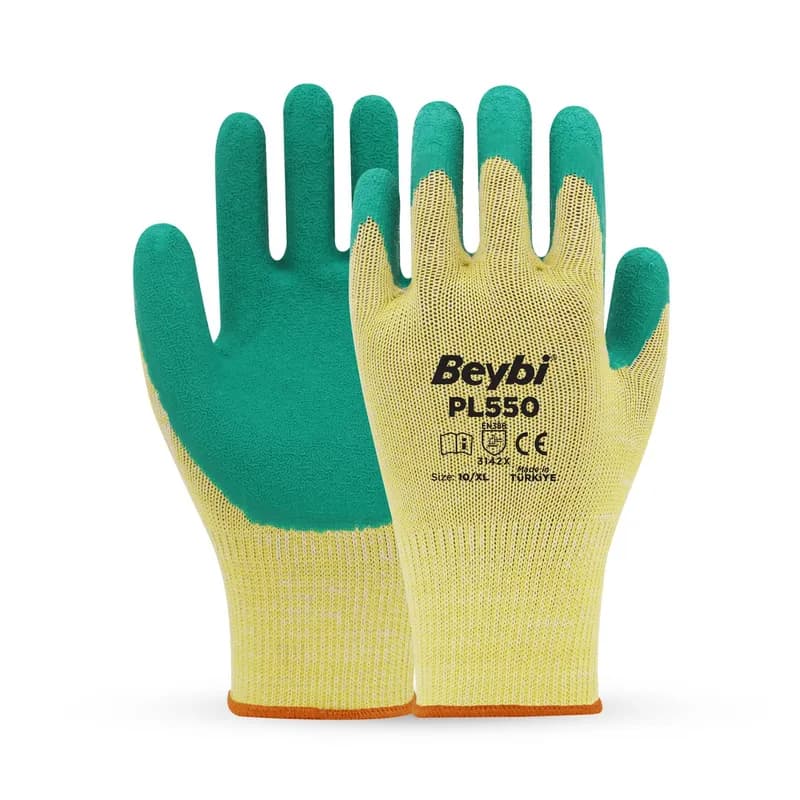
Beybi Crinkle Latex Glove Size 9
Beybi · Latex Gloves
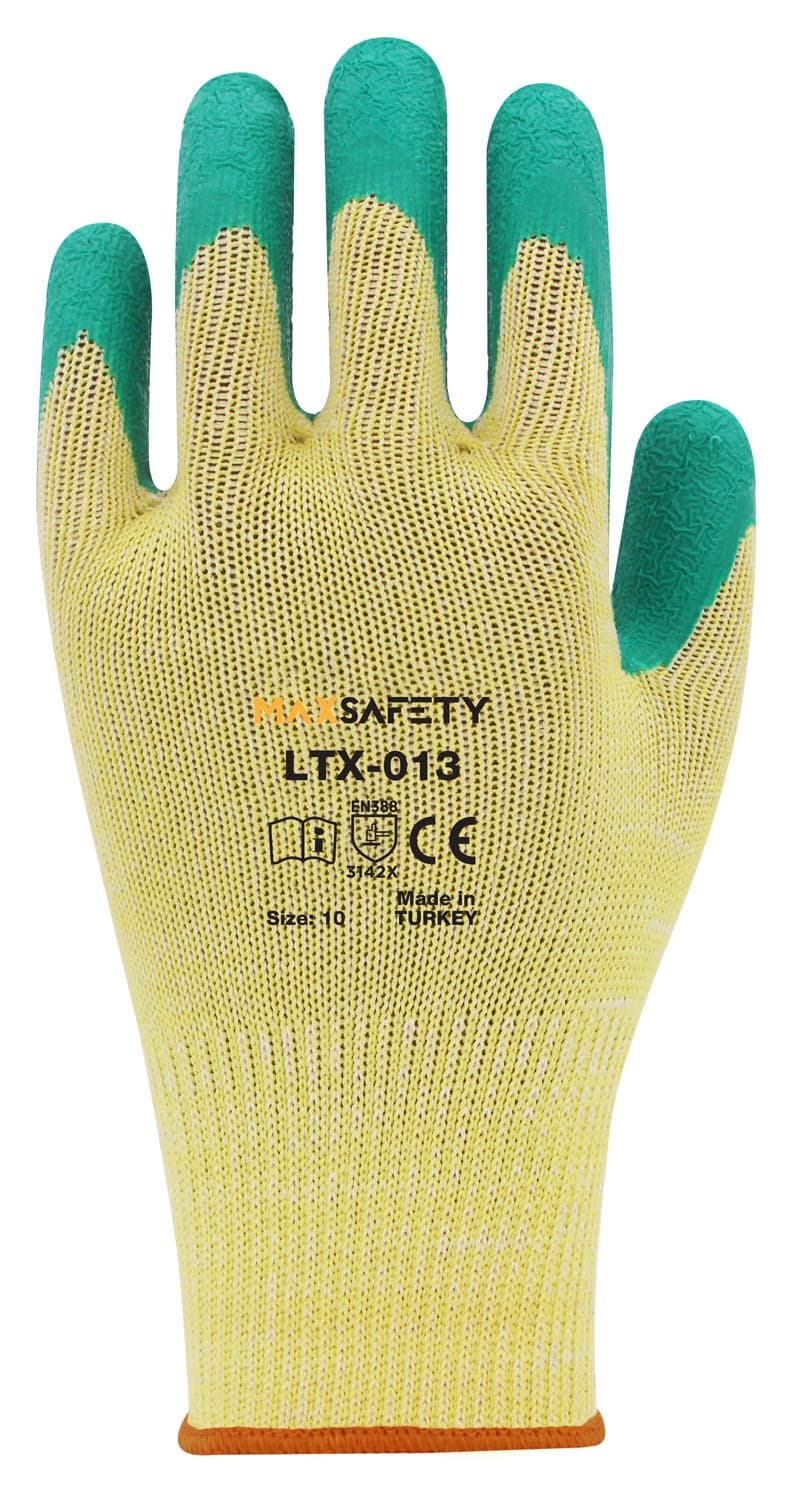
Lateks Camcı Eldiveni - Crinkle No: 9 - 10
Max Safety · Latex Gloves
What latex is good and bad at
Latex is natural rubber: more elastic than the synthetics, quicker to conform to the hand, and the best grip there is on a wet, slippery surface. A crinkle finish increases that further — the broken surface cuts through the water film.
Its weaknesses are two. It swells in oils and solvents, which is why oily work goes to nitrile. And natural rubber proteins can cause an allergic reaction in some wearers, for whom a nitrile or PU coated model is the alternative.
| Coating | Where it is strong | Where it is weak |
|---|---|---|
| Nitrile | Oil, grease and hydrocarbons; abrasion; no allergy risk | Less sensitive than PU on very fine work |
| Latex | Grip on wet and slippery surfaces; most elastic | Swells in oil; natural protein allergy risk |
| PU (polyurethane) | Fingertip sensitivity; thin and light | Shortest abrasion life of the three |
Coating materials; liner and coverage are chosen separately.
Coated knit and rubber gloves
A latex coated knit glove is a work glove: it has a knitted liner, the coating goes over the palm or the whole hand, and it is used in building work and general handling.
A household rubber glove has no liner and is rubber throughout; it is made for working in water and detergent. The two do not substitute for each other.
Frequently Asked Questions
Can latex gloves be used with oil?
No. Latex swells in oils and solvents and breaks down; oily work should use a nitrile coated glove.
I have a latex allergy — what is the alternative?
Nitrile coated knit gloves. Nitrile is synthetic and contains none of the natural rubber proteins that cause latex allergy.
What does a crinkle finish do?
The coating is dried with a wrinkled, broken surface. That surface cuts through the water film on a wet part and grips markedly better than a smooth dip.