Categories
Socket Sets & Ratchets
A socket set speeds up tightening by surrounding the bolt head, and a ratchet handle removes the need to reposition the tool at every turn. The first decision is square drive: 1/4", 3/8" and 1/2" are three different torque classes.
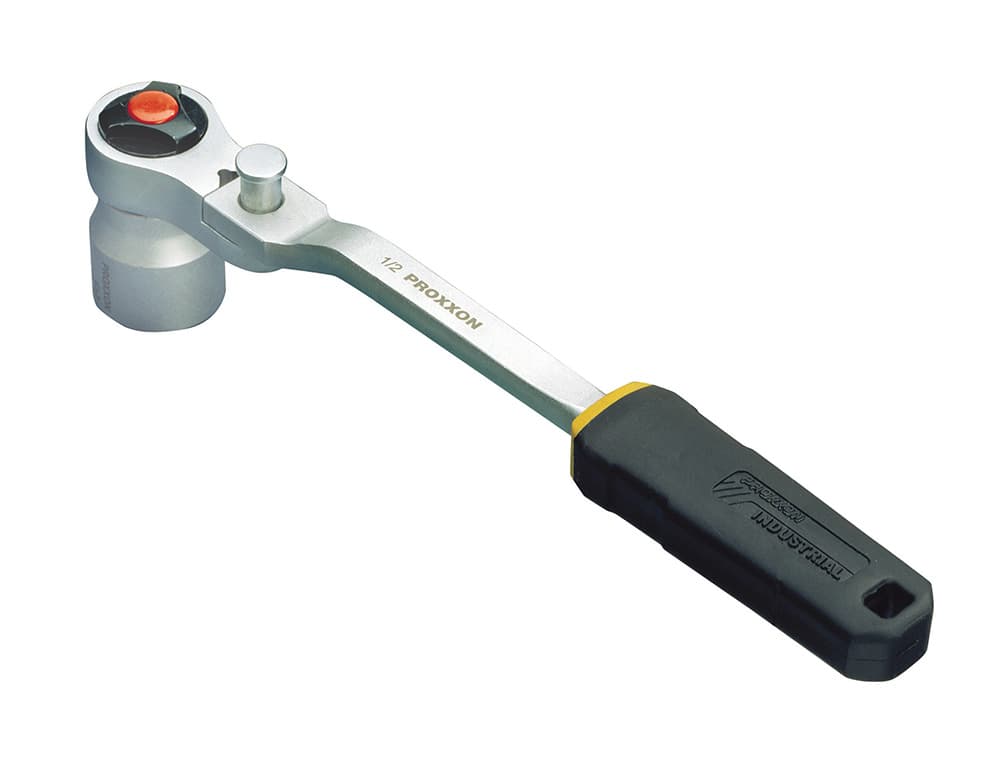
Proxxon 23088 Ratchet 1/2″
Proxxon Industrial · Socket Sets & Ratchets
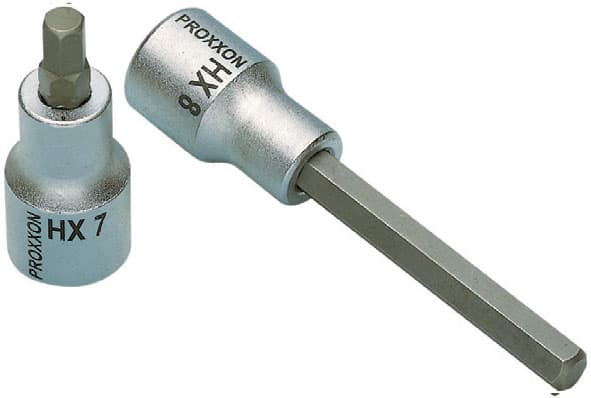
Proxxon 23487 Hex Socket 1/2″ 10x100mm
Proxxon Industrial · Socket Sets & Ratchets
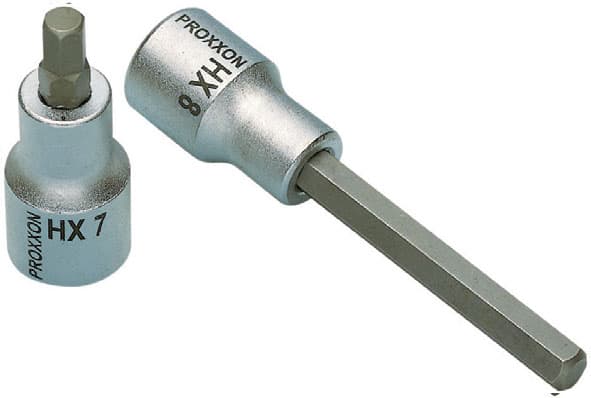
Proxxon 23480 Hex Socket 1/2″ 10x55mm
Proxxon Industrial · Socket Sets & Ratchets
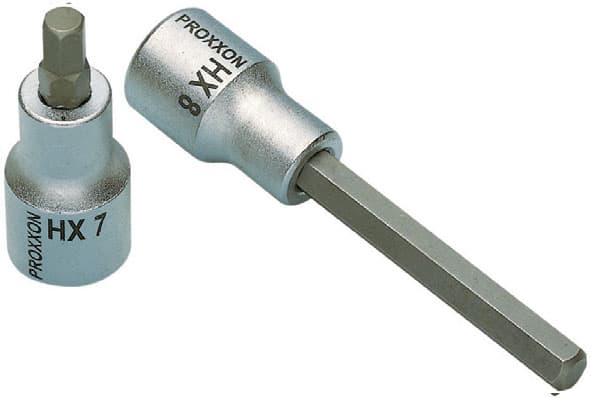
Proxxon 23483 Hex Socket 1/2″ 12x100mm
Proxxon Industrial · Socket Sets & Ratchets
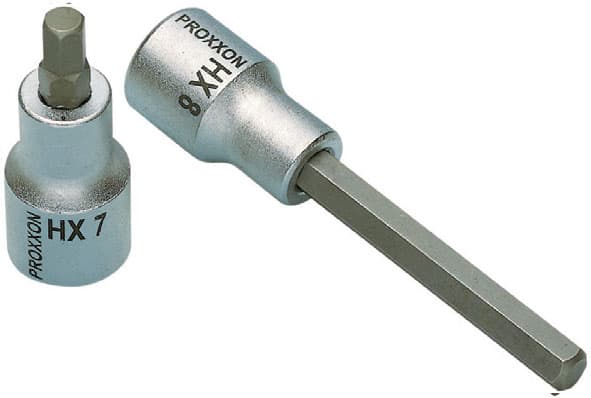
Proxxon 23481 Hex Socket 1/2″ 12x55mm
Proxxon Industrial · Socket Sets & Ratchets
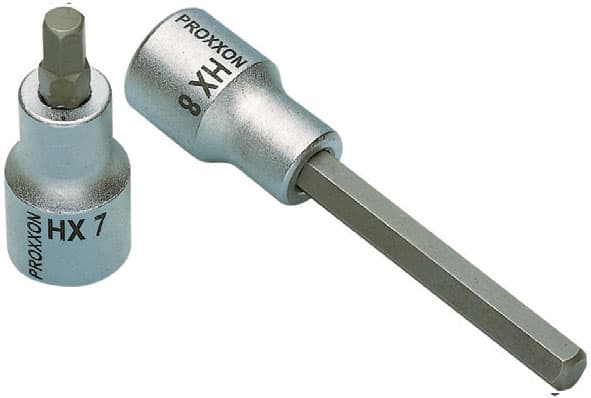
Proxxon 23482 Hex Socket 1/2″ 14x55mm
Proxxon Industrial · Socket Sets & Ratchets
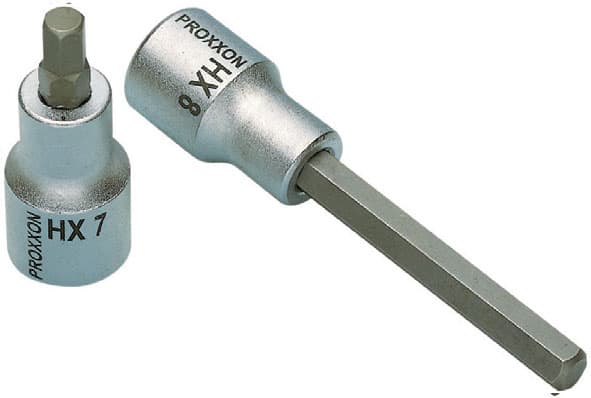
Proxxon 23484 Hex Socket 1/2″ 5x100mm
Proxxon Industrial · Socket Sets & Ratchets
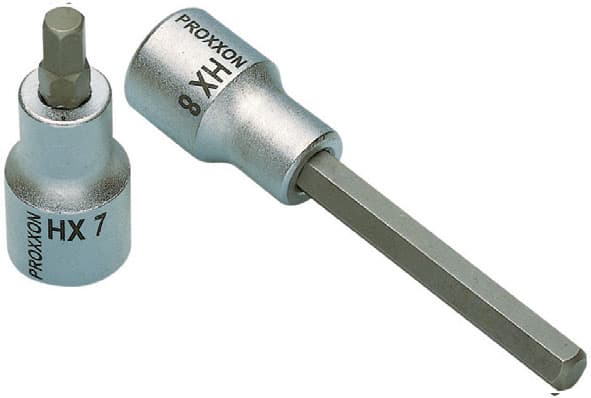
Proxxon 23476 Hex Socket 1/2″ 5x55mm
Proxxon Industrial · Socket Sets & Ratchets
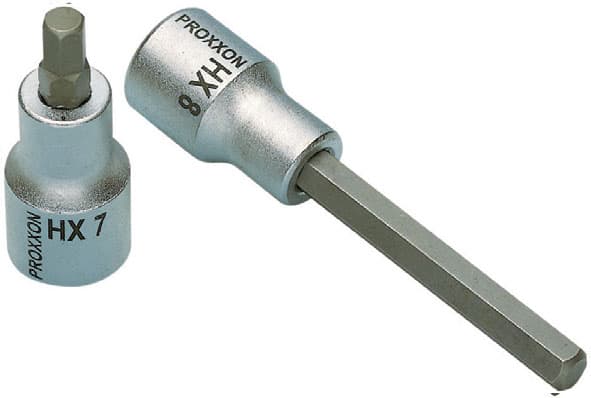
Proxxon 23475 Hex Socket 1/2″ 6x100mm
Proxxon Industrial · Socket Sets & Ratchets
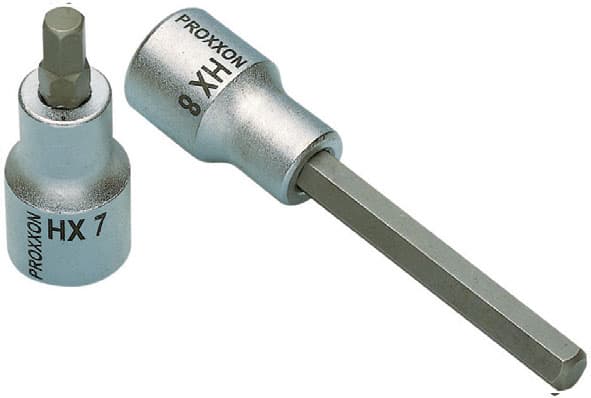
Proxxon 23477 Hex Socket 1/2″ 6x55mm
Proxxon Industrial · Socket Sets & Ratchets
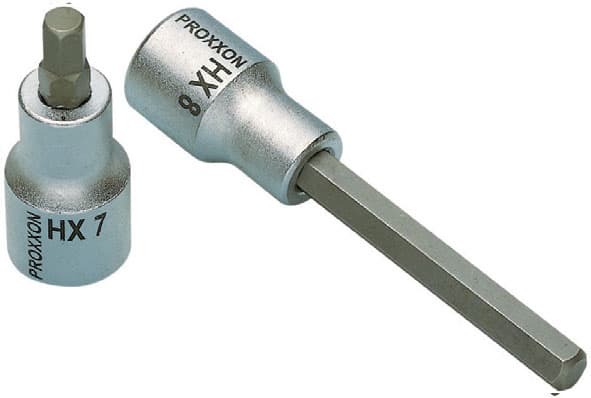
Proxxon 23485 Hex Socket 1/2″ 7x100mm
Proxxon Industrial · Socket Sets & Ratchets
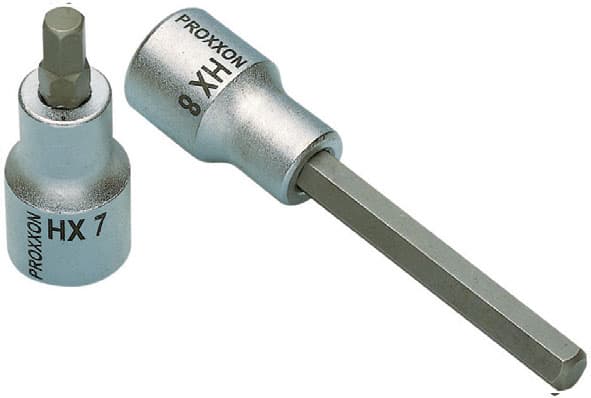
Proxxon 23478 Hex Socket 1/2″ 7x55mm
Proxxon Industrial · Socket Sets & Ratchets
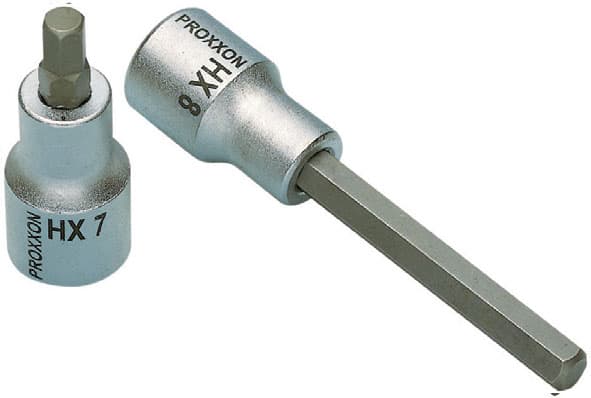
Proxxon 23486 Hex Socket 1/2″ 8x100mm
Proxxon Industrial · Socket Sets & Ratchets
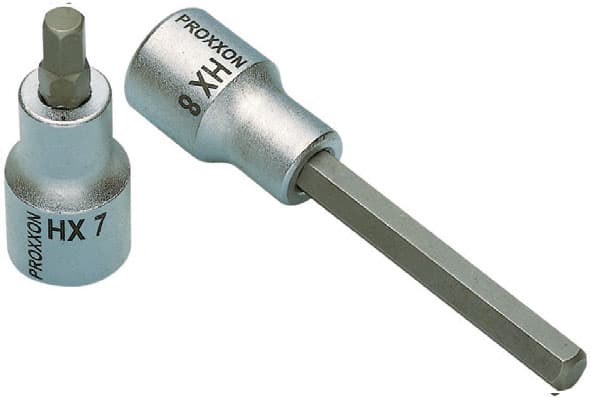
Proxxon 23479 Hex Socket 1/2″ 8x55mm
Proxxon Industrial · Socket Sets & Ratchets
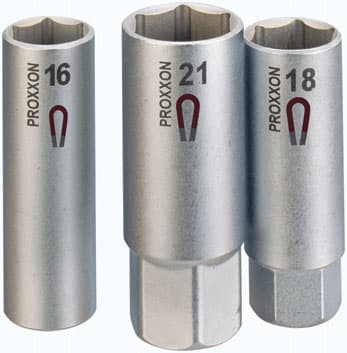
Proxxon 23392 Spark plug Socket 1/2″ 16mm
Proxxon Industrial · Socket Sets & Ratchets
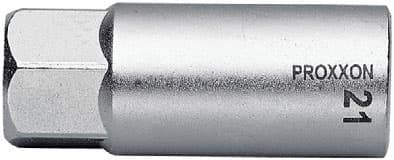
Proxxon 23442 Spark plug Socket 1/2″ 16mm
Proxxon Industrial · Socket Sets & Ratchets
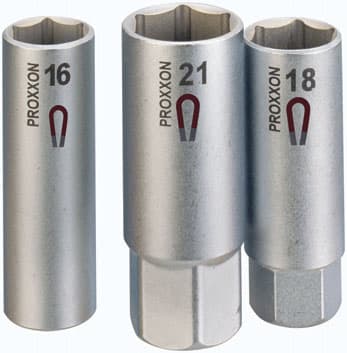
Proxxon 23394 Spark plug Socket 1/2″ 18mm
Proxxon Industrial · Socket Sets & Ratchets
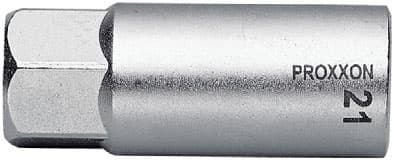
Proxxon 23443 Spark plug Socket 1/2″ 18mm
Proxxon Industrial · Socket Sets & Ratchets
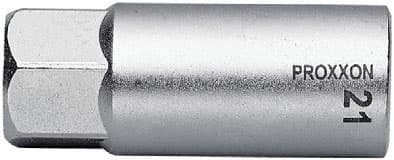
Proxxon 23445 Spark plug Socket 1/2″ 19mm
Proxxon Industrial · Socket Sets & Ratchets
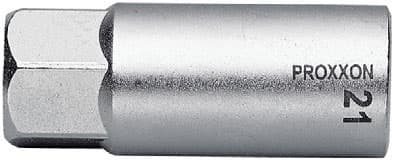
Proxxon 23444 Spark plug Socket 1/2″ 21mm
Proxxon Industrial · Socket Sets & Ratchets
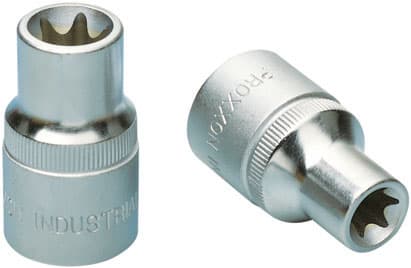
Proxxon 23380 External torx, torx Socket 1/2″ E 10
Proxxon Industrial · Socket Sets & Ratchets
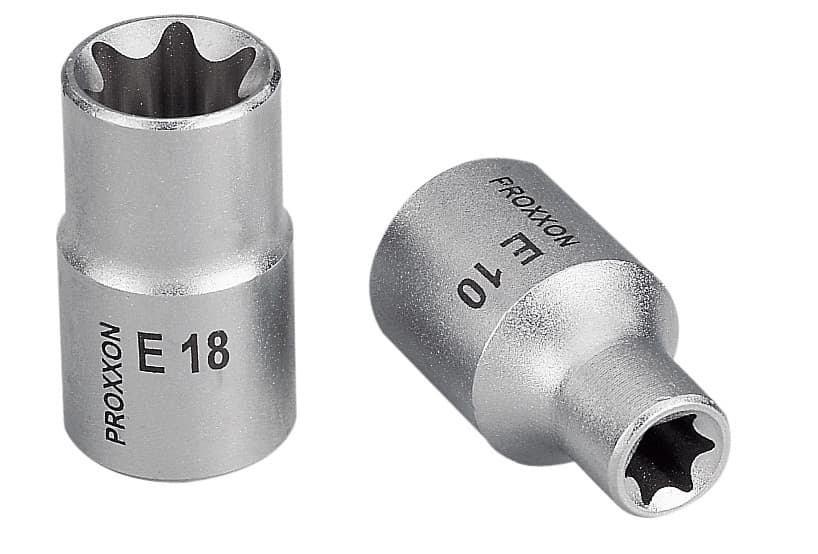
Proxxon 23382 External torx, torx Socket 1/2″ E 12
Proxxon Industrial · Socket Sets & Ratchets
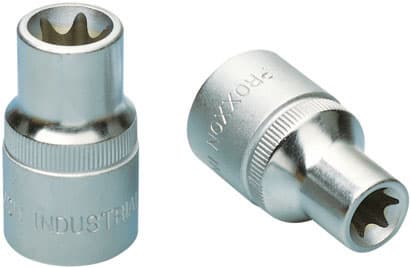
Proxxon 23384 External torx, torx Socket 1/2″ E 14
Proxxon Industrial · Socket Sets & Ratchets
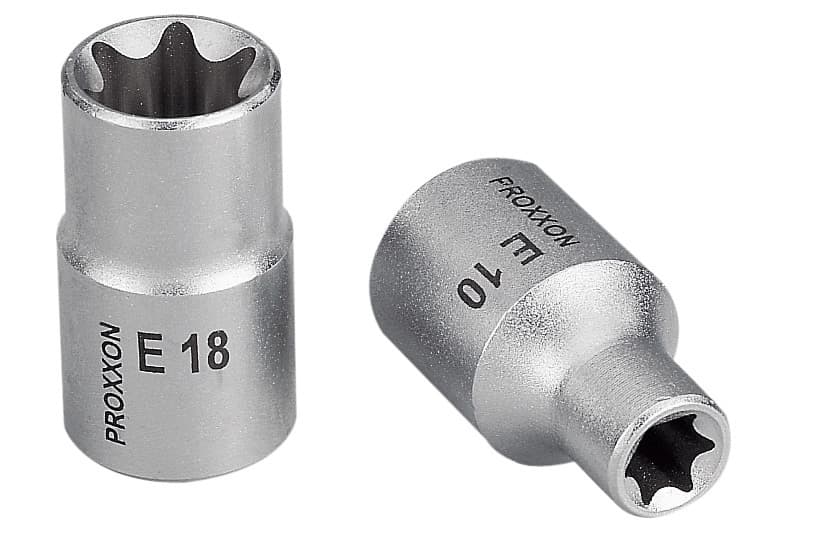
Proxxon 23388 External torx, torx Socket 1/2″ E 18
Proxxon Industrial · Socket Sets & Ratchets
1–24 of 903 · page 1 / 38
Square drive and torque class
The square drive sets the maximum torque the system can carry. 1/4" suits fine assembly and electronics, 3/8" general maintenance, and 1/2" wheels, chassis and other high-torque work. Adapters let you change size, but the torque limit is whatever the smallest link in the chain is.
| Square drive | Typical torque | Use |
|---|---|---|
| 1/4" | 2-25 Nm | Fine assembly, interior trim |
| 3/8" | 10-70 Nm | General maintenance |
| 1/2" | 40-250 Nm | Wheels, chassis, heavy assembly |
6-point, 12-point and impact sockets
A 6-point socket transfers torque through the flats of the bolt and rarely rounds a seized head. A 12-point positions at smaller angles, which helps in tight spaces, but it is not as secure at high torque.
Only impact sockets belong on air and impact tools: CrMo steel, usually black, with thicker walls. A bright chrome hand socket can shatter under impact and throw fragments.
Frequently Asked Questions
How do I choose between 1/4", 3/8" and 1/2"?
By the torque: 1/4" for fine assembly (2-25 Nm), 3/8" for general maintenance (10-70 Nm), 1/2" for wheels and chassis (40-250 Nm). It should also match the ratchets and torque wrenches you own.
What is the difference between an impact socket and a normal one?
Impact sockets are CrMo steel with thicker walls, made to take shock, and usually black. A chrome hand socket can shatter on an impact wrench.
6-point or 12-point sockets?
Six points transfer torque through the flats and will not round a seized bolt. Twelve points position more easily in tight spaces but are less secure at high torque.
Can I change drive size with an adapter?
Yes, but the torque limit becomes the smallest drive in the chain. Putting a 1/4" adapter on a 1/2" ratchet and pulling hard breaks the adapter or the socket.
Why does ratchet tooth count matter?
It sets the smallest swing that still engages. A 72-tooth ratchet engages every 5 degrees, which matters in tight spaces.
When do I need deep sockets?
When the bolt protrudes through the nut — on studs, for example. A standard socket cannot seat fully on the head in that case.