Categories
Magnetic Drills
A magnetic drill clamps itself to steel with an electromagnetic base and drills from that fixed position, bringing pillar-drill accuracy to beams and heavy sections on site. The catalogue holds 4 models.
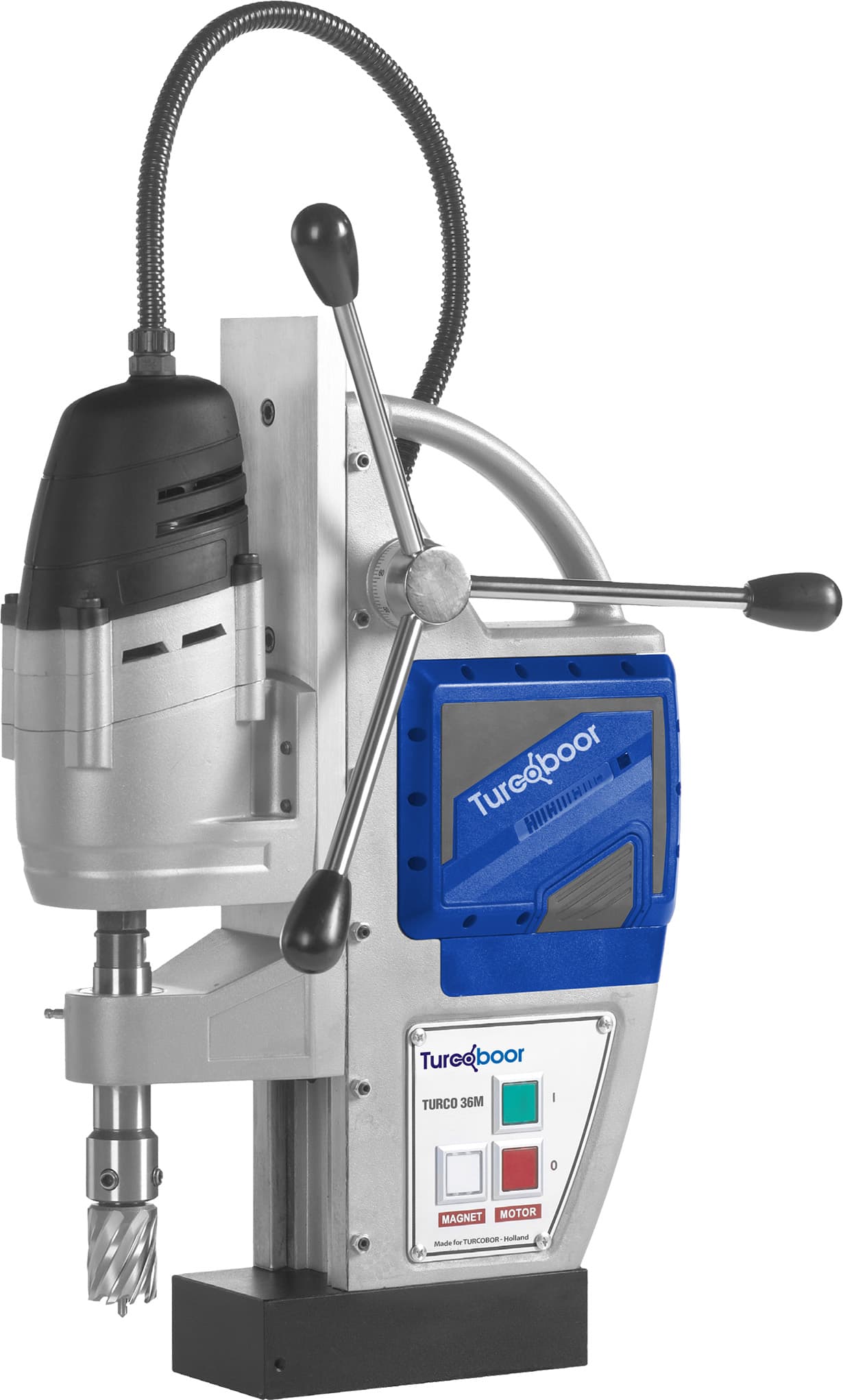
Turcoboor TURCO36M Magnetic Drill Cordless Twin Battery
Turcoboor · Magnetic Drills
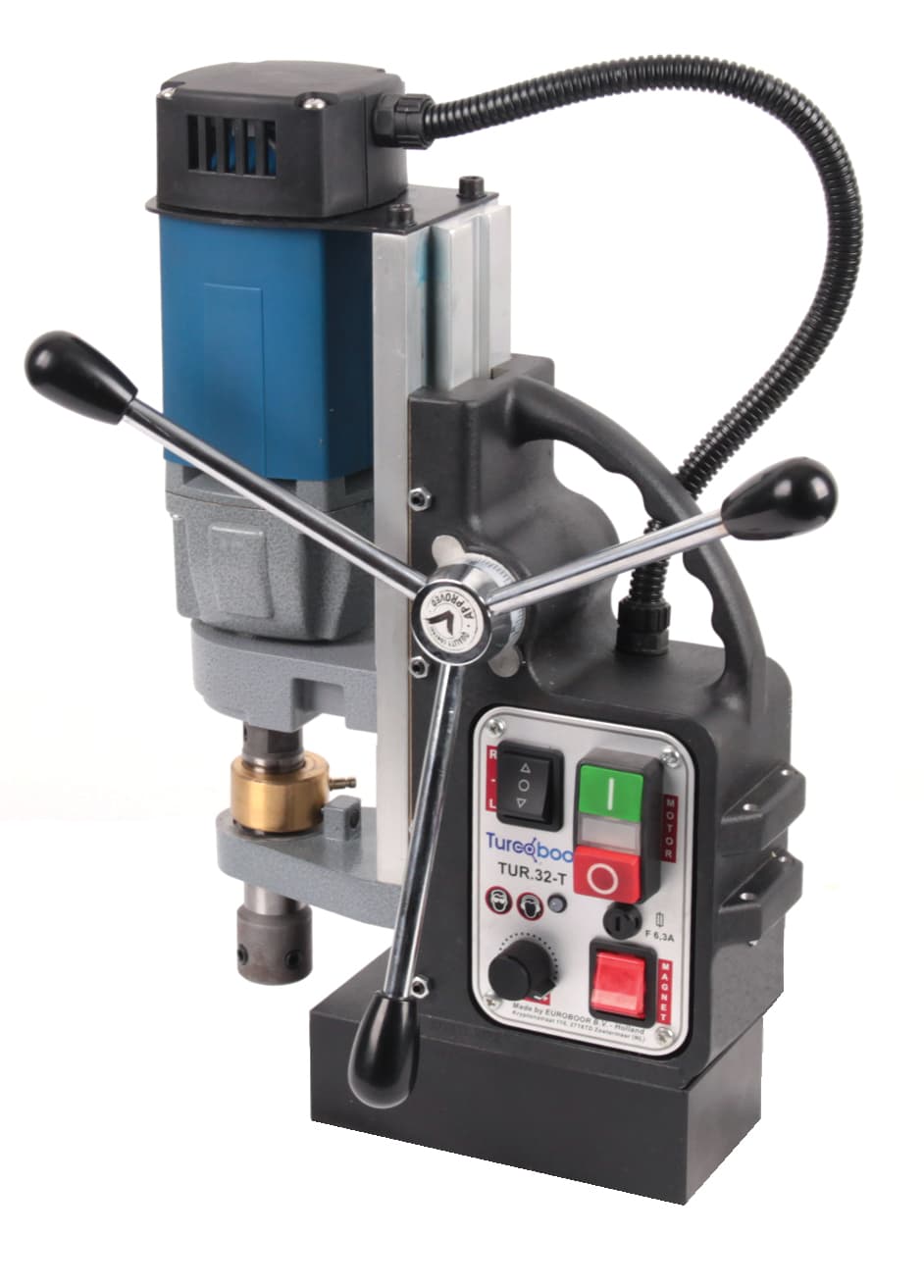
Turcoboor TURCO32TAK Magnetic Drill with Tapping
Turcoboor · Magnetic Drills
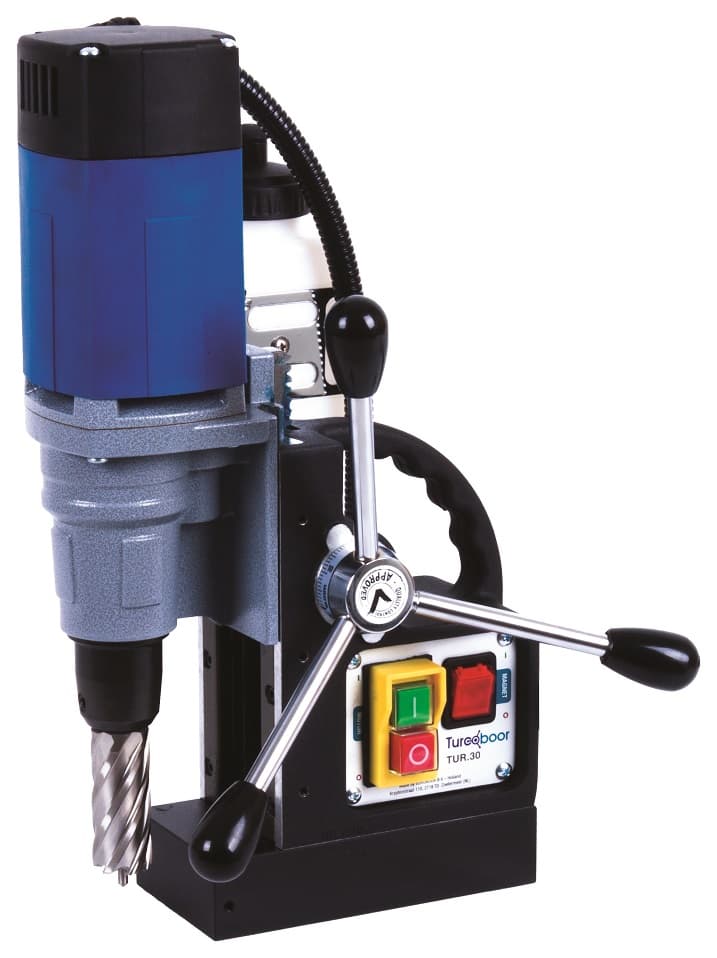
Turcoboor TURCO30 Magnetic Drill
Turcoboor · Magnetic Drills
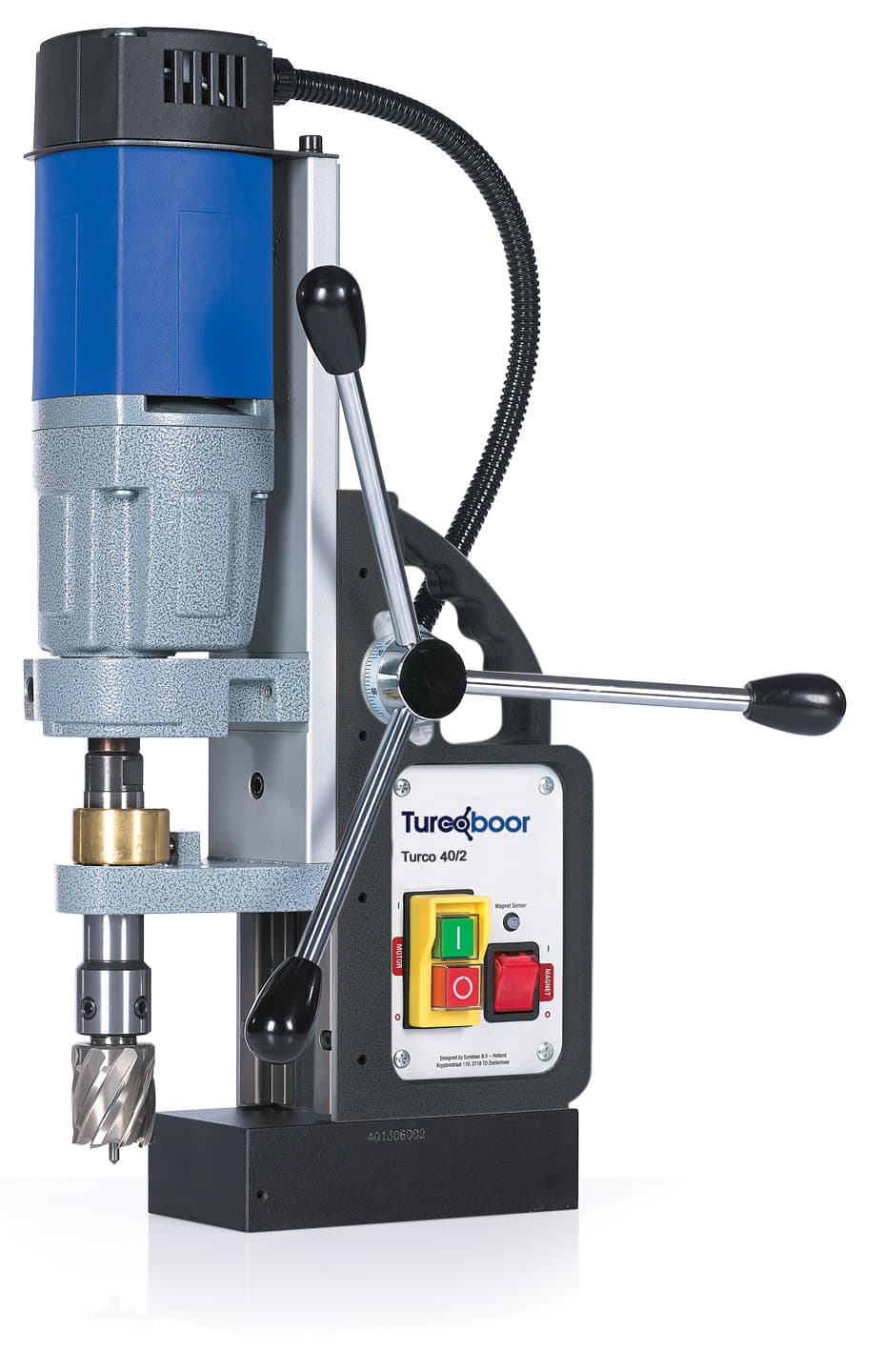
Turcoboor TURCO40 Magnetic Drill
Turcoboor · Magnetic Drills
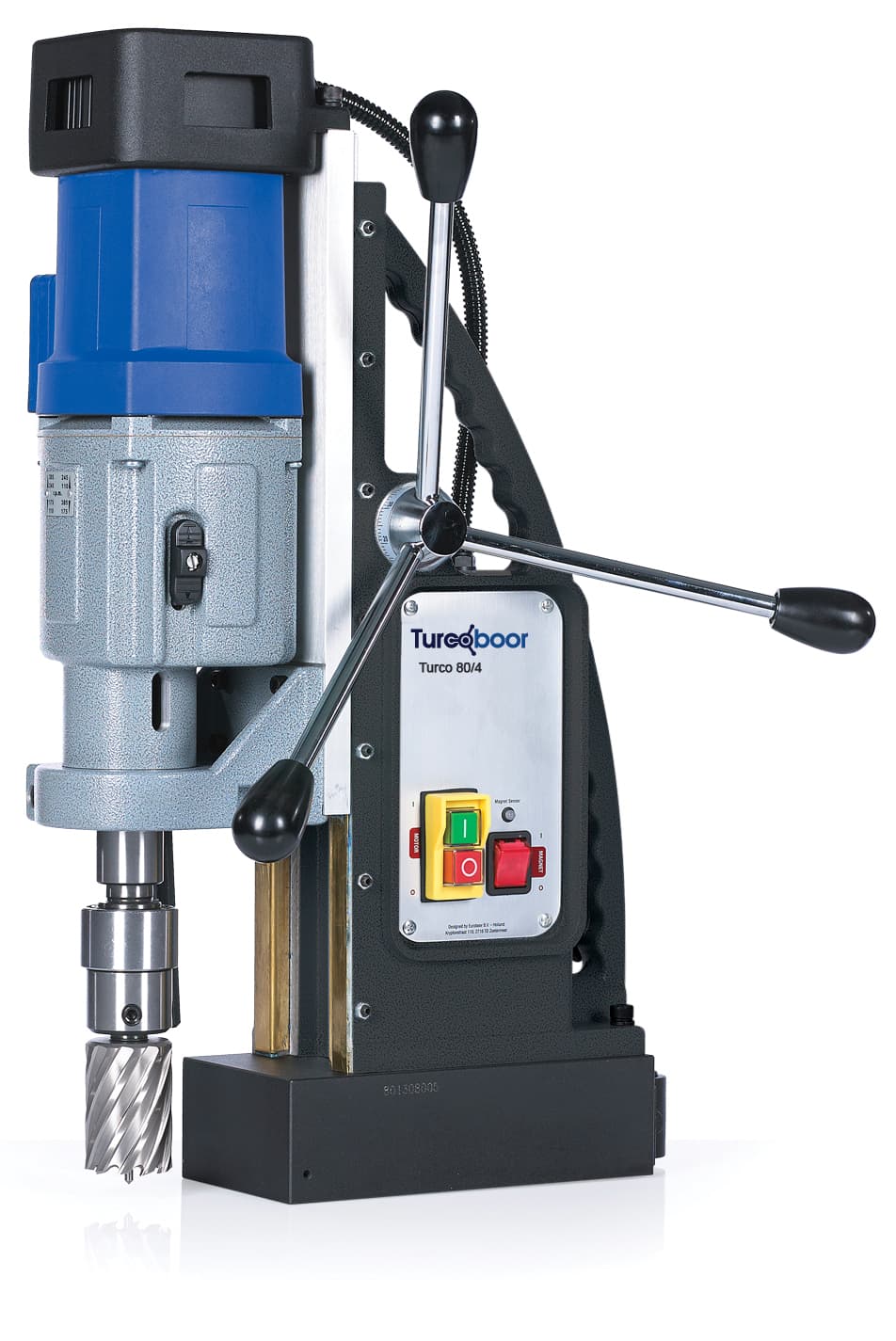
Turcoboor TURCO80 Magnetic Drill
Turcoboor · Magnetic Drills
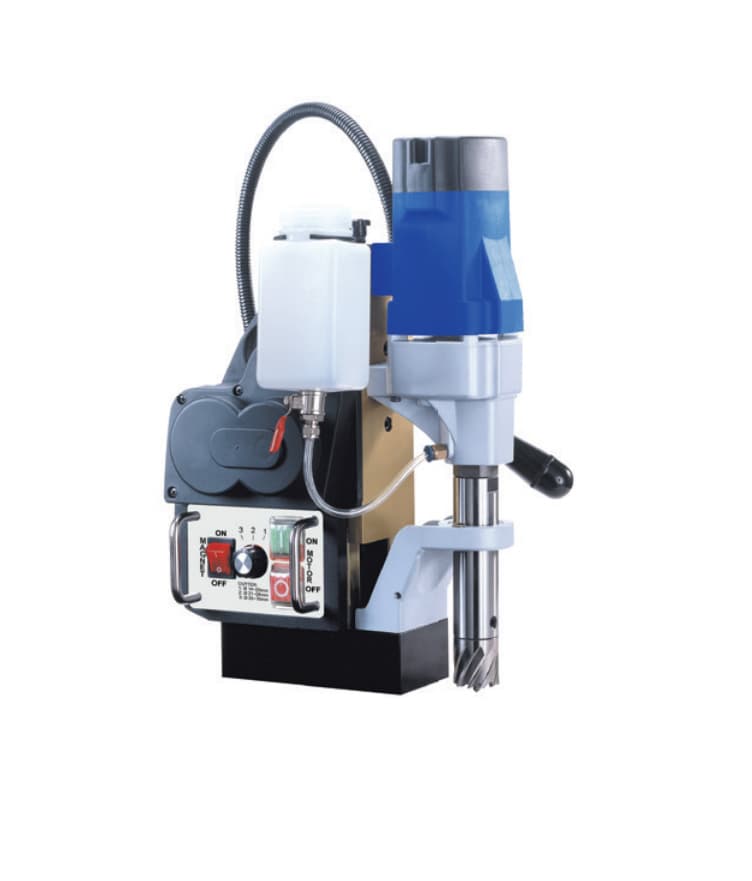
Turcoboor TURCOTB30X Magnetic Drill Semi-Automatic
Turcoboor · Magnetic Drills
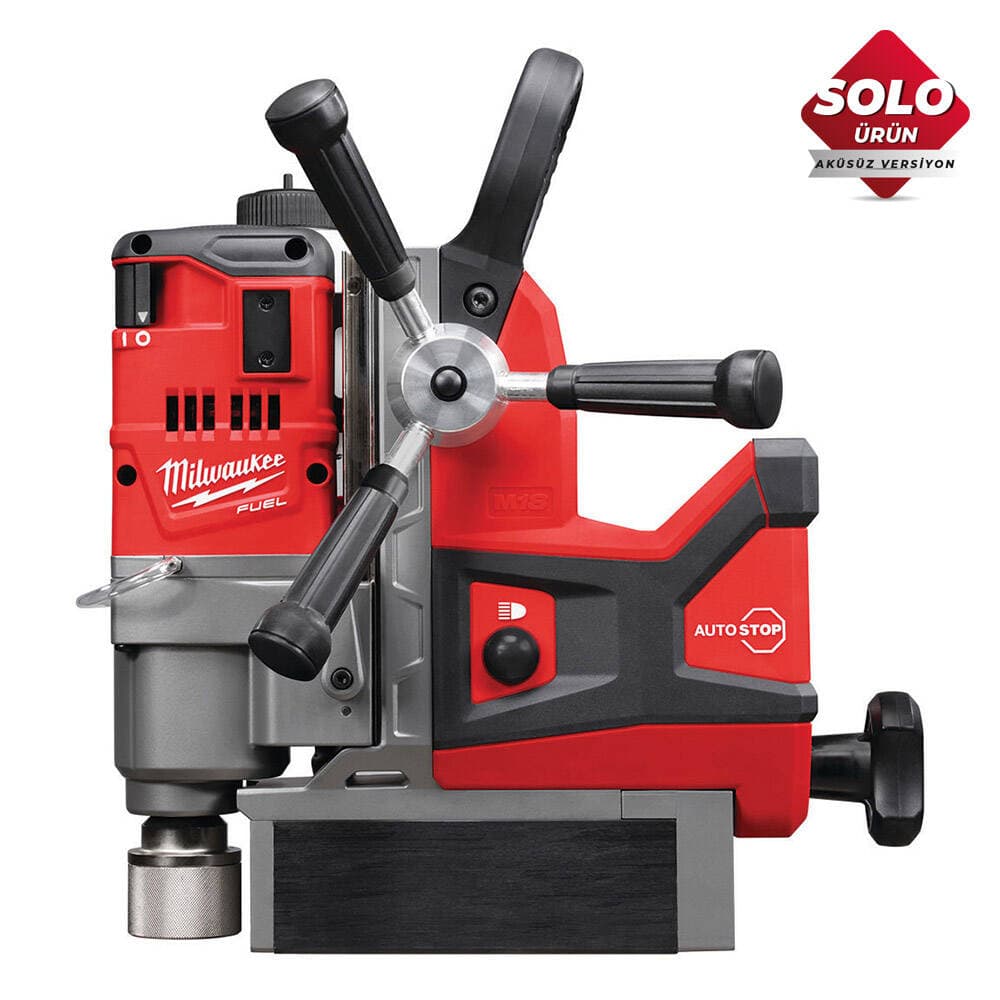
Milwaukee M18 FMDP-0C Cordless Magnetic Drill
Milwaukee · Magnetic Drills
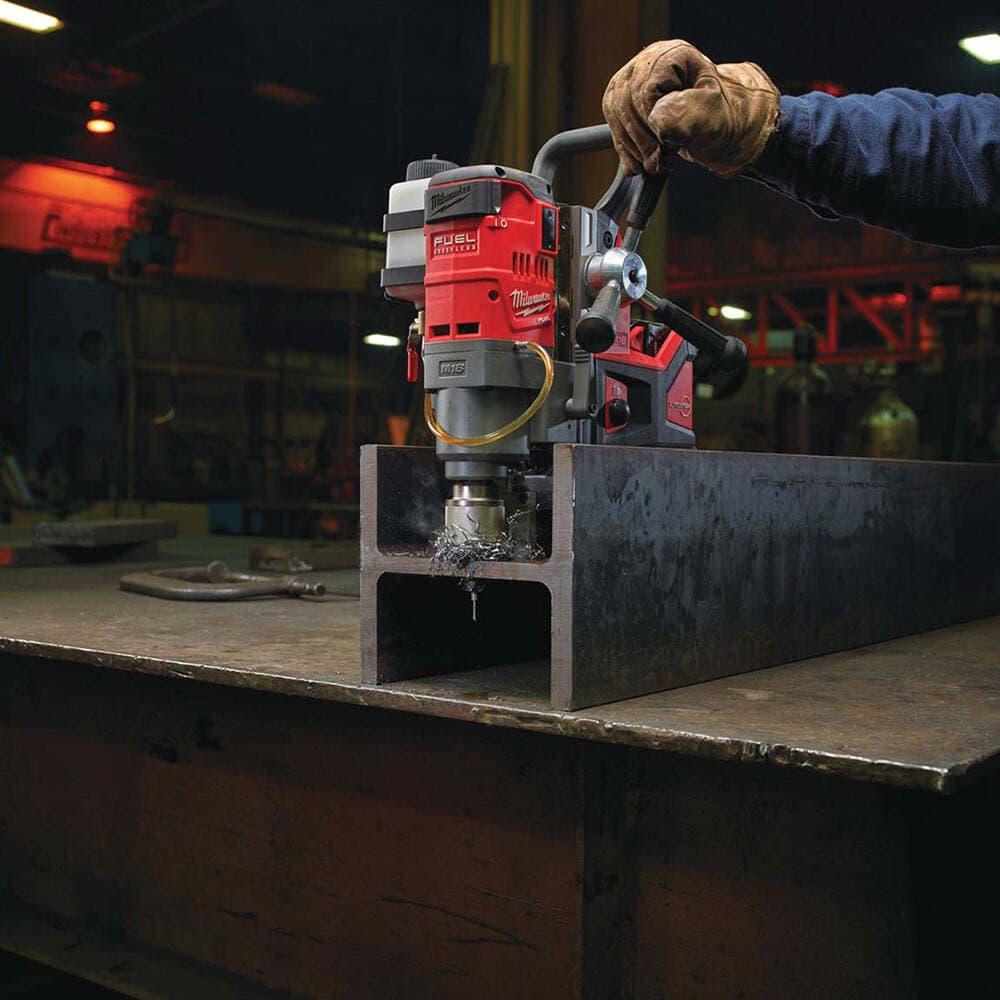
Milwaukee M18 FMDP-502C Cordless Magnetic Drill
Milwaukee · Magnetic Drills
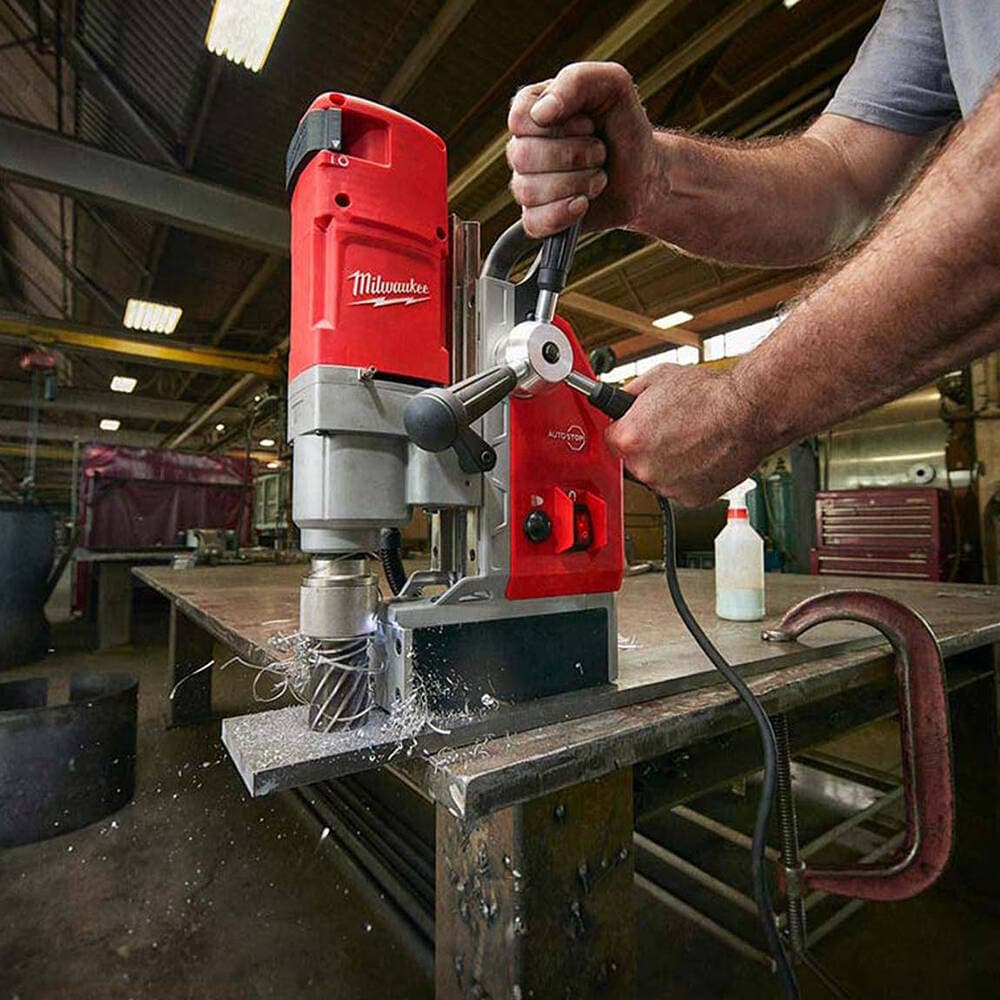
Milwaukee MDE 41 41 mm Elektro Magnetic Drill
Milwaukee · Magnetic Drills
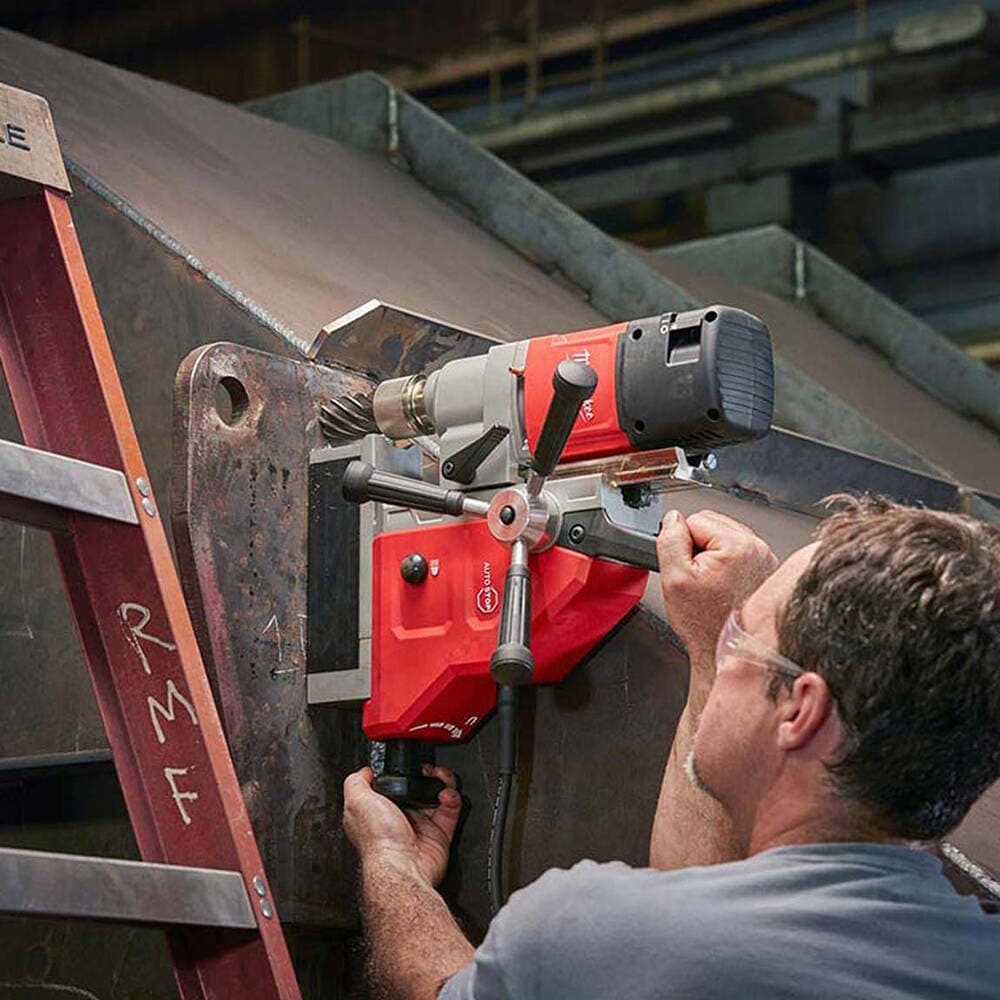
Milwaukee MDP 41 41 mm Manuel Magnetic Drill
Milwaukee · Magnetic Drills
Magnetic holding and annular cutters
Holding force has to resist the torque of drilling, and it only reaches its rated value on clean, flat steel of sufficient thickness — paint, rust and swarf all weaken it. On thin sheet the magnetic circuit does not close and the machine can slide.
These machines usually take an annular cutter rather than a twist drill: it cuts only the rim of the hole and ejects the slug whole, needing far less force and time than a twist drill of the same diameter.
- The surface must be clean, flat and thick enough.
- A safety strap or chain is mandatory vertically and overhead.
- An annular cutter is much faster than a twist drill of equal size.
- Cutting fluid improves both cutter life and hole finish.
Frequently Asked Questions
What surfaces does a magnetic drill work on?
Clean, flat ferromagnetic steel of sufficient thickness. Rust, paint and thin sheet weaken the magnetic circuit; it will not hold on stainless or aluminium.
How does an annular cutter differ from a twist drill?
It cuts only the circumference and ejects the slug whole, so it needs far less power and drills much faster at the same diameter.
Is a safety strap necessary?
It is mandatory for vertical and overhead work. The magnet releases if power fails, and the strap or chain stops the machine falling.
Is cutting fluid essential?
In practice yes — it noticeably extends cutter life and leaves a better hole. Many machines carry a fluid reservoir and feed line.