Categories
PU Coated Gloves
PU (polyurethane) coated gloves are the thinnest of the coated work gloves: the type that gives away the least fingertip feel. They are the glove of assembly, electronics and inspection, where the parts are small.
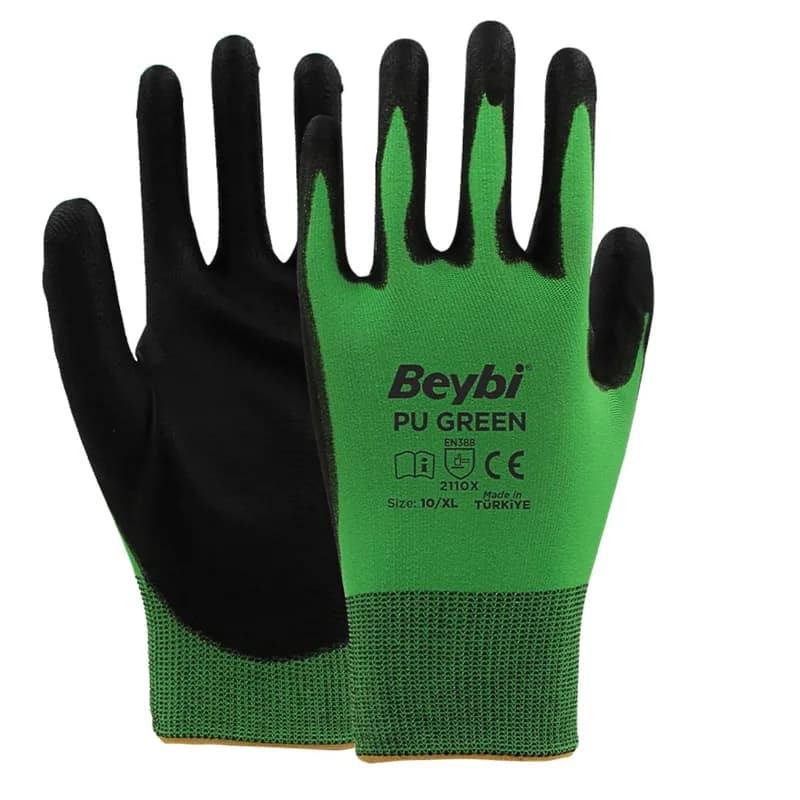
Beybi PU Special Purpose Work Glove Size 10
Beybi · PU Coated Gloves
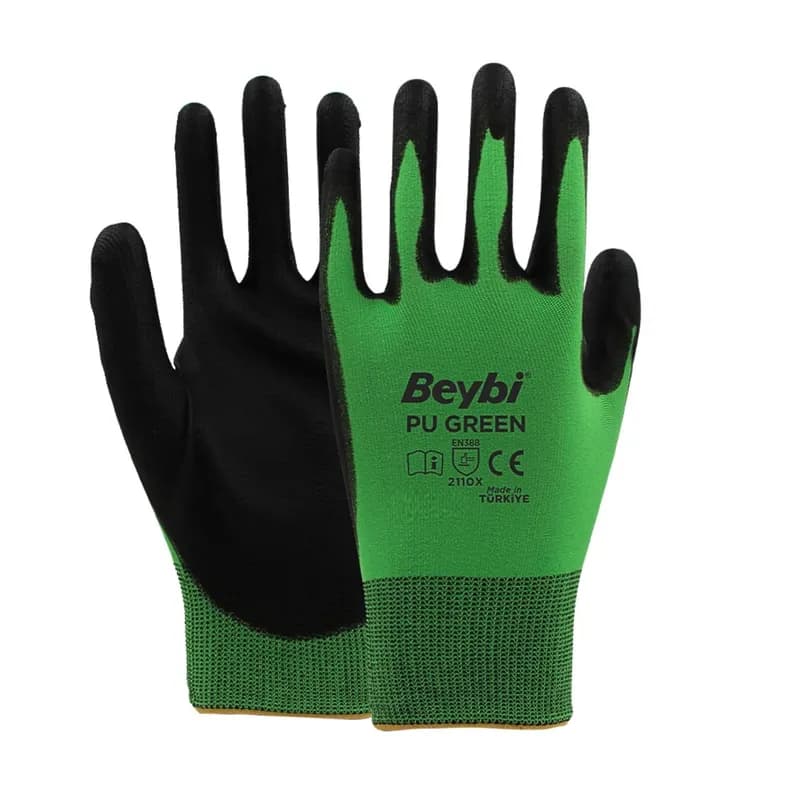
Beybi PU Special Purpose Work Glove Size 9
Beybi · PU Coated Gloves
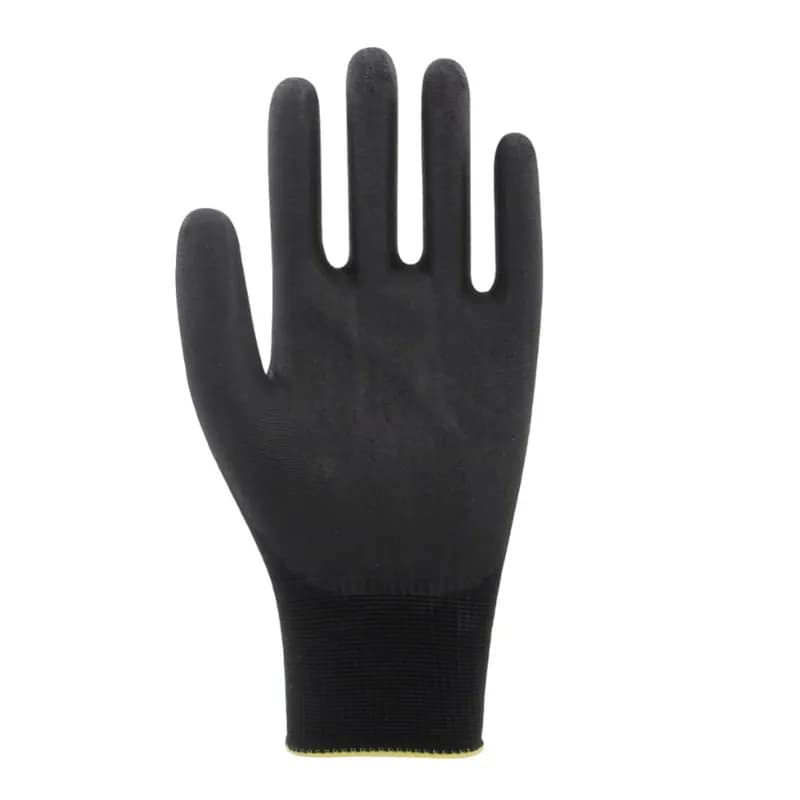
Beybi PU Coated Knit Work Glove Size 10
Beybi · PU Coated Gloves
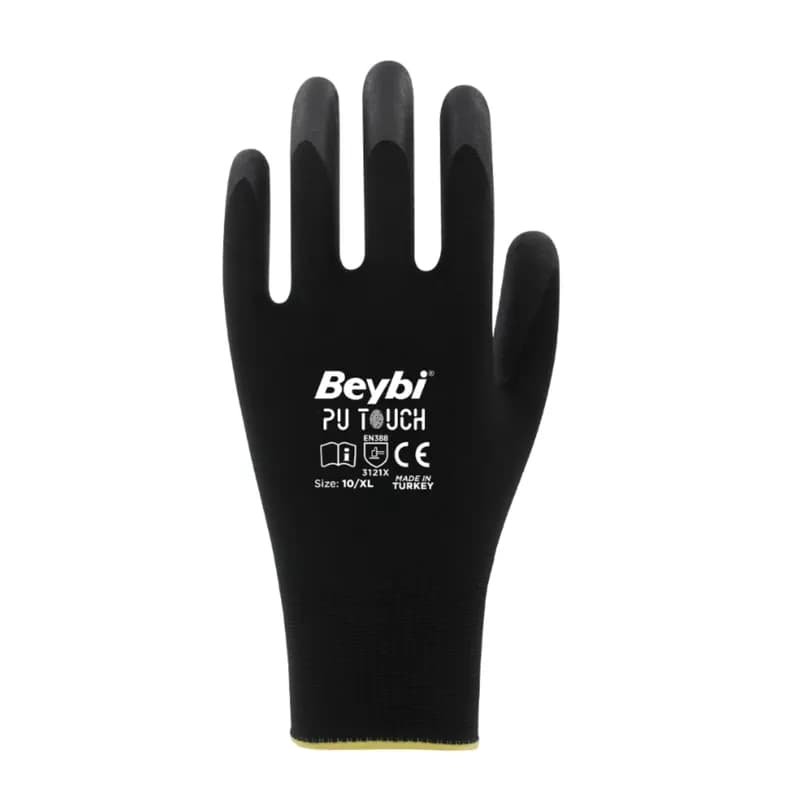
Beybi PU Coated Knit Work Glove Size 7
Beybi · PU Coated Gloves
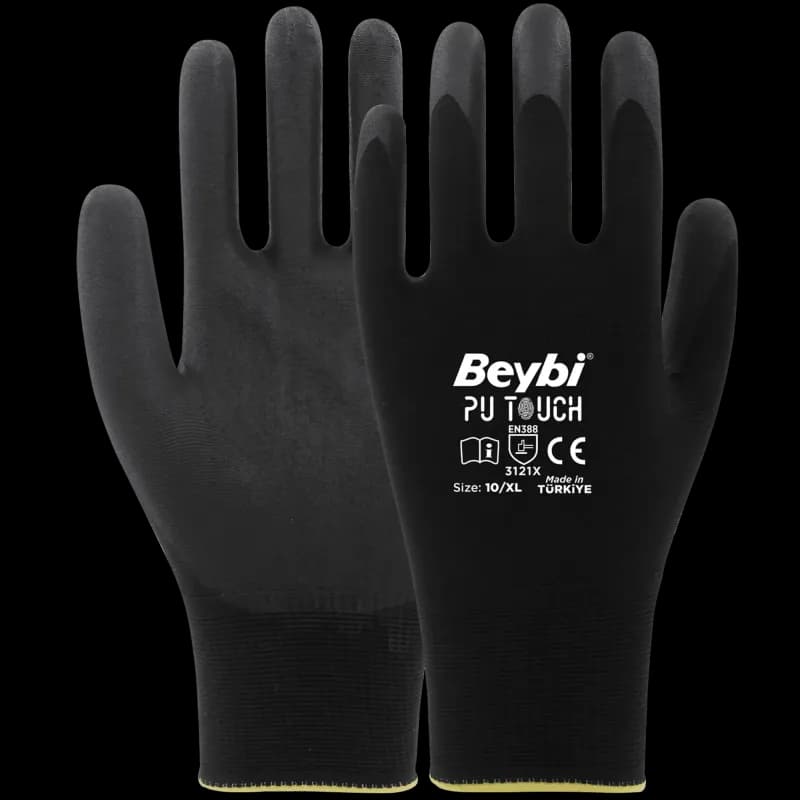
Beybi PU Coated Knit Work Glove Size 8
Beybi · PU Coated Gloves
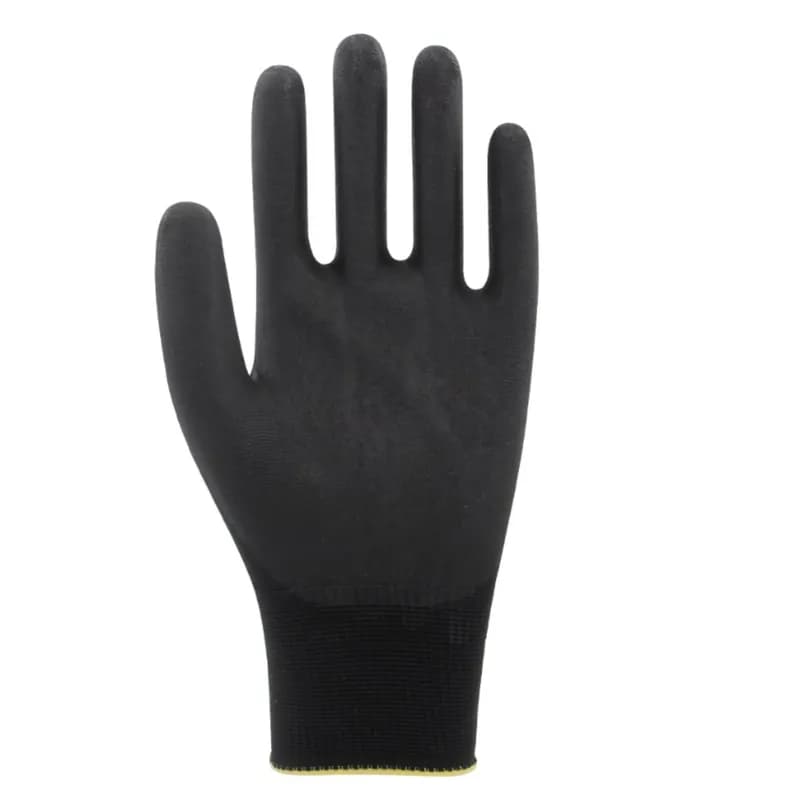
Beybi PU Coated Knit Work Glove Size 9
Beybi · PU Coated Gloves
What the thin coating gains and costs
A PU dip is markedly thinner than nitrile. The gain is feel: a small screw, a connector or a thin sheet edge can be felt through the glove. That is what stops people on an assembly line from taking gloves off.
The cost is abrasion life. On rough surfaces the same user will wear through a PU dip sooner than a nitrile one. Where there is rough handling, a sharp edge or constant rubbing, nitrile lasts longer.
| Coating | Where it is strong | Where it is weak |
|---|---|---|
| Nitrile | Oil, grease and hydrocarbons; abrasion; no allergy risk | Less sensitive than PU on very fine work |
| Latex | Grip on wet and slippery surfaces; most elastic | Swells in oil; natural protein allergy risk |
| PU (polyurethane) | Fingertip sensitivity; thin and light | Shortest abrasion life of the three |
Coating materials; liner and coverage are chosen separately.
Where they are used
Electronics assembly, automotive interior assembly, inspection, packing and warehouse work are the natural ground for a PU glove: the parts are small, they must stay clean, and the pace of the work depends on dexterity.
PU is usually applied to the palm only; the back stays bare knit and the glove stays cool through the day. It is not the right glove where there is liquid contact.
Frequently Asked Questions
How long does a PU glove last?
It depends on the work. The thin coating is what gives the sensitivity, and it trails nitrile on abrasion: rough surfaces, sharp edges and constant rubbing wear it through sooner. On small-part work it lasts well.
Are PU gloves suitable for static-sensitive work?
A standard PU coated glove is not an antistatic product. In an ESD protected area, use a glove certified for that purpose.
PU or nitrile?
PU where the parts are small and the work is fine; nitrile where there is oil, rough surfaces and abrasion. The difference is not protection level but the trade between sensitivity and life.