Categories
Median Nose Pieces
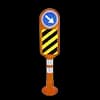
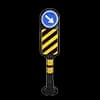
Median nose markers tell drivers where a median or island begins. The catalog lists 85 cm flexible units whose bodies lie down and spring back after impact.
What the Nose Marker Does
The start of a median or island is the point vehicles hit most often: where the line begins is hard to read at night and in poor visibility. A nose marker raises that point and flags it with a reflective surface, reducing impacts.
The flexible body lies down on contact rather than breaking, then returns upright. That extends its own life and limits vehicle damage by presenting a deformable surface instead of a rigid obstacle.
- 85 cm flexible median nose marker — marks the start of an island
- Body springs back after impact — low replacement frequency
- Reflective surface for night visibility
- Used as the leading element of a delineator line
- Junctions, roundabouts and car park island layouts
Planning with the Delineator Line
A nose marker is not planned alone but with the delineators that continue the line: the nose marks the start, the delineators the run. Spacing is set so the driver reads the line continuously.
Using the same reflective colour scheme on both the nose marker and the delineators makes the whole line read as one continuous edge at night.
Frequently Asked Questions
How does a nose marker differ from a delineator?
A nose marker flags the starting point of an island or median and usually has a more prominent body. Delineators mark the run that follows. Used together, the line reads from start to finish.
Does it need replacing after every impact?
No. Flexible bodies lie down and spring back, so routine contact does not require replacement. Renew the unit when the body is permanently deformed or the reflective surface has lost its function.
How is it installed?
It is anchored into the surface. Because it is the point the driver needs to register earliest, it belongs right at the tip of the island and in the driver's line of sight.