Categories
Security Mortise Locks
A security mortise lock resists attack by locking the door at three or four points rather than one. It is used on apartment entrance and exterior doors. The catalogue holds 7 models.
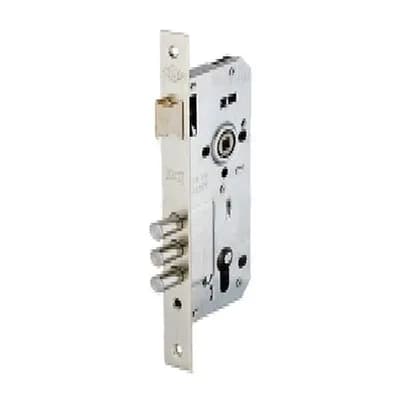
Kale Ball-Pin Cylinder Security Mortise Lock, 3 Bolts 45 mm Nickel 2000
Kale Kilit · Security Mortise Locks
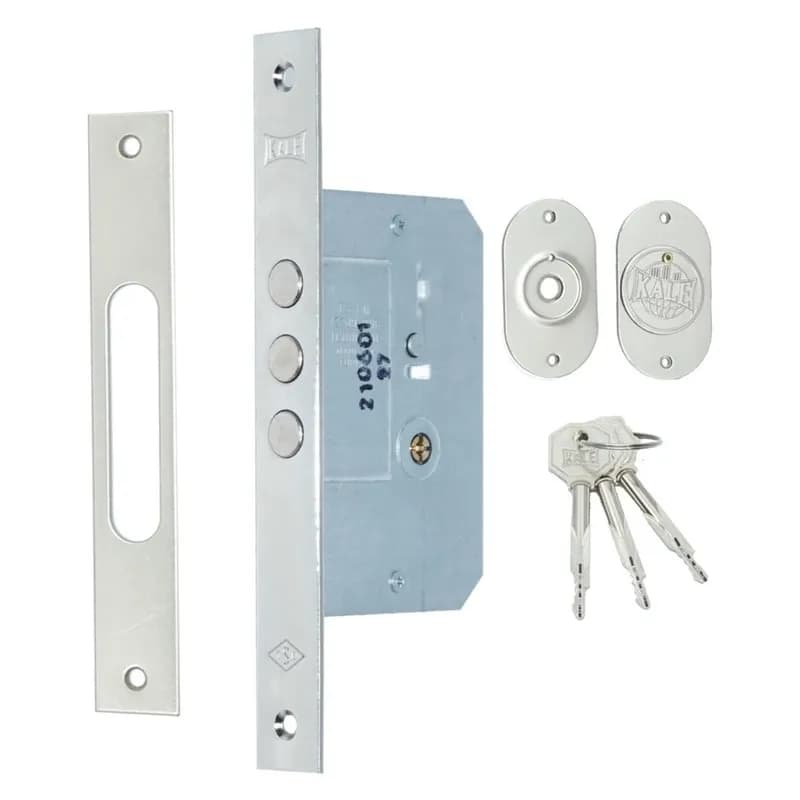
Kale Fiam Cylinder Security Mortise Lock 3-Bolt Nickel 189/3 MF
Kale Kilit · Security Mortise Locks
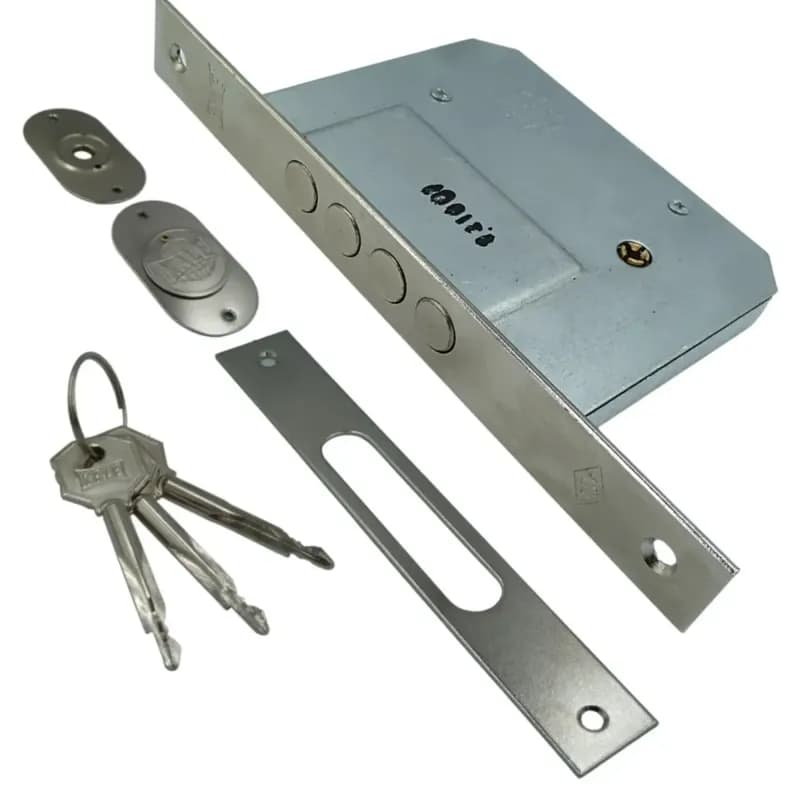
Kale Fiam Cylinder Security Mortise Lock 4-Bolt Nickel 189/4 MF
Kale Kilit · Security Mortise Locks
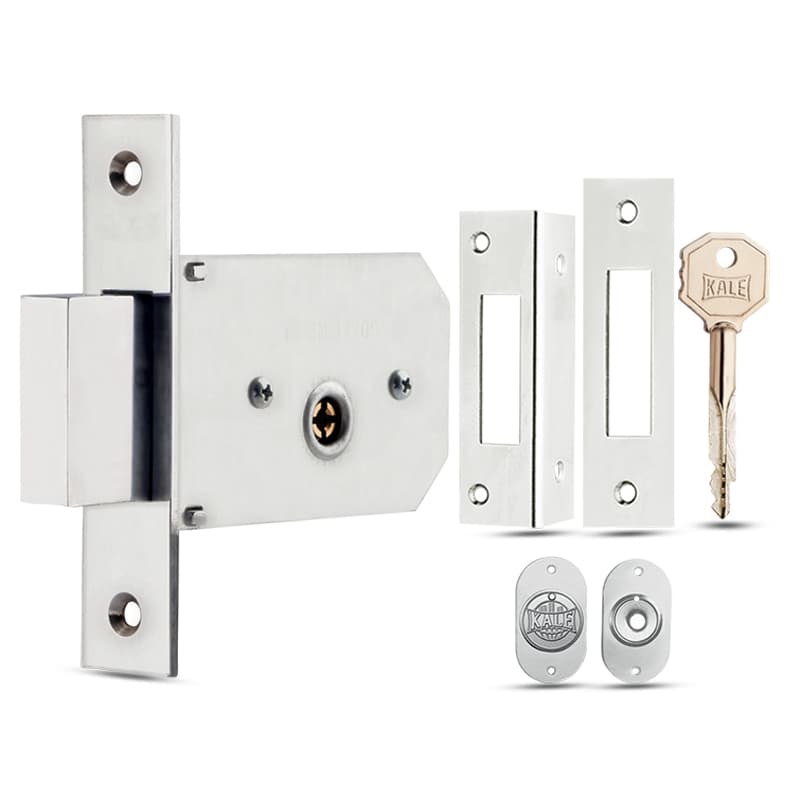
Kale Prazis Cylinder Security Mortise Lock Wooden and Metal Doors 156 F
Kale Kilit · Security Mortise Locks
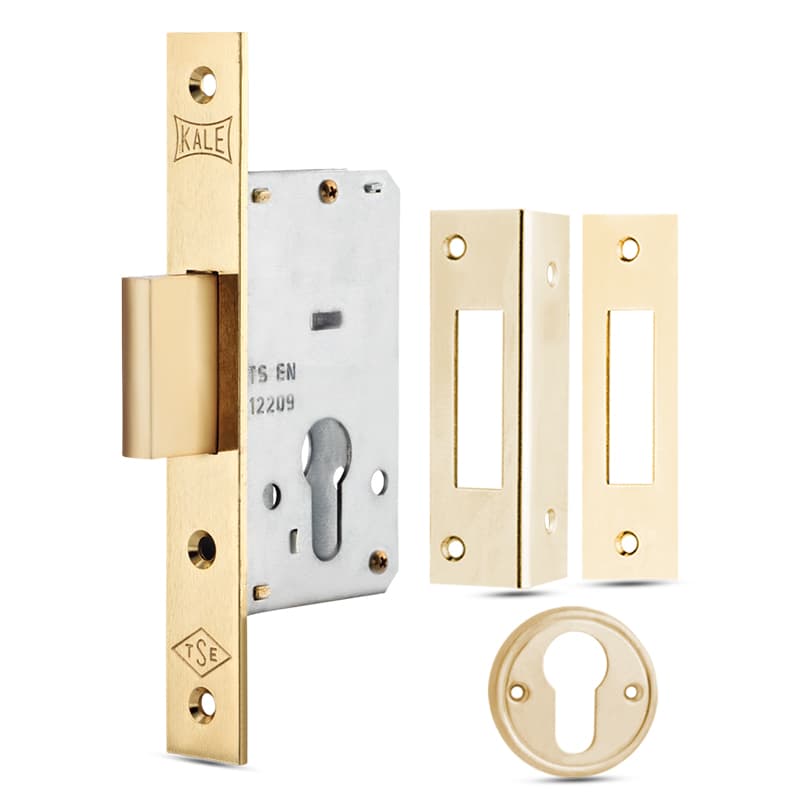
Kale Cylinder Security Mortise Lock Wooden and Metal Doors 157
Kale Kilit · Security Mortise Locks
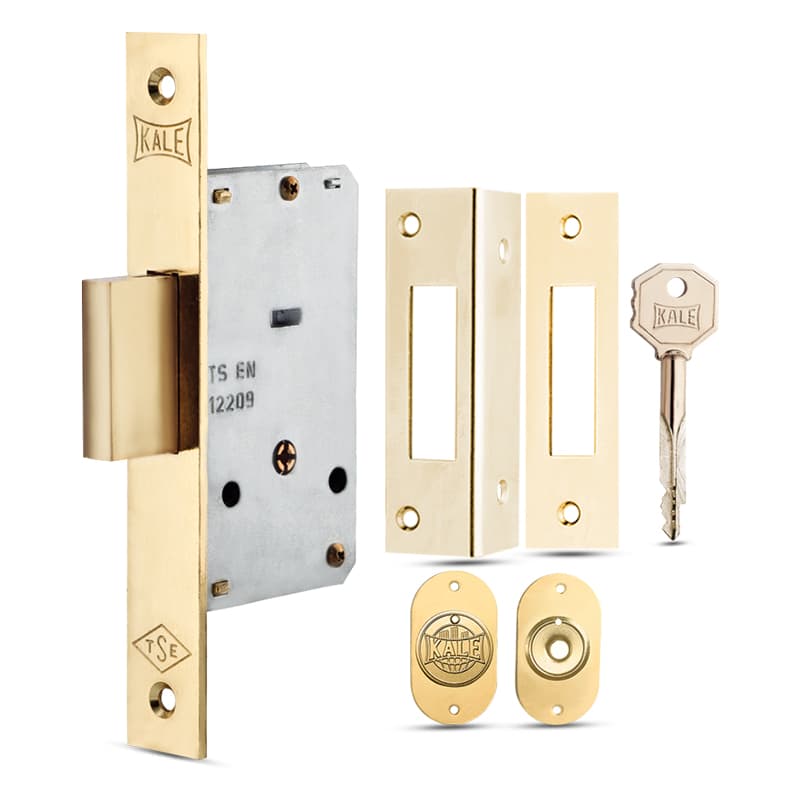
Kale Prazis Cylinder Security Mortise Lock Wooden and Metal Doors 157 F
Kale Kilit · Security Mortise Locks
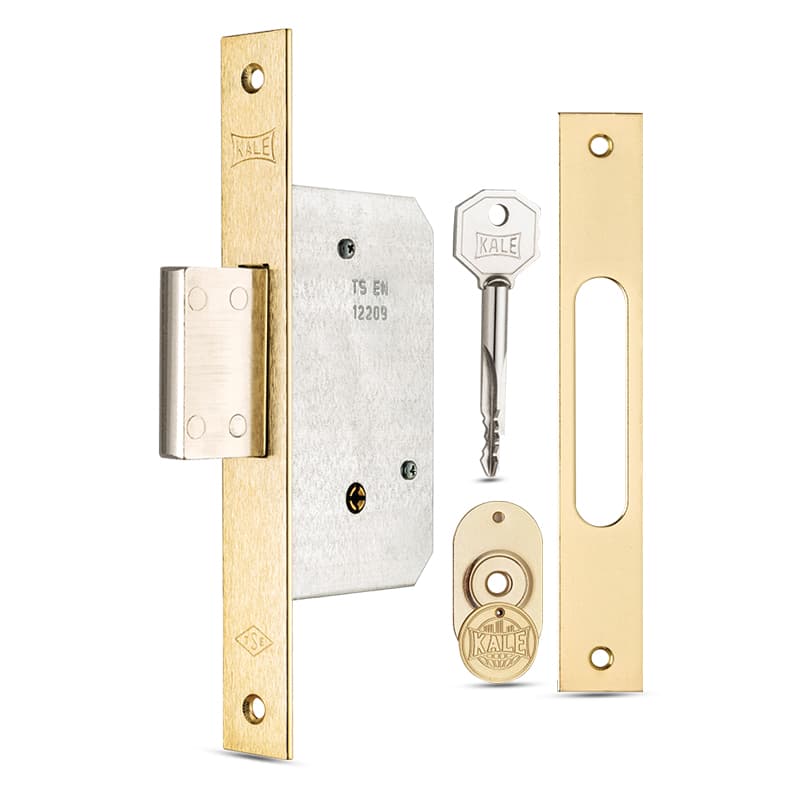
Kale Prazis Cylinder Security Mortise Lock Wooden and Metal Doors 189 F
Kale Kilit · Security Mortise Locks
Multi-point locking
Turning the key drives not only the side bolt but rods running along the edges of the leaf. That spreads the attack force around the door instead of concentrating it at one point, making it far harder to separate the leaf from the frame.
The difference between 3-point and 4-point versions is simply the number of locking points. The lock should be judged together with its cylinder: a multi-point lock fitted with an ordinary cylinder will be opened at its weakest link.
Frequently Asked Questions
What is the difference between 3-point and 4-point?
The number of locking points. A 4-point lock grips the door at one more place and spreads the attack force over a wider area.
Can it be fitted to my existing door?
If the lock pocket dimensions match, yes. Compare centre distance, backset and faceplate length against the existing lock; the rods also need channels.
Should the cylinder be changed too?
It is recommended. With a standard cylinder the cylinder sets the security level of the whole door; a ball-pin or anti-pick cylinder should be preferred.
How does it differ from a steel door lock?
The principle is similar; steel door locks use hook and pin bolts and are made to the specific pockets of those doors, while security mortise locks are for timber and standard leaves.