Categories
Dye Penetrant Inspection Sprays
Dye penetrant inspection makes an invisible surface crack readable in three steps. The method rests on capillary action: the liquid draws itself into the crack, then is drawn back out and made visible against a white ground. All three cans are 500 ml, supplied as a set or singly.
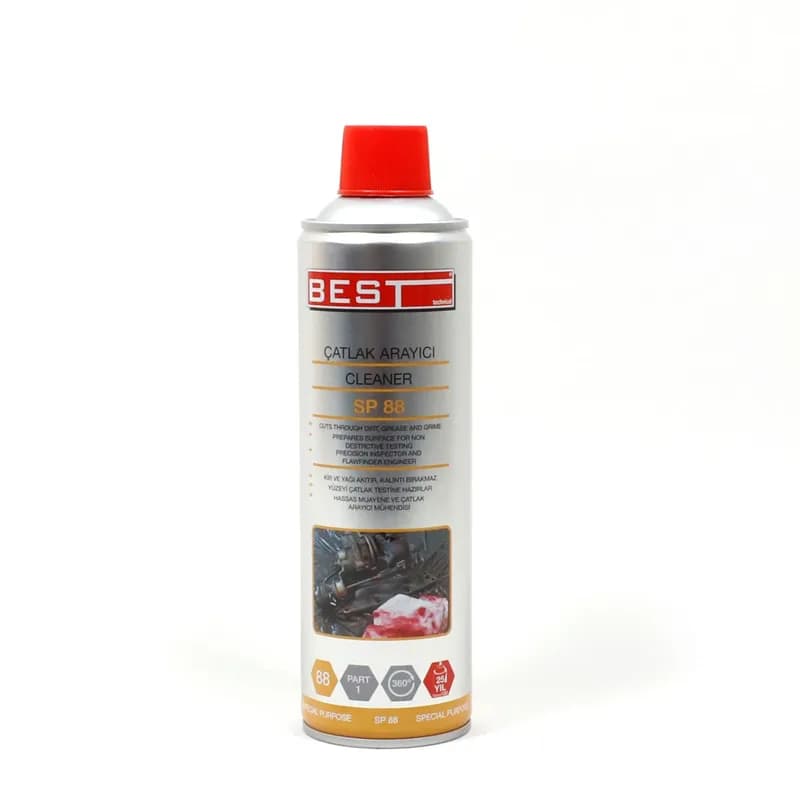
Best Penetrant Test Cleaner SP 88 500 ml
Best · Dye Penetrant Inspection Sprays
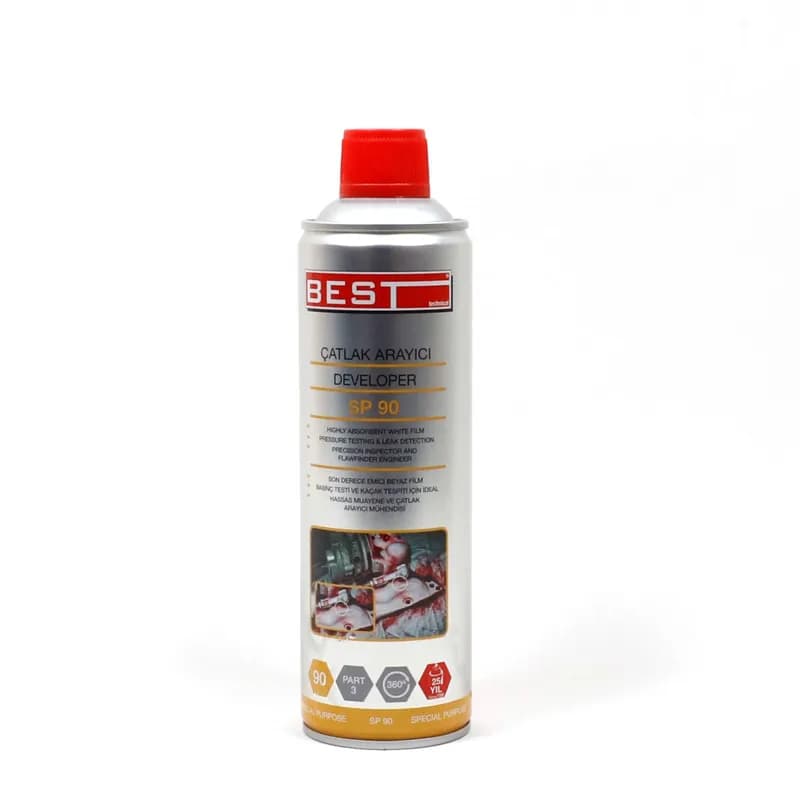
Best Penetrant Test Developer SP 90 500 ml
Best · Dye Penetrant Inspection Sprays
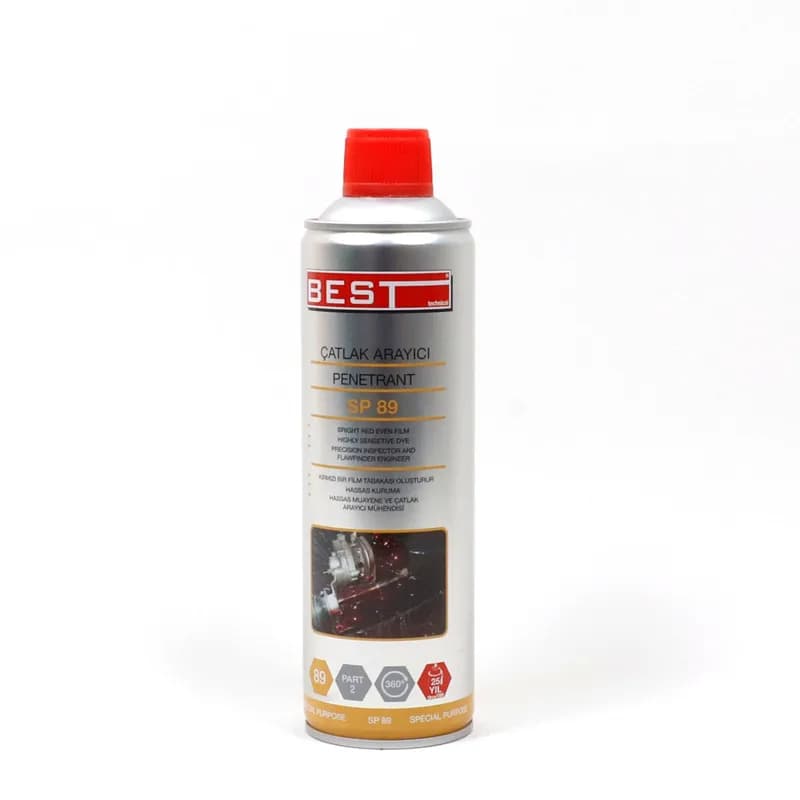
Best Red Dye Penetrant SP 89 500 ml
Best · Dye Penetrant Inspection Sprays
Three steps, in order
1. Cleaner (SP 88): cleans the surface to be inspected. The penetrant only enters a clean crack; one filled with oil, paint or dust will not show. That is why the sequence starts here.
2. Penetrant (SP 89): the red one. Sprayed on and left to dwell, it is drawn into the crack by capillary action. At the end of the dwell the excess is wiped off with cleaner — what is inside the crack stays.
3. Developer (SP 90): leaves a white, absorbent layer. It draws the red penetrant back out of the crack into a red line on a white ground; the length and direction of the flaw are read at this stage.
Where it is used
Weld inspection is the most common use: cooling cracks after welding open at the surface and are far too fine to see.
Beyond that it is used to find hairline cracks in castings, hydraulic and pneumatic tools and steel wheels. The method shows flaws that break the surface; internal defects need ultrasonic or radiographic testing.
Frequently Asked Questions
Do I have to buy the set?
The three work together, but they are not used up at the same rate: the cleaner goes fastest because it is used both in step 1 and to wipe off the excess. All three can be ordered singly.
Which materials can it be used on?
Any non-porous material: steel, stainless, aluminium, castings, copper alloys and non-metallic materials. Porous surfaces hold the penetrant everywhere, so the method does not apply.
How long should the penetrant dwell?
Dwell time depends on the material, the temperature and how fine the flaw being looked for is; hairline cracks need longer. Take the figure from the inspection procedure in force.
Does it find internal defects?
No. Penetrant shows only flaws that break the surface. Porosity, slag inclusions and internal cracks that do not reach the surface need ultrasonic or radiographic testing.