Categories
Welding & Anti-Spatter Sprays
In MIG welding spatter causes trouble in two places: it sticks to the workpiece and has to be cleaned off, and it sticks in the torch nozzle and disturbs the gas flow. Anti-spatter spray goes on the work, the paste goes in the nozzle. This page also covers stainless weld repair spray.
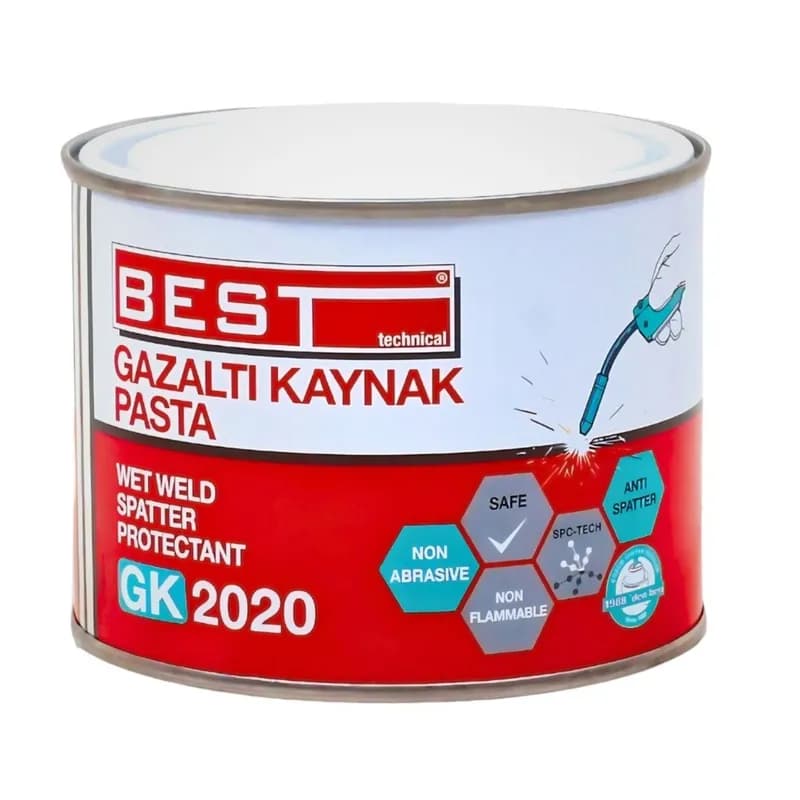
Best MIG Anti-Spatter Paste GK 2020 250 g
Best · Welding & Anti-Spatter Sprays
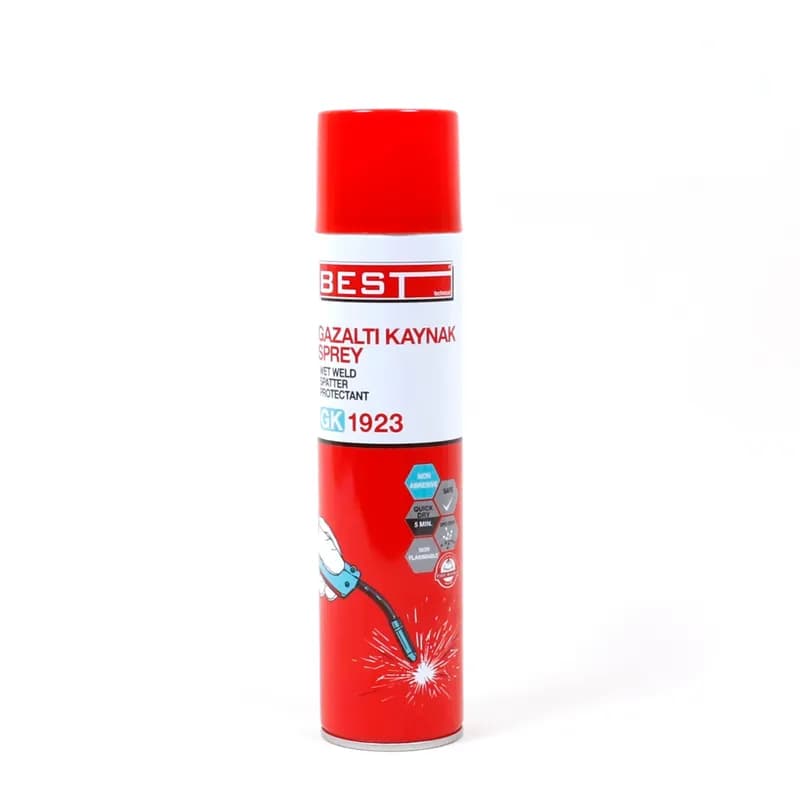
Best MIG Anti-Spatter Spray GK 1923 350 g
Best · Welding & Anti-Spatter Sprays
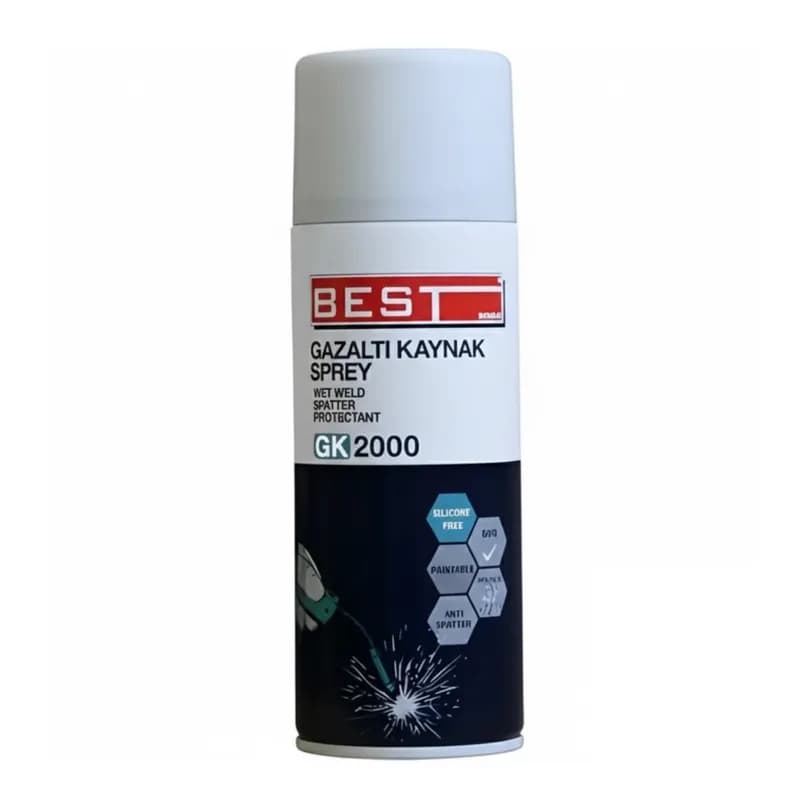
Best MIG Anti-Spatter Spray GK 2000 400 ml
Best · Welding & Anti-Spatter Sprays
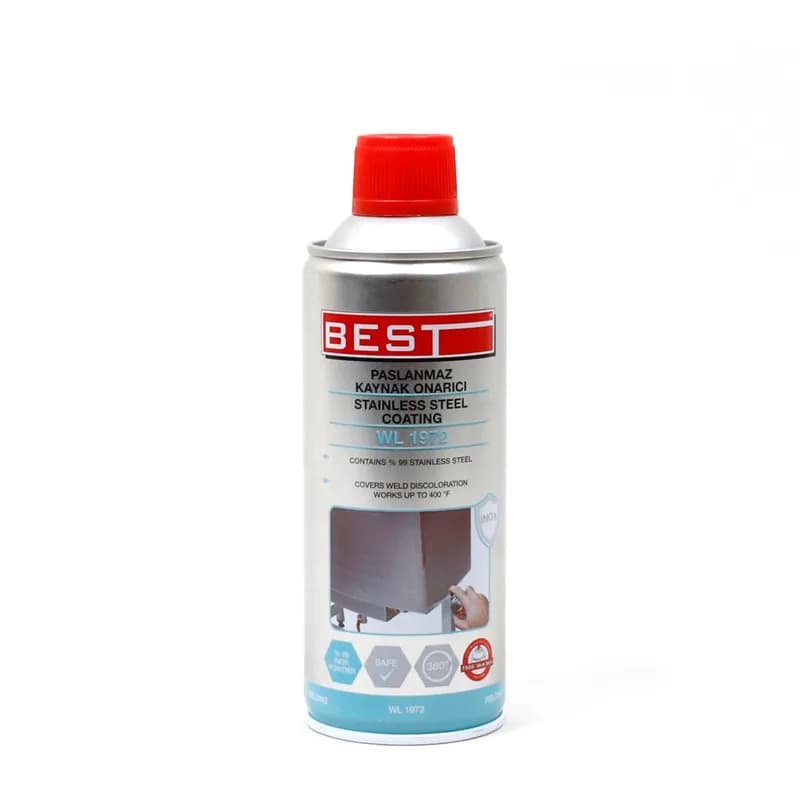
Best Stainless Weld Repair Spray WL 1972 400 ml
Best · Welding & Anti-Spatter Sprays
Spray or paste?
The spray is for the workpiece: it leaves a thin film on the metal so spatter lands on the film instead of fusing to the steel, and lifts off by hand or with a scraper.
The paste is for the torch. Its very high viscosity keeps it from running off a hot nozzle; when the torch is hot, coat the last 20-25 mm. With no spatter building on the nozzle the gas shield stays clean.
With and without silicone
Some anti-spatter products contain silicone. Silicone residue interferes with paint and label adhesion, so fabrications that will be painted after welding need a silicone-free product — the paste in this catalogue is silicone free.
Surfaces treated with anti-spatter can still be painted and marked afterwards, which is one of the reasons the product is specified in the first place.
Frequently Asked Questions
How long does anti-spatter spray stay effective?
It is meant for one welding cycle: reapply to the work before each pass. It dries in 5 minutes and the non-flammable formulation is suitable for use near the arc.
Can spray be used in the torch nozzle?
It can, but paste suits the job better: spray runs off a hot nozzle, paste stays put. In high-throughput production the paste is what cuts nozzle cleaning frequency most.
What does stainless weld repair spray do?
It is a coating formulated with stainless steel pigment: it covers the zone that lost corrosion resistance to weld heat, gives a satin finish and is rated to 200 °C. It hardens overnight and reaches full strength in a few days.
Is it applied before or after welding?
Anti-spatter spray and paste go on BEFORE welding — that is the whole point of them. Stainless weld repair spray goes on AFTER, once the bead has been cleaned.