Categories
Angle Grinders & Cutters
Grinders are classified by disc diameter, and that diameter sets both cut depth and speed: a small disc spins fast and stays controllable, a large one turns slower but cuts deeper. This page covers the difference between angle grinders, large grinders and chop saws, how to choose a disc, and what safety features to look for. The catalogue holds over 190 models.
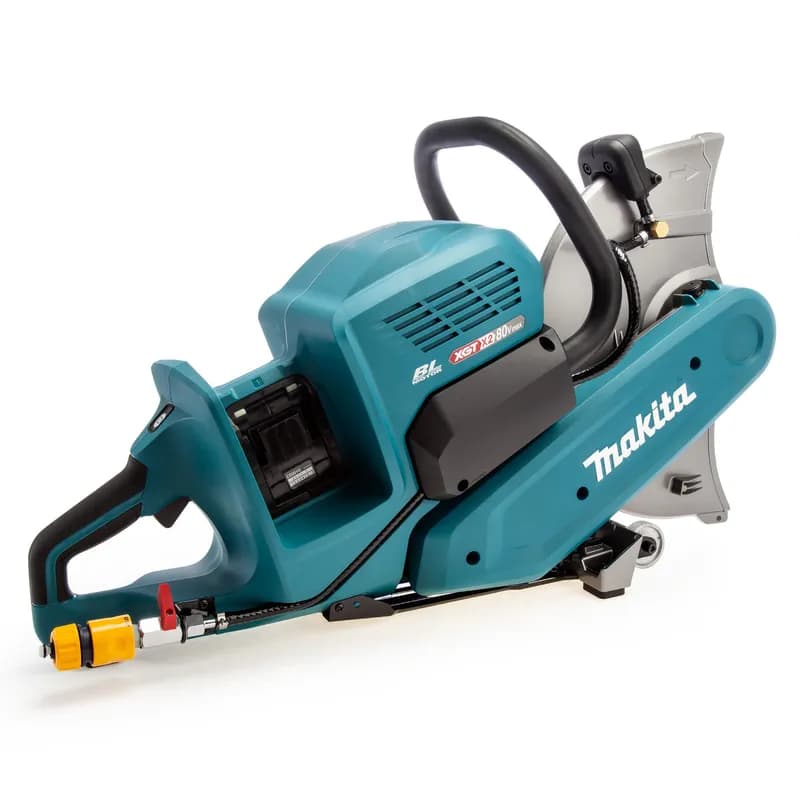
Makita CE001GZ Cordless Concrete Saw
Makita · Angle Grinders & Cutters
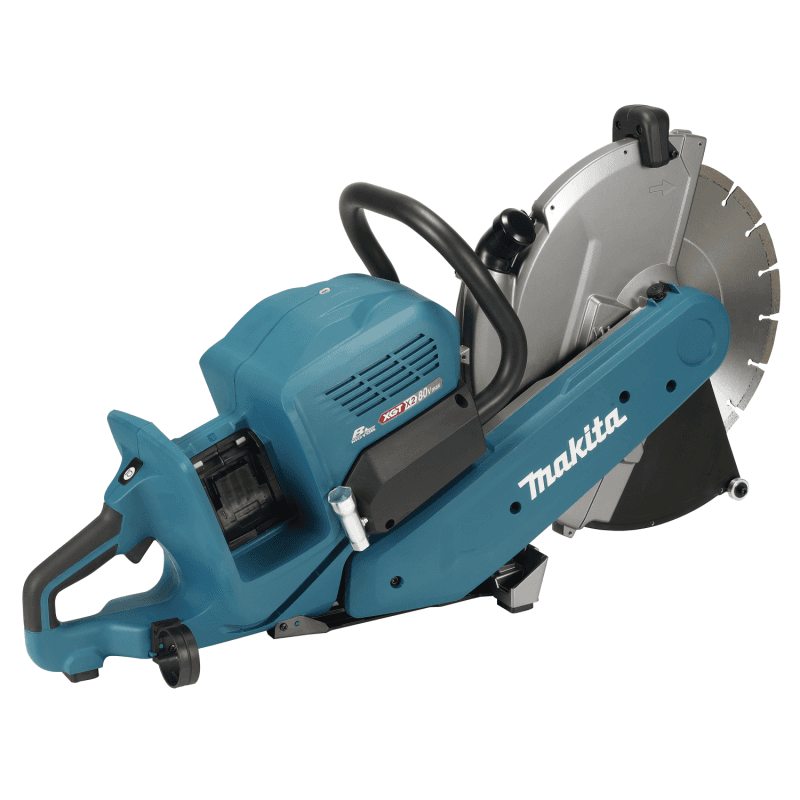
Makita CE002GZ Cordless Concrete Saw
Makita · Angle Grinders & Cutters
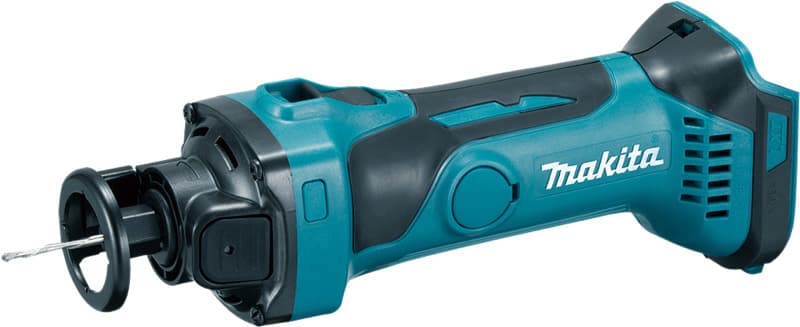
Makita DCO180Z Drywall Cutter 18V
Makita · Angle Grinders & Cutters
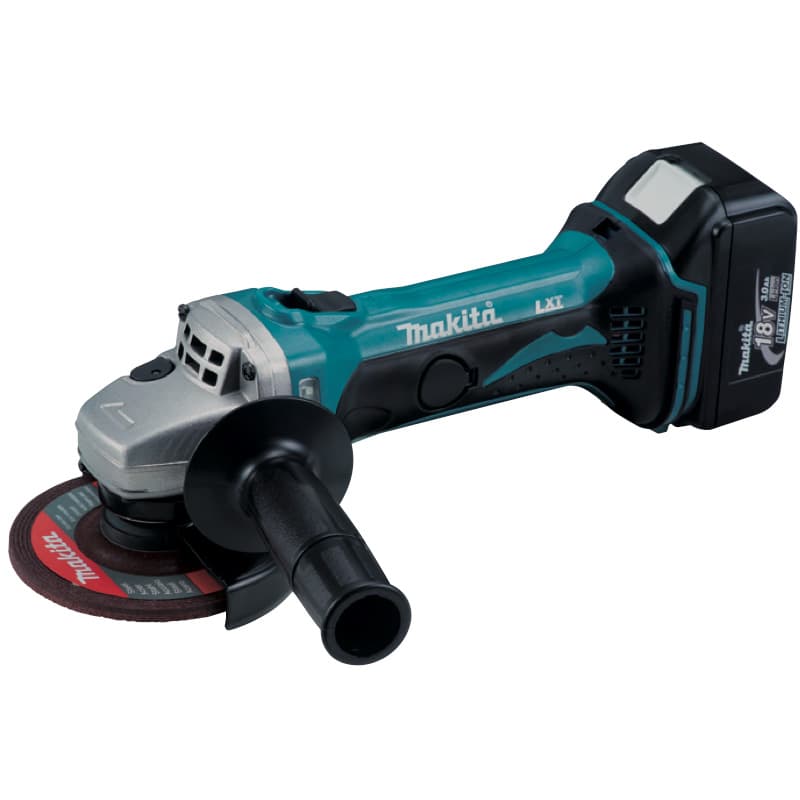
Makita DGA452RMJ Angle Grinder 18V
Makita · Angle Grinders & Cutters
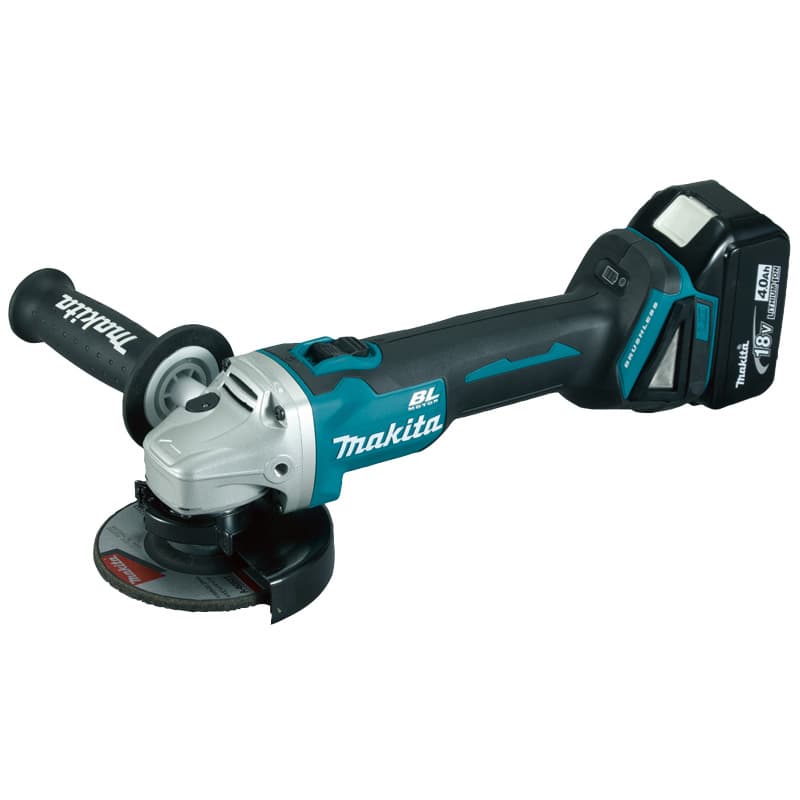
Makita DGA454RFE Angle Grinder 18V
Makita · Angle Grinders & Cutters
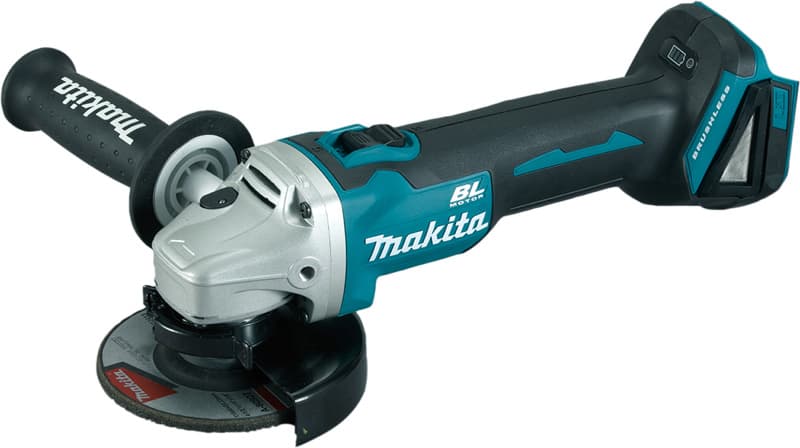
Makita DGA456Z Angle Grinder 18V
Makita · Angle Grinders & Cutters
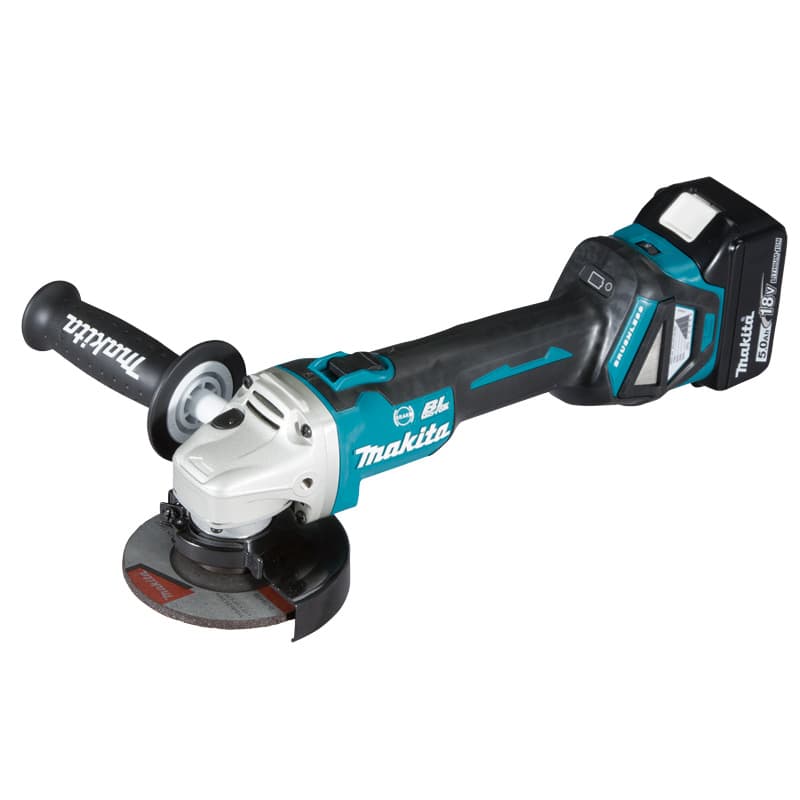
Makita DGA463RTJ Angle Grinder 18V
Makita · Angle Grinders & Cutters
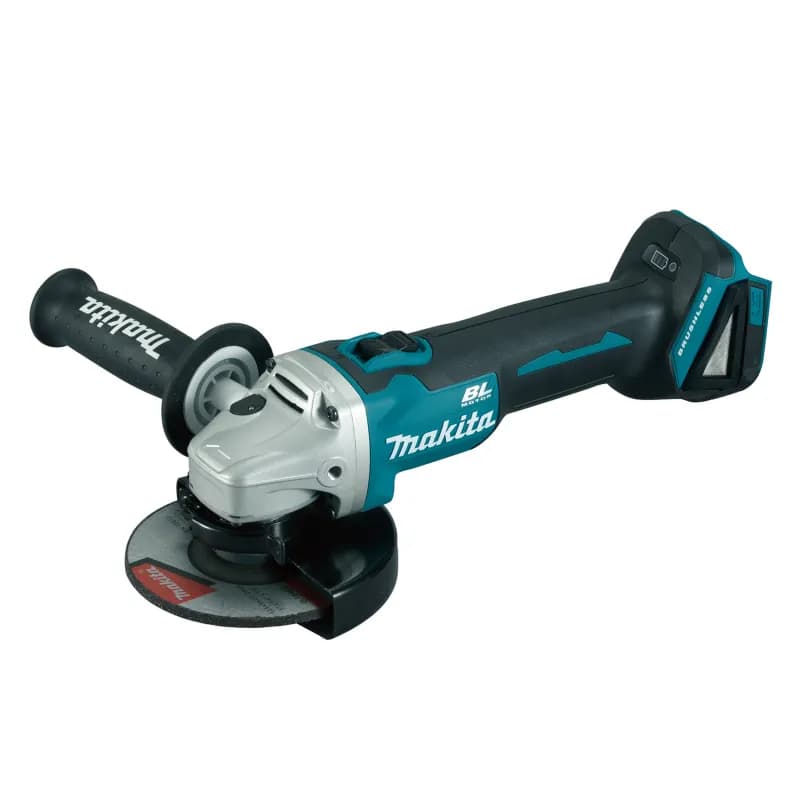
Makita DGA504RTJ Angle Grinder 18V
Makita · Angle Grinders & Cutters
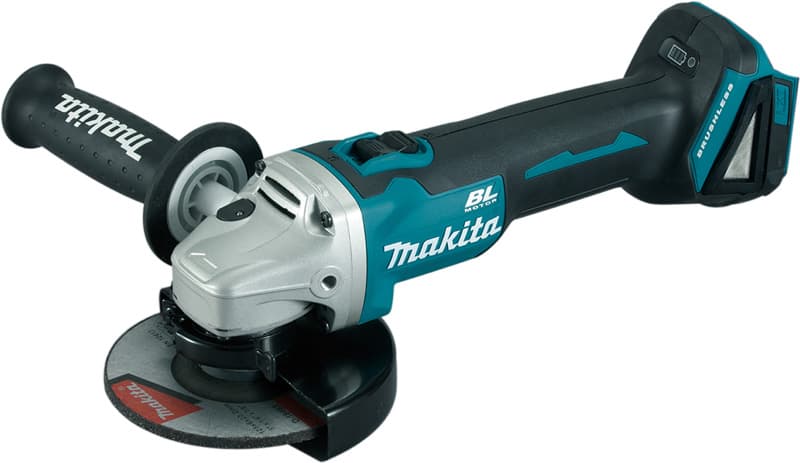
Makita DGA506Z Angle Grinder 18V
Makita · Angle Grinders & Cutters
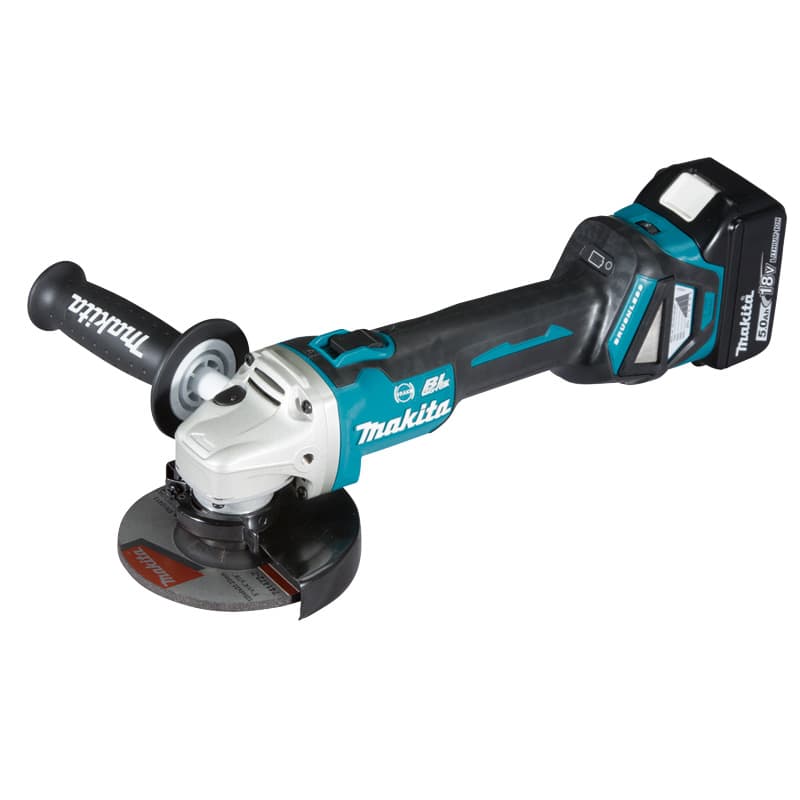
Makita DGA513RTJ Angle Grinder 18V
Makita · Angle Grinders & Cutters
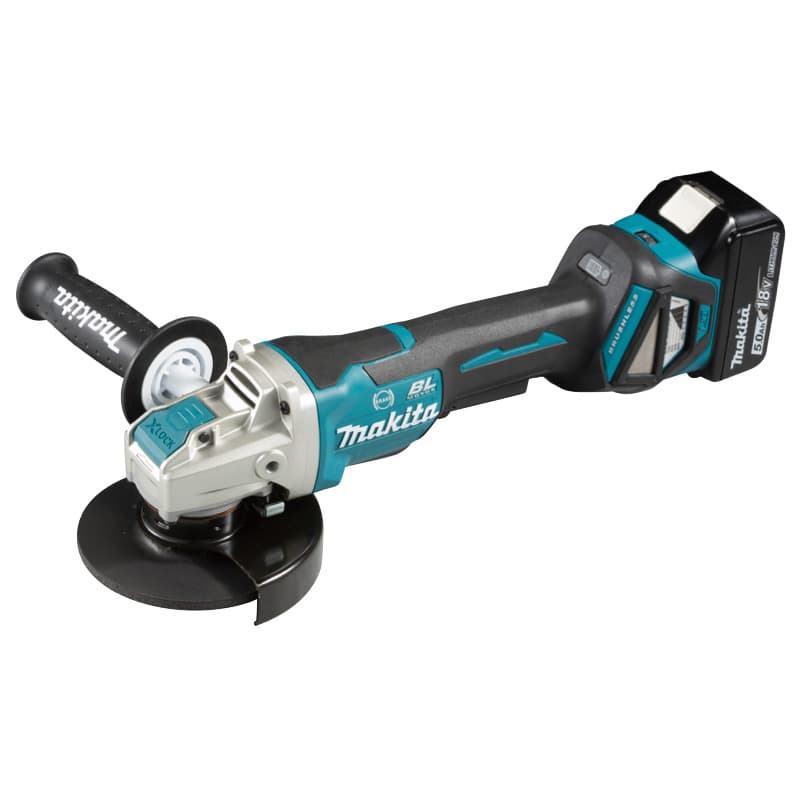
Makita DGA519RTJ Angle Grinder 18V
Makita · Angle Grinders & Cutters
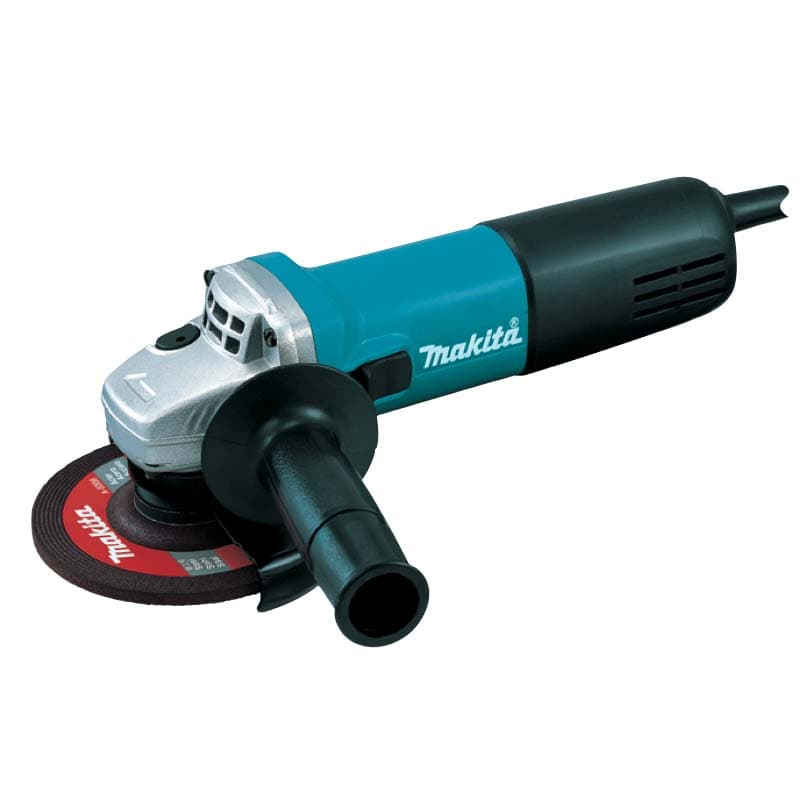
Makita 9558HNRG Angle Grinder
Makita · Angle Grinders & Cutters
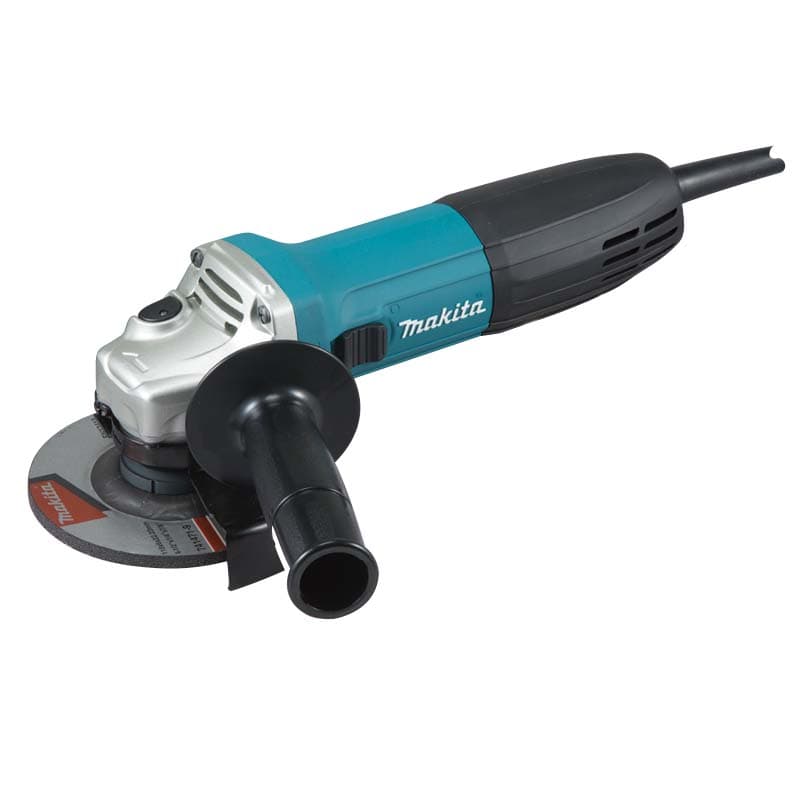
Makita GA4530R Angle Grinder
Makita · Angle Grinders & Cutters
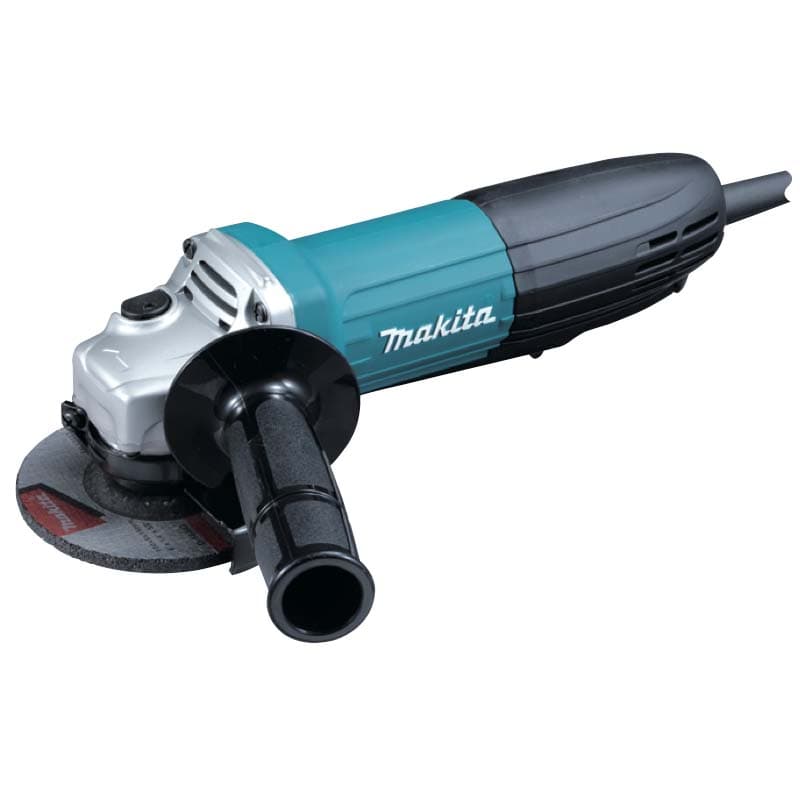
Makita GA4534 Angle Grinder
Makita · Angle Grinders & Cutters
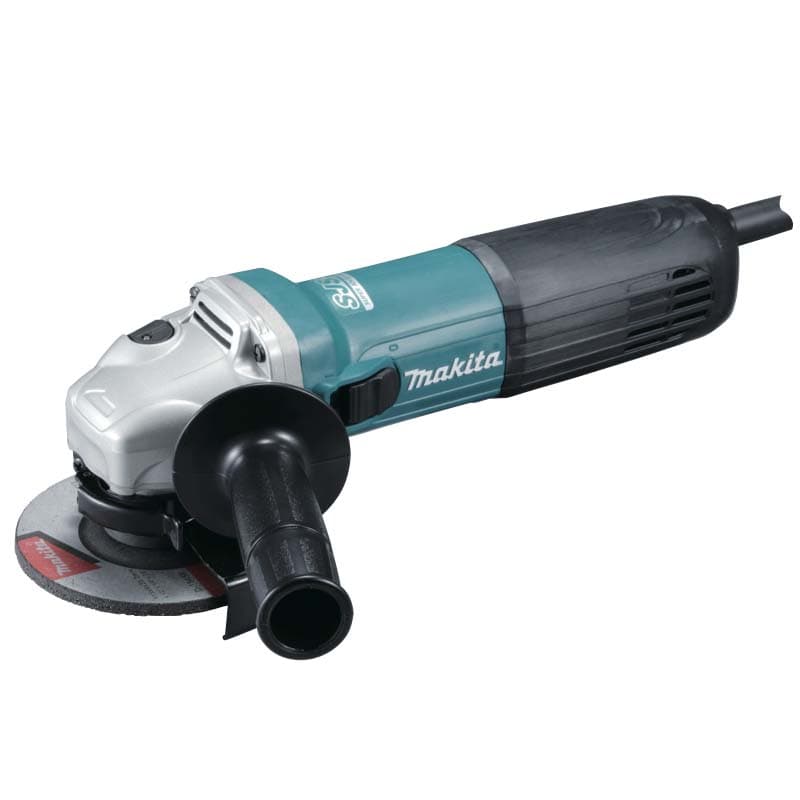
Makita GA4540R Angle Grinder
Makita · Angle Grinders & Cutters
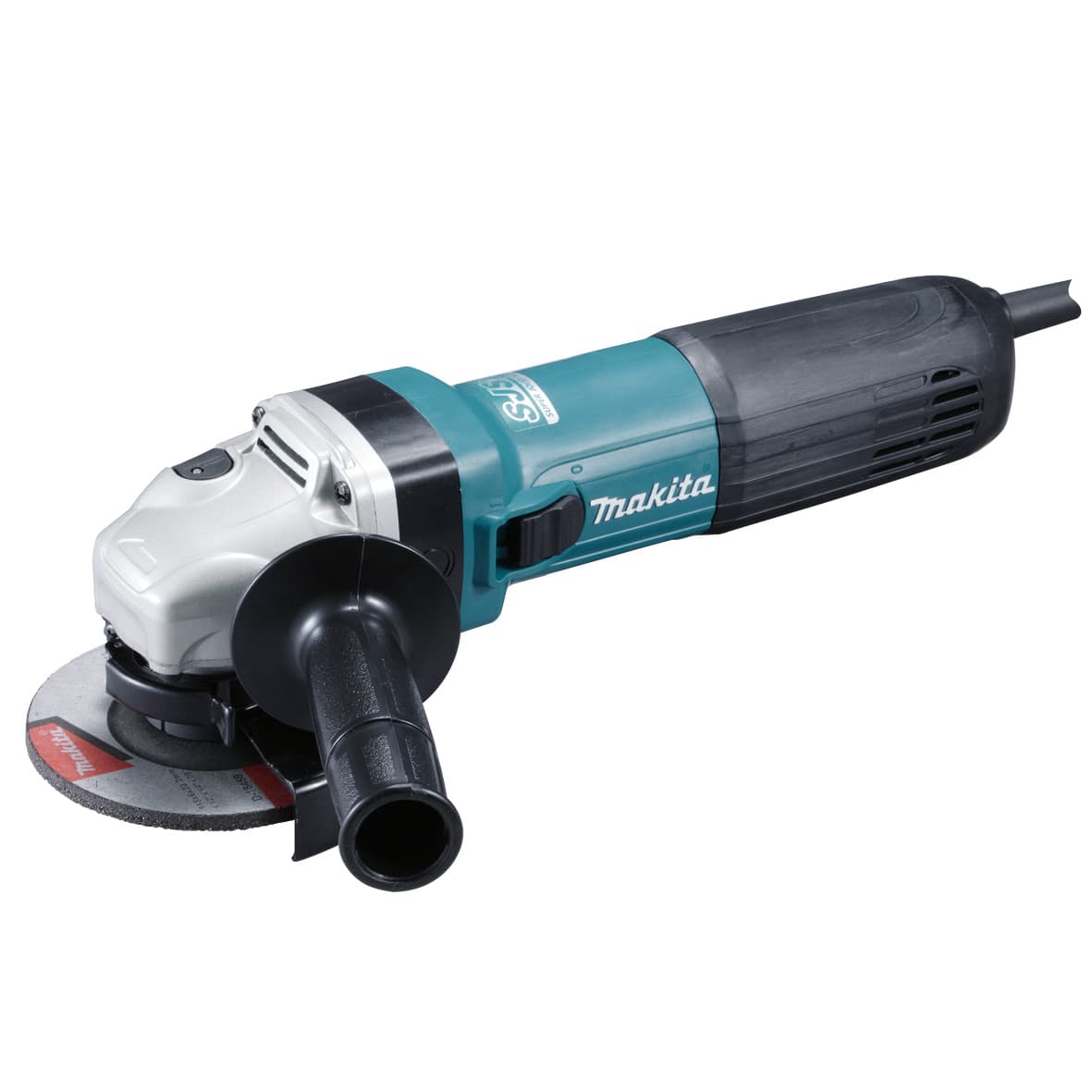
Makita GA4541R Angle Grinder
Makita · Angle Grinders & Cutters
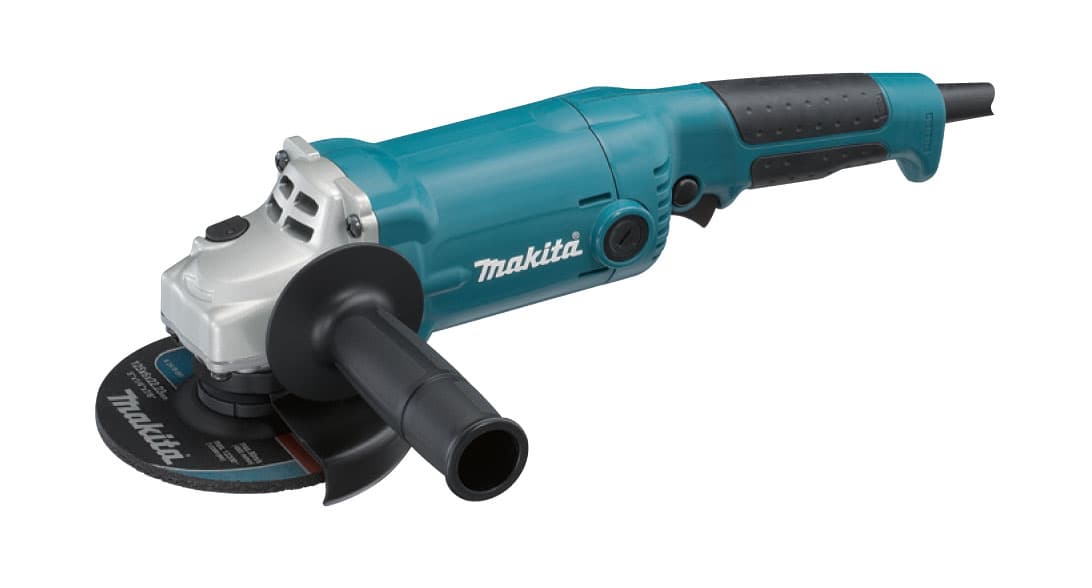
Makita GA5010 Angle Grinder
Makita · Angle Grinders & Cutters
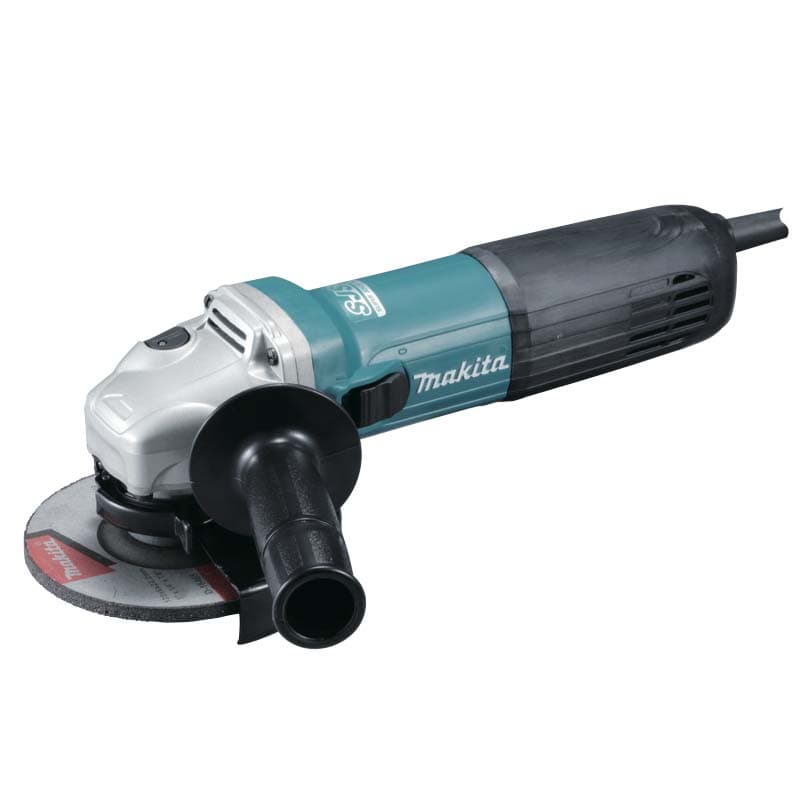
Makita GA5040R Angle Grinder
Makita · Angle Grinders & Cutters
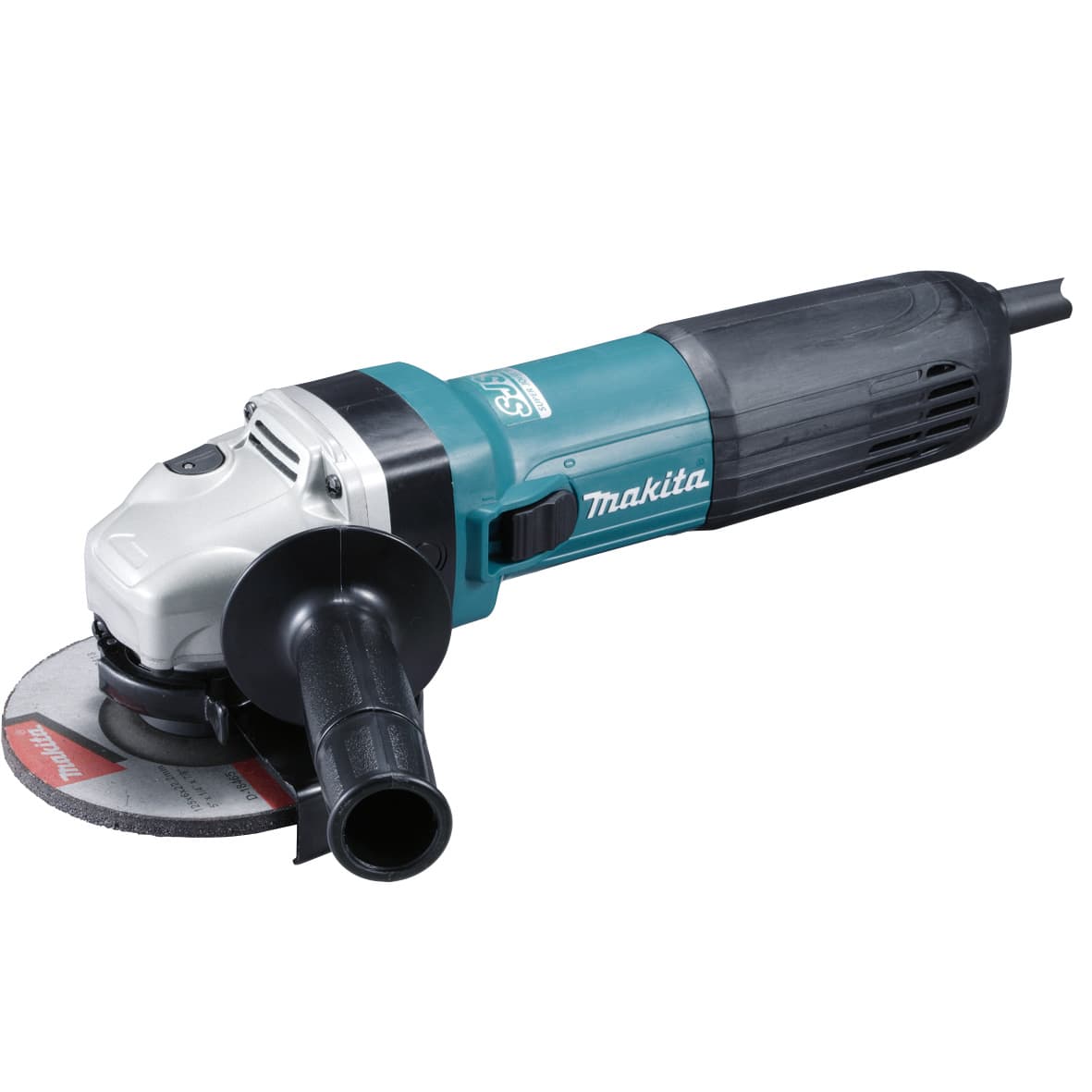
Makita GA5041R Angle Grinder
Makita · Angle Grinders & Cutters
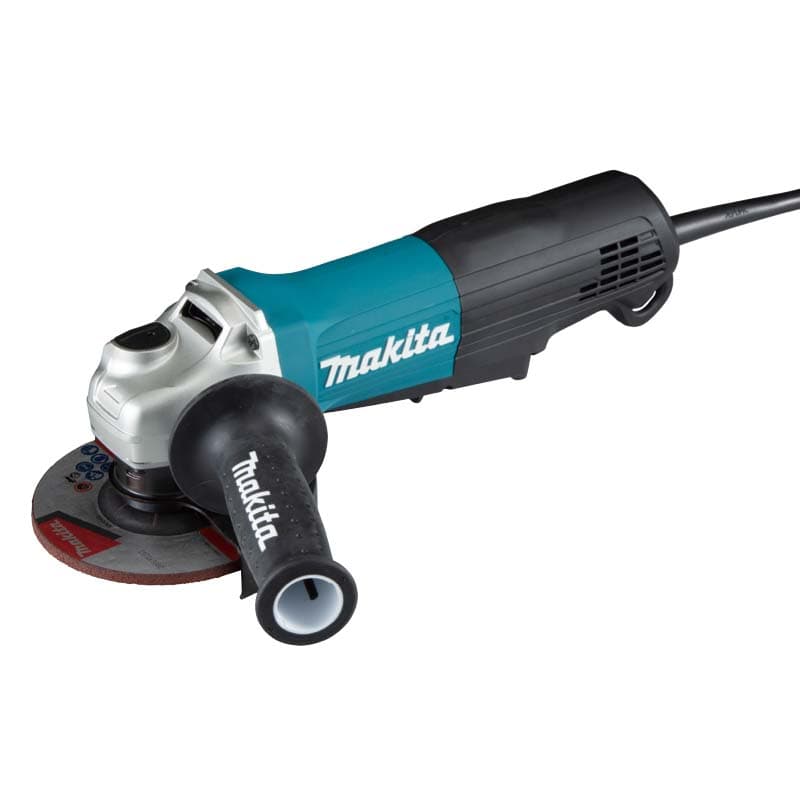
Makita GA5050R Angle Grinder
Makita · Angle Grinders & Cutters
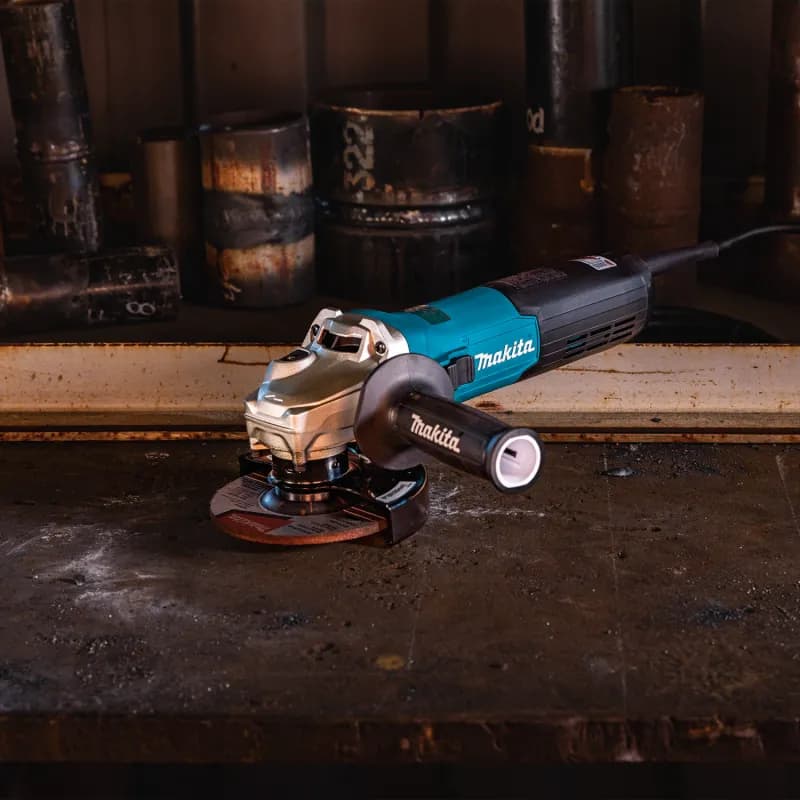
Makita GA5090 Angle Grinder
Makita · Angle Grinders & Cutters
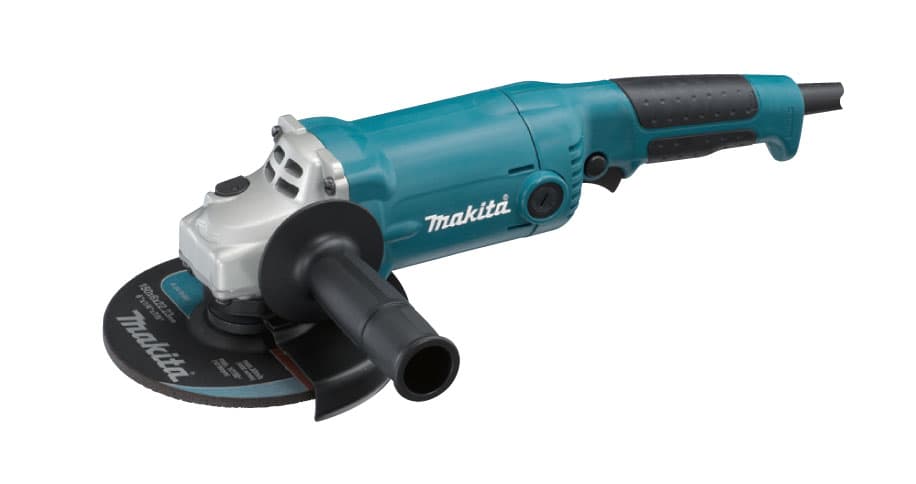
Makita GA6010 Angle Grinder
Makita · Angle Grinders & Cutters
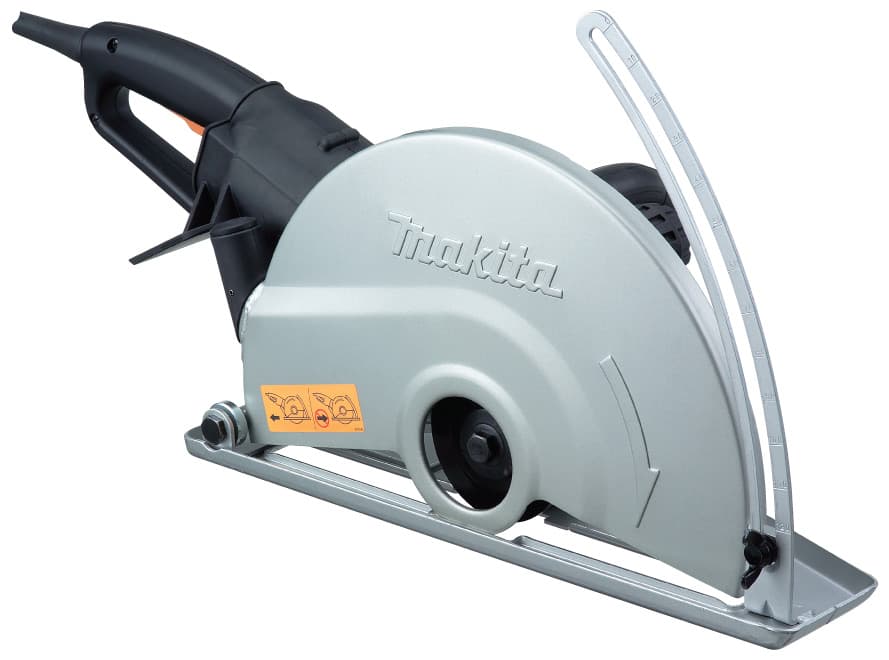
Makita 4114S Concrete Saw Machine
Makita · Angle Grinders & Cutters
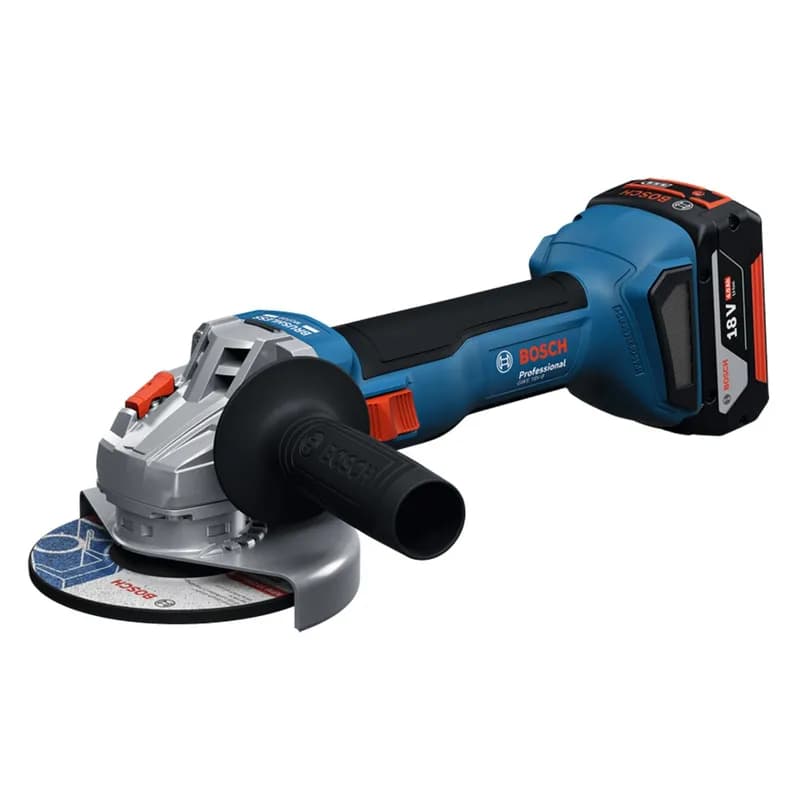
Bosch Cordless Grinder 125 mm 18V GWS 18V-8 06019N9020
Bosch · Angle Grinders & Cutters
1–24 of 188 · page 1 / 8
Disc diameter and speed
Peripheral speed at the rim is limited, so as the disc grows the machine's rpm comes down. A 115-125 mm angle grinder runs at around 11,000 rpm, a 230 mm machine at around 6,500. You choose the larger machine because it cuts deeper, not because it is "stronger".
| Disc | Typical speed | Cut depth | Use |
|---|---|---|---|
| 115 mm | ~11,000 rpm | ~28 mm | Thin sheet, sections, assembly work |
| 125 mm | ~11,000 rpm | ~33 mm | General purpose, the most common size |
| 180 mm | ~8,500 rpm | ~50 mm | Heavy sections, concrete |
| 230 mm | ~6,500 rpm | ~68 mm | Thick material, construction cutting |
Cutting discs, grinding discs and flap discs
The disc decides the job, and the wrong disc is both unsafe and slow. A thin cutting disc is for cutting only; pressing it sideways to grind will shatter it. A thick grinding disc removes material, and a flap disc sands and dresses weld beads.
Every disc carries a maximum permitted speed, and it must exceed the machine's. The disc size must match the machine's guard, and the guard must never be removed.
- Cutting disc: cutting only, never side loads.
- Grinding disc: removing material, dressing edges.
- Flap disc: sanding, dressing weld beads.
- Diamond disc: concrete, tile, stone — dry and wet types differ.
Safety features
Look for three on a modern grinder: a kickback clutch that releases the drive when the disc jams, restart protection so the tool does not run on when power returns, and a side handle that damps vibration. The guard is mandatory for cutting work.
Cordless grinders often add an electronic brake that stops the disc in under a second when the trigger is released — a real safety gain where cutting is frequent.
Frequently Asked Questions
Should I buy a 125 mm or a 230 mm grinder?
Most daily work is done with 125 mm: light, controllable and served by the widest range of discs. A 230 mm machine is a second tool for heavy sections and construction cutting.
Can I grind with a cutting disc?
No. A thin cutting disc will not carry side loads and can shatter, causing serious injury. Use a thick grinding disc to remove material.
What does the speed marked on a disc mean?
It is the maximum speed the disc withstands, and it must be higher than the machine's. Fitting a lower-rated disc to a faster machine can burst it.
What does a kickback clutch do?
It limits the machine's reaction when the disc jams in the workpiece by briefly releasing the drive between motor and spindle. Jamming is the most common cause of a grinder being thrown from the hand.
Can a cordless grinder replace a corded one?
For short cutting and grinding, yes — especially on 18 V high-output packs. For long, continuous grinding a corded machine is better on both heat and cost.