Categories
Cutting Discs
A cutting disc is thin and hard, and unlike a grinding wheel it works on its edge rather than its face. Diameter, thickness and bore decide which machine it fits; the bond and the grain decide what it cuts.
Makita D-18764-10 10'li Inox Cutting Set 115x1.2 mm
Makita · Cutting Discs
Makita D-18770-10 10'li Inox Cutting Set 125x1.2 mm
Makita · Cutting Discs
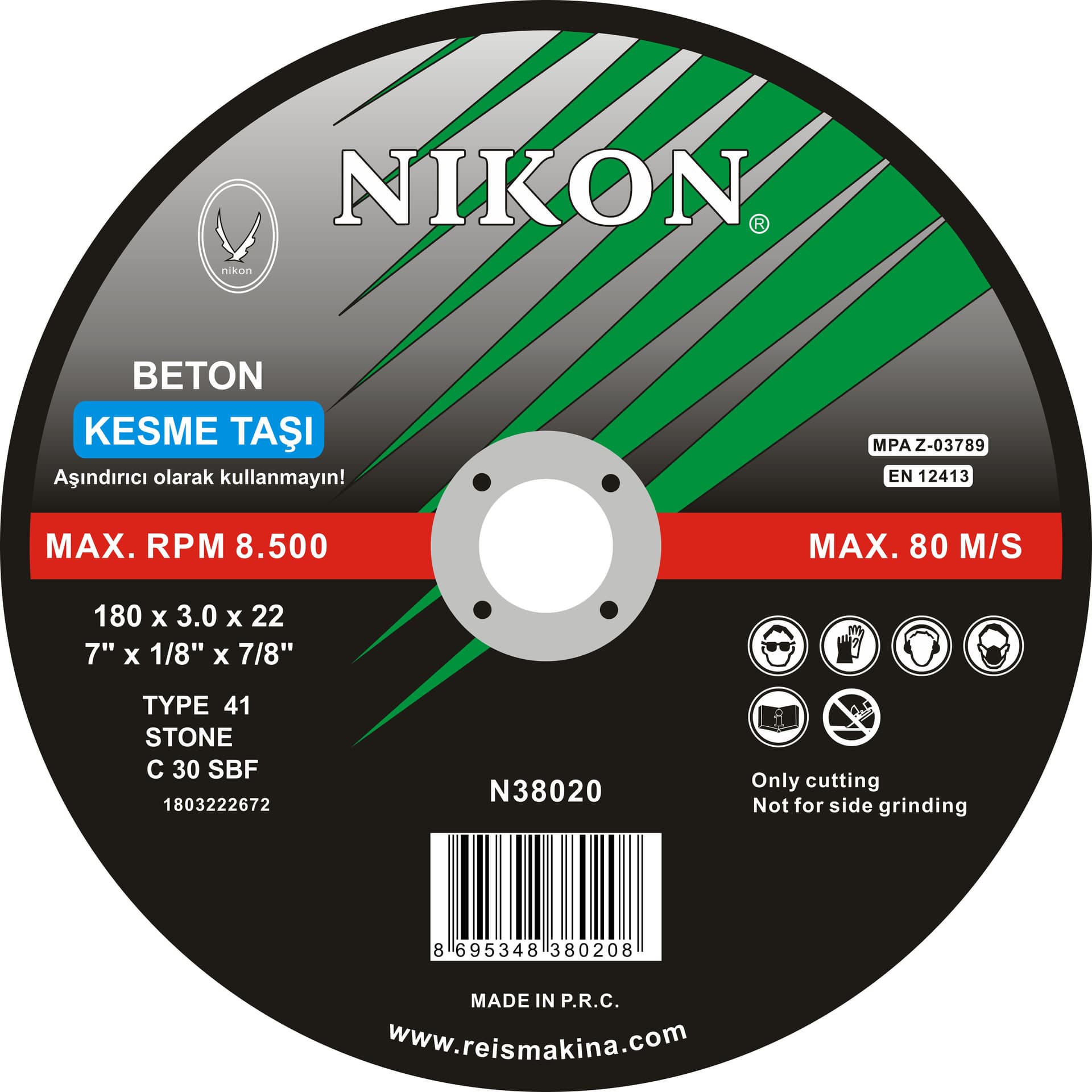
Nikon Concrete Cutting Disc 115 x 2.5 x 22 mm (NIK38017)
Nikon · Cutting Discs
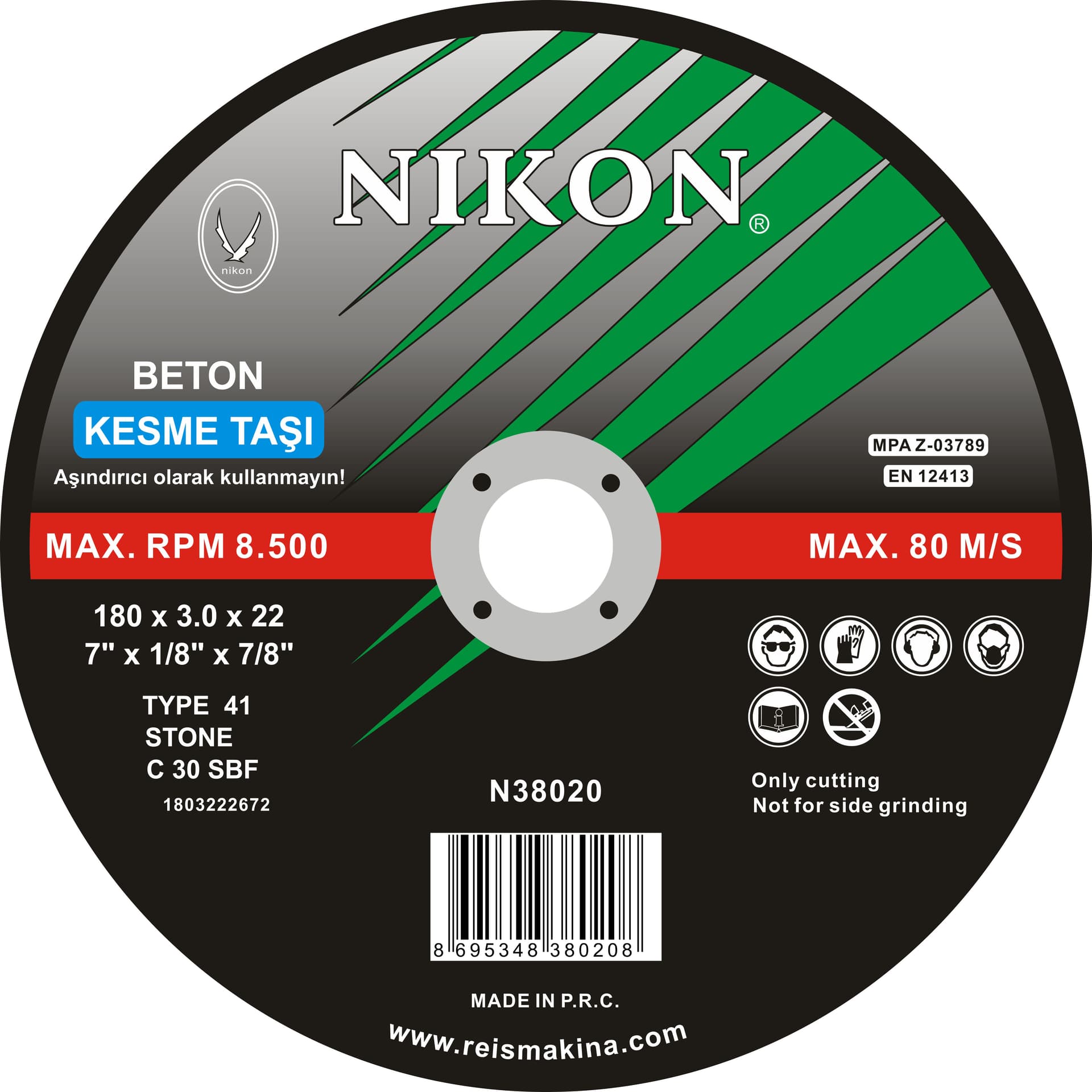
Nikon Concrete Cutting Disc 115 x 2.5 x 22 mm (NIK38018)
Nikon · Cutting Discs
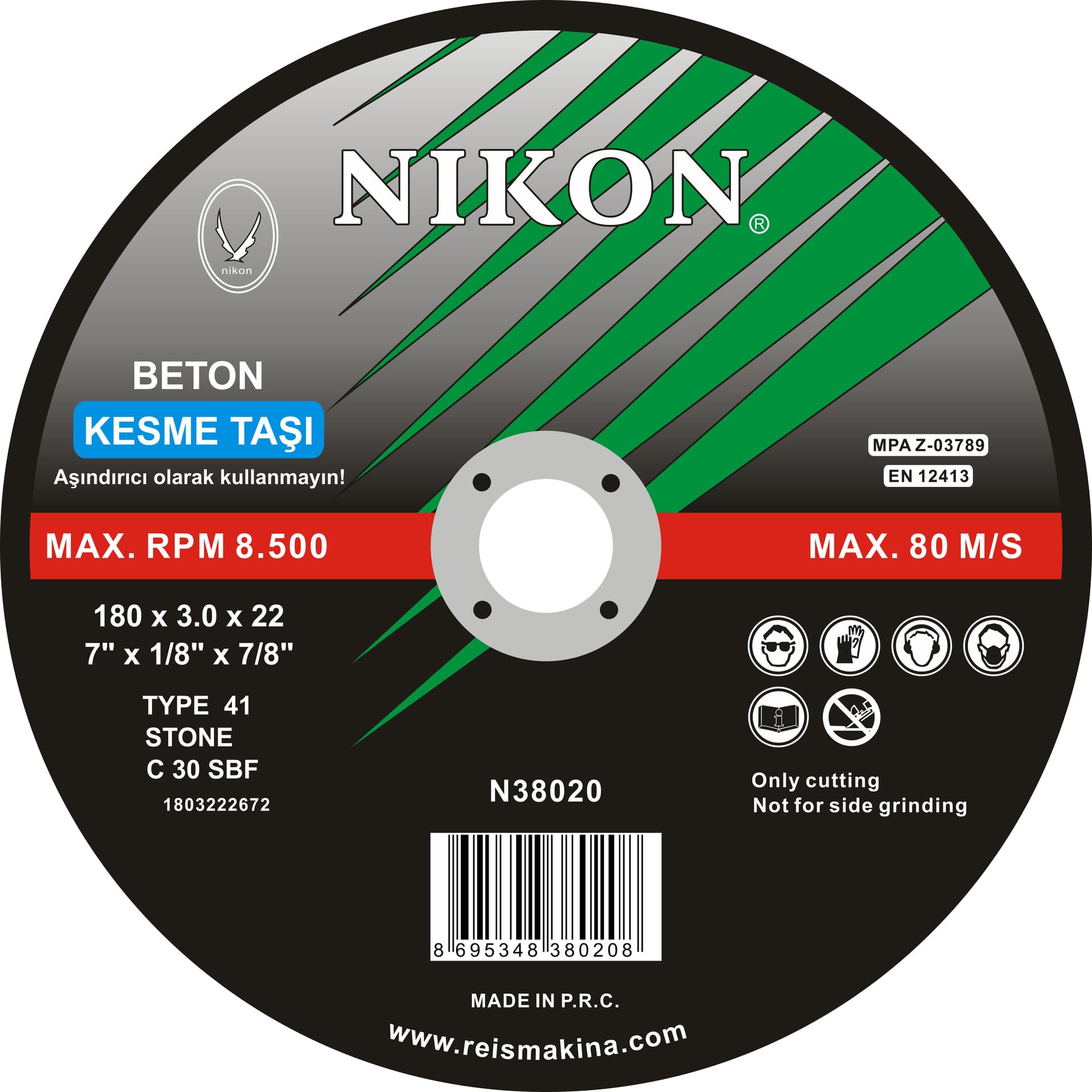
Nikon Concrete Cutting Disc 180 x 3.0 x 22 mm (NIK38019)
Nikon · Cutting Discs
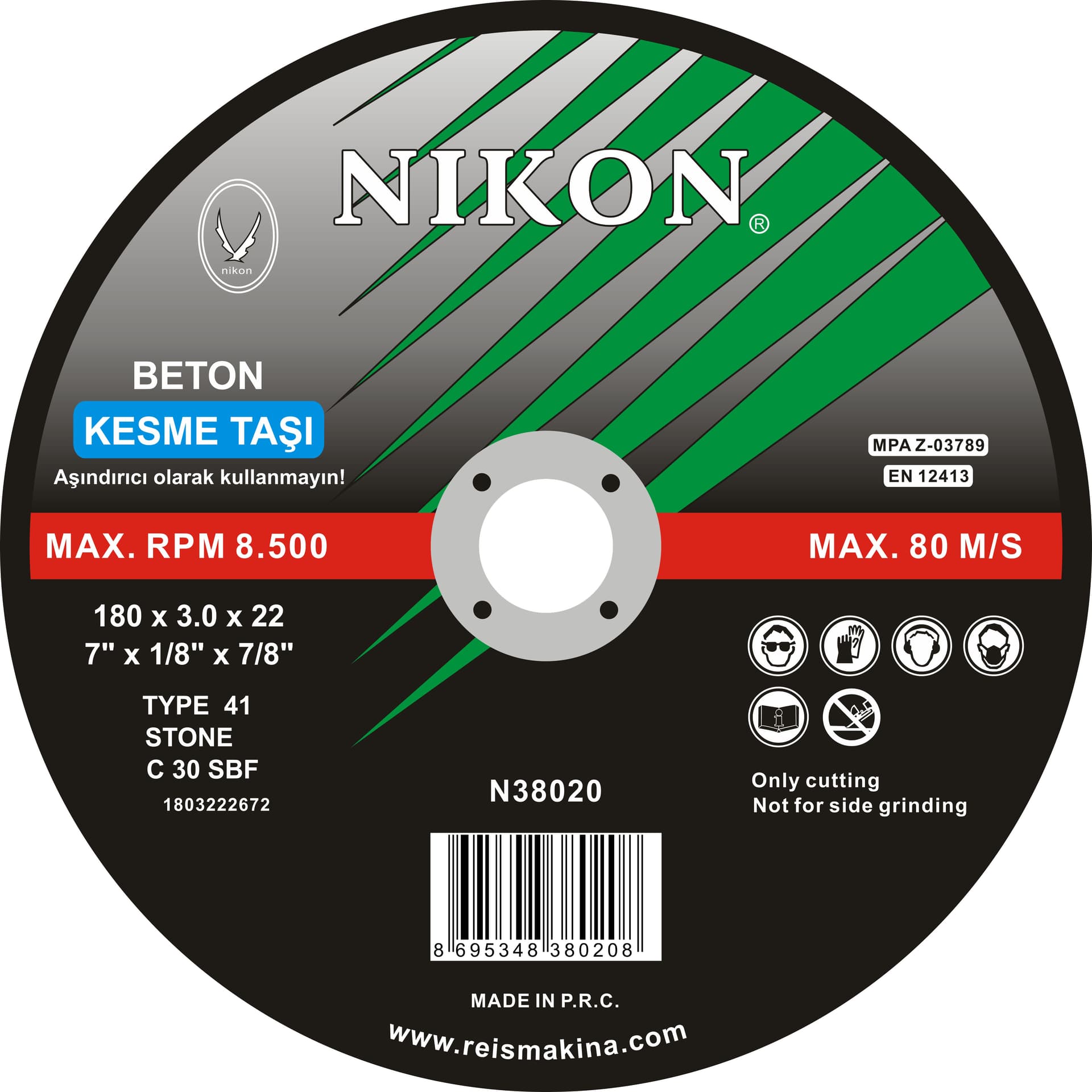
Nikon Concrete Cutting Disc 180 x 3.0 x 22 mm (NIK38020)
Nikon · Cutting Discs
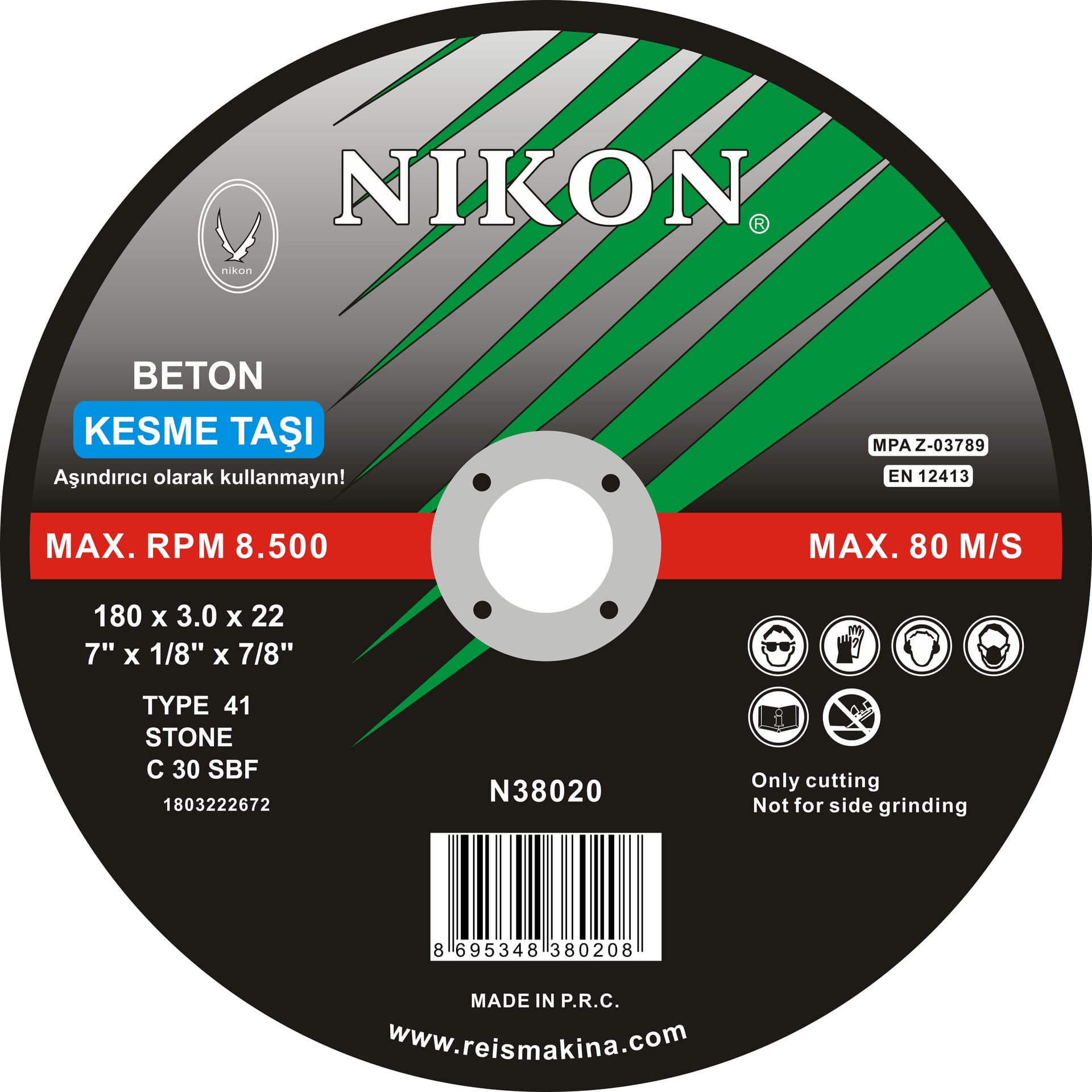
Nikon Concrete Cutting Disc 230 x 3.0 x 22 mm (NIK52065)
Nikon · Cutting Discs
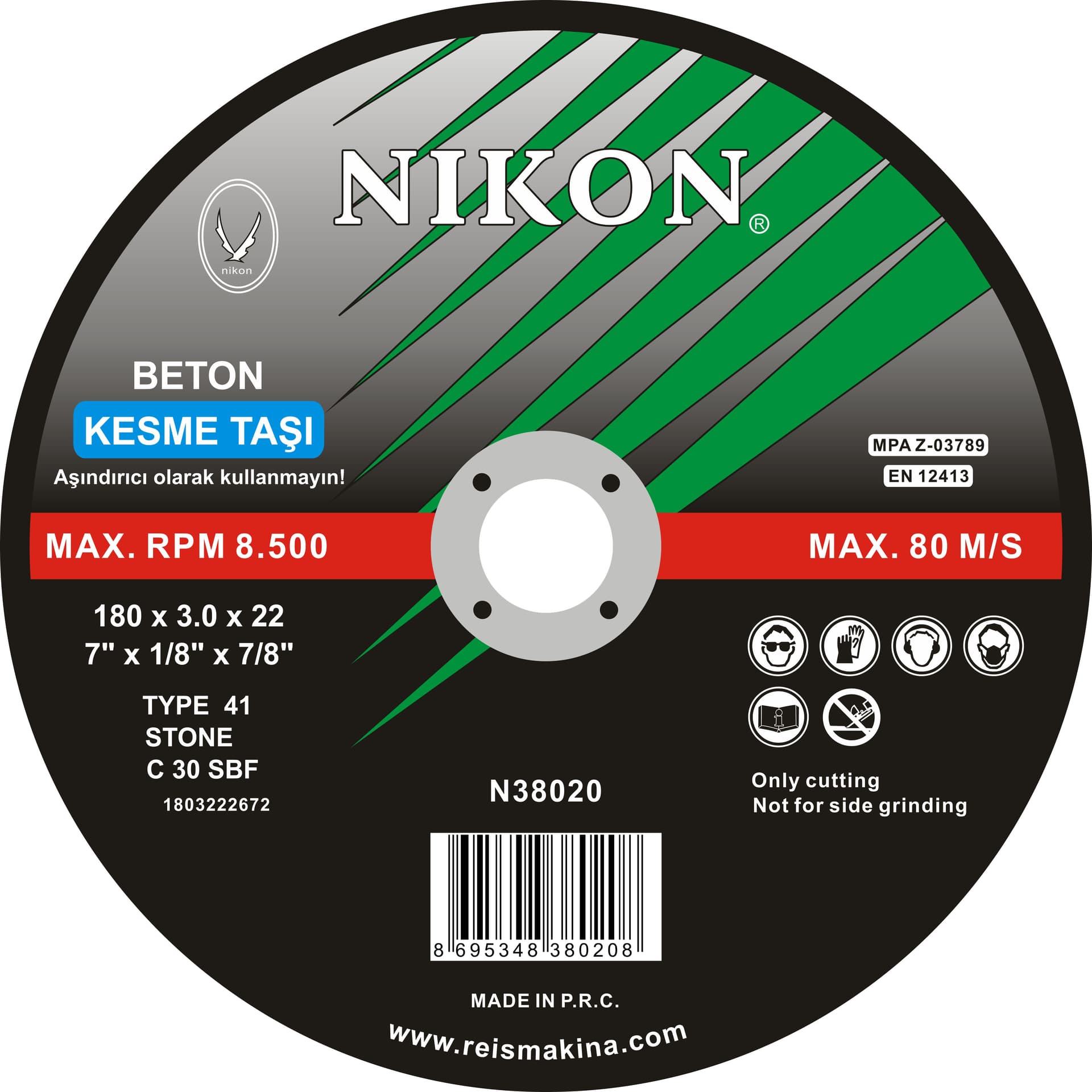
Nikon Concrete Cutting Disc 230 x 3.0 x 22 mm (NIK38021)
Nikon · Cutting Discs
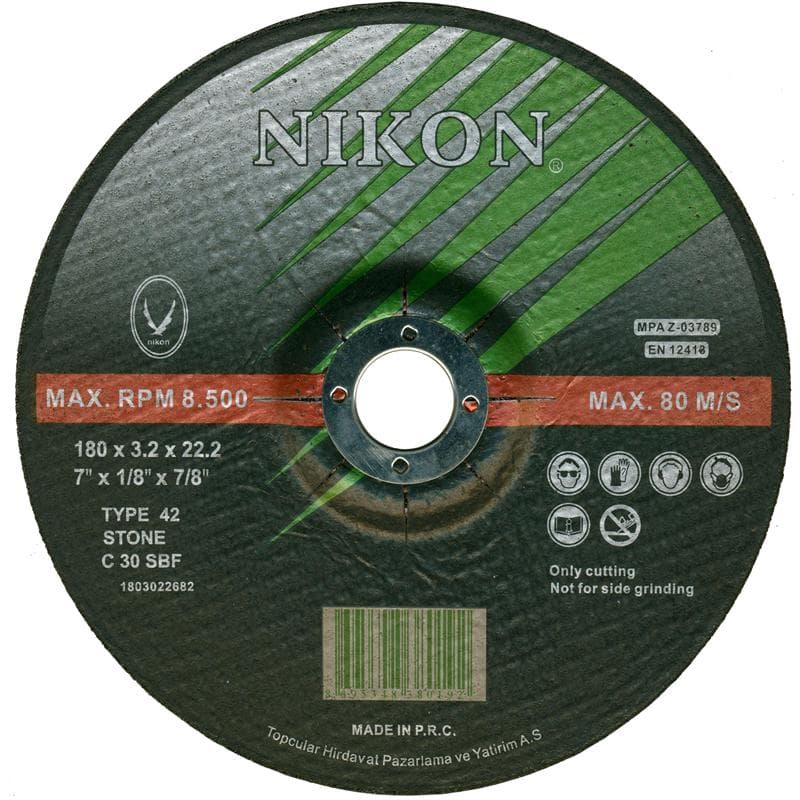
Nikon Concrete Cutting Disc 300 x 3.0 x 25.4 mm
Nikon · Cutting Discs
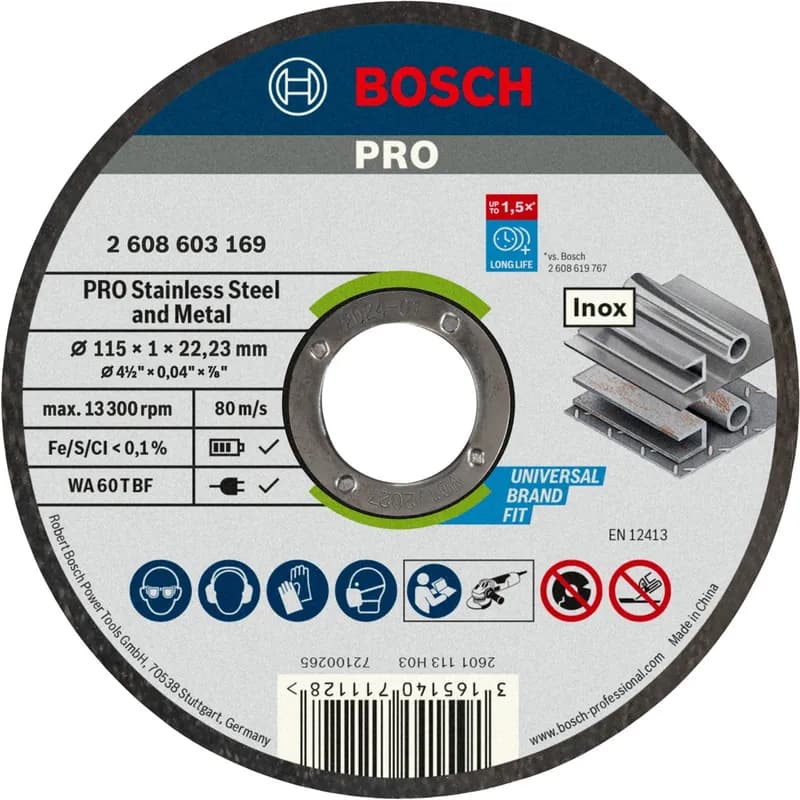
Bosch Inox Cutting Disc 115x1.0 2608603169
Bosch · Cutting Discs
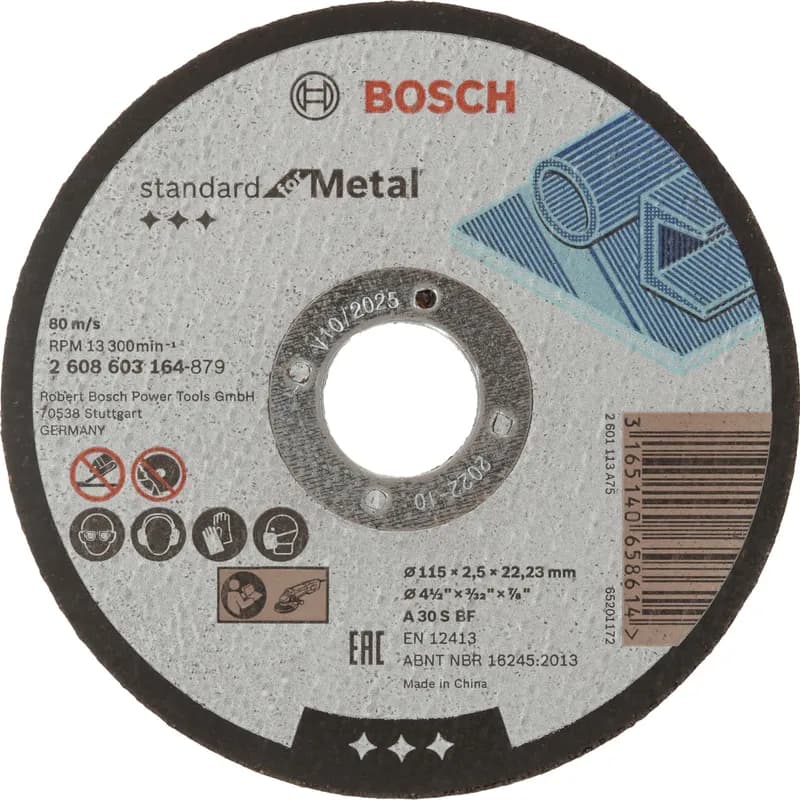
Bosch Metal Cutting Wheel 115x2.5 2608603164
Bosch · Cutting Discs
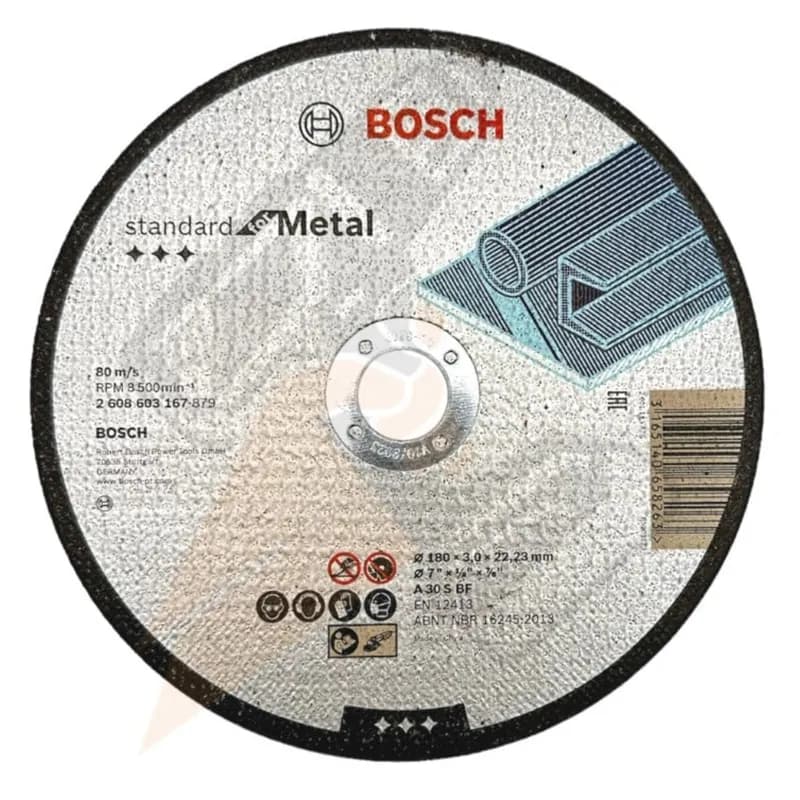
Bosch Metal Cutting Wheel 180x3.0 2608603167
Bosch · Cutting Discs
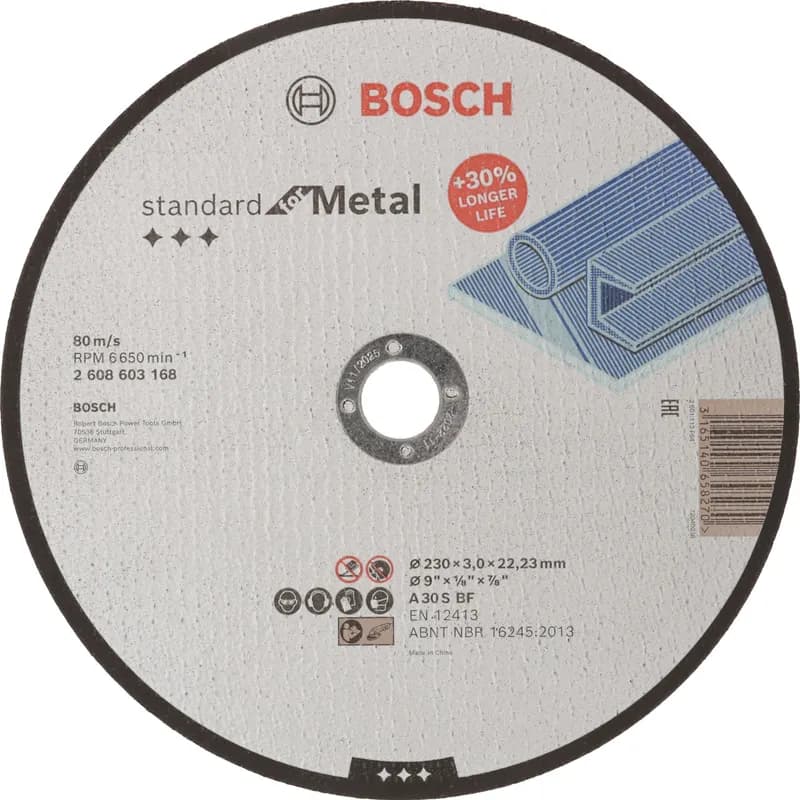
Bosch Metal Cutting Wheel 230x3.0 2608603168
Bosch · Cutting Discs
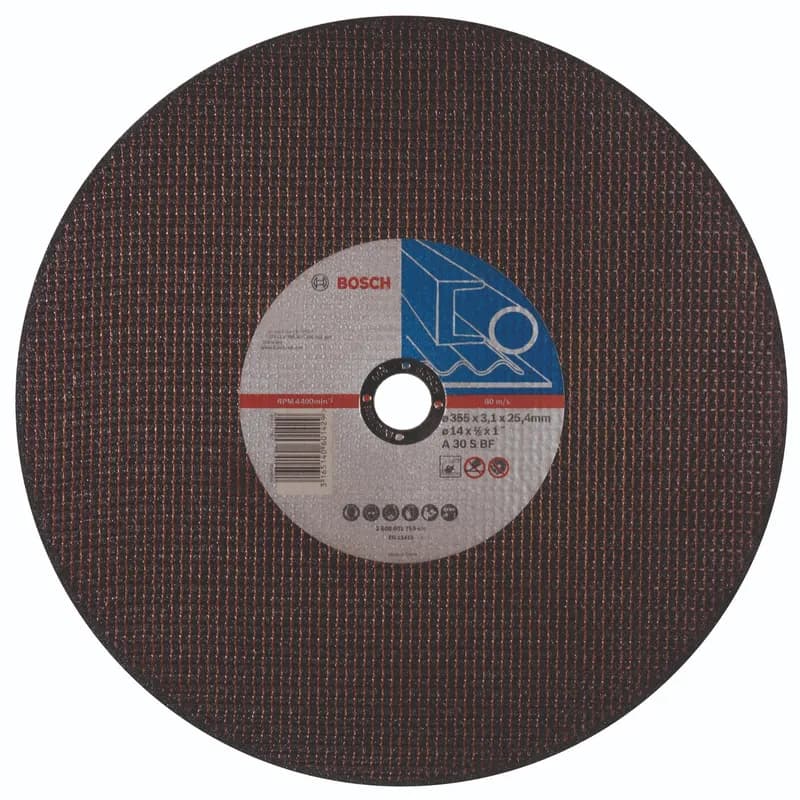
Bosch Metal Cutting Wheel 355x25.4 2608602759
Bosch · Cutting Discs
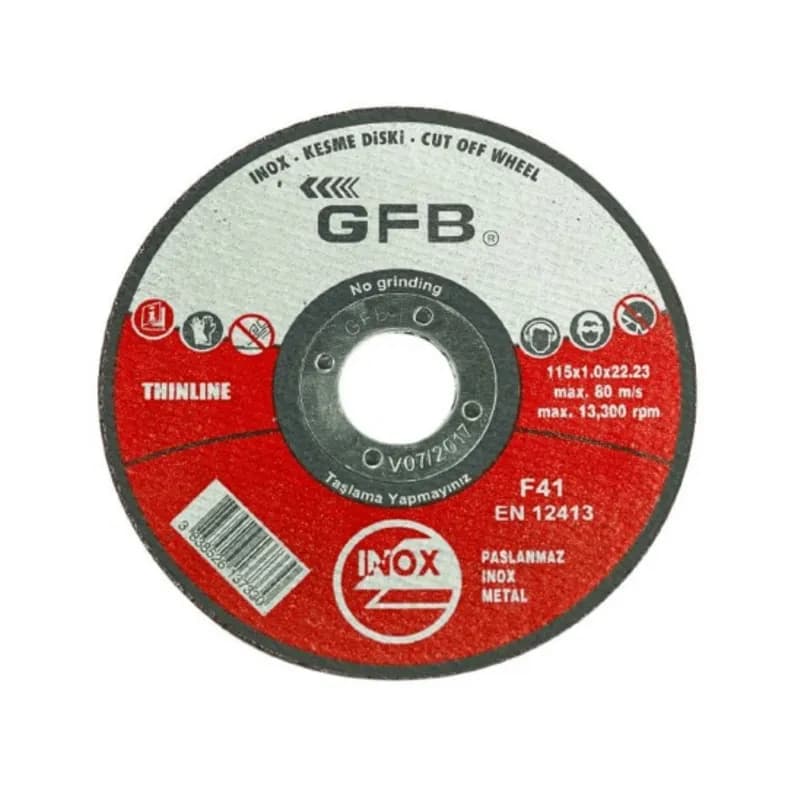
GFB İnox Kesme Taşı 115x1.0x22.23 KOD:2350
Cutting Discs
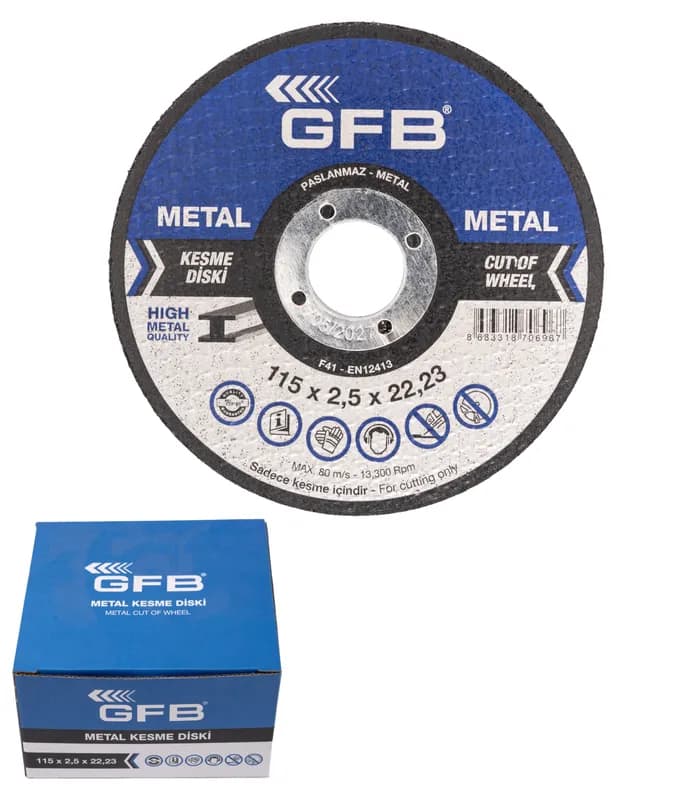
GFB Cutting Disc 115 mm x 2.5 mm
GFB · Cutting Discs
GFB Cutting Disc 180 mm x 3 mm
GFB · Cutting Discs
GFB Cutting Disc 230 mm x 3 mm
GFB · Cutting Discs
GFB Cutting Disc 300 mm x 3 mm
GFB · Cutting Discs
GFB Cutting Disc 355 mm x 3 mm
GFB · Cutting Discs
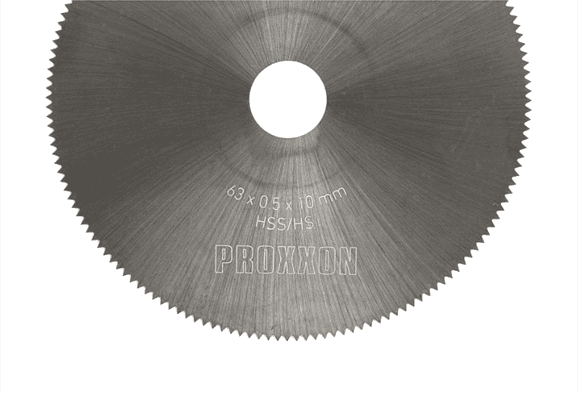
Proxxon 28900 Hss Cutting Disc 65mm 160 teeth
Proxxon · Cutting Discs
Makita D-18817 Inox Cutting Disc Bombeli 115x1.2 mm
Makita · Cutting Discs
Makita D-18823 Inox Cutting Disc Bombeli 125x1.6 mm
Makita · Cutting Discs
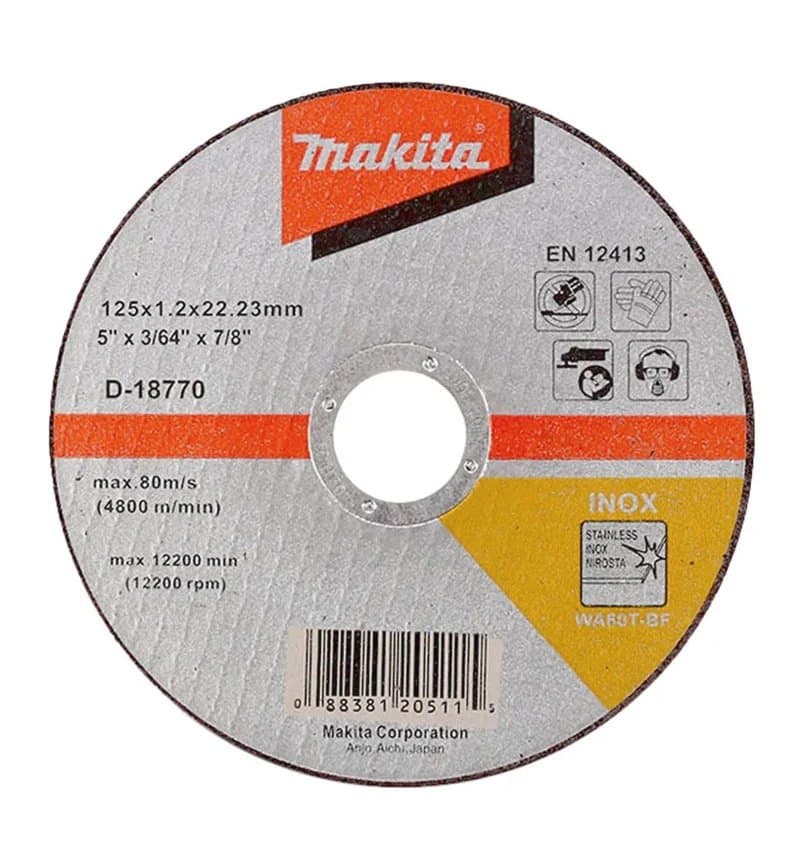
Makita D-18770 Inox Cutting Disc Straight 125x1.2 mm
Makita · Cutting Discs
1–24 of 94 · page 1 / 4
Why a thinner disc cuts better
The thinner the disc, the less material it removes: the cut is faster, the heat lower and the edge less burnt. In exchange a thin disc has no strength against side load — bend it in the cut and it breaks.
That is why you never grind with a cutting disc. Pressing on the face puts it under side load, and that is the commonest reason one shatters.
The disc follows the material
Aluminium oxide for steel; for stainless a formulation free of iron, sulphur and chlorine, because iron residue left on a stainless surface starts corrosion later.
For ceramic, stone and glass, silicon carbide or a diamond rim. The same distinction holds at micro tool sizes.
Frequently Asked Questions
What is the difference from a grinding wheel?
Thickness and which way it is used. A cutting disc is thin and works on its edge; a grinding wheel is thick and works on its face. Substituting one for the other is both dangerous and ineffective.
Is a separate disc really needed for stainless?
Yes. Iron residue from a standard disc starts corrosion on a stainless surface; stainless discs are made free of those three elements.
Which sizes suit a micro tool?
Micro tool chucks take thin discs in the 20-50 mm range, usually sold in packs of 10 or 50; size and pack quantity are in the spec table.