Categories
Hook & Loop Sanding Discs
Hook and loop discs attach to the pad of a random orbital or drywall sander. This page lists perforated, plain and film discs in 115, 125, 150, 180, 225 and 230 mm.
Nikon Aluminium oxide 10 Hole Drywall Sanding Disc 225mm - 10 Delikli 100 Grit (NIK52020)
Nikon · Hook & Loop Sanding Discs
Nikon Aluminium oxide 10 Hole Drywall Sanding Disc 225mm - 10 Delikli 100 Grit (NIK52019)
Nikon · Hook & Loop Sanding Discs
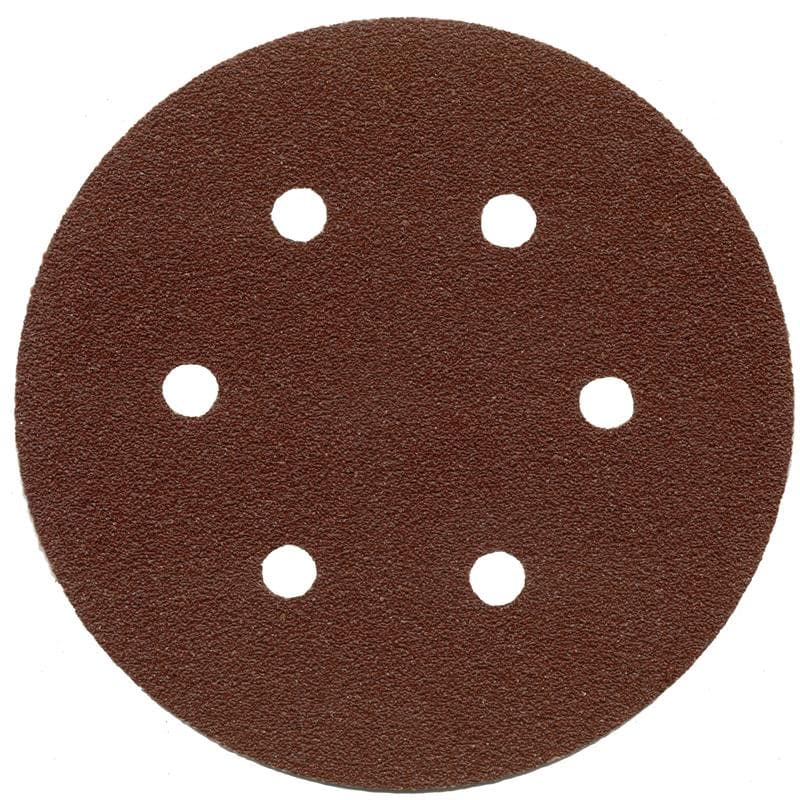
Nikon Aluminium oxide 6 Hole Hook & Loop Sanding Disc 150mm - 6 Delikli 150 Grit
Nikon · Hook & Loop Sanding Discs
Nikon Aluminium oxide 6 Hole Hook & Loop Sanding Disc 150mm - 6 Delikli 180 Grit
Nikon · Hook & Loop Sanding Discs
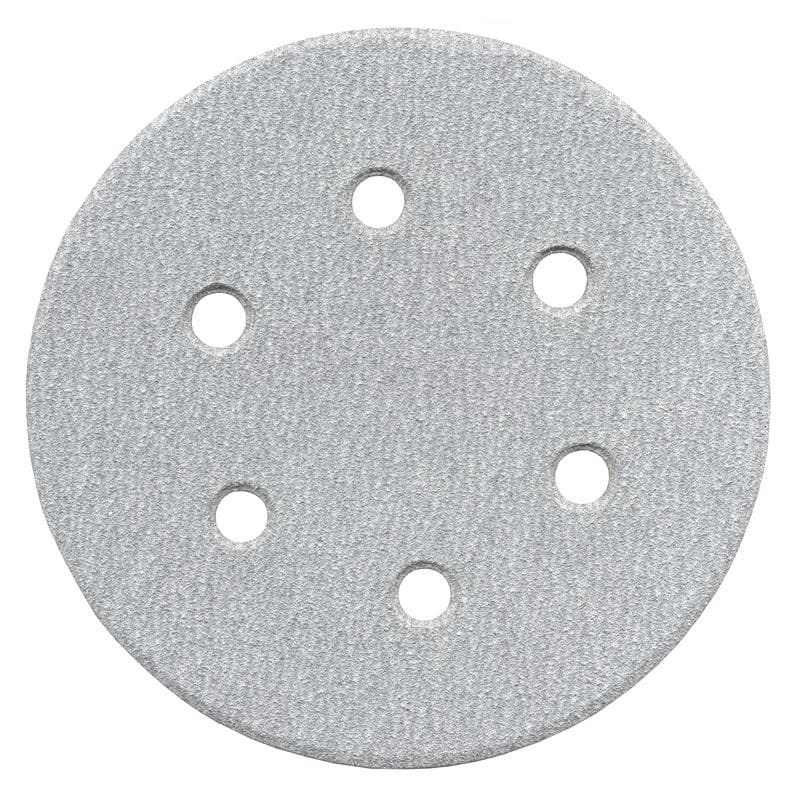
Nikon Aluminium oxide 6 Hole Hook & Loop Sanding Disc 150mm - 6 Delikli 240 Grit (NIK33677)
Nikon · Hook & Loop Sanding Discs
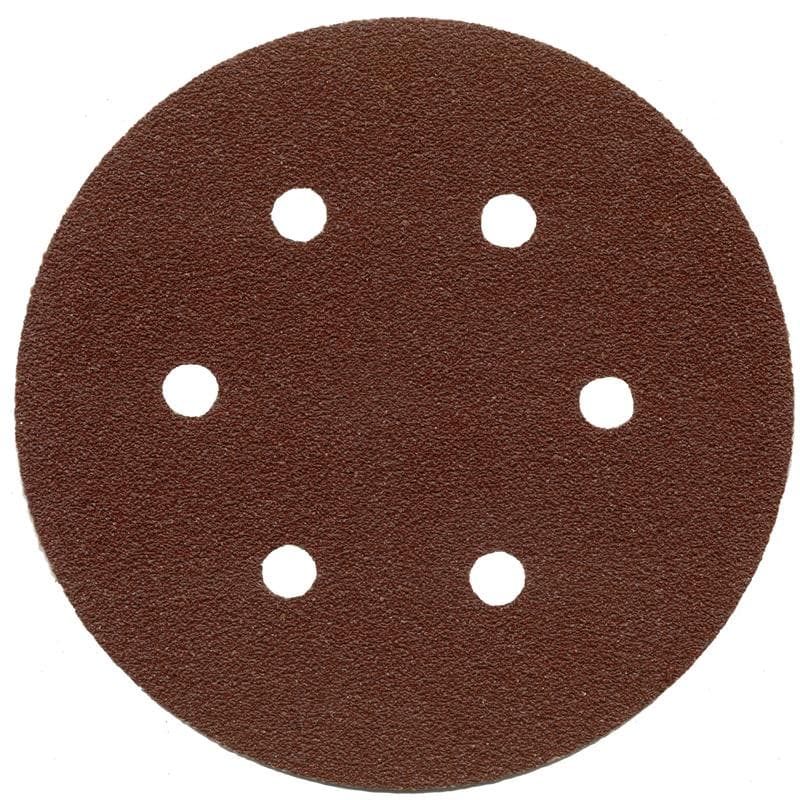
Nikon Aluminium oxide 6 Hole Hook & Loop Sanding Disc 150mm - 6 Delikli 240 Grit (NIK33477)
Nikon · Hook & Loop Sanding Discs
Nikon Aluminium oxide 6 Hole Hook & Loop Sanding Disc 150mm - 6 Delikli 280 Grit
Nikon · Hook & Loop Sanding Discs
Nikon Aluminium oxide 6 Hole Hook & Loop Sanding Disc 150mm - 6 Delikli 320 Grit
Nikon · Hook & Loop Sanding Discs
Nikon Aluminium oxide 6 Hole Hook & Loop Sanding Disc 150mm - 6 Delikli 360 Grit
Nikon · Hook & Loop Sanding Discs
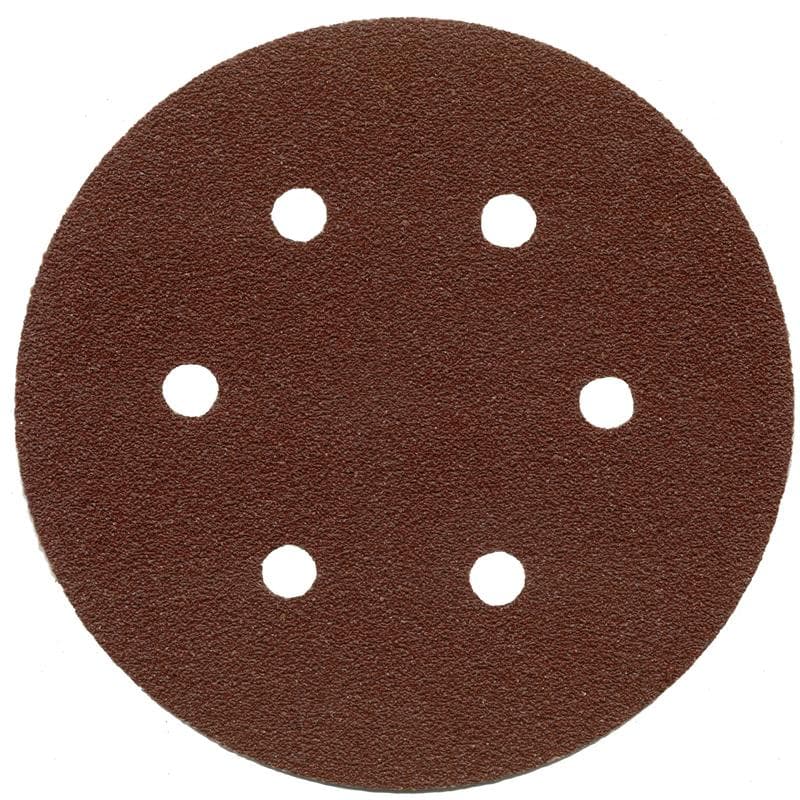
Nikon Aluminium oxide 6 Hole Hook & Loop Sanding Disc 360 Grit
Nikon · Hook & Loop Sanding Discs
Nikon Aluminium oxide 6 Hole Hook & Loop Sanding Disc 150mm - 6 Delikli 400 Grit
Nikon · Hook & Loop Sanding Discs
Nikon Aluminium oxide 6 Hole Hook & Loop Sanding Disc 150mm - 6 Delikli 800 Grit
Nikon · Hook & Loop Sanding Discs
Nikon Aluminium oxide Film 6 Hole Hook & Loop Sanding Disc 150mm - 6 Delikli 1000 Grit
Nikon · Hook & Loop Sanding Discs
Nikon Aluminium oxide Film 6 Hole Hook & Loop Sanding Disc 150mm - 6 Delikli 280 Grit
Nikon · Hook & Loop Sanding Discs

Nikon Aluminium oxide Film 6 Hole Hook & Loop Sanding Disc 60 Grit
Nikon · Hook & Loop Sanding Discs
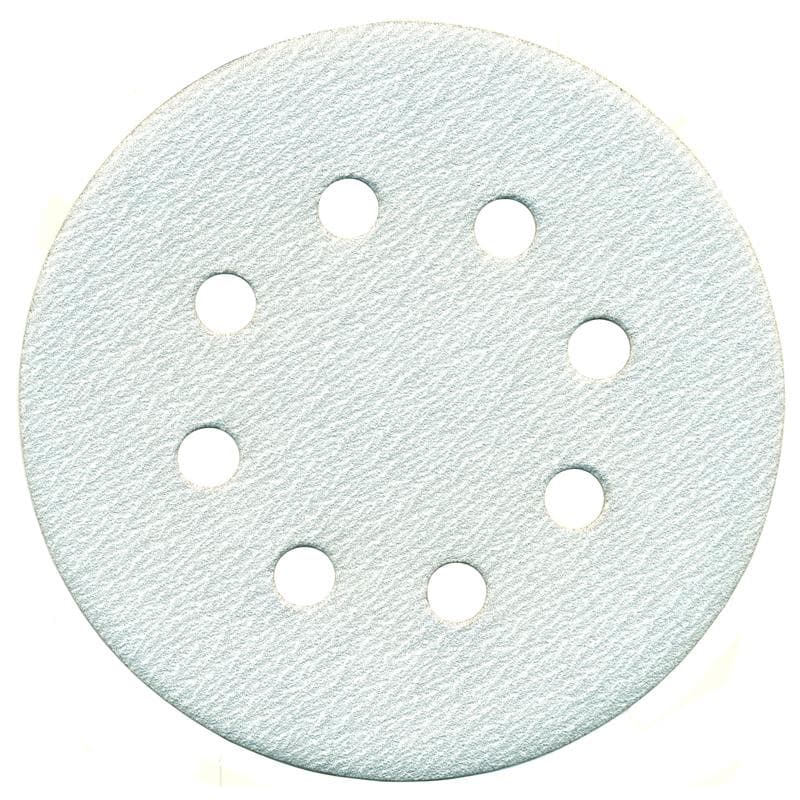
Nikon Aluminium oxide 8 Hole Hook & Loop Sanding Disc 125mm - 8 Delikli 100 Grit
Nikon · Hook & Loop Sanding Discs
Nikon Aluminium oxide 8 Hole Hook & Loop Sanding Disc 125mm - 8 Delikli 180 Grit
Nikon · Hook & Loop Sanding Discs
Nikon Aluminium oxide 8 Hole Hook & Loop Sanding Disc 125mm - 8 Delikli 220 Grit
Nikon · Hook & Loop Sanding Discs
Nikon Aluminium oxide 8 Hole Hook & Loop Sanding Disc 125mm - 8 Delikli 240 Grit
Nikon · Hook & Loop Sanding Discs
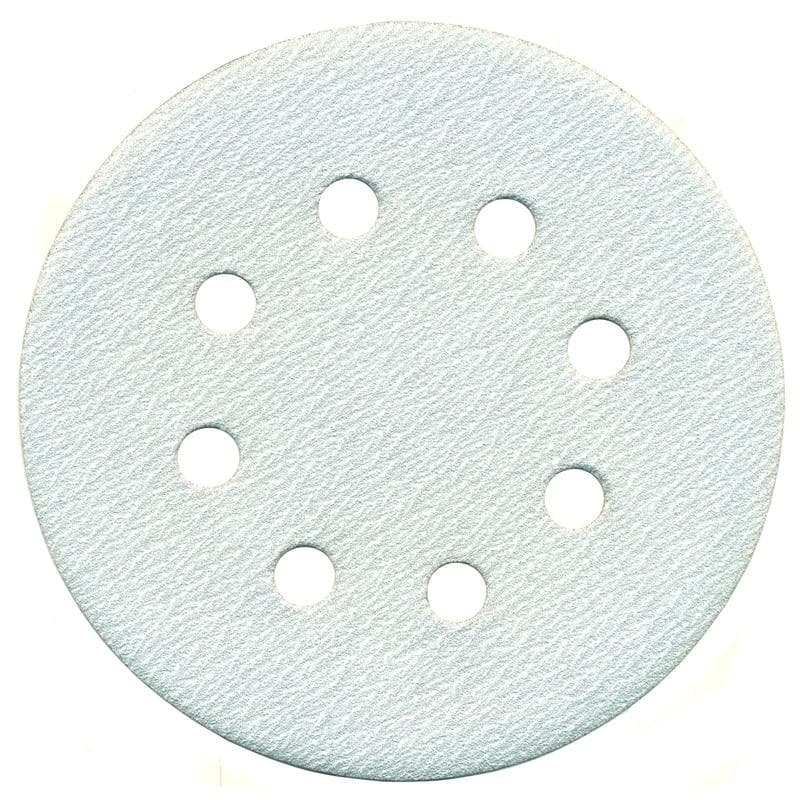
Nikon Aluminium oxide 8 Hole Hook & Loop Sanding Disc 125mm - 8 Delikli 280 Grit
Nikon · Hook & Loop Sanding Discs
Nikon Aluminium oxide 8 Hole Hook & Loop Sanding Disc 125mm - 8 Delikli 320 Grit
Nikon · Hook & Loop Sanding Discs
Nikon Aluminium oxide 8 Hole Hook & Loop Sanding Disc 125mm - 8 Delikli 360 Grit
Nikon · Hook & Loop Sanding Discs
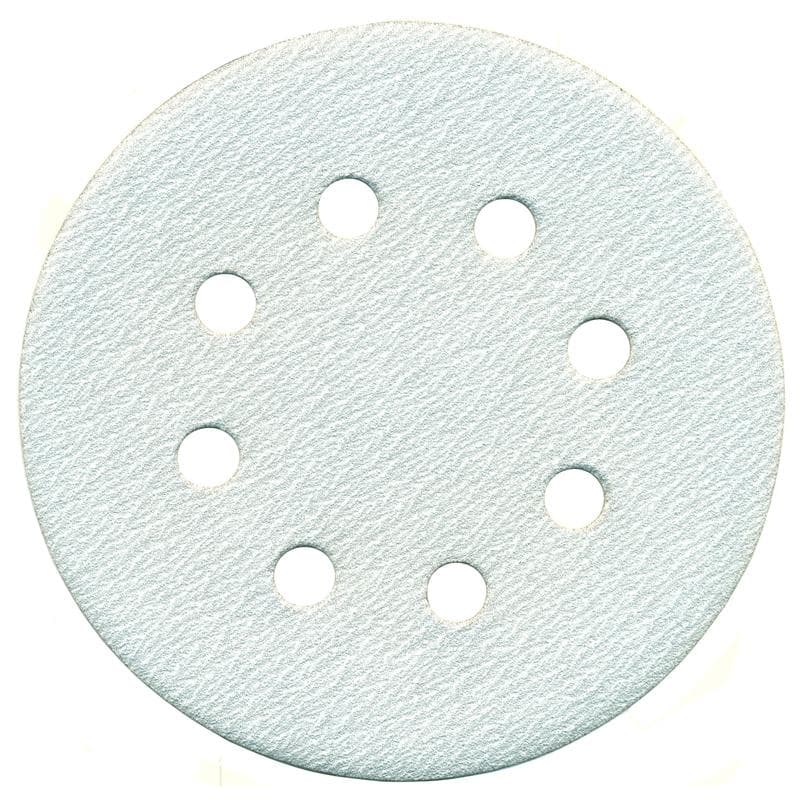
Nikon Aluminium oxide 8 Hole Hook & Loop Sanding Disc 125mm - 8 Delikli 40 Grit (NIK33391)
Nikon · Hook & Loop Sanding Discs
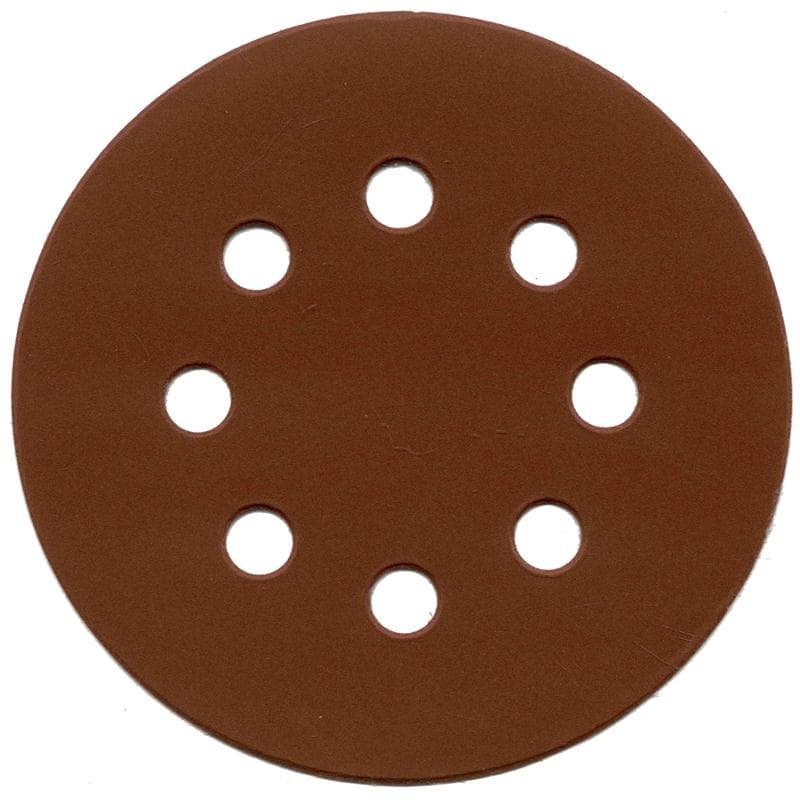
Nikon Aluminium oxide 8 Hole Hook & Loop Sanding Disc 125mm - 8 Delikli 40 Grit (NIK33431)
Nikon · Hook & Loop Sanding Discs
1–24 of 101 · page 1 / 5
Perforated or plain?
The holes are extraction channels, not decoration. Lined up with the holes in the machine's pad, they take the dust straight into the vacuum instead of letting it collect under the disc. The count and pattern belong to the machine: 6 hole, 8 hole and 10 hole patterns suit different pads, and a pattern that does not line up stops the extraction working at all.
Plain discs are for machines without extraction and for hand use. On heavy dust work such as plaster and filler a plain disc loads quickly — there, a perforated disc is a requirement rather than a preference.
The standard drywall sander pad is Ø225 mm with 8 holes; the catalogue also carries 230 mm 8 hole discs.
What ends a disc's life
On soft materials — plaster, filler, paint — a disc does not blunt, it loads: the material being cut packs between the grains until they no longer touch the surface. Extraction working properly therefore matters as much as the quality of the abrasive.
Film discs are coated on a polyester film backing: thinner and more stable than paper, giving a more even surface in the fine grits and resisting tearing.
Grit sequence: why a grit is not skipped
Sanding is not removal so much as scratch replacement. Each grit replaces the scratch the last one left with its own finer scratch, and what remains at the end is the scratch of the last grit used.
That is why skipping a grit spoils the result. Going from 80 straight to 400, the fine grain cannot reach the bottom of the deeper scratch and only polishes its edges — the surface feels smooth to the hand but the scratch reappears under paint or polish. The practical sequence runs 60-80-120-180-240-320-400, each grit worked until the previous one's scratch is no longer visible.
| Grit range | Class | Where it is used |
|---|---|---|
| 36-60 | Coarse | Stripping old paint and rust, dressing welds, stock removal |
| 80-120 | Medium | Levelling filler, removing the coarse grit scratch |
| 150-240 | Fine | Last pass before primer, closing cut on timber |
| 280-600 | Very fine | Flatting primer, levelling before paint |
| 800-2500 | Extra fine | Wet sanding, paint defect correction, before polish |
Grit bands and what each is typically used for.
Frequently Asked Questions
What if the hole pattern does not match my machine?
The disc still fits and spins, but the extraction does not work: the holes do not line up with the machine's channels and the dust stays underneath. The disc loads quickly and leaves lump marks on the surface.
Which size for a drywall sander?
The standard pad is Ø225 mm with 8 holes. Confirm the pad diameter and hole count in the machine's manual.
The disc stops gripping — what now?
Grip weakens as the hook surface on the machine's pad wears. Once it does, the disc slips and tears at the edge; what needs replacing then is the backing pad, not the disc.
What is a film disc?
A disc coated on polyester film rather than paper: thinner, more stable and more tear resistant. It gives a more even surface in the fine grits, which is why it is preferred in paint and lacquer work.