Categories
Welding Wire
MIG/MAG welding wires are listed in the Seza Global catalogue for wholesale supply. The core of the range is SG2-type solid wire (AWS ER70S-6) for welding general structural steels, in 0.80, 1.00 and 1.20 mm on 15 kg spools.
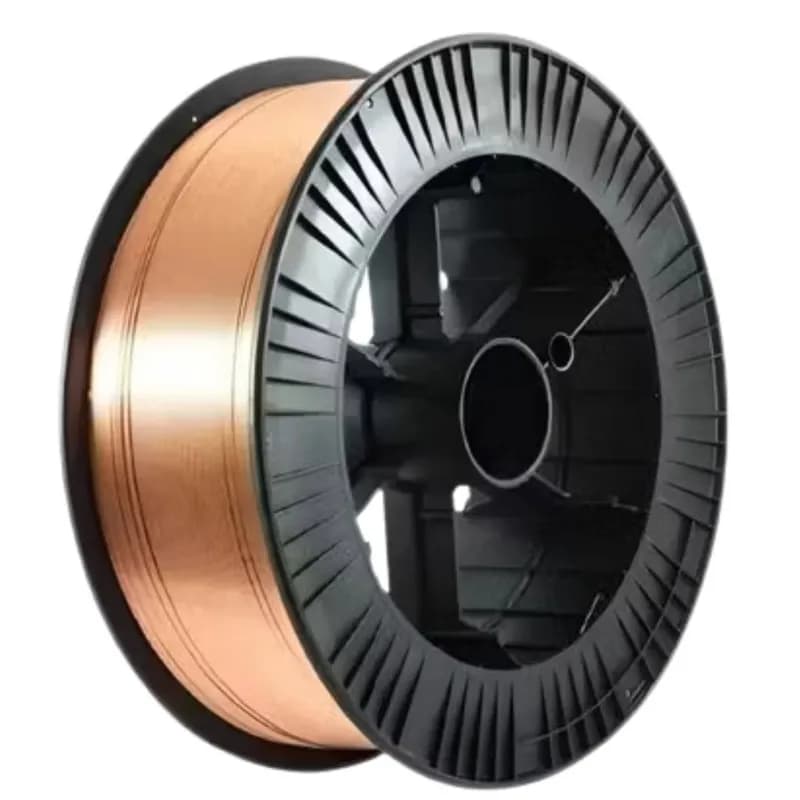
Apa SG-2 Pls.mak.gazaltı Kaynak Teli 15 kg 0.8 mm
Welding Wire
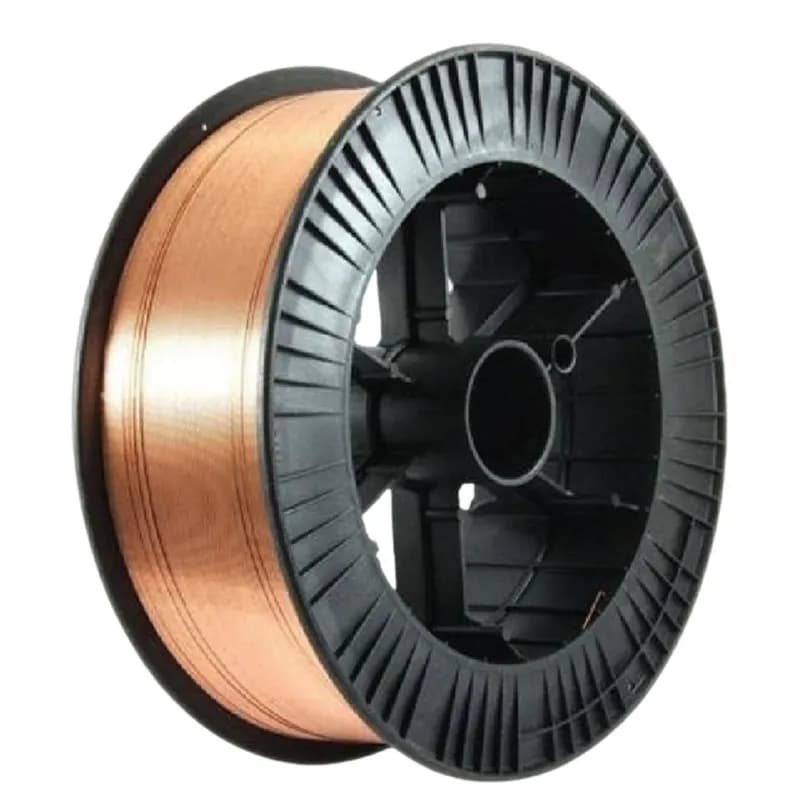
Apa SG-2 Pls.mak.gazaltı Kaynak Teli 15 kg 1.0 mm
Welding Wire
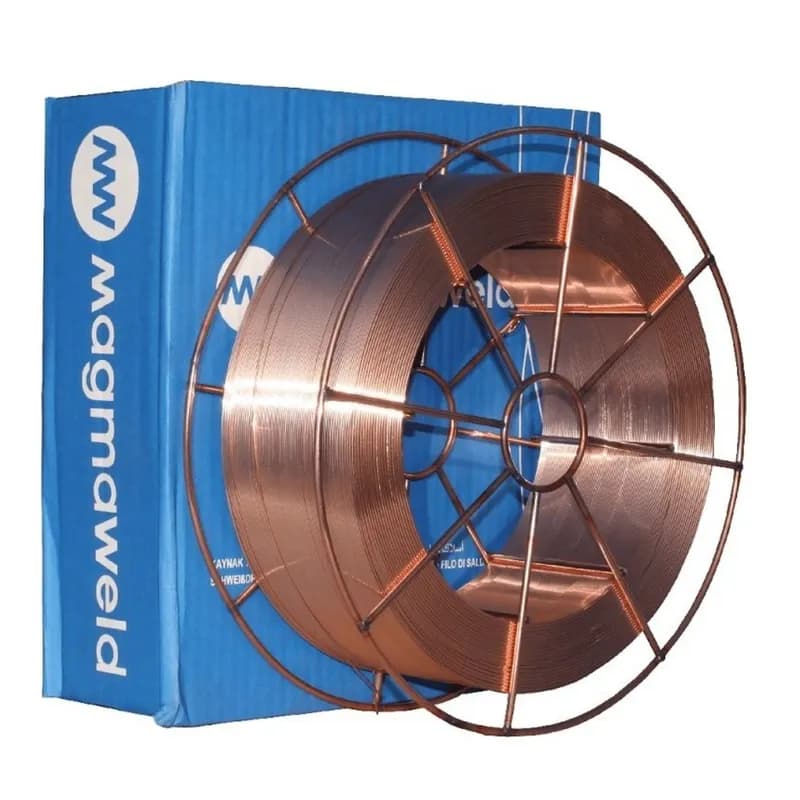
Magmaweld SG2 MIG/MAG Welding Wire 0.80 mm (15 kg)
Magmaweld · Welding Wire
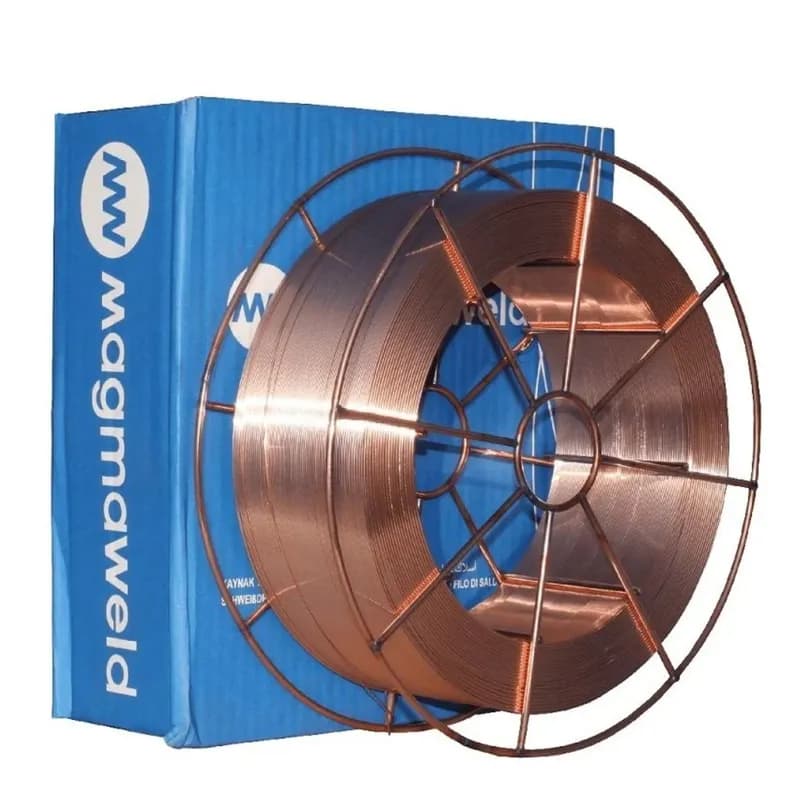
Magmaweld SG2 MIG/MAG Welding Wire 1.00 mm (15 kg)
Magmaweld · Welding Wire
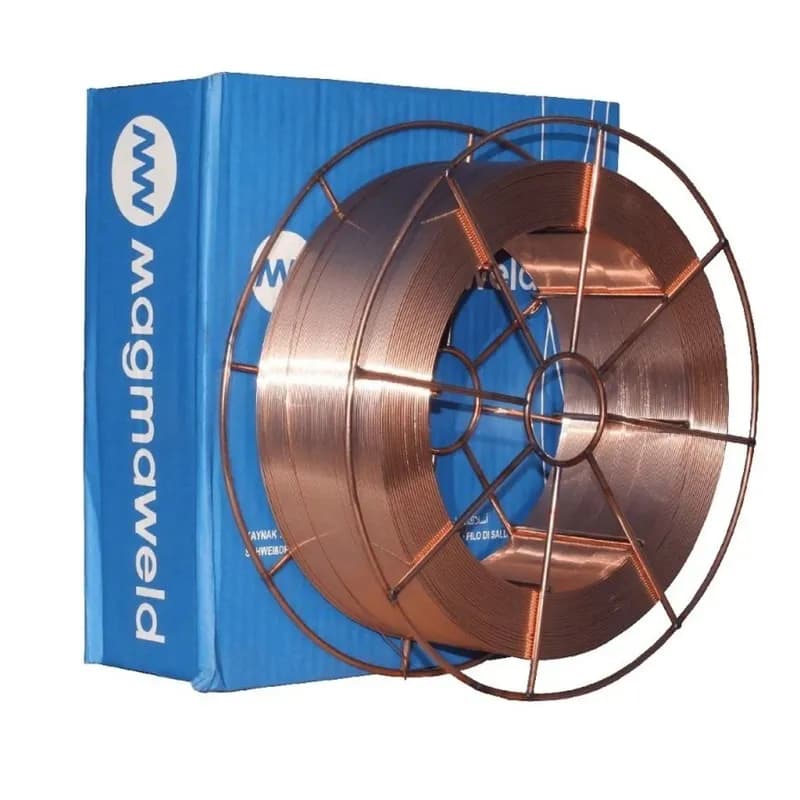
Magmaweld SG2 MIG/MAG Welding Wire 1.20 mm (15 kg)
Magmaweld · Welding Wire
What SG2 / ER70S-6 Is
SG2 is the common name for the copper-coated solid wire used in the gas-shielded welding of general structural steels, pipe steels and cast steels; it is ER70S-6 under the AWS classification, and G 42 3 C1 3Si1 or G 42 4 M21 3Si1 under EN ISO 14341-A depending on the shielding gas. Steel fabrication and shipbuilding, machinery, tank and boiler manufacture, metal goods production and the automotive industry are its main fields.
The thin, even copper coating on the wire does two jobs: it improves electrical transfer at the contact tip, and it slows the wire rusting while it sits on the spool. Preheating is advised according to the thickness and carbon equivalent of the material being welded.
Shielding Gas: CO2 or a Mixture?
SG2 wire runs under both 100% CO2 (C1) and an argon mixture (M21, Ar + 15-25% CO2), and the choice changes the character of the bead. The mixture gives less spatter, a smoother bead and higher impact values; pure CO2 gives deeper penetration and a markedly lower gas cost.
The difference shows in the mechanical values too: the same wire gives 560 N/mm² tensile strength and 95 J at -30 °C under M21 mixed gas, against 540 N/mm² and 90 J at -20 °C under 100% CO2. Where low-temperature impact values are specified, that gap is a specification matter.
Wire Diameter and Spool Planning
Wire diameter follows plate thickness. At 0.80 mm the wire runs at low current and minimises burn-through — the size for sheet, tube and automotive panel work. 1.00 mm bridges sheet work and medium sections and suits shops running a wide range of jobs on a single wire. 1.20 mm gives the high deposition rate that thick sections need, and is the fill-pass size in steel fabrication, tank and boiler manufacture.
The wires in this catalogue are listed on 15 kg spools. Spool weight is the unit of consumable planning: it sets how often the wire is changed, and therefore downtime, and it makes the monthly order calculable from the kilos burned in a shift.
- 0.80 mm — sheet, tube and automotive panel work, low heat input
- 1.00 mm — the general-purpose workshop size, sheet through to medium sections
- 1.20 mm — steel fabrication, tanks and boilers, multi-pass fill
- 15 kg spool — the standard unit for consumable planning
Frequently Asked Questions
Are SG2 and ER70S-6 the same thing?
Yes — two names for the same wire under different standards. SG2 is the established European trade designation, ER70S-6 the AWS A5.18 classification; under EN ISO 14341-A it appears as G 42 3 C1 3Si1 (CO2) or G 42 4 M21 3Si1 (mixed gas), depending on the shielding gas.
Which wire diameter should I choose?
It follows the thickness of the section: 0.80 mm for sheet and tube work, 1.00 mm as the general-purpose workshop size, 1.20 mm for thick sections and multi-pass fill runs. Both deposition rate and required current rise with diameter.
Can MIG/MAG wire be used outdoors?
Solid MIG/MAG wire relies on its shielding gas, and wind disperses the gas shield, leaving porosity in the bead — outdoors you need a screen. If the work must be done in wind, a process that needs no gas — MMA (stick) or self-shielded flux-cored wire — gives a safer result.
How much welding does a 15 kg spool do?
The exact figure depends on wire diameter, current and bead length, but planning runs on spool weight: measure the kilos burned in a shift and monthly consumption and order quantities follow directly. Spool weight also sets how often the wire is changed, and therefore downtime.