Categories
Masonry Bits (SDS Max)
SDS-max bits have an 18 mm shank and belong to heavy rotary hammers: they work at diameters and depths beyond SDS-plus, and in reinforced concrete. The catalogue holds over 200 sizes.
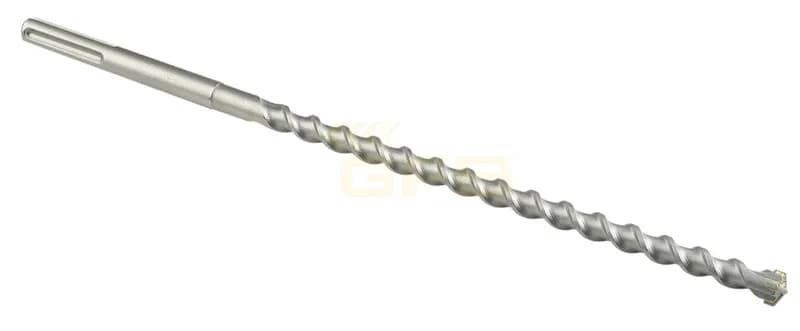
GFB Masonry Drill Bit SDS Max 12 x 340 mm 4 Cutter
GFB · Masonry Bits (SDS Max)
GFB Masonry Drill Bit SDS Max 12 x 540 mm 4 Cutter
GFB · Masonry Bits (SDS Max)
GFB Masonry Drill Bit SDS Max 14 x 340 mm 4 Cutter
GFB · Masonry Bits (SDS Max)
GFB Masonry Drill Bit SDS Max 14 x 540 mm 4 Cutter
GFB · Masonry Bits (SDS Max)
GFB Masonry Drill Bit SDS Max 16 x 340 mm 4 Cutter
GFB · Masonry Bits (SDS Max)
GFB Masonry Drill Bit SDS Max 16 x 540 mm 4 Cutter
GFB · Masonry Bits (SDS Max)
GFB Masonry Drill Bit SDS Max 18 x 1000 mm 4 Cutter
GFB · Masonry Bits (SDS Max)
GFB Masonry Drill Bit SDS Max 18 x 340 mm 4 Cutter
GFB · Masonry Bits (SDS Max)
GFB Masonry Drill Bit SDS Max 18 x 540 mm 4 Cutter
GFB · Masonry Bits (SDS Max)
GFB Masonry Drill Bit SDS Max 20 x 1000 mm 4 Cutter
GFB · Masonry Bits (SDS Max)
GFB Masonry Drill Bit SDS Max 20 x 340 mm 4 Cutter
GFB · Masonry Bits (SDS Max)
GFB Masonry Drill Bit SDS Max 20 x 520 mm 4 Cutter
GFB · Masonry Bits (SDS Max)
GFB Masonry Drill Bit SDS Max 22 x 1000 mm 4 Cutter
GFB · Masonry Bits (SDS Max)
GFB Masonry Drill Bit SDS Max 22 x 340 mm 4 Cutter
GFB · Masonry Bits (SDS Max)
GFB Masonry Drill Bit SDS Max 22 x 520 mm 4 Cutter
GFB · Masonry Bits (SDS Max)
GFB Masonry Drill Bit SDS Max 24 x 1000 mm 4 Cutter
GFB · Masonry Bits (SDS Max)
GFB Masonry Drill Bit SDS Max 24 x 340 mm 4 Cutter
GFB · Masonry Bits (SDS Max)
GFB Masonry Drill Bit SDS Max 24 x 520 mm 4 Cutter
GFB · Masonry Bits (SDS Max)
GFB Masonry Drill Bit SDS Max 25 x 1000 mm 4 Cutter
GFB · Masonry Bits (SDS Max)
GFB Masonry Drill Bit SDS Max 25 x 340 mm 4 Cutter
GFB · Masonry Bits (SDS Max)
GFB Masonry Drill Bit SDS Max 25 x 520 mm 4 Cutter
GFB · Masonry Bits (SDS Max)
GFB Masonry Drill Bit SDS Max 26 x 1000 mm 4 Cutter
GFB · Masonry Bits (SDS Max)
GFB Masonry Drill Bit SDS Max 26 x 340 mm 4 Cutter
GFB · Masonry Bits (SDS Max)
GFB Masonry Drill Bit SDS Max 26 x 520 mm 4 Cutter
GFB · Masonry Bits (SDS Max)
1–24 of 205 · page 1 / 9
When SDS-max is needed
SDS-plus covers 4-30 mm; larger holes, reinforced concrete and deep penetrations belong to SDS-max. The 18 mm shank carries greater impact energy to the tip safely.
The two systems do not interchange, and adapters are not advisable for heavy breaking: an adapter absorbs impact energy and risks failure.
| Diameter | Typical work |
|---|---|
| 12-16 mm | Heavy anchors, structural steel fixing |
| 18-25 mm | Chemical anchors, balustrades and brackets |
| 28-40 mm | Service and cable penetrations |
| 45-52 mm | Large penetrations, ventilation |
In use
On long bits, dust clearance becomes critical: backing out periodically in deep holes clears the flute, speeds progress and reduces heat. A thin film of grease on the shank reduces holder wear.
Stop hammer drilling when you hit reinforcement; unless the bit is rated to cut rebar, the carbide edge chips and the bit never advances at its old rate again.
Frequently Asked Questions
How does SDS-max differ from SDS-plus?
Shank size and duty class. SDS-plus has a 10 mm shank covering 4-30 mm holes; SDS-max has an 18 mm shank for heavy drilling and breaking. The bits do not interchange.
Can an SDS-plus bit run in an SDS-max machine via an adapter?
Mechanically possible, but not advisable for heavy work: the adapter absorbs part of the impact energy and can fail.
Why does progress slow in a deep hole?
Usually dust packing in the flute. Backing out periodically to clear it speeds progress noticeably and reduces heat.
What should I do when I hit reinforcement?
Unless the bit is rated to cut rebar, stop hammer drilling. Reinforcement chips the carbide edge; move the hole or switch to a rebar-cutting bit.