Categories
Nitrile Coated Gloves
A nitrile coated glove is a knitted liner dipped in nitrile rubber, and it is the most widely used work glove in industry. This page lists polyester and cotton liners, palm and full dips, and smooth and foam nitrile models.
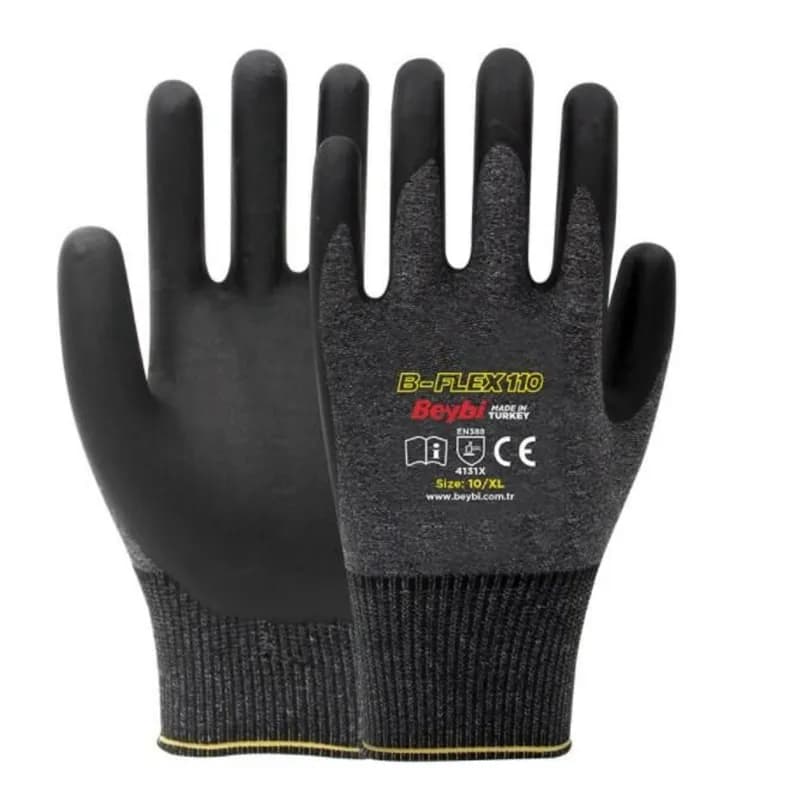
Beybi B-FLEX110 Flex Special Purpose Work Glove Size 10
Beybi · Nitrile Coated Gloves
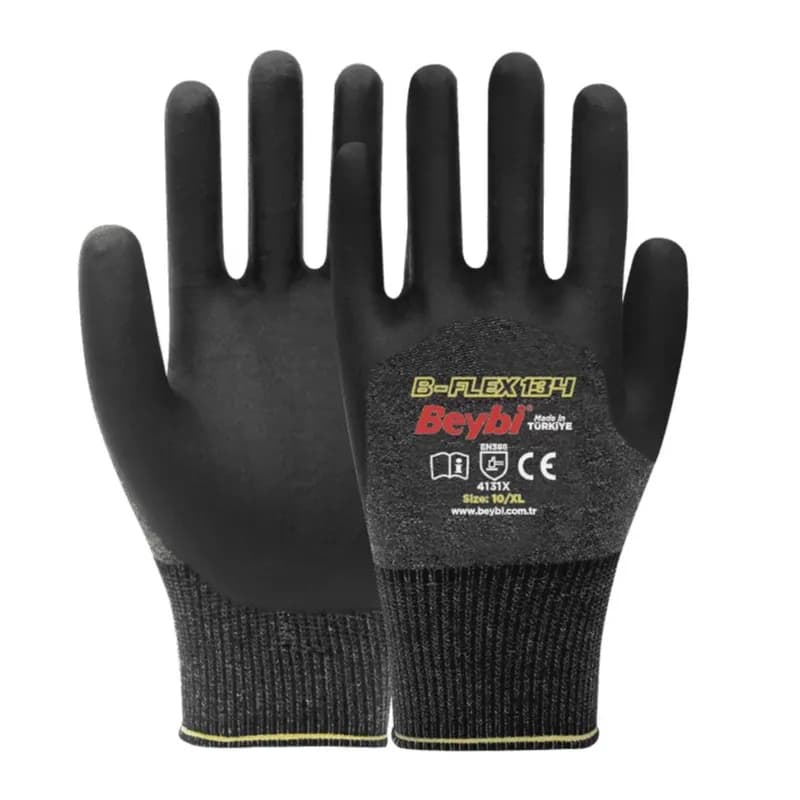
Beybi B-FLEX110 Flex Special Purpose Work Glove Size 7
Beybi · Nitrile Coated Gloves
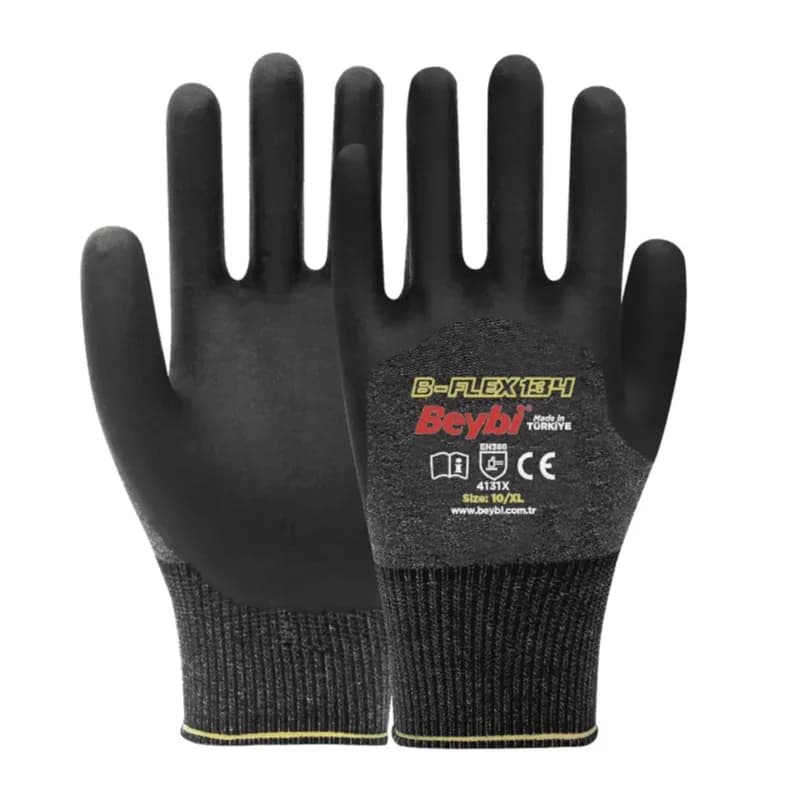
Beybi B-FLEX110 Flex Special Purpose Work Glove Size 8
Beybi · Nitrile Coated Gloves
Beybi B-FLEX110 Flex Special Purpose Work Glove Size 9
Beybi · Nitrile Coated Gloves
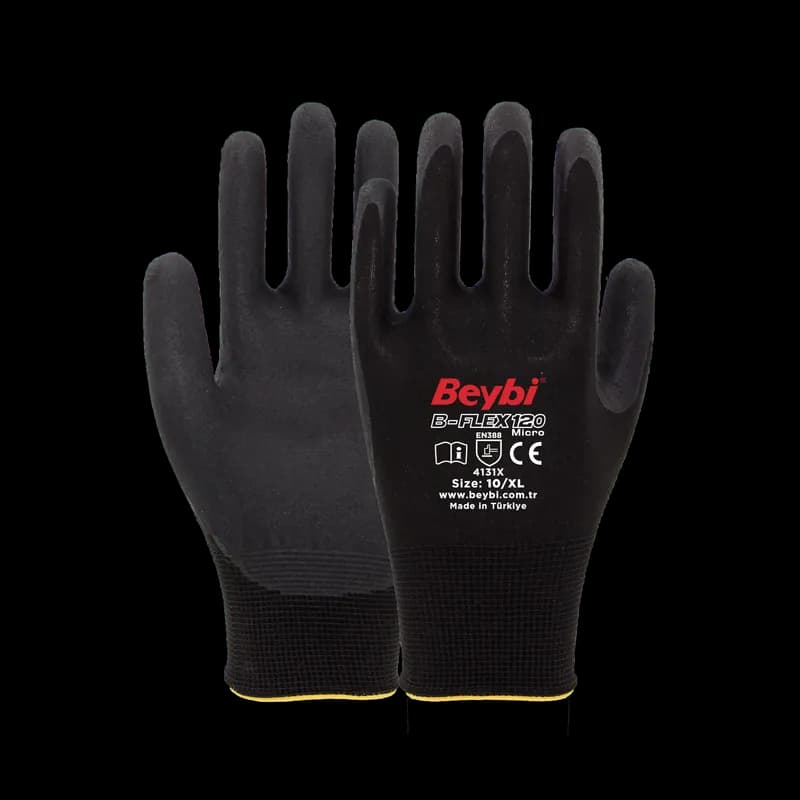
Beybi B-FLEX120 Flex Nitrile Coated Knit Work Glove Size 10
Beybi · Nitrile Coated Gloves
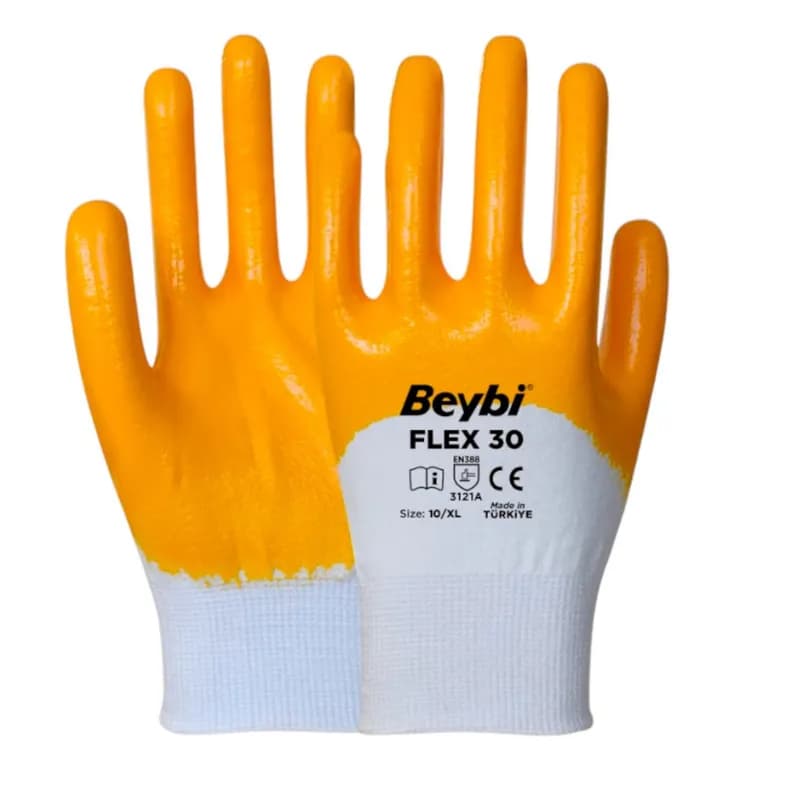
Beybi FLEX30 Flex Nitrile Coated Knit Work Glove Yellow Size 10
Beybi · Nitrile Coated Gloves
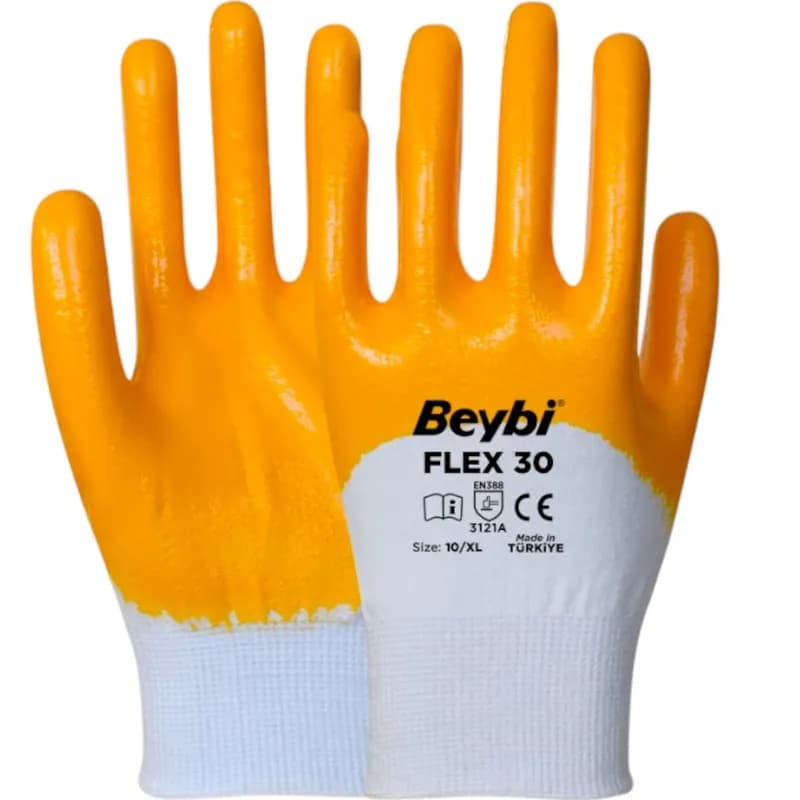
Beybi FLEX30 Flex Nitrile Coated Knit Work Glove Yellow Size 9
Beybi · Nitrile Coated Gloves
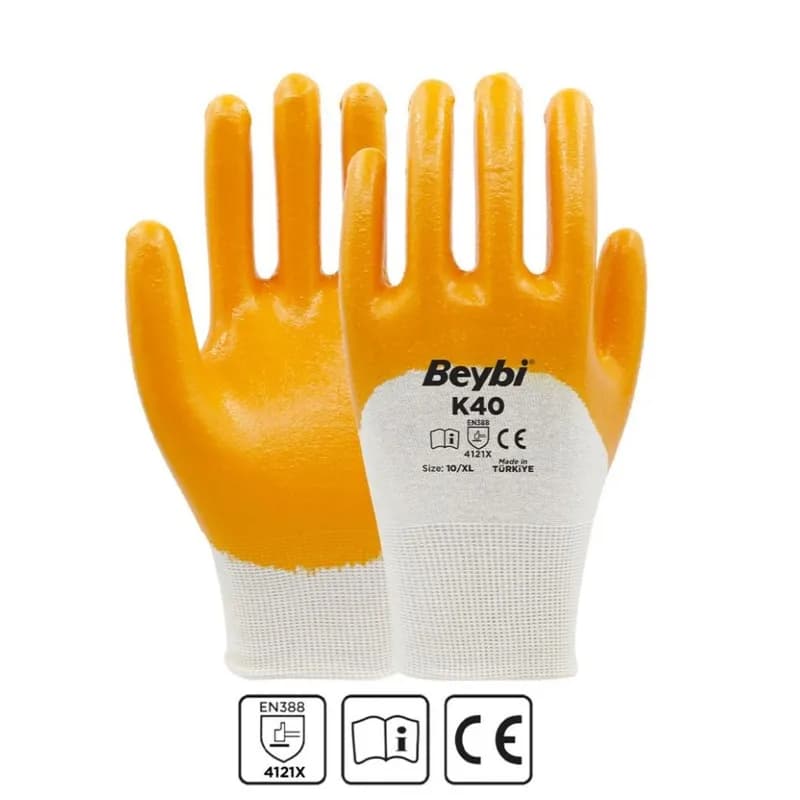
Beybi K40 Nitrile Coated Knit Work Glove Yellow Size 10
Beybi · Nitrile Coated Gloves
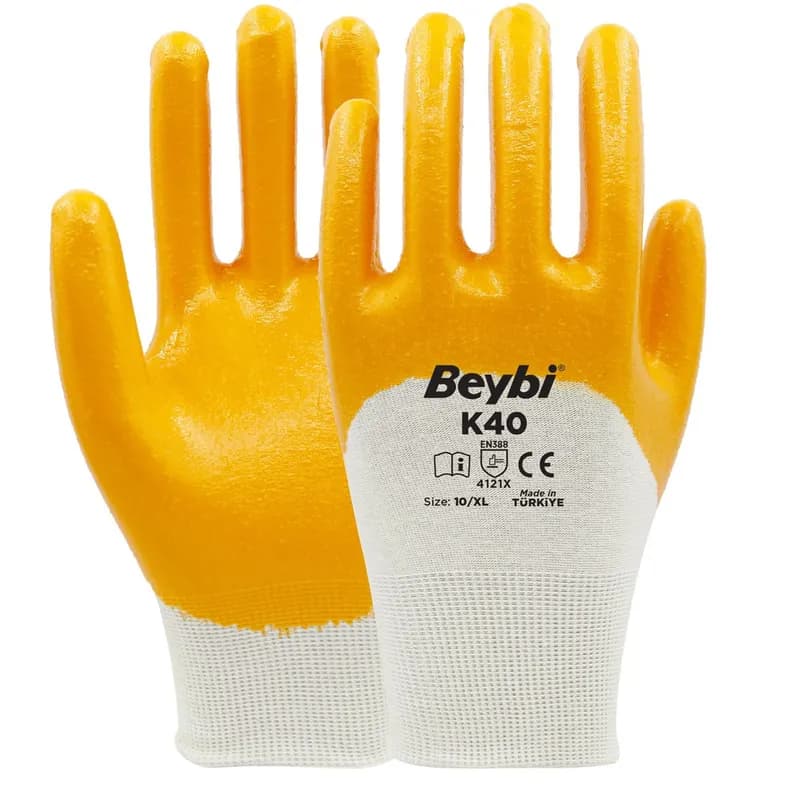
Beybi K40 Nitrile Coated Knit Work Glove Yellow Size 9
Beybi · Nitrile Coated Gloves
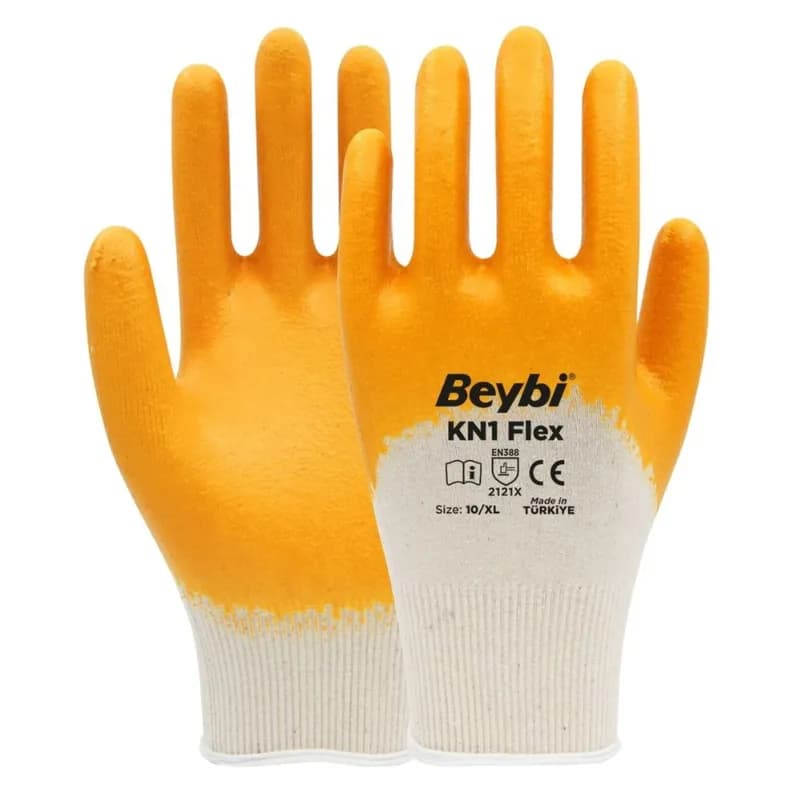
Beybi KN1 Flex Nitrile Coated Knit Work Glove Yellow Size 10
Beybi · Nitrile Coated Gloves
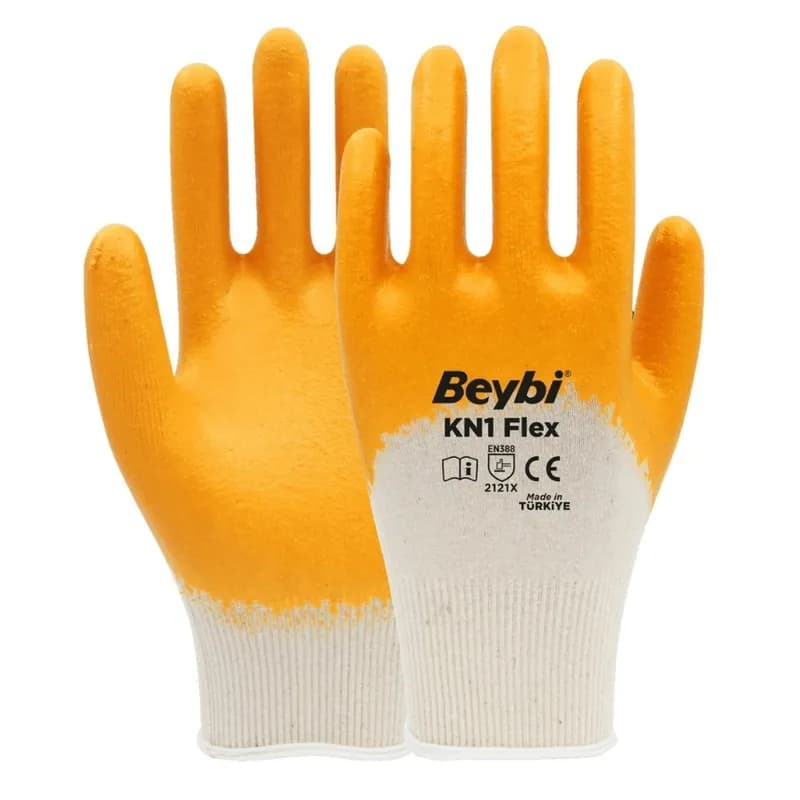
Beybi KN1 Flex Nitrile Coated Knit Work Glove Yellow Size 9
Beybi · Nitrile Coated Gloves
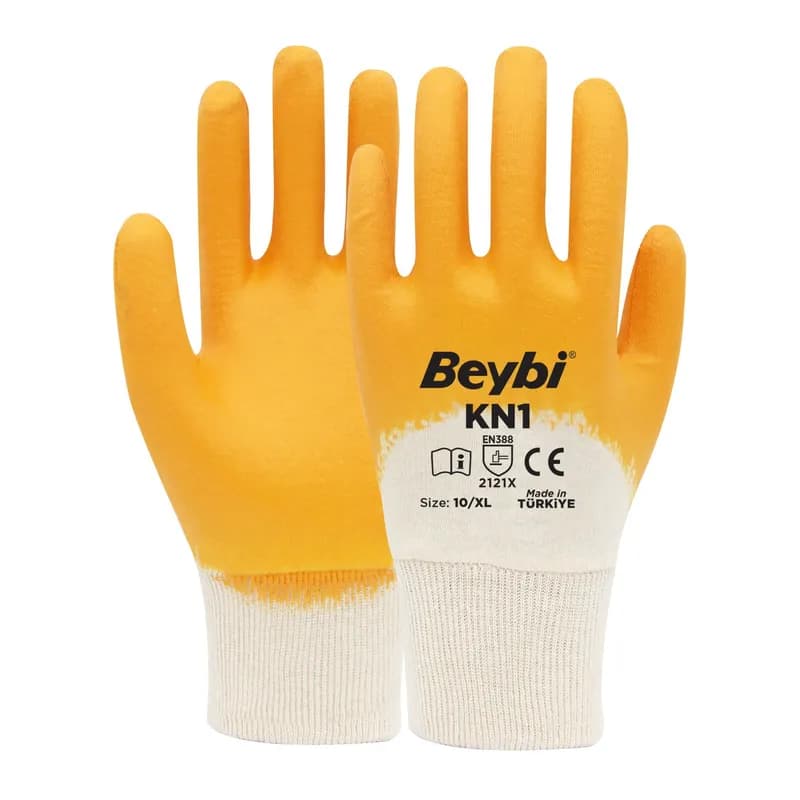
Beybi KN1 Nitrile Coated Knit Work Glove Yellow Size 10
Beybi · Nitrile Coated Gloves
Beybi KN1 Nitrile Coated Knit Work Glove Yellow Size 9
Beybi · Nitrile Coated Gloves
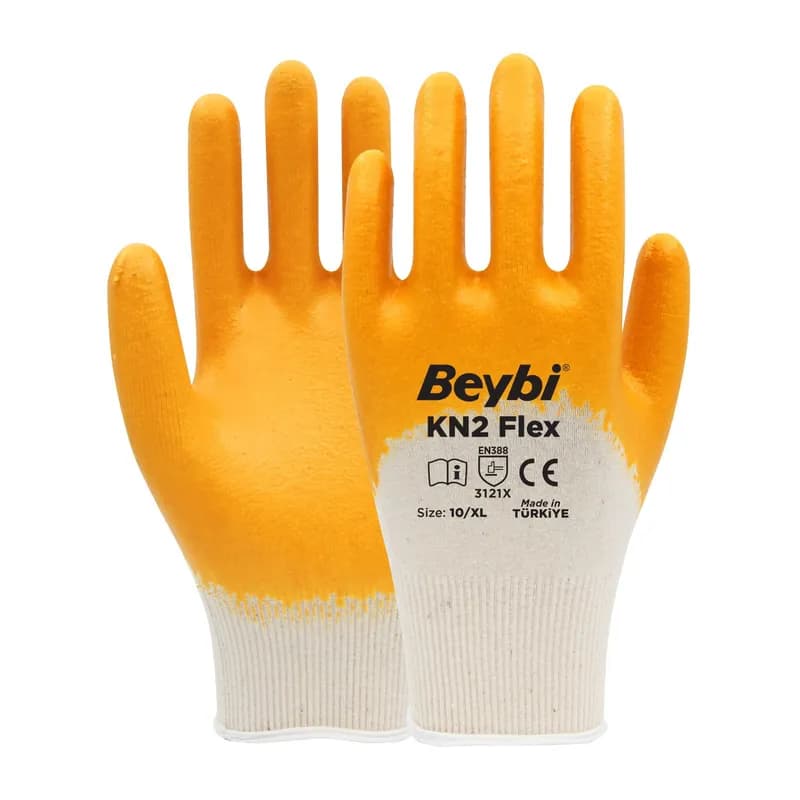
Beybi KN2 Flex Cotton Nitrile Glove Yellow Size 10
Beybi · Nitrile Coated Gloves
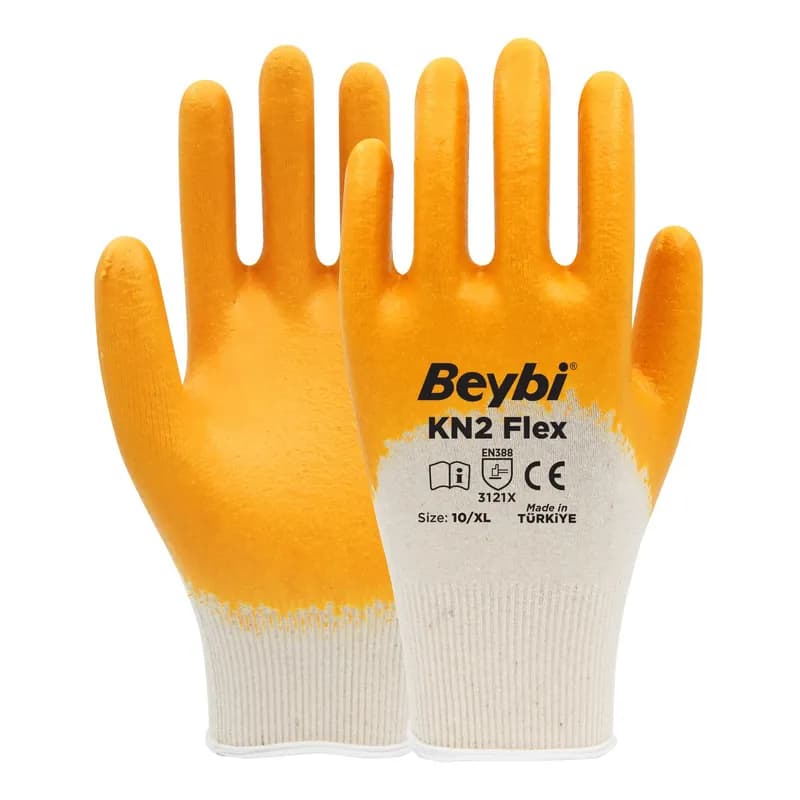
Beybi KN2 Flex Cotton Nitrile Glove Yellow Size 9
Beybi · Nitrile Coated Gloves
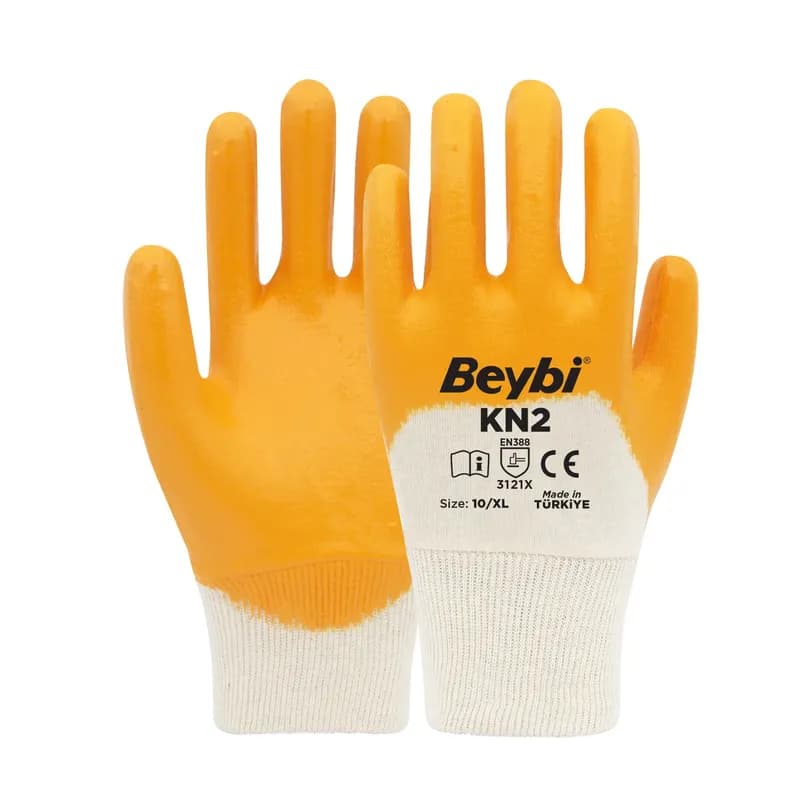
Beybi KN2 Cotton Nitrile Glove Yellow Size 10
Beybi · Nitrile Coated Gloves
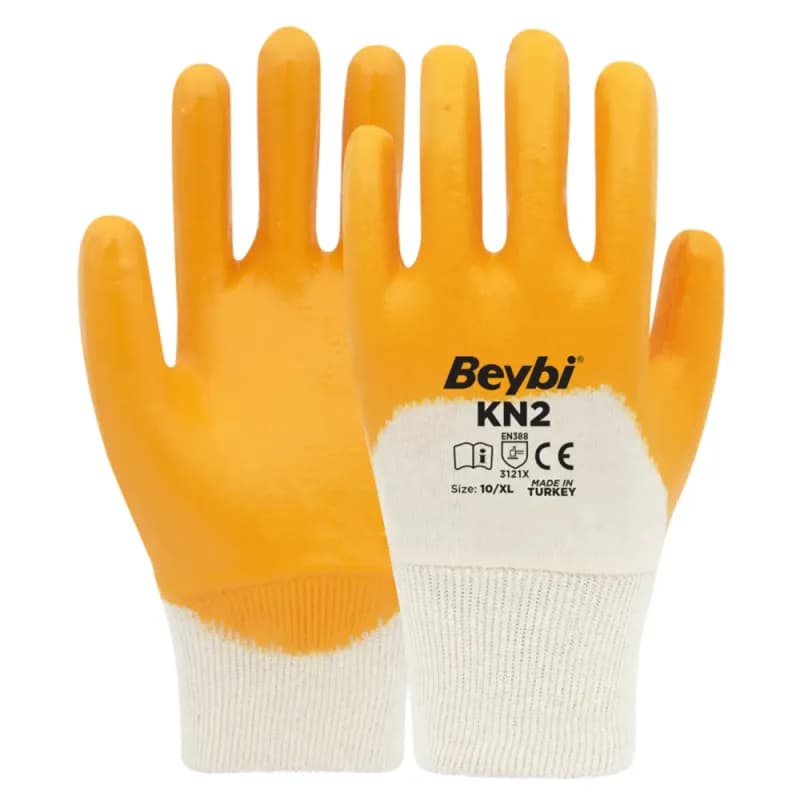
Beybi KN2 Cotton Nitrile Glove Yellow Size 9
Beybi · Nitrile Coated Gloves
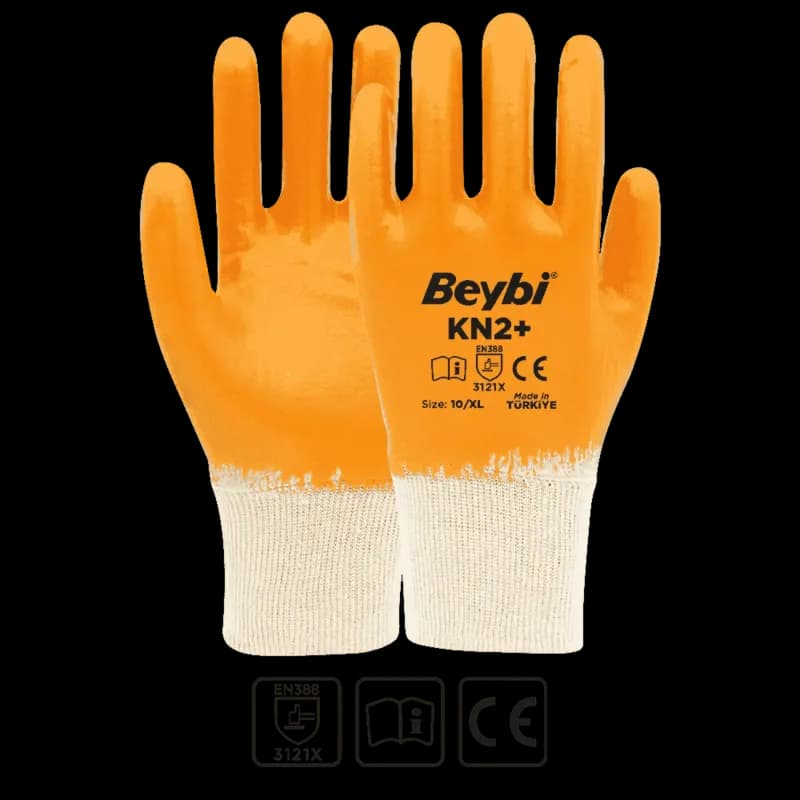
Beybi KN2+ Plus Nitrile Coated Knit Work Glove Yellow Size 10
Beybi · Nitrile Coated Gloves
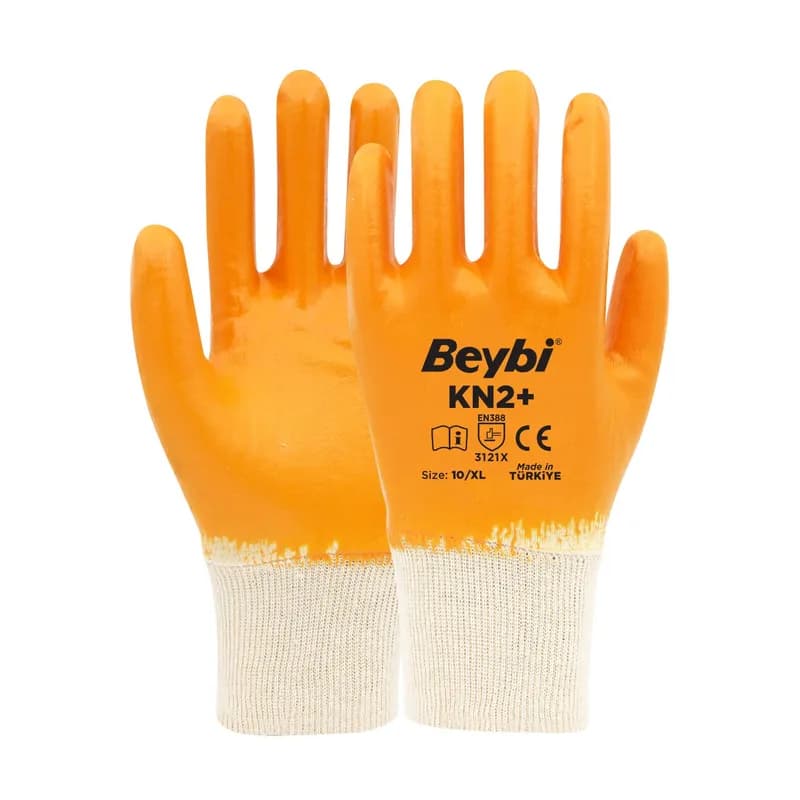
Beybi KN2+ Plus Nitrile Coated Knit Work Glove Yellow Size 9
Beybi · Nitrile Coated Gloves
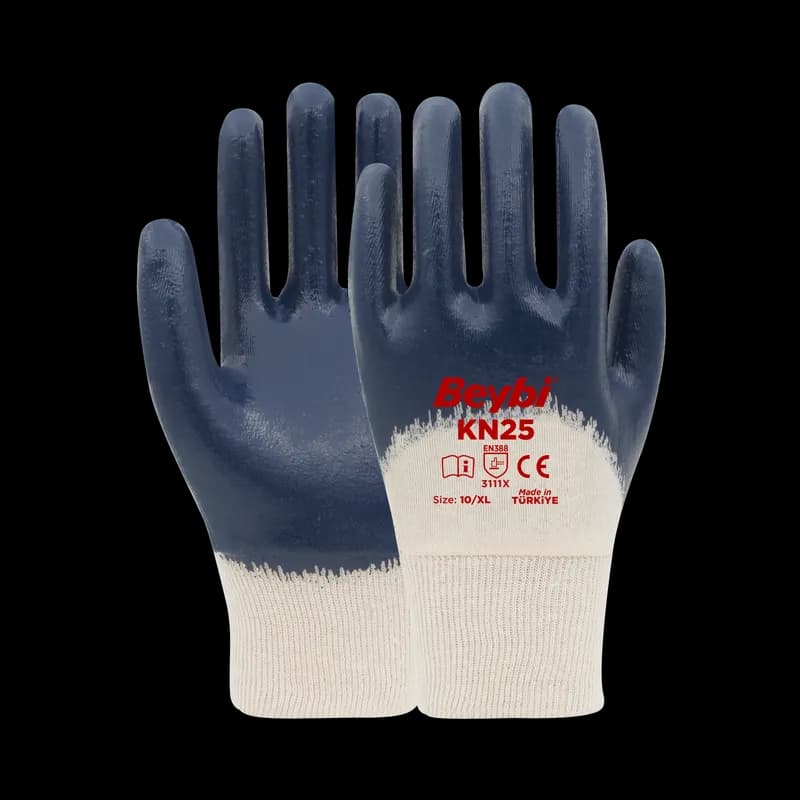
Beybi KN25 Cotton Nitrile Glove Navy Size 10
Beybi · Nitrile Coated Gloves
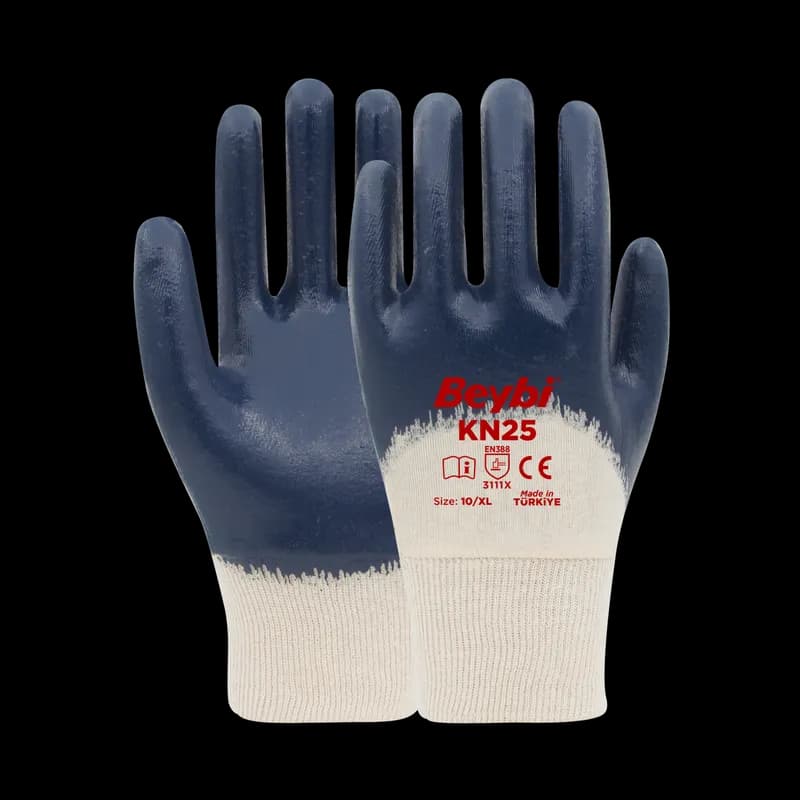
Beybi KN25 Cotton Nitrile Glove Navy Size 9
Beybi · Nitrile Coated Gloves
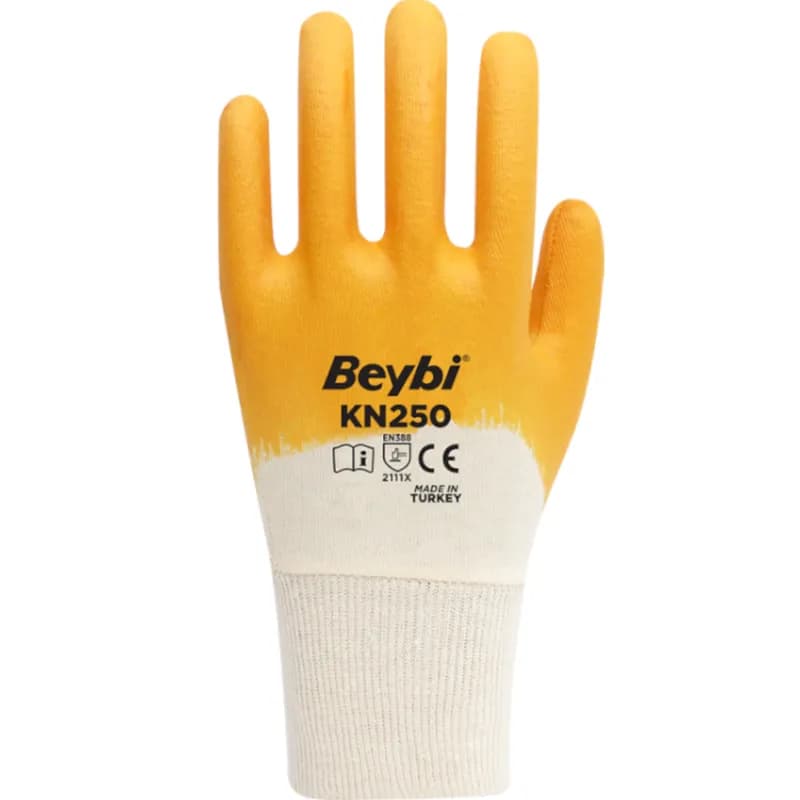
Beybi KN250 Cotton Nitrile Glove Yellow Size 10
Beybi · Nitrile Coated Gloves
Beybi KN250 Cotton Nitrile Glove Yellow Size 9
Beybi · Nitrile Coated Gloves
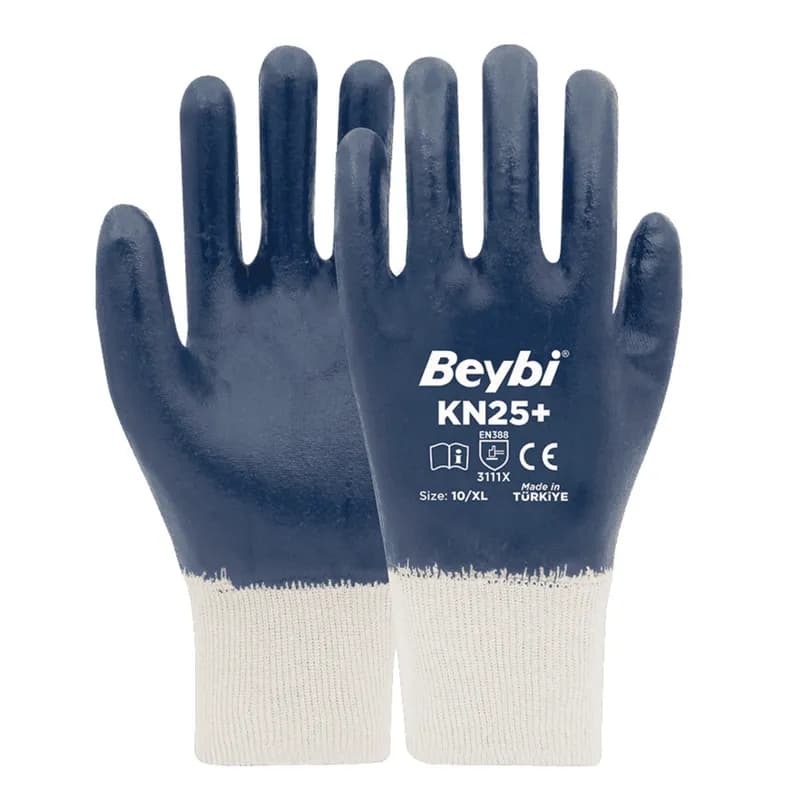
Beybi KN25+ Plus Cotton Nitrile Glove Navy Size 10
Beybi · Nitrile Coated Gloves
1–24 of 82 · page 1 / 4
Why nitrile
Nitrile is a synthetic rubber, and three things recommend it in a work glove: it does not swell in oils, greases and hydrocarbons, it resists abrasion better than latex, and containing no natural protein it carries no latex allergy risk.
What it does not match is the elasticity and the wet grip of latex. Wherever the hand works in oil, nitrile is the right answer; where the work is wet and slippery, latex still grips better.
| Coating | Where it is strong | Where it is weak |
|---|---|---|
| Nitrile | Oil, grease and hydrocarbons; abrasion; no allergy risk | Less sensitive than PU on very fine work |
| Latex | Grip on wet and slippery surfaces; most elastic | Swells in oil; natural protein allergy risk |
| PU (polyurethane) | Fingertip sensitivity; thin and light | Shortest abrasion life of the three |
Coating materials; liner and coverage are chosen separately.
Coverage: palm, 3/4, full dip
As important as the coating material is where the coating is applied. A palm (1/2) dip leaves the back of the hand as bare knit: the hand breathes, the glove stays cool and it costs less, but protection stops at the palm and fingers.
A 3/4 dip also takes contact from the side, which shows when the part is turned in the hand or rubs along the glove. A full dip encloses the hand and is the only right answer where there is liquid: an open knit lets liquid straight through. The cost is sweating.
Smooth and foam nitrile
A smooth nitrile surface slips on an oily part: the oil forms a film between glove and work. Foam nitrile is porous and draws that oil in, bringing back real contact — which is where the grip difference on oily work comes from.
Micro foam is the same structure at a finer cell size. The smaller the cells, the smoother the surface, and on small parts both grip and fingertip feel survive.
Choosing a size
A glove that is too big leaves space at the fingertips and destroys dexterity; one that is too small tires the hand and splits at the seam. The size number is the palm circumference in inches.
| Size | Palm circumference | Typical wearer |
|---|---|---|
| 7 | ~18 cm | Small hand |
| 8 | ~20 cm | Medium |
| 9 | ~23 cm | The most common size |
| 10 | ~25 cm | The second most common |
| 11 | ~28 cm | Large hand |
The size number is the palm circumference in inches. Figures are approximate; sizes 9 and 10 are the stocked ones.
Frequently Asked Questions
Is a nitrile glove chemical resistant?
Nitrile does not swell in oils, greases and many hydrocarbons, but a coated knit work glove is not a chemical protective glove. Where there is immersion or splash risk, a fully dipped glove certified to EN 374 is what is needed.
Can nitrile gloves cause a latex allergy?
No. Nitrile is synthetic and contains none of the natural rubber proteins that cause latex allergy; it is the standard alternative for latex-sensitive wearers.
Is a palm dip enough?
For dry assembly, handling and general workshop use, yes, and it lets the hand breathe. Where there is liquid, mud or chemical contact a full dip is needed: an open knit lets liquid through.
Which model grips on oily parts?
Foam or micro foam nitrile. The porous structure absorbs the oil and leaves contact between part and glove; smooth nitrile slips on the same job.