Categories
Sheet Welding Machines
A sheet welding press joins PE and PP sheet edge to edge to form the body of tanks, channels, silos and large fabrications. The catalogue holds the 2 metre manual hydraulic Polyfusion 2 range and the 3-4 metre CNC hydraulic and CNC pneumatic models; weldable thickness runs from 3 mm to 100 mm.
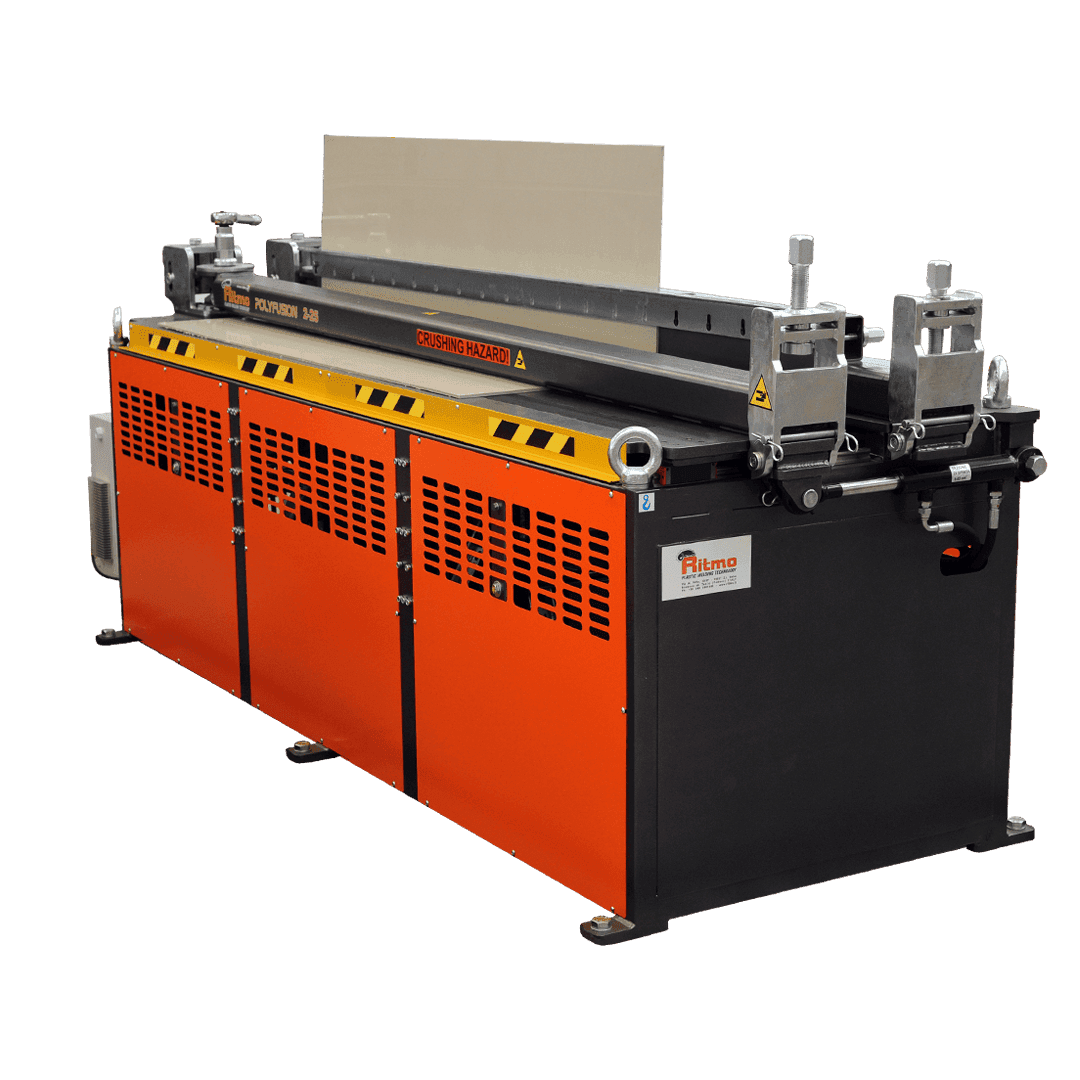
Ritmo Polyfusion 2-25 Sheet Welding Machine 2 m / 25 mm
Ritmo · Sheet Welding Machines
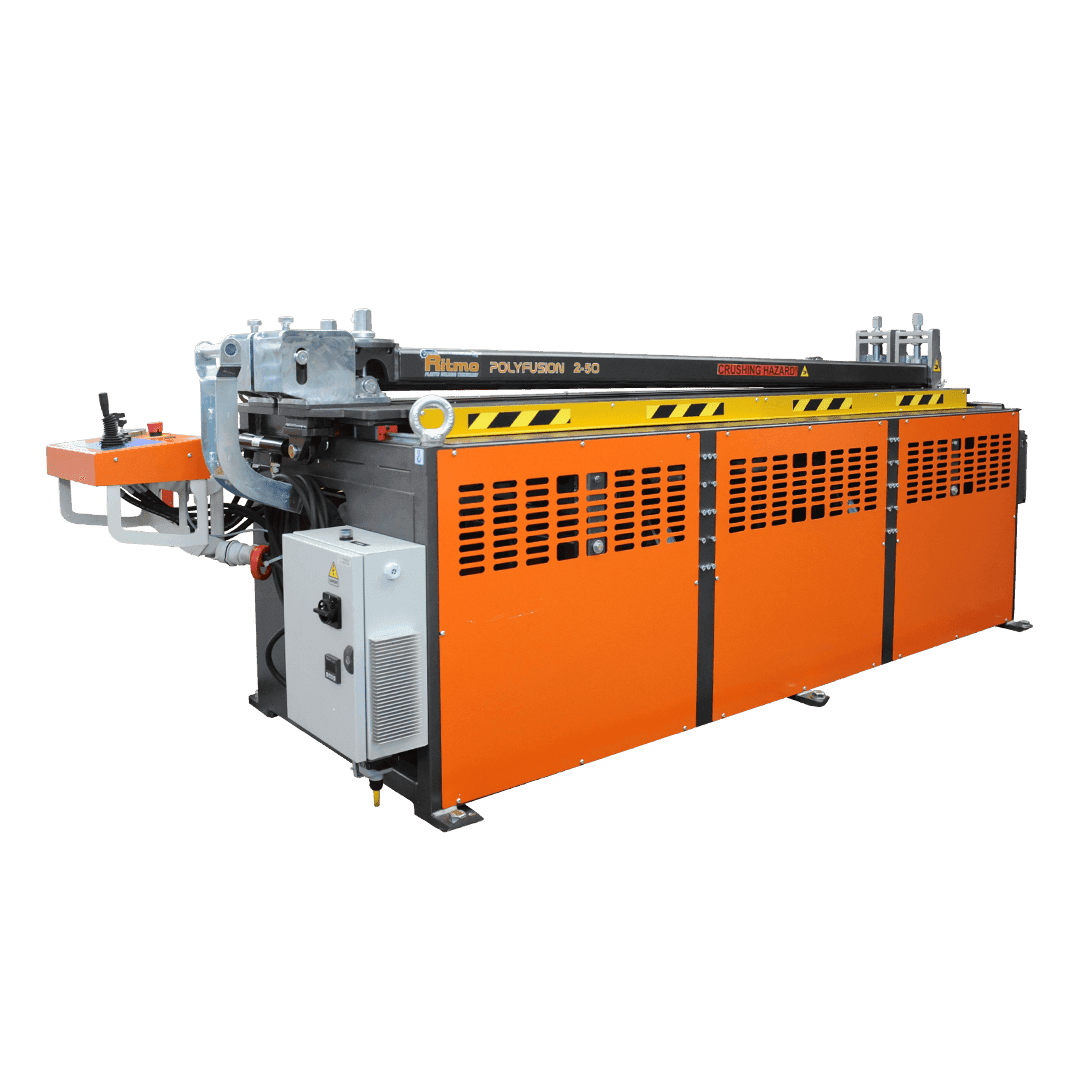
Ritmo Polyfusion 2-50 Sheet Welding Machine 2 m / 50 mm
Ritmo · Sheet Welding Machines
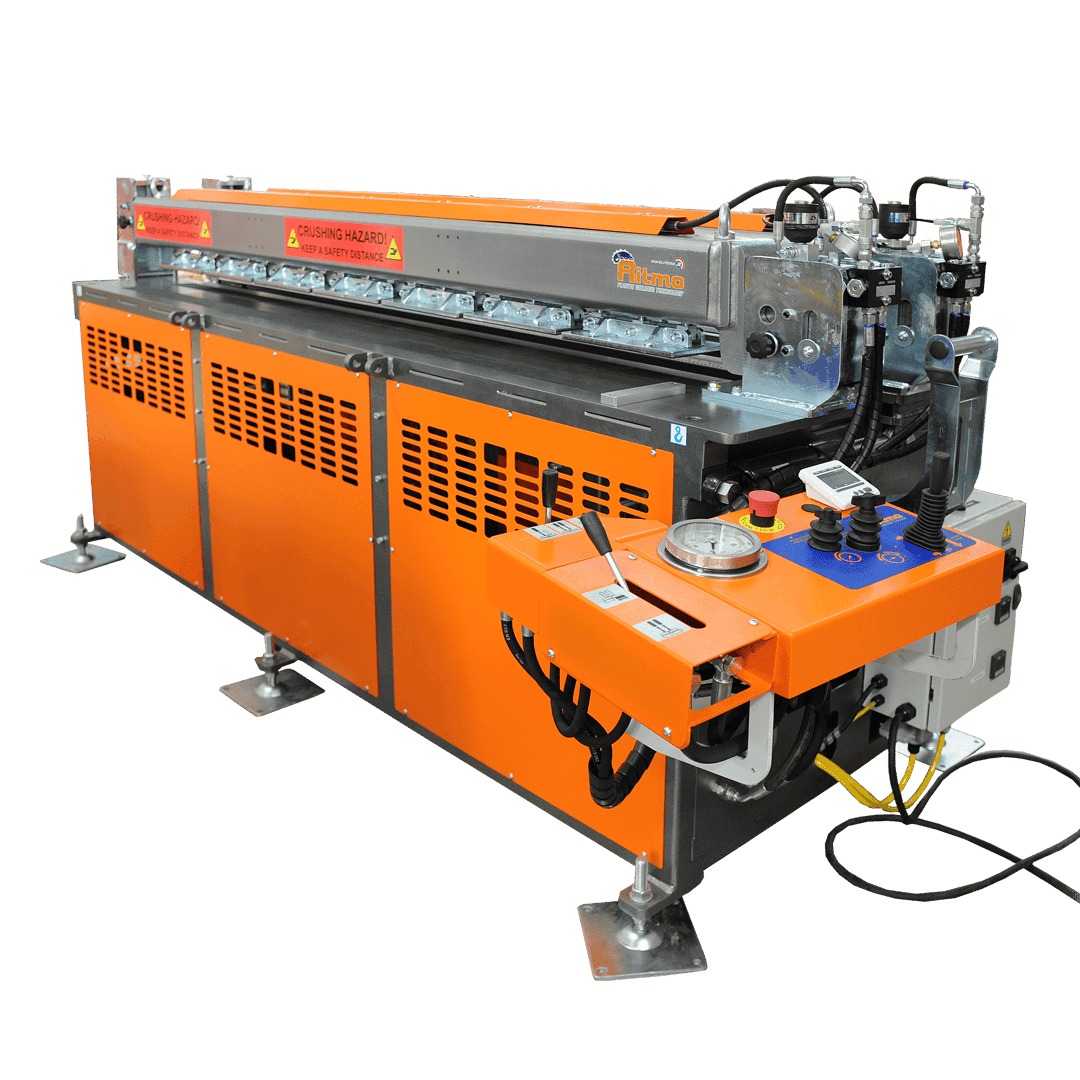
Ritmo Polyfusion 2-100 Sheet Welding Machine 2 m / 100 mm
Ritmo · Sheet Welding Machines
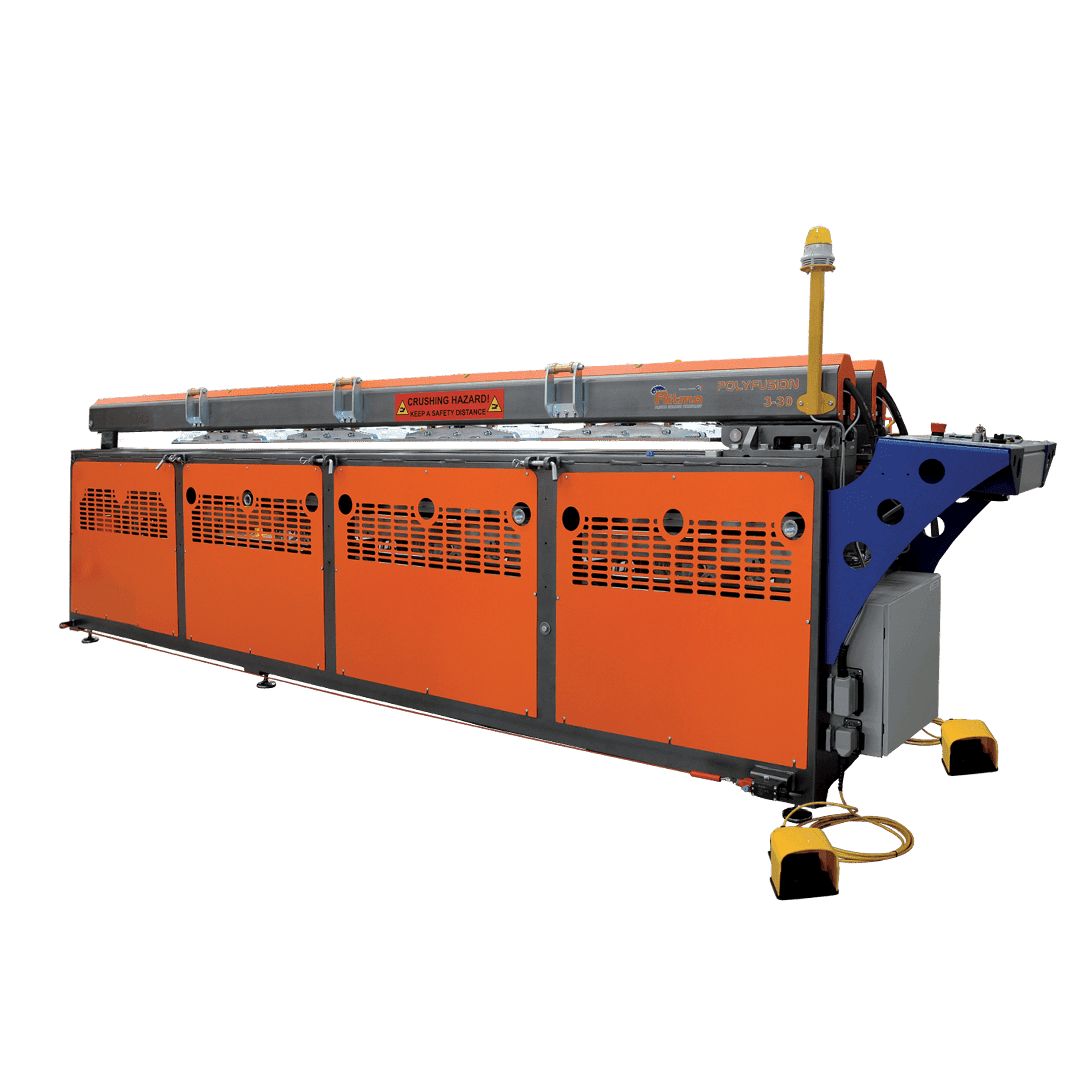
Ritmo Polyfusion 3-30 CNC Sheet Welding Machine 3 m / 3-30 mm
Ritmo · Sheet Welding Machines
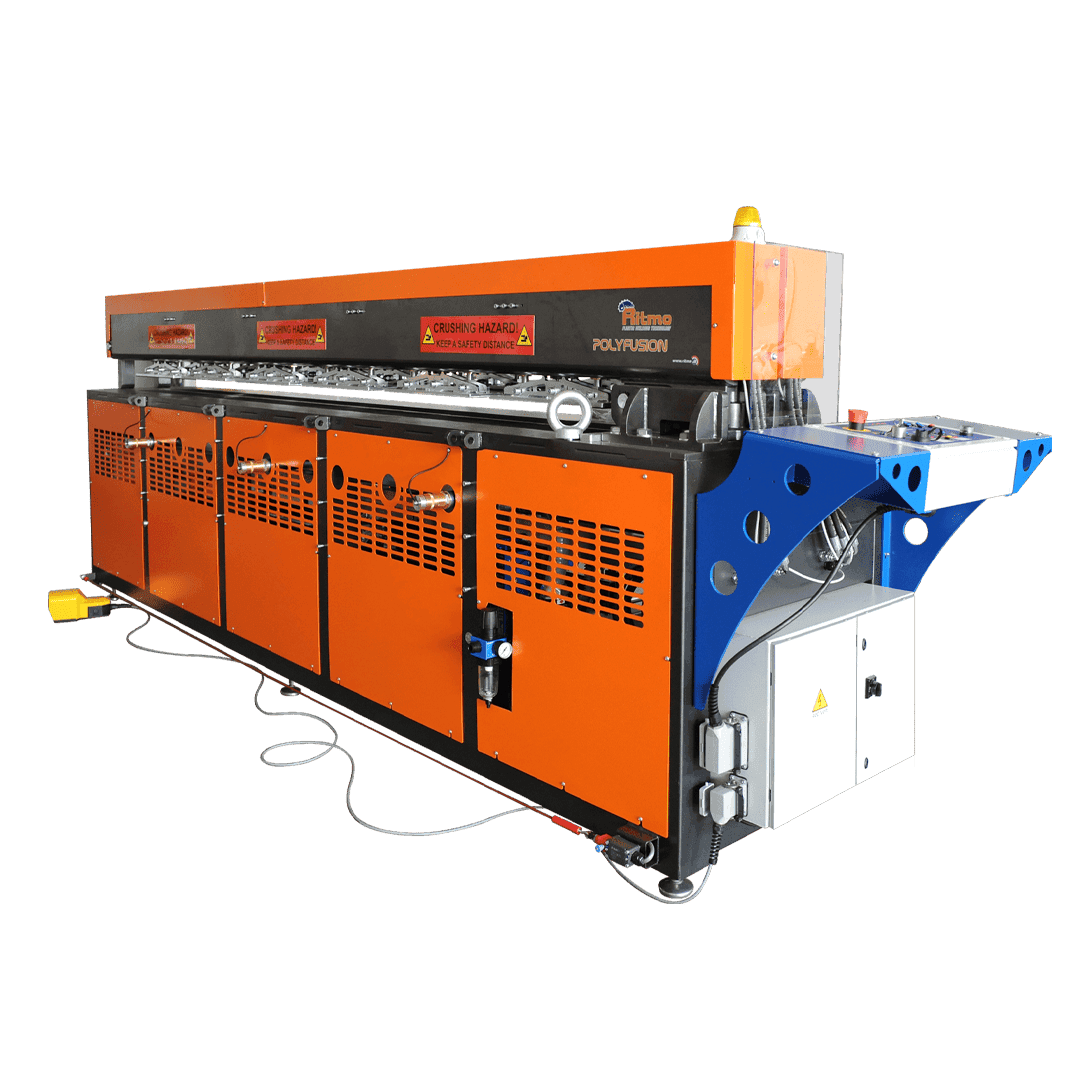
Ritmo Polyfusion 3-50 CNC Sheet Welding Machine 3 m / 3-50 mm
Ritmo · Sheet Welding Machines
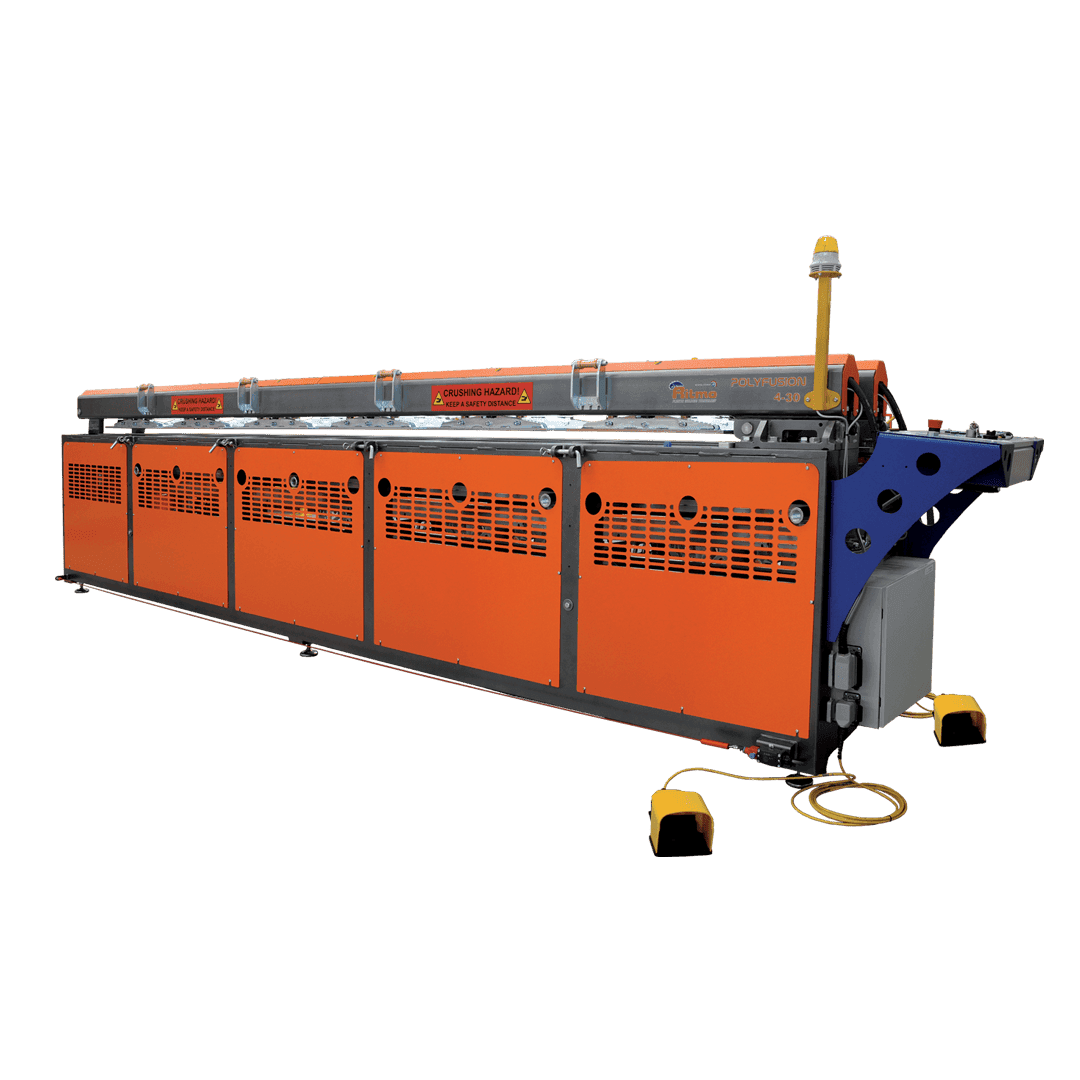
Ritmo Polyfusion 4-30 CNC Sheet Welding Machine 4 m / 3-30 mm
Ritmo · Sheet Welding Machines
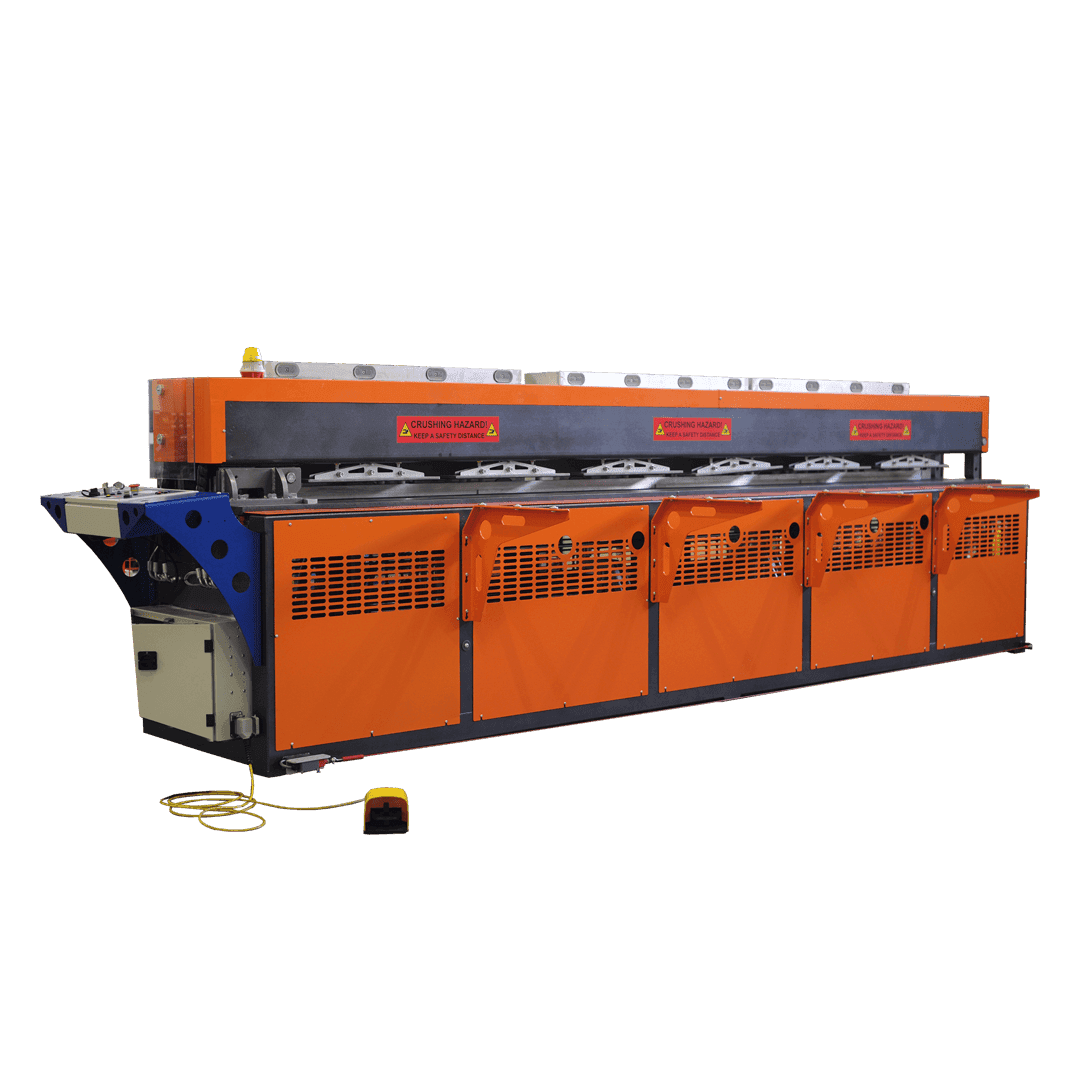
Ritmo Polyfusion 4-50 CNC Sheet Welding Machine 4 m / 3-50 mm
Ritmo · Sheet Welding Machines
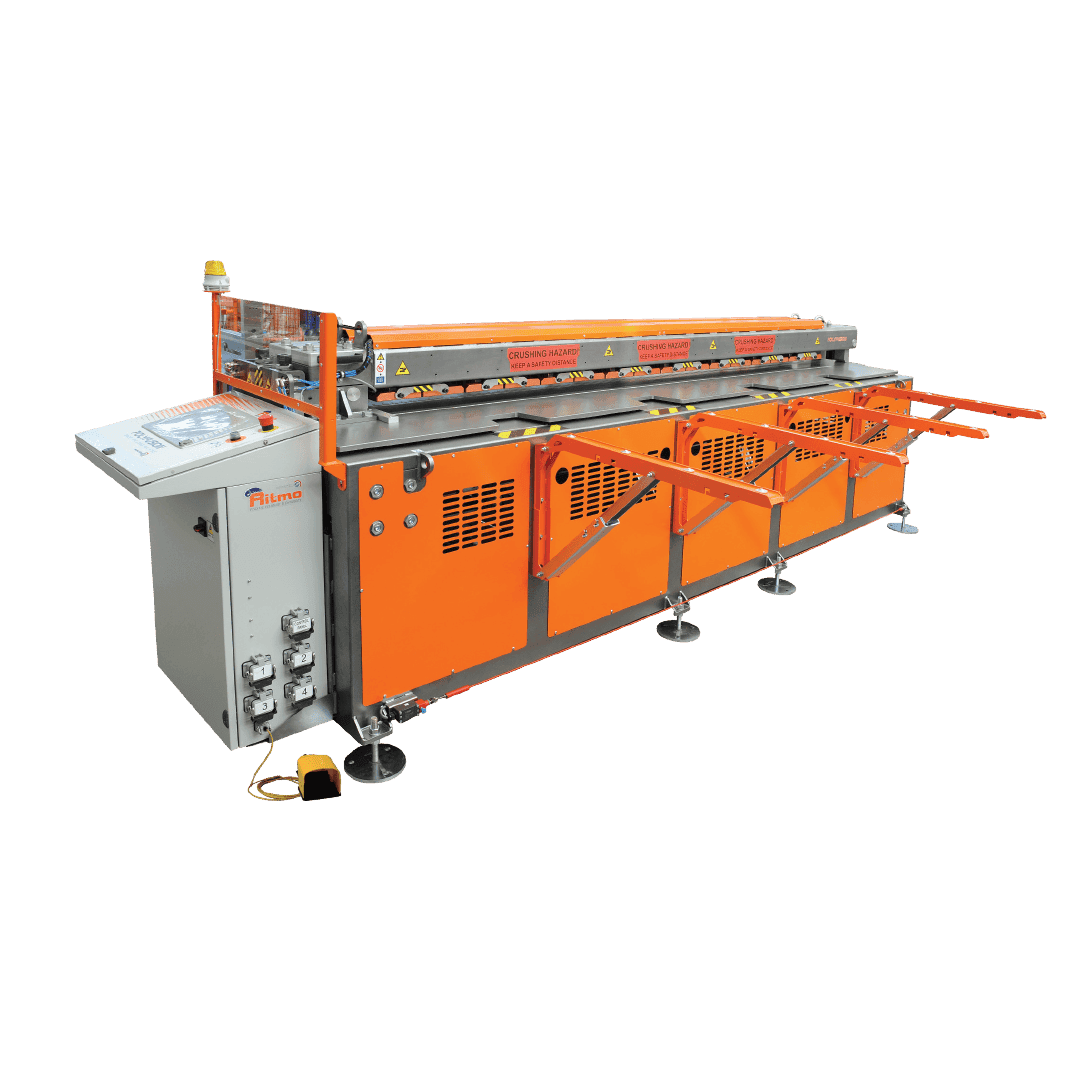
Ritmo Polyfusion 3 CNC Pneumatic Sheet Welding Machine 3050 mm
Ritmo · Sheet Welding Machines
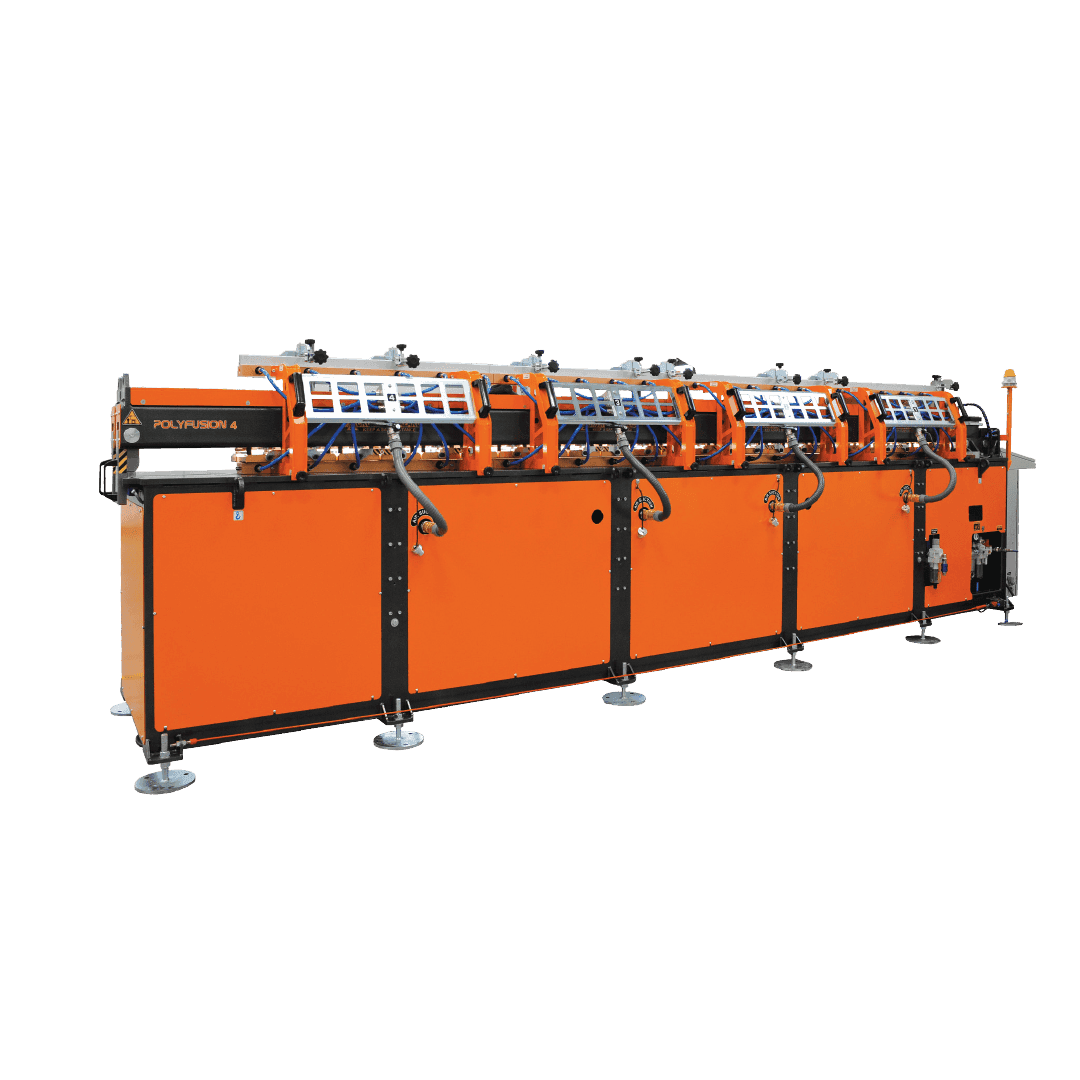
Ritmo Polyfusion 4 CNC Pneumatic Sheet Welding Machine 4050 mm
Ritmo · Sheet Welding Machines
Manual hydraulic, CNC hydraulic and CNC pneumatic
The Polyfusion 2 range (2-25, 2-50, 2-100) works at 2 metres wide and is aimed at thick sheet; the trailing figure gives the thickness the model reaches, so the 2-100 is for work running up to 100 mm. Sheet clamping is mechanical on the 2-25 and 2-50 and hydraulic on the 2-100.
On the CNC models the welding parameters are driven from the control unit; the Polyfusion 3-30, 3-50, 4-30 and 4-50 clamp hydraulically and weld from 3 mm up to 30-50 mm, while the Polyfusion 3 and 4 clamp pneumatically and take sheet 3,050-4,050 mm wide. Where series production needs repeatability, CNC makes sense; for one-off and thick work, manual hydraulic does.
- Polyfusion 2-25 / 2-50 / 2-100: 2 m width, manual hydraulic
- Polyfusion 3-30 / 3-50: 3 m width, CNC hydraulic, 3-50 mm
- Polyfusion 4-30 / 4-50: 4 m width, CNC hydraulic, 3-50 mm
- Polyfusion 3 / 4: 3,050-4,050 mm, CNC pneumatic, from 3 mm
- Weld types: flat, double-wall, 90° (kit on request), circular (kit on request)
Weld types and fabrication capability
A flat weld joins sheets in the same plane; the double-wall weld is used on twin-wall structures up to 60 mm. The 90° weld forms tank and channel corners without bending the sheet and is offered as a kit on request.
The circular welding kit closes sheet into a ring for cylindrical bodies; the minimum diameter is Ø 500 or Ø 700 mm depending on the model. Because these capabilities bear directly on machine choice, any corner and cylinder work in your production programme should be settled at the ordering stage.
Frequently Asked Questions
What is the difference between a sheet welding press and extrusion welding?
The press melts two sheets against a heating plate and joins them edge to edge under pressure, giving a seamless joint close to the strength of the parent material. Extrusion welding builds a bead with filler rod and is used on corners, repairs and post-assembly work. Most fabricators use both.
How is the working width chosen?
By the edge length of the sheet being welded. Two metres suits workshops working with standard sheet sizes; the 3 and 4 metre models cut the number of seams in large tank and channel bodies — and every seam is both labour and a potential weak point.
What do the CNC models add?
Heating time, pressure and cooling are driven from the control unit, so the same job repeats with the same parameters every time and depends less on the operator. That matters in series production and wherever weld parameters have to be recorded.
Which materials can be welded?
PE and PP sheet are welded on these presses; for technical thermoplastics such as PVDF the parameters are set to the material. Sheet thickness starts at 3 mm and reaches 100 mm on the manual hydraulic 2-100.