Categories
Torque Wrenches
A torque wrench is a measuring-class tool that releases at a preset tightening torque. Engine, gearbox, wheel and flange joints have to reach the figure the manufacturer specifies: over-torque stretches the bolt, under-torque lets the joint work loose. Models with 1/4″, 3/8″, 1/2″ and 3/4″ square drives, ratcheting and flex-head, are listed with their measuring ranges.

Proxxon 23351 Torque Wrench
Proxxon Industrial · Torque Wrenches

Proxxon 23353 Torque Wrench
Proxxon Industrial · Torque Wrenches
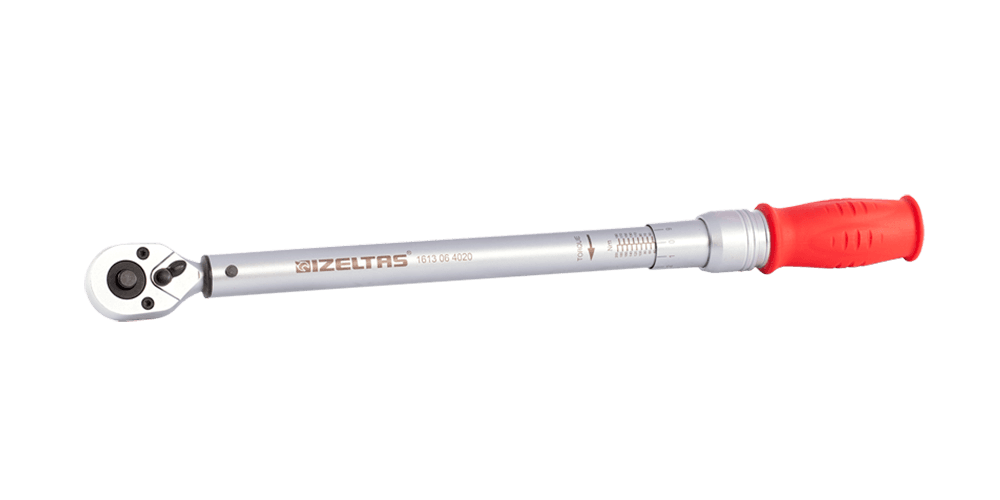
İzeltaş 1/2″ Torque Wrench With Reversible Ratchet Head 40 – 200Nm
İzeltaş · Torque Wrenches
İzeltaş 1/2″ Torque Wrench With Reversible Ratchet Head 60 – 340Nm
İzeltaş · Torque Wrenches
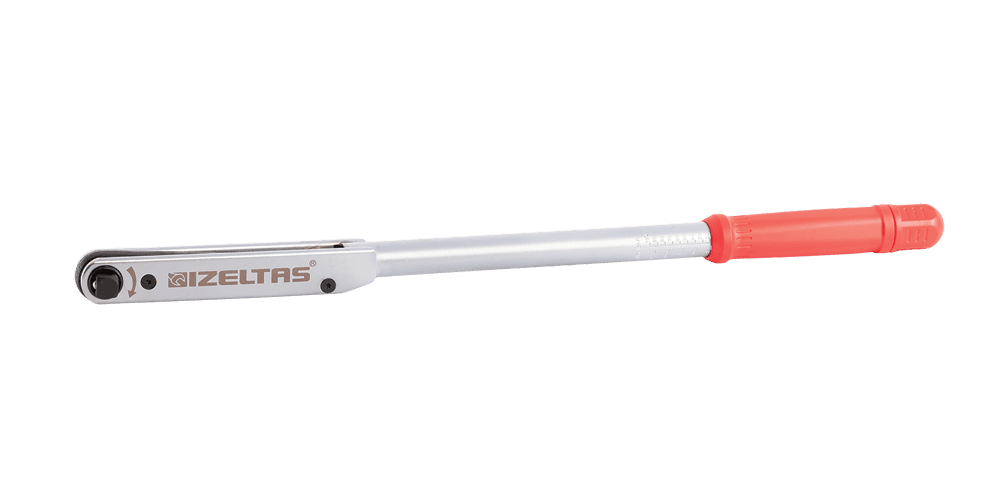
İzeltaş 1/2” Torque Wrench 25 – 135 Nm – 3 – 14 Kg
İzeltaş · Torque Wrenches
İzeltaş 1/2” Torque Wrench 50 – 225 Nm – 5 – 23 Kg
İzeltaş · Torque Wrenches
İzeltaş 1/2” Torque Wrench 70 – 330 Nm – 7 – 35 Kg
İzeltaş · Torque Wrenches
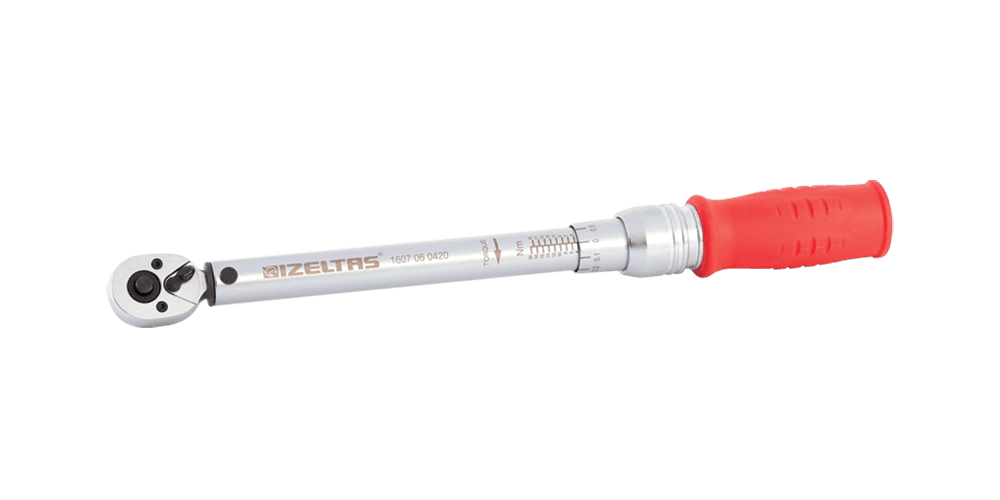
İzeltaş 1/4″ Torque Wrench With Reversible Ratchet-Head
İzeltaş · Torque Wrenches
İzeltaş 3/4″ Torque Wrench With Reversible Ratchet-Head
İzeltaş · Torque Wrenches
İzeltaş 3/4″ Torque Wrench
İzeltaş · Torque Wrenches
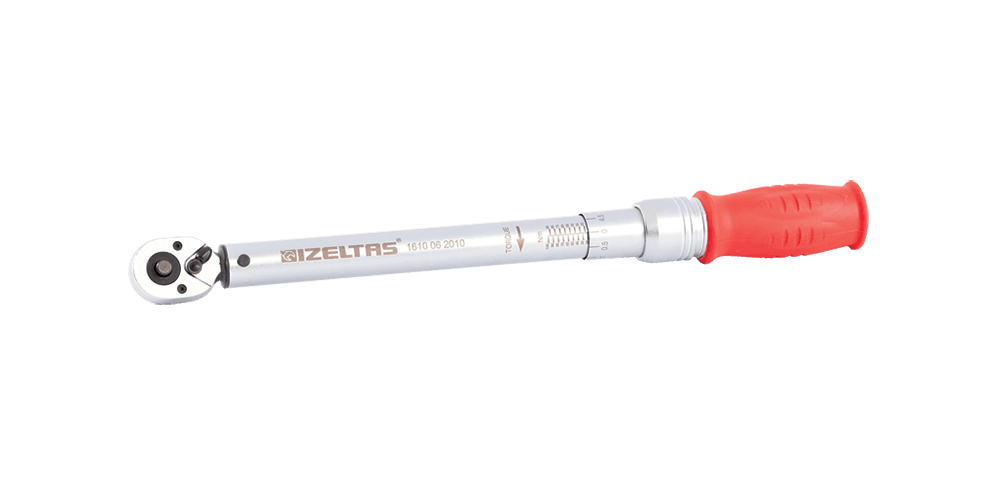
İzeltaş Torque Wrench With Reversible Ratchet-Head
İzeltaş · Torque Wrenches

İzeltaş 3/8” Torque Wrench 2.5 – 11 Nm – 0.3 – 1.2 Kg
İzeltaş · Torque Wrenches
İzeltaş 3/8” Torque Wrench 7 – 33 Nm – 0.5 – 3.4 Kg
İzeltaş · Torque Wrenches
A torque wrench is a measuring instrument
A torque wrench releases mechanically at the set moment and signals it with a click you hear and feel. That makes it an instrument rather than a tightening tool: a wrench that has been dropped should be treated as out of calibration until it has been checked.
The accuracy of hand torque tools is defined in TS ISO 6789-1 and -2. For adjustable wrenches the accepted deviation over the upper part of the range is typically of the order of ±4%, which is the band the manufacturer's tightening figure assumes.
Square drive and measuring range
The wrenches here come in 1/4″, 3/8″, 1/2″ and 3/4″ square drives, and the drive also indicates the torque class: 1/4″ for small assembly work, 1/2″ for wheel nuts and engine fasteners, 3/4″ for heavy commercial vehicles and industrial joints.
For a sound reading the target should sit in the middle of the wrench's range. Working at the very bottom of the range magnifies relative error; working at the very top wears the calibration quickly.
| Square drive | Typical use |
|---|---|
| 1/4″ | Small assembly, electronics and panel work |
| 3/8″ | General maintenance, engine ancillaries |
| 1/2″ | Wheel nuts, engine and gearbox fasteners |
| 3/4″ | Heavy commercial vehicles, industrial and flange joints |
Use and storage
Apply force at the middle of the handle, square to it; pulling from the very end or through an extension tube falsifies the reading. Stop at the click -- a second one takes the joint past the set value.
Store the wrench wound back to its lowest setting. Left under spring tension it drifts, and in continuous use periodic recalibration is the right practice.
Frequently Asked Questions
Why store a torque wrench at its lowest setting?
Left under spring tension the adjustment spring relaxes over time and the setting drifts. Winding it back after use is what preserves the calibration.
Can I undo bolts with a torque wrench?
It should not be used for that. Breakaway torque can exceed the wrench's range and damage the mechanism; use a ratchet to undo.
Can I fit an extension tube?
No. Changing the handle length separates what the wrench reads from what reaches the bolt. Apply force at the middle of the handle, square to it.
Which square drive should I choose?
1/4″ for small assembly, 3/8″ for general maintenance, 1/2″ for wheel nuts and engine fasteners, 3/4″ for heavy vehicles and industrial joints. Aim for a target in the middle of the wrench's range.
Is a dropped torque wrench still usable?
Not until it has been recalibrated. It is a measuring instrument, and after an impact its readings cannot be assumed accurate.