Categories
Wood Drill Bits
Wood bits cut the fibres with a brad point and spurs to leave a clean-edged hole — the thing a metal bit cannot do in timber. The catalogue holds over 340 sizes.
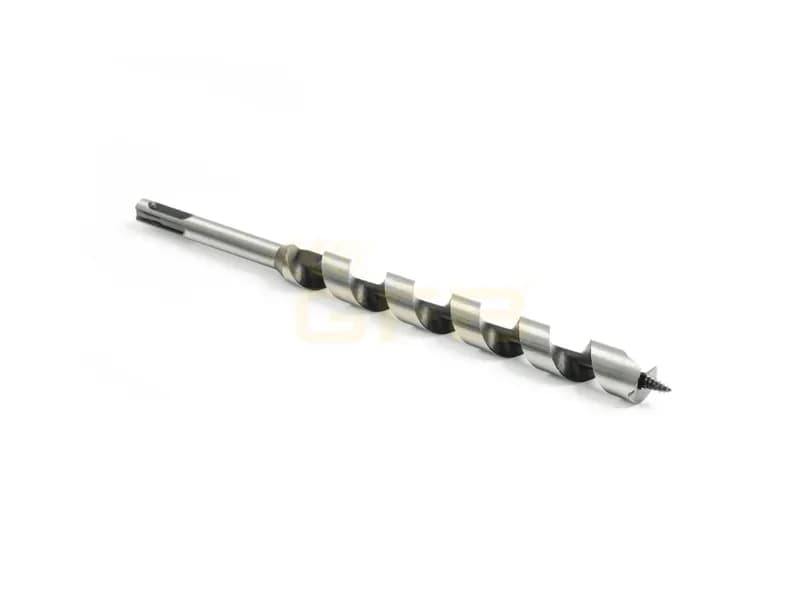
GFB Auger Bit 10 x 250 mm SDS Shank
GFB · Wood Drill Bits
GFB Auger Bit 10 x 500 mm SDS Shank
GFB · Wood Drill Bits
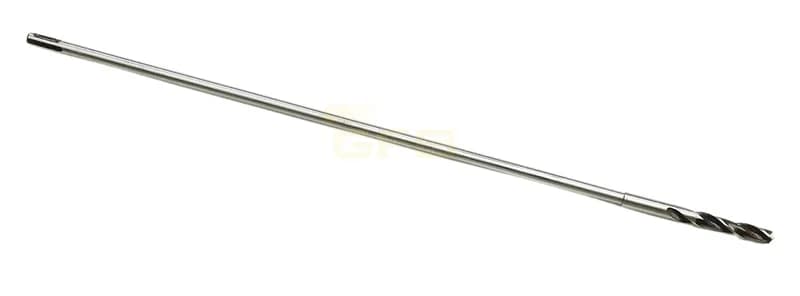
GFB Long SDS Wood Bit 10 x 600 mm SDS Shank
GFB · Wood Drill Bits
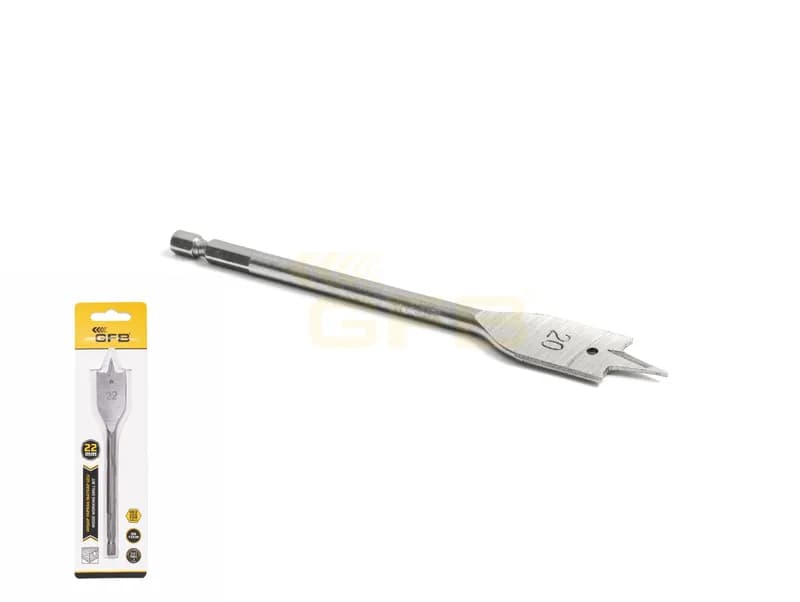
GFB Spade Bit 12 mm Hex Shank
GFB · Wood Drill Bits
GFB Auger Bit 12 x 250 mm SDS Shank
GFB · Wood Drill Bits
GFB Auger Bit 12 x 500 mm SDS Shank
GFB · Wood Drill Bits
GFB Long SDS Wood Bit 12 x 600 mm SDS Shank
GFB · Wood Drill Bits
Makita D-15914 1/4" Hex Connection Wood Drill Bit 10x130 mm
Makita · Wood Drill Bits
Makita D-15920 1/4" Hex Connection Wood Drill Bit 12x150 mm
Makita · Wood Drill Bits
Makita D-15936 1/4" Hex Connection Wood Drill Bit 15x160 mm
Makita · Wood Drill Bits
Makita D-15861 1/4" Hex Connection Wood Drill Bit 3x75 mm
Makita · Wood Drill Bits
Makita D-15877 1/4" Hex Connection Wood Drill Bit 4x90 mm
Makita · Wood Drill Bits
Makita D-15883 1/4" Hex Connection Wood Drill Bit 5x100 mm
Makita · Wood Drill Bits
Makita D-15899 1/4" Hex Connection Wood Drill Bit 6x110 mm
Makita · Wood Drill Bits
Makita D-15908 1/4" Hex Connection Wood Drill Bit 8x115 mm
Makita · Wood Drill Bits
Makita D-16019 1/4" Hex Connection Connection Wood Auger Bit 10x200 mm
Makita · Wood Drill Bits
Makita D-16025 1/4" Hex Connection Connection Wood Auger Bit 12x200 mm
Makita · Wood Drill Bits
Makita D-16031 1/4" Hex Connection Connection Wood Auger Bit 14x200 mm
Makita · Wood Drill Bits
Makita D-16047 1/4" Hex Connection Connection Wood Auger Bit 16x200 mm
Makita · Wood Drill Bits
Makita D-16053 1/4" Hex Connection Connection Wood Auger Bit 18x200 mm
Makita · Wood Drill Bits
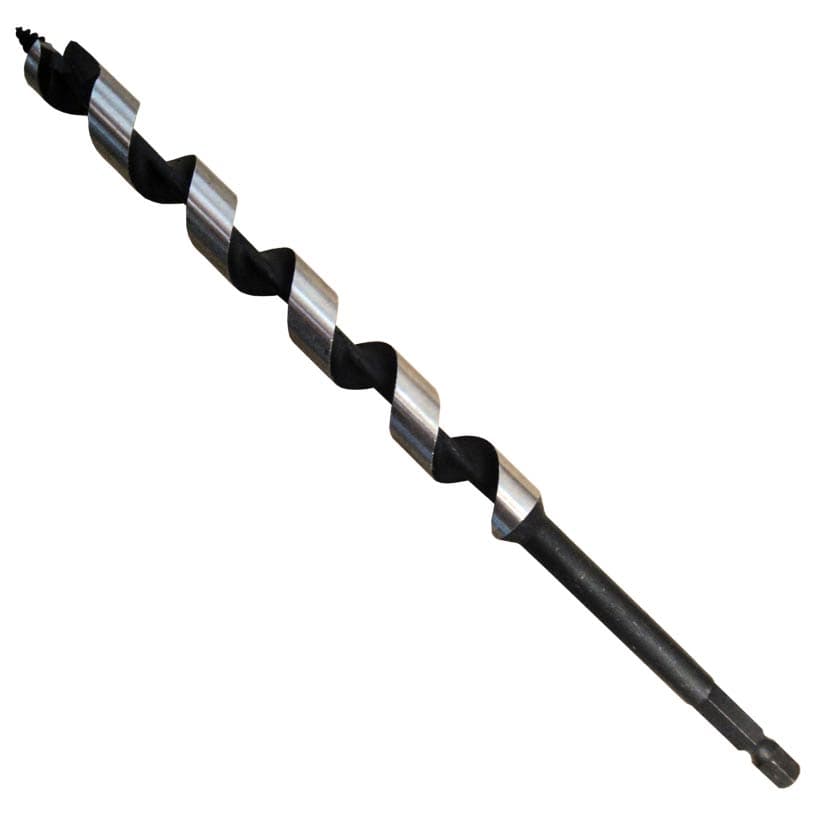
Makita D-16069 1/4" Hex Connection Connection Wood Auger Bit 20x200 mm
Makita · Wood Drill Bits
Makita D-16075 1/4" Hex Connection Connection Wood Auger Bit 21x200 mm
Makita · Wood Drill Bits
Makita D-15992 1/4" Hex Connection Connection Wood Auger Bit 6x200 mm
Makita · Wood Drill Bits
GFB Spade Bit 14 mm Hex Shank
GFB · Wood Drill Bits
1–24 of 348 · page 1 / 15
Bit types
In timber the bit type decides how clean and how deep the hole will be.
| Type | What it does | Typical job |
|---|---|---|
| Brad point | Clean-edged straight hole | General woodwork, dowels |
| Forstner / hinge | Wide flat-bottomed recess | Hinge cups, furniture |
| Auger | Deep holes, self-feeding | Heavy timber, joists |
| Step drill | Several diameters in one bit | Sheet and thin timber |
| Long wood bit | Through holes wall to timber | Services, electrical |
Getting a clean hole
The practical way to stop breakout on the exit side is a sacrificial board underneath. The other is to stop as soon as the point shows through, turn the piece over and finish from the other side.
Speed follows material and diameter: high for small bits, low for wide ones like Forstners. Augers work at low speed and high torque.
Frequently Asked Questions
How does a wood bit differ from a metal bit?
Wood bits have a brad point and spurs: the point bites without skating and the spurs sever the fibres, so the edge comes out clean. A metal bit will drill timber but leaves a ragged edge.
When do I need a Forstner bit?
When the recess must be wide, clean and flat-bottomed: hinge cups, furniture assembly and dowelled joints. Run it slow with steady pressure.
Why does the timber break out on the far side?
Because nothing supports the fibres as the bit exits. A sacrificial board underneath, or turning the piece over once the point shows, solves it.
Why does an auger bit pull itself in?
The threaded lead screw at its tip winds into the timber and feeds the bit. That is why augers belong in high-torque, low-speed machines — and never on hammer mode.